Block Surge

800 posts

Block Surge

Block Surge

@BlockSurgeHQ

Web3 Growth Agency helping crypto projects scale visibility, communities & trust through data driven execution.

Katılım Ağustos 2025
137 Takip Edilen535 Takipçiler
Sabitlenmiş Tweet
Block Surge
Block Surge@BlockSurgeHQ·
BlockSurge powers your project end to end. We build and manage communities with 24/7 coverage, while trained teams handle design, content, and execution. Start strong or scale fast your brand grows without the hiring delays.
Block Surge tweet mediaBlock Surge tweet media
English
109
187
233
31.5K
Block Surge
Block Surge@BlockSurgeHQ·
Many teams believe better planning will solve slow growth. So they redesign roadmaps, refine strategy, and schedule more alignment meetings. But momentum rarely comes from clearer plans. It comes from faster execution cycles. Planning reduces uncertainty. Execution produces learning. The teams moving fastest today don’t wait for perfect clarity. They build systems that allow progress while decisions evolve. Growth accelerates when planning stops replacing delivery.
Block Surge tweet media
English
0
0
0
69
Block Surge
Block Surge@BlockSurgeHQ·
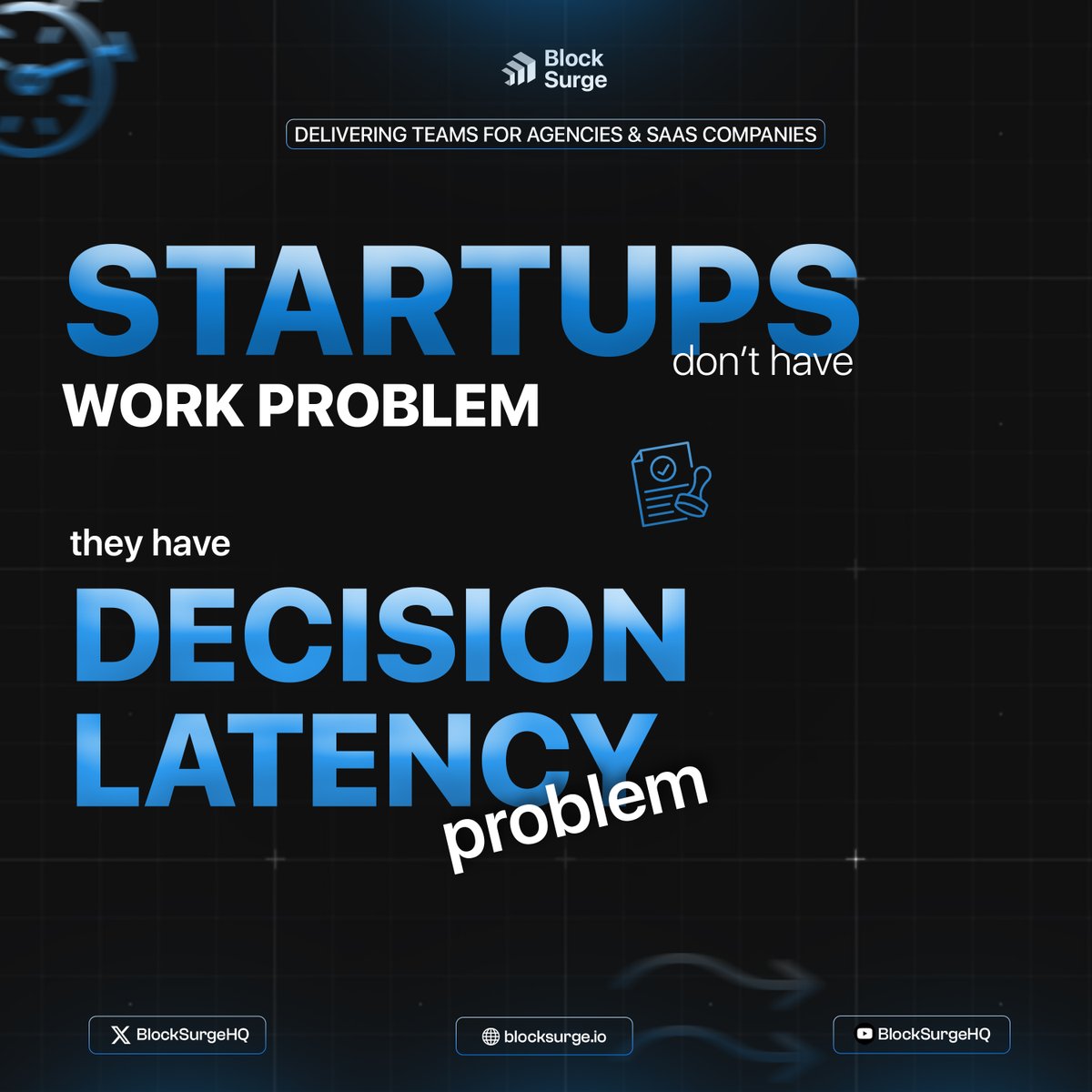
Startups rarely suffer from lack of work. Teams are busy. Projects exist. Roadmaps are full. Yet progress slows down. Not because people aren’t capable. Because decisions take too long to become execution. A feature waits for approval. A task waits for alignment. Momentum dies in the gap between deciding and shipping. As companies grow, coordination expands faster than execution systems evolve. The fastest teams don’t just make better decisions. They reduce the time between decision and delivery. Growth doesn’t stall from lack of effort. It stalls when execution can’t keep pace with decisions.
Block Surge tweet media
English
0
0
0
43
Block Surge
Block Surge@BlockSurgeHQ·
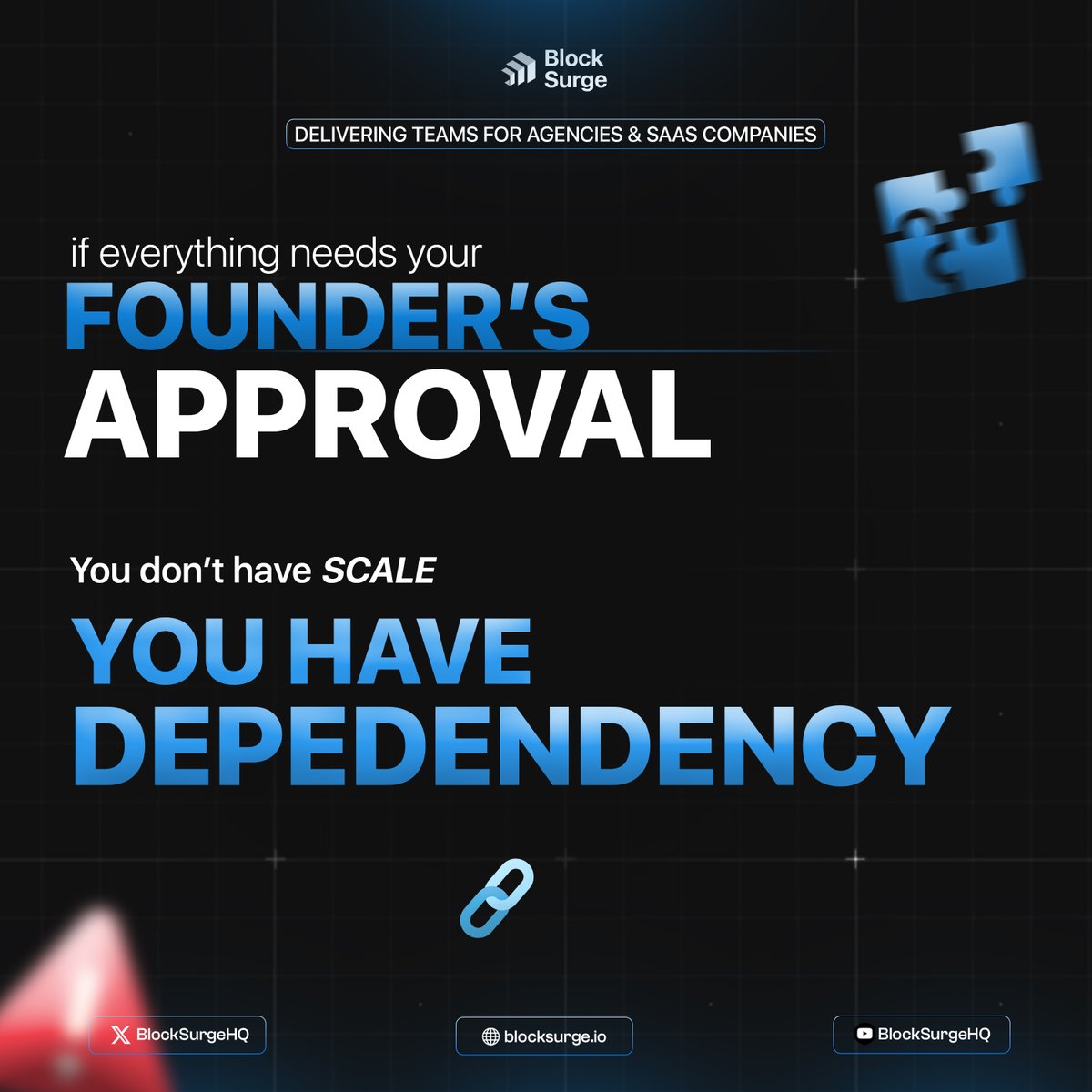
The Hidden Cost of Founder Dependence Most startups don’t slow down because of lack of talent. They slow down because everything still routes through the founder. Every approval. Every decision. Every escalation. The team exists. But execution still waits for one person. Growth looks active from the outside. Inside, delivery moves at founder speed. This creates a silent bottleneck: Hiring increases. Meetings increase. Responsibility diffuses. Momentum drops. The strongest operators don’t try to work faster. They design execution that moves without constant founder intervention. Real scale begins when decisions stop climbing upward and start flowing forward. Teams don’t fail from lack of people. They fail from lack of autonomous execution structure.
Block Surge tweet media
English
0
0
0
32
Block Surge
Block Surge@BlockSurgeHQ·
Startups don’t slow down because they hire bad people. They slow down because they hire too early for structure and too late for execution systems. Founders think growth requires more headcount. Reality: growth requires removing coordination overhead. Every new hire increases communication paths. 5 people → manageable. 12 people → coordination starts hurting. 25 people → execution depends on structure, not talent. Most teams scale people before they scale execution design. That’s when velocity dies.
Block Surge tweet media
English
0
0
0
28
Block Surge
Block Surge@BlockSurgeHQ·
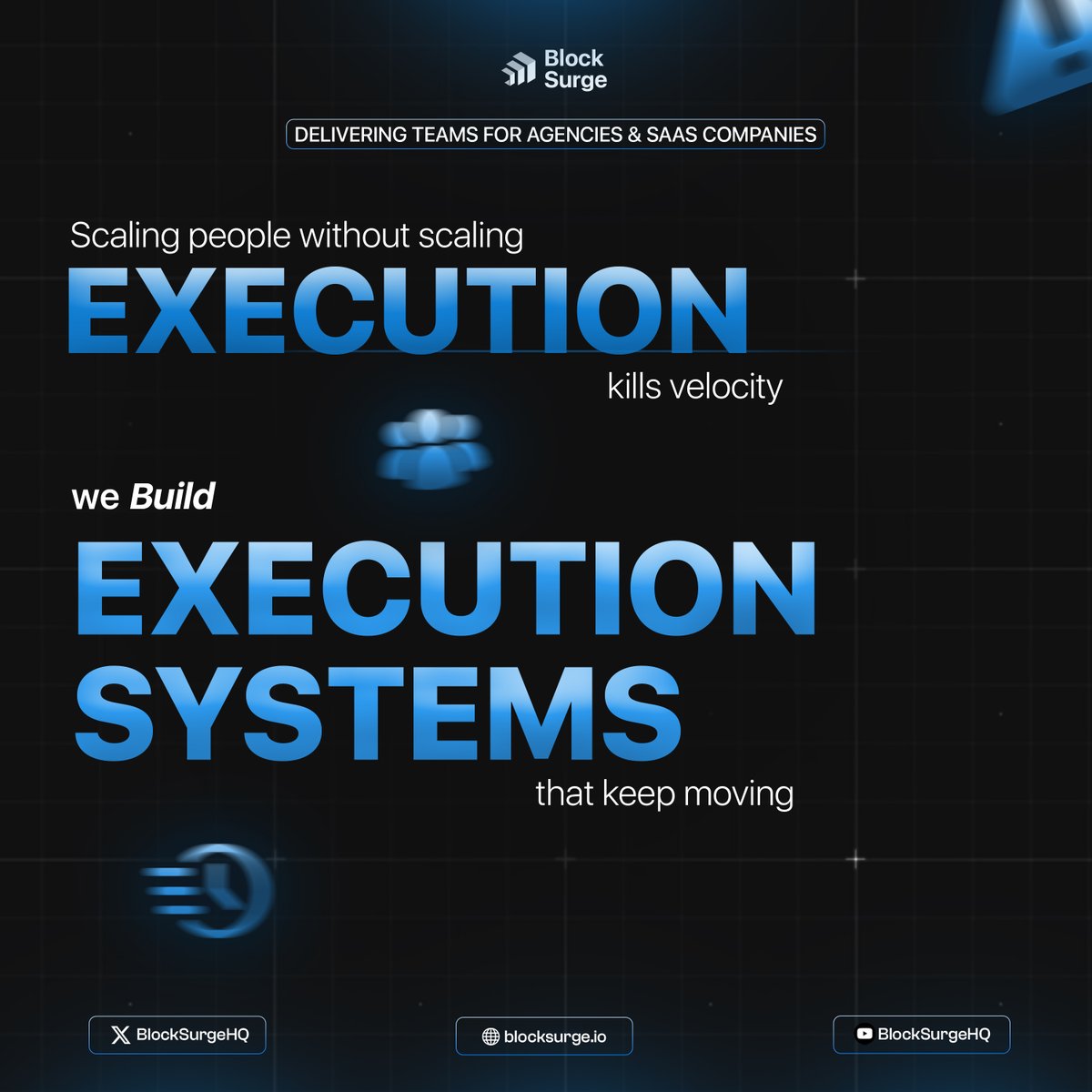
Execution rarely breaks because teams lack talent. It breaks because decisions don’t scale with growth. Most startups reach a stage where everything quietly starts waiting. Waiting for approval. Waiting for feedback. Waiting for one person to unblock the next step. Work exists. Momentum doesn’t. Founders become the center of every decision loop. Not intentionally, but structurally. The result is predictable: More meetings. More context switching. More activity that looks like progress but never converts into delivery. This isn’t a hiring problem. It’s an execution design problem. High-performing teams remove dependency between thinking and shipping. They build systems where execution continues moving even when leadership is focused elsewhere. The companies that scale fastest are not the ones doing more work. They are the ones reducing friction between decision and action. When execution flows, growth stops feeling heavy. It starts feeling inevitable.
Block Surge tweet media
English
1
0
0
21
Block Surge
Block Surge@BlockSurgeHQ·
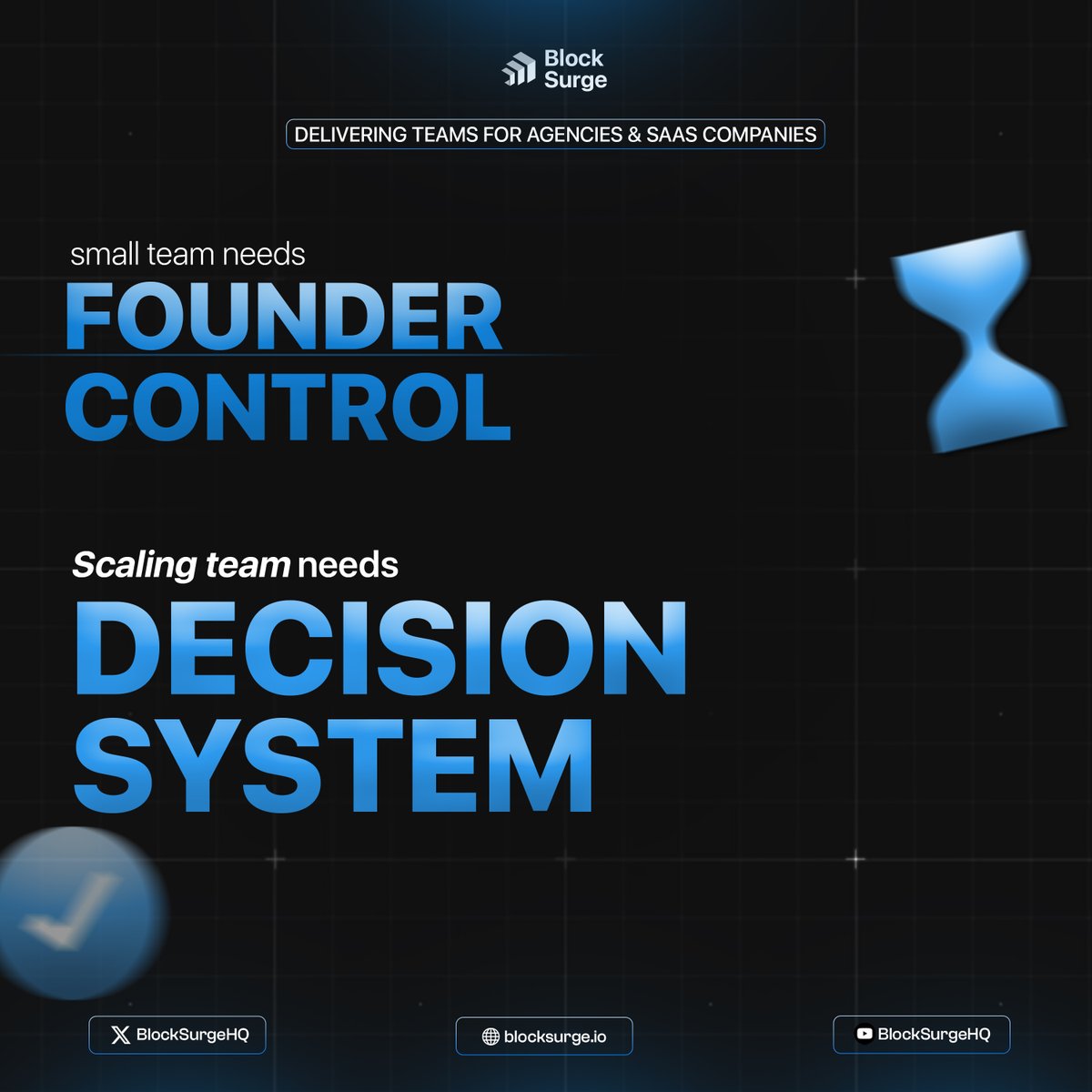
Most teams think growth problems come from lack of talent. They usually come from too many decision layers. Early stage teams move fast because one person decides and ships. Then growth happens. More managers. More approvals. More coordination. Suddenly simple tasks require meetings. Momentum disappears without anyone noticing why. Nothing is broken individually. The system just became heavier than the work itself. This is the hidden scale trap. Companies don’t lose speed because people are slow. They lose speed because execution paths become longer than delivery cycles. The teams scaling well today are redesigning execution around outcomes, not hierarchy. They reduce handoffs. Shorten feedback loops. And keep delivery closer to decision-making.
Block Surge tweet media
English
0
0
0
22
Block Surge
Block Surge@BlockSurgeHQ·
A lot of founders think productivity drops because teams are overloaded. But when we audit operations, the pattern looks different. Designers jumping between 6 clients. Developers switching priorities mid-week. Managers translating decisions across multiple freelancers. Nothing is technically broken. Yet progress feels slow. That’s context switching. Every switch resets focus, drains energy, and delays delivery. Work expands, timelines slip, and founders mistake coordination fatigue for lack of talent. High-performing teams don’t just add people. They reduce switching. Execution improves when teams operate inside clear ownership, stable workflows, and uninterrupted delivery cycles. The companies scaling fastest right now are protecting focus as aggressively as they protect revenue. Because execution speed isn’t created by more activity. It’s created by fewer interruptions.
Block Surge tweet media
English
0
0
0
24
Block Surge
Block Surge@BlockSurgeHQ·
Many agencies assume client satisfaction equals a healthy operation. But internally, something different is happening. Clients get fast replies. Extra revisions are approved. Requests expand quietly beyond scope. Teams stretch to keep relationships smooth. Nothing looks wrong externally. Retention stays high. Yet delivery becomes heavier every month. This is silent scope expansion. Over time, “being helpful” replaces structured delivery. Teams stop executing a system and start reacting to clients. Margins tighten, timelines slip, and burnout increases even while revenue grows. High-performing agencies protect delivery discipline without damaging relationships. Clear boundaries, structured communication, and defined ownership allow teams to serve clients well without sacrificing operational stability. Client success shouldn’t come from internal chaos. It should come from execution that scales without exhausting the team.
Block Surge tweet media
English
0
0
0
19
Block Surge
Block Surge@BlockSurgeHQ·
Your revenue is growing. Your team is expanding. Clients are coming in consistently. Yet the real engine of the business is still one person. You. Final approvals run through you. Escalations land on your desk. Strategy pauses until you weigh in. Quality gets checked by you. That’s not leadership. That’s structural dependency. Founder dependency feels productive in the early stages. But as complexity increases, it becomes the ceiling. Velocity drops. Decisions queue up. The team waits instead of moves. Agencies that scale redesign execution so ownership is distributed, quality control is layered, and decisions don’t bottleneck at the top. When delivery no longer relies on constant founder involvement, growth becomes stable instead of stressful. The real shift isn’t hiring more people. It’s building execution that doesn’t collapse without you in the middle.
Block Surge tweet media
English
0
1
1
21
Block Surge
Block Surge@BlockSurgeHQ·
Revenue is up. Clients are coming in. The team is busy. Yet profitability feels tight. Deadlines stretch. Revisions multiply. Scope creeps quietly. Senior time gets pulled into delivery. Nothing is collapsing. But margin is slowly bleeding. This isn’t a sales issue. It’s an operational structure issue. Most agencies scale revenue before they scale delivery systems. So every new client adds complexity instead of profit. High-performing teams protect margin by: • Defining scope boundaries clearly • Structuring ownership inside delivery • Reducing revision loops • Building repeatable workflows instead of custom chaos At BlockSurge, we rebuild delivery so growth increases margin, not stress. Because scaling revenue without protecting execution discipline doesn’t build a business. It builds a busy team with shrinking leverage.
Block Surge tweet media
English
0
0
0
15
Block Surge
Block Surge@BlockSurgeHQ·
Growth doesn’t slow because opportunities disappear. It slows because decisions take too long to turn into action. Campaigns get approved but execution drags. Features get prioritized but ownership stays unclear. Client feedback comes in but movement stalls. Nothing looks broken on the surface. But velocity quietly drops. As teams scale, coordination layers multiply. More alignment. More approvals. More context. The time between decision and execution stretches, and momentum fades without anyone noticing. Most companies try to solve this by hiring more people. But without fixing the execution model, headcount increases latency instead of reducing it. High-performing teams shorten the distance between decision and delivery. They design ownership, workflows, and accountability so action follows quickly and predictably. That’s the gap we focus on at BlockSurge. Because growth isn’t limited by ideas. It’s limited by how fast those ideas turn into execution.
Block Surge tweet media
English
0
0
0
10
Block Surge
Block Surge@BlockSurgeHQ·
A founder showed us their roadmap. Clear vision. Strong features. Real demand. Still, nothing shipped on time. Not because the team lacked skill. Because execution was fragmented. Priorities changed faster than workflows could adapt. Ownership blurred. Delivery slowed under its own structure. This is where most startups misdiagnose the problem. They blame planning. The real issue is delivery architecture. Roadmaps don’t fail. Execution layers fail to support them. The fastest teams design execution that flexes with change. They reduce friction between decision and delivery. At BlockSurge, this is the gap we close. Execution should accelerate the roadmap, not resist it. Growth doesn’t stall because of vision. It stalls because delivery can’t keep up.
Block Surge tweet media
English
0
0
0
9
Block Surge
Block Surge@BlockSurgeHQ·
AI isn’t the next bottleneck. Delivery is. The product improves, users show up, yet execution slows under more standups, more tools, and heavier coordination. This isn’t technical debt. It’s execution debt. AI increases coordination load, and when execution models don’t adapt to the roadmap, velocity drops even as output rises. The fastest teams fix delivery early by redesigning how work moves instead of hiring into broken systems. Execution debt isn’t failure. It’s the point where teams either redesign delivery and scale, or keep adding weight and stall.
Block Surge tweet media
English
0
0
0
16
Block Surge
Block Surge@BlockSurgeHQ·
Most founders don’t hire full-time because the role is clear. Obbiously, they hire to reduce pressure. Salary is only the visible cost. Recruiting time, onboarding, tooling, context-building and slow early velocity quietly increase burn while output stays flat. By the time momentum shows up, the runway has already shortened. Execution pods remove that weight. They ship faster, scale with your roadmap, and adapt as priorities change without locking you into fixed costs or long-term stress. If speed, flexibility, and execution matter more than headcount, let's talk.
Block Surge tweet media
English
0
0
0
14
Block Surge
Block Surge@BlockSurgeHQ·
Expanding on top of churn creates leaky growth. Retention-first expansion protects revenue and long-term scale.
Block Surge tweet media
English
0
0
1
12
Block Surge
Block Surge@BlockSurgeHQ·
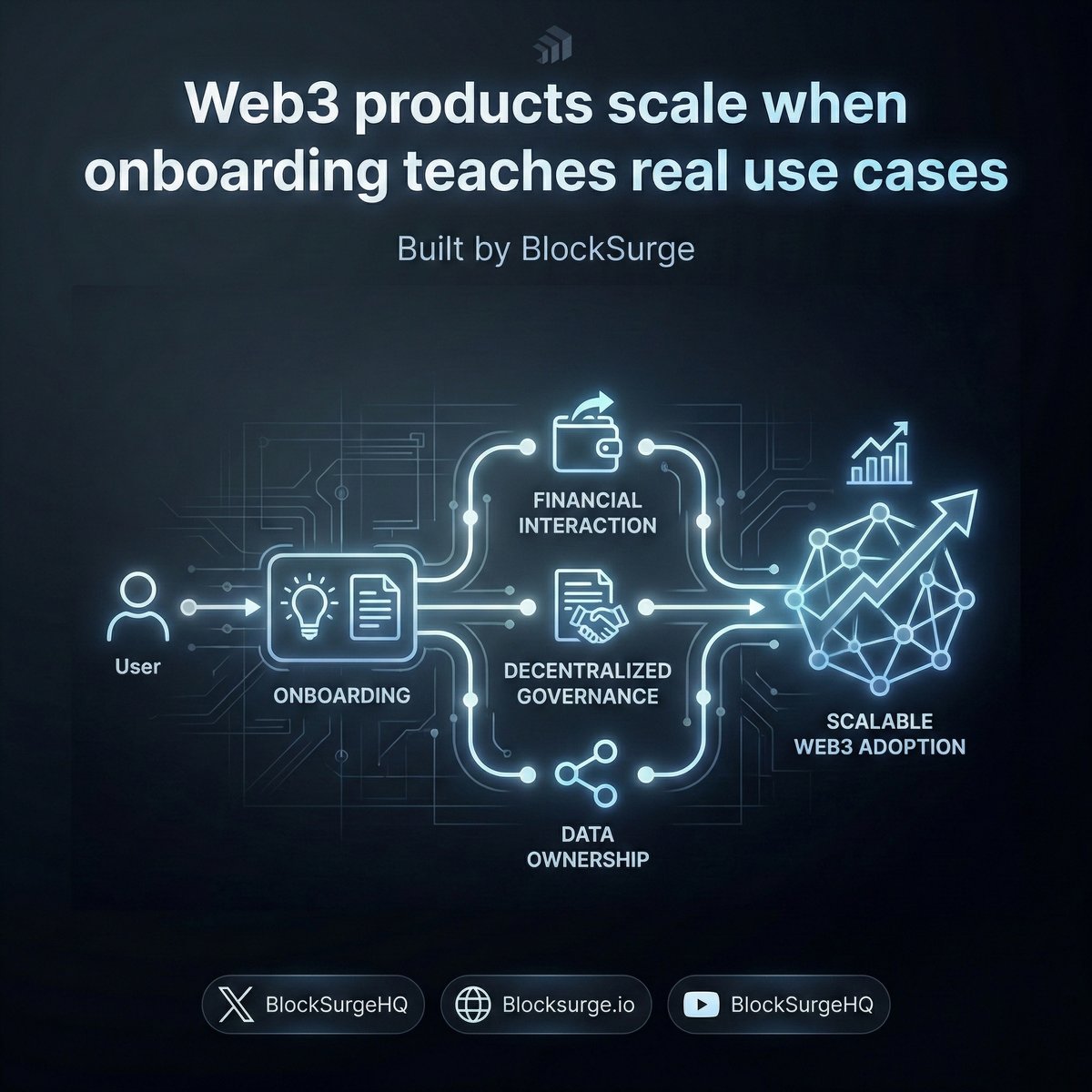
Generic onboarding creates shallow understanding. Use-case-driven onboarding improves activation and reduces early churn.
Block Surge tweet media
English
0
0
0
11
Block Surge
Block Surge@BlockSurgeHQ·
Unrecognized effort leads to disengagement. Simple recognition systems increase long-term participation and loyalty.
Block Surge tweet media
English
0
0
1
10
Block Surge
Block Surge@BlockSurgeHQ·
Collecting feedback without acting on it wastes user trust. Operational feedback loops turn insights into measurable improvements.
Block Surge tweet media
English
0
0
1
20
Block Surge
Block Surge@BlockSurgeHQ·
Churn is usually a product signal, not just a marketing issue. Fixing product friction stabilizes growth and revenue over time.
Block Surge tweet media
English
0
0
1
31
Block Surge
Block Surge@BlockSurgeHQ·
Random user journeys create confusion and drop-offs. Structured journeys improve onboarding, activation, and retention.
Block Surge tweet media
English
0
0
1
6