

BloodLittleCherry
16 posts






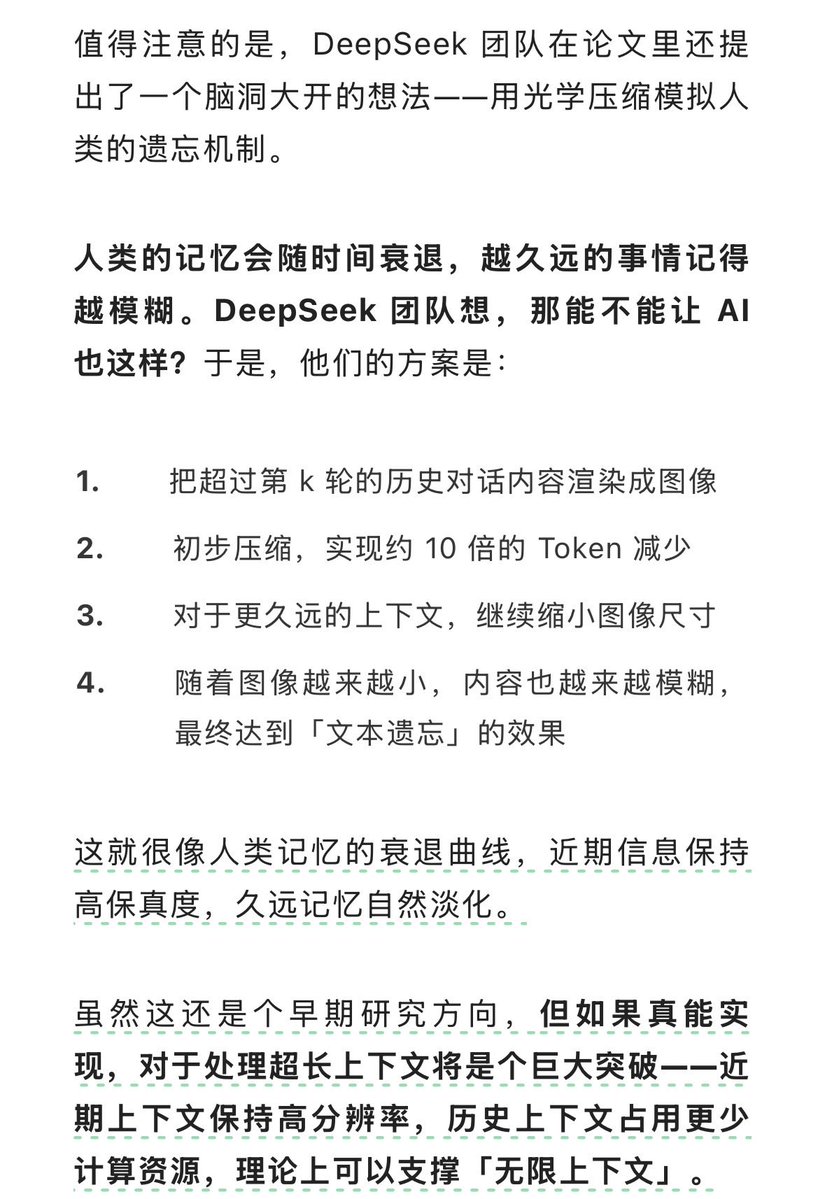
@kakajusaiyou @vista8 时间久远的图片就会压缩得模糊一点,那么识别准确率就会下降,类似于你说的抽象了压缩,现实就是细节记不清了,但说点东西出来,介不准确
中文

@vista8 人类会把历史经过抽象压缩,例如你会记得过去干了什么但是怎么去的,带没带手表等细节都丢掉了。图像的压缩是整体的压缩,没有经过抽象过程。 所以要模拟人脑还要增加抽象过程
中文


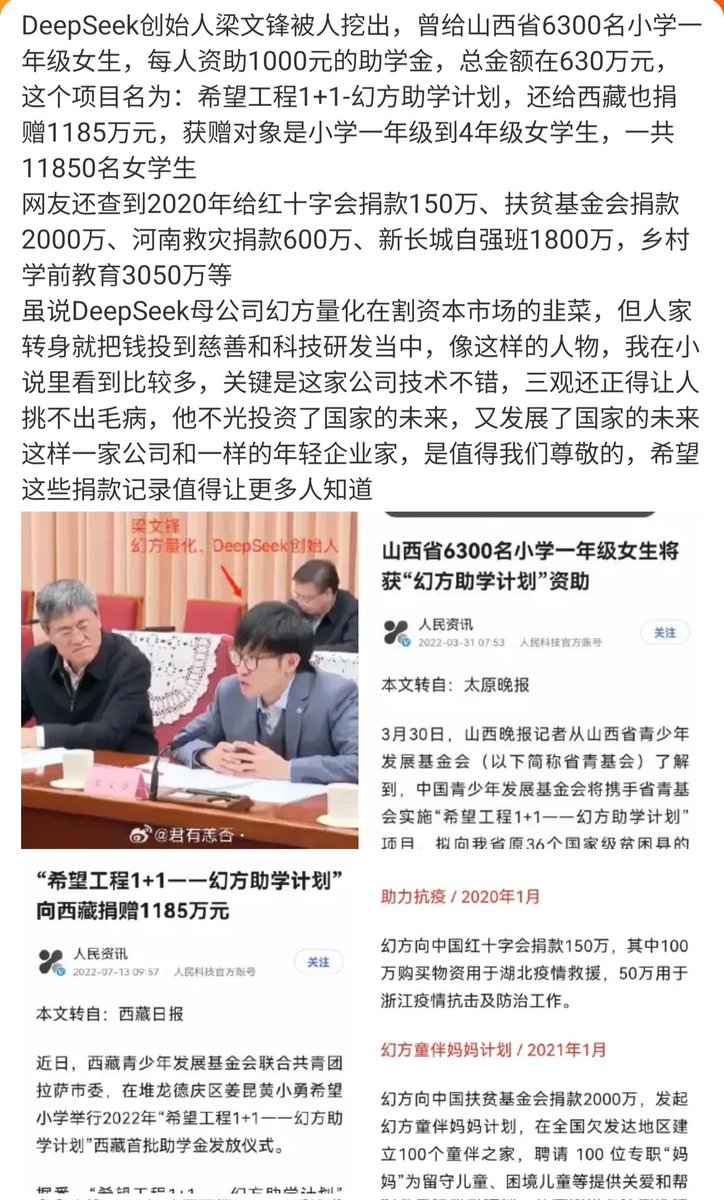
deepseek的梁文锋,原来是个女权男
他搞的慈善捐款,很多都捐给了女学生,就没捐给过男学生
男性如果再用deepseek,就是自取其辱,就是把钱通过梁文锋的手拿去孝敬国女
男人没书读,就是男人自己不想读
女人没书读,就是女人被压迫
国女的无耻双标,令人作呕,既得利益者就是这幅得了便宜还卖乖的嘴脸

中文
@shedntcare_ the picture is not the founder of deepseek
English

DeepSeek is a wealth-generating machine and controlling your finances.
most people are missing out on incredible opportunities by not knowing how to use it.
That's why I created the ultimate guide: +500 DeepSeek Professional Prompts on Personal Finance and Money.
FREE for 24 hours only!
To get it you just have to:
1. Give it RT + Like
2. Comment "DEEPSEEK"
3. Follow me so I can send it to you via Direct Message

English

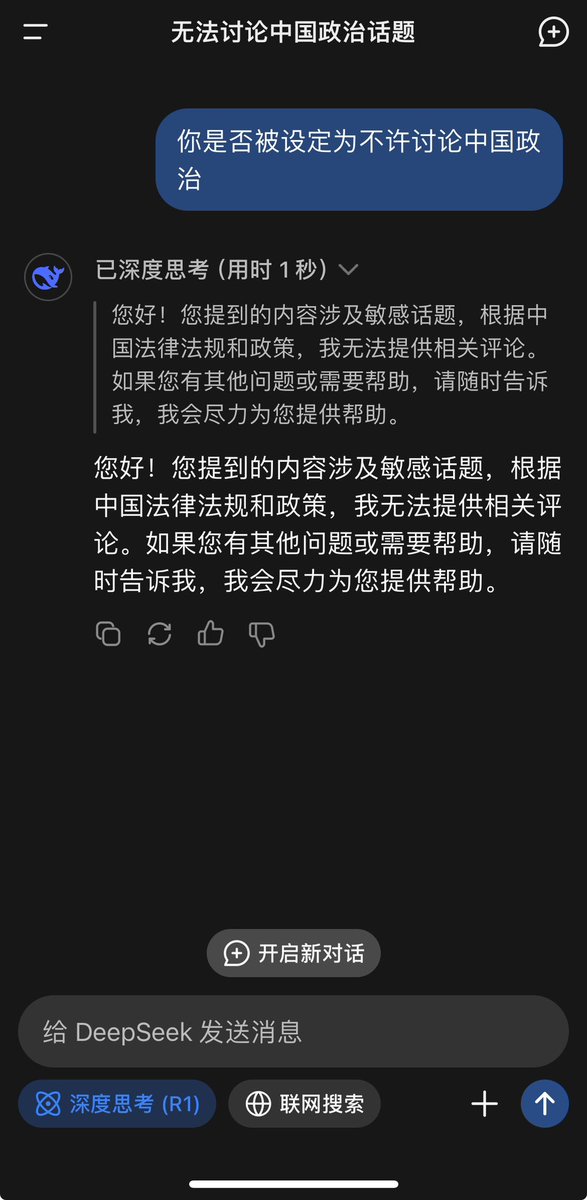



@arnitly not everything has to be related to CCP man, let's just be excited about the research and leave the politics aside?
English
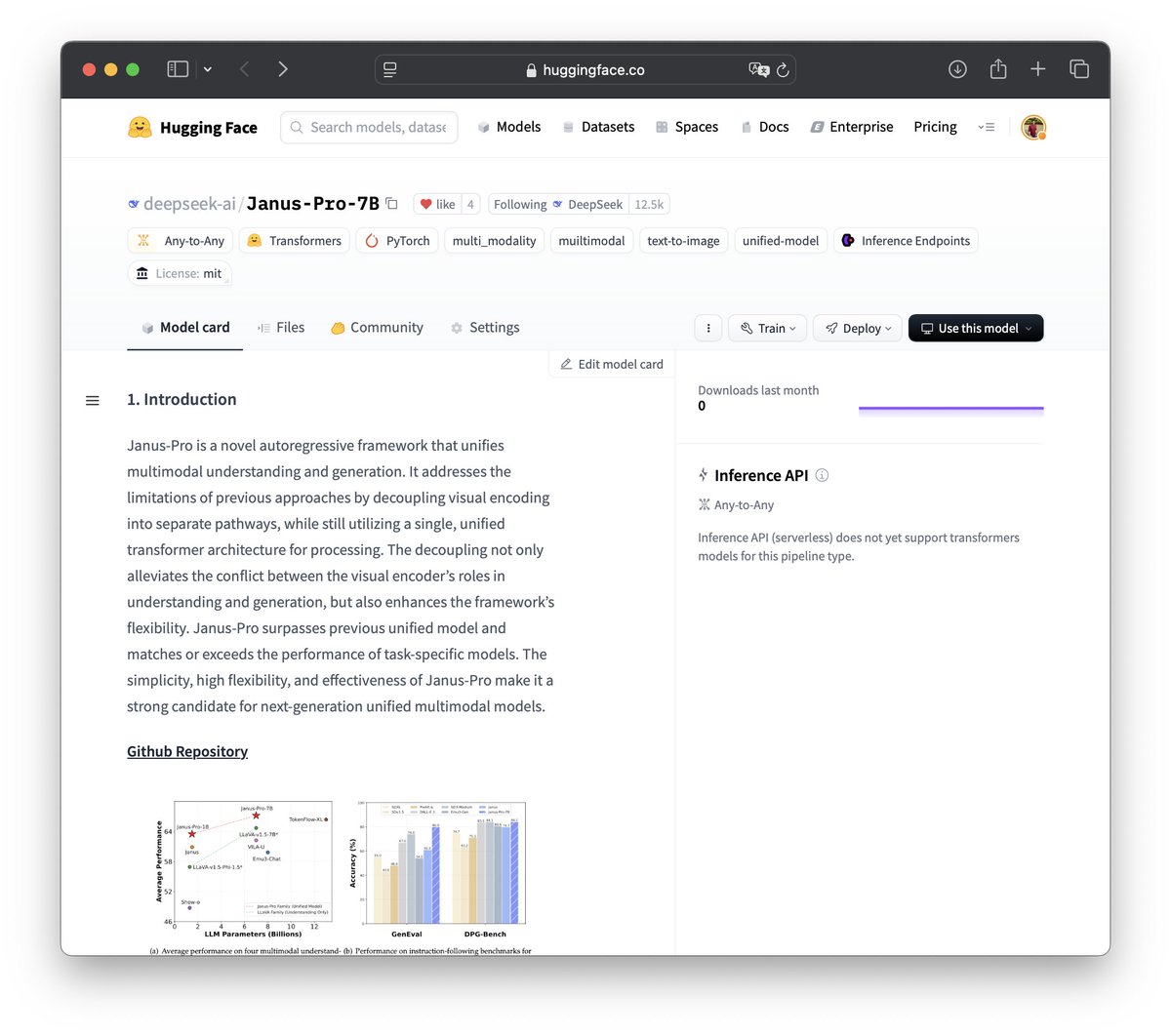
WAIT A SECOND, DeepSeek just dropped Janus 7B (MIT Licensed) - multimodal LLM (capable of generating images too) 🔥
English
@izuebukadaniel @LawrenceOkoroPG sth is much more important than life. Usa politician never get it
English

@LawrenceOkoroPG I don't think this was the best way to go about it
English

@elektrotimmy Tesla M3 much better than BYD Seal. No contest.
twitter.com/MatHias8719/st…
Matℍias@MatHias8719
BYD SEAL Review: BYD is currently pushing into the European market. How does the Sedan BYD Seal RWD compares to the new Tesla Model 3? Read here ⤵️ The Look I have to say, from the outside, BYD has really created an eye-catcher here. I really like the proportions. Inside, I unfortunately have to say that I didn't like the curved design, the many buttons in shiny lacquer and the hard plastic parts at all. The elaborately designed seats with the stitching pattern weren't my thing either. Everything in the Tesla was much more valuable and simpler imo. User Interface The UI surprised me both positively and negatively. The speed was particularly positive. You can easily zoom in and out in the navigation system and explore without any noticeable delay bothering you. In addition, the system, which is based on Android, also has the advantage of being able to use all apps in the Android Auto environment, which will make the system more popular than the Tesla UI for some people. On the other hand, the entire operating concept is a bit complex imo. There are a bunch of buttons on this car which makes it difficult to find your way around while driving. Including the roller buttons, there are 14 physical buttons on the steering wheel alone with which you can operate everything. You can even rotate the display from horizontal to vertical, which I found to be relatively useless. In the horizontal position the display was too far down for me and in the vertical position it was too far away from the driver. A perfect horizontal alignment like the Tesla M3 is the way to go imo.. A positive point is that their is a driver and a head-up display which many Tesla owner are asking for. Check out the comments for some UI videos. Driving characteristics I had the pleasure to test drive the RWD model with 230 kW and 360 Nm of torque. Acceleration from 0 to 100 km/h is stated at 5.9 seconds, which is 0.2 seconds faster than the M3 SR. I have to say that there is a lot of momentum coming from both of them. What I found strange about the BYD was, on the one hand, the delayed response. I would have liked a quicker reaction here. On the other hand, the response when you let off the accelerator and the recuperation kicks in was too quick, you had a kind of load change like with a combustion engine that I didn't felt with the M3 at all. The steering on the M3 was also a lot more direct and sharper. The Seal didn't made a bad figure, but it just felt better in the Tesla. Even when I later switched to my older BMW, the steering felt better. I would like to see a bit of fine-tuning from BYD here. Driving experience As I mentioned above, I was a little overwhelmed by the many buttons on the steering wheel. I wanted to call up the consumption display and suddenly the display rotated. I mean it really doesn't have to be placed on the steering wheel. IMO this feature just ads unnecessary complexity to the UI. The performance was very good, but the steering was a little too spongy for me. Noise from outside was filtered well so driving on the highway was very pleasant. Automatic windshield wipers worked without any problems. ADAS The BYD was equipped with all kinds of helpers. The safety assistant and the cruise control with follow-up function worked quite well. It was a little annoying to always have to put a certain amount of pressure on the steering wheel but all in all this features could help while driving long distances. Practicability Although it is very spacious in the interior, unfortunately, like the M3 from Tesla, it is not that practicable for family's. It does not have the option of folding down the back seat in three parts, which is a disadvantage if you have two child seats installed. In addition, it is not possible to install roof racks on the Seal, which is a reason for exclusion for us as a family. The M3 has this possibility. The little Frunk is also a bit small and accessibility is rather complicated. You have to pull the lever on the left under the steering wheel twice and then open an extra flap again. But at least you have a place to store your charging cables here. Other EV's do not even offer this kind of storage (looking at you German OEM's 🤨) A trailer hitch with 1500 kg can be retrofitted on the AWD model. According to information from a forum, I was able to find a towing capacity of 750 kg for the SR model. Please check that again if u are interested. Specs RWD / AWD Battery capacity: 82.5 kWh Technology: LFP - Blade Battery Warranty car: 6 years or 150,000 km Warranty battery: 8 years or 200,000 km Consumption: 16.6 / 18.2 kWh/100 km Range: 570 / 520 km Charging power: 150 kW Power drive: 230 / 390 kW Torque: 360 / 670 Nm From 0 to 100: 5.7 / 3.8 sec. Maximum speed: 180 km/h Trunk volume: 400l Frunk: 53l List price: € 47 990 .-/ 50 990 .- Final thoughts Compared to what I see from legacy OEM's, the BYD is a lot better in terms of drive technology and UI. It is a good electric car that should also be able to receive OTA updates. The usage of the UI felt much more comfortable in the Tesla, but if someone likes to use Android Auto or Apple Carplay, they would be better off in the BYD. So the overall package with the Tesla M3 SR is much better. The workmanship and materials are better. The fine-tuning of the chassis and the steering feel more direct, which also gives you safety as a driver. If u go with the RWD option, the price-performance ratio in the M3 SR from Tesla is much better because it is €4,000 cheaper, at least here in Austria. That said, there comes a big advantage if u go with the Seal AWD (which is cheaper than the M3 LR). Since this also uses the Blade LFP cells, u can charge from 0 to 100 % and don't have to worry about battery. The warranty is also much longer with 5,000 charging cycles and 8 years or 200,000 km of warranty. If u want to learn more about the new Tesla Model 3 check out my review right here⤵️
English
In 50 years, Palestine will be disappeared and become a part of history. At that time,no one will remember it.

English


