
BloombergNEF

14.1K posts

BloombergNEF banner
BloombergNEF

BloombergNEF

@BloombergNEF

BloombergNEF (BNEF) is a strategic research provider covering global commodity markets & disruptive technologies driving the transition to a low-carbon economy.

London Katılım Ocak 2010
478 Takip Edilen75.7K Takipçiler
BloombergNEF
BloombergNEF@BloombergNEF·
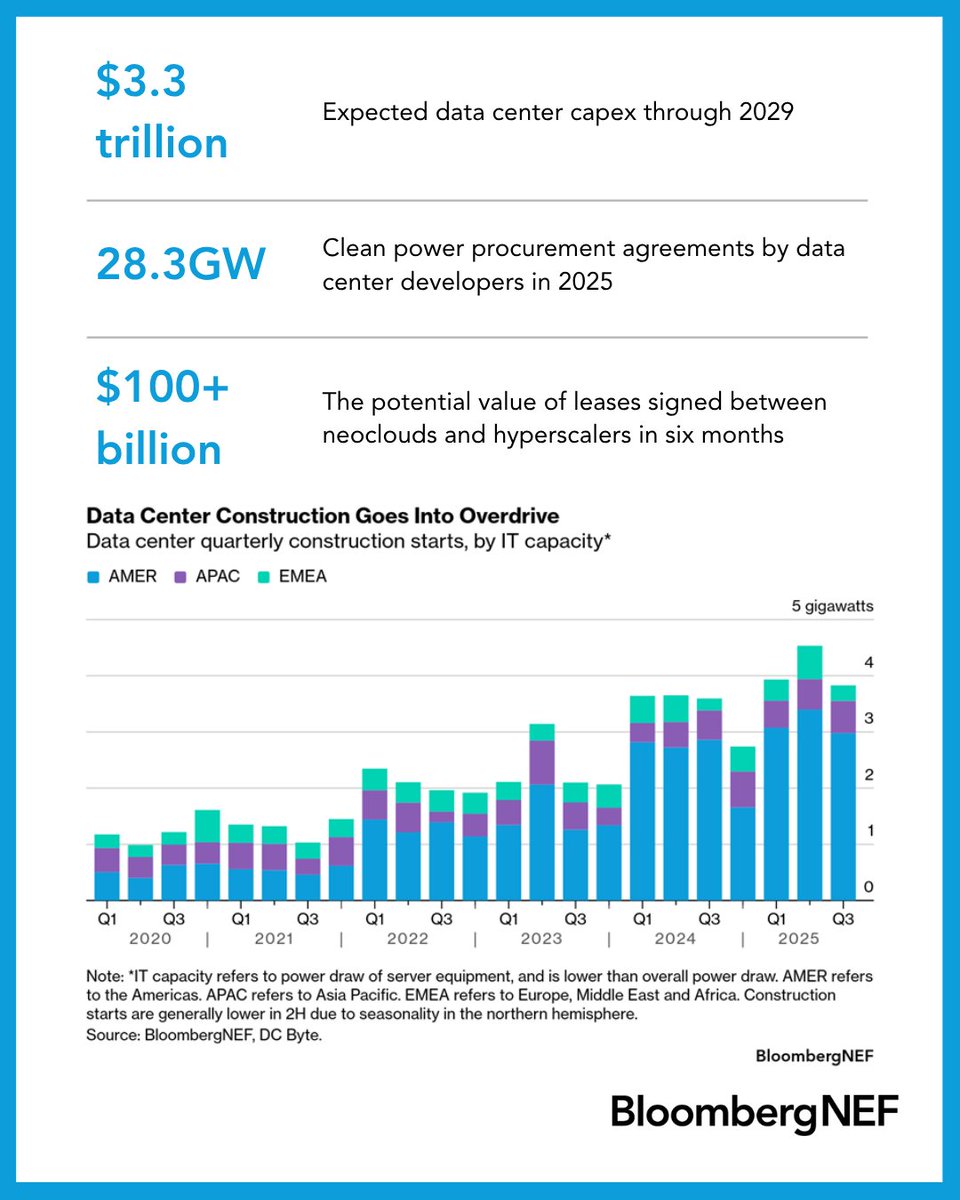
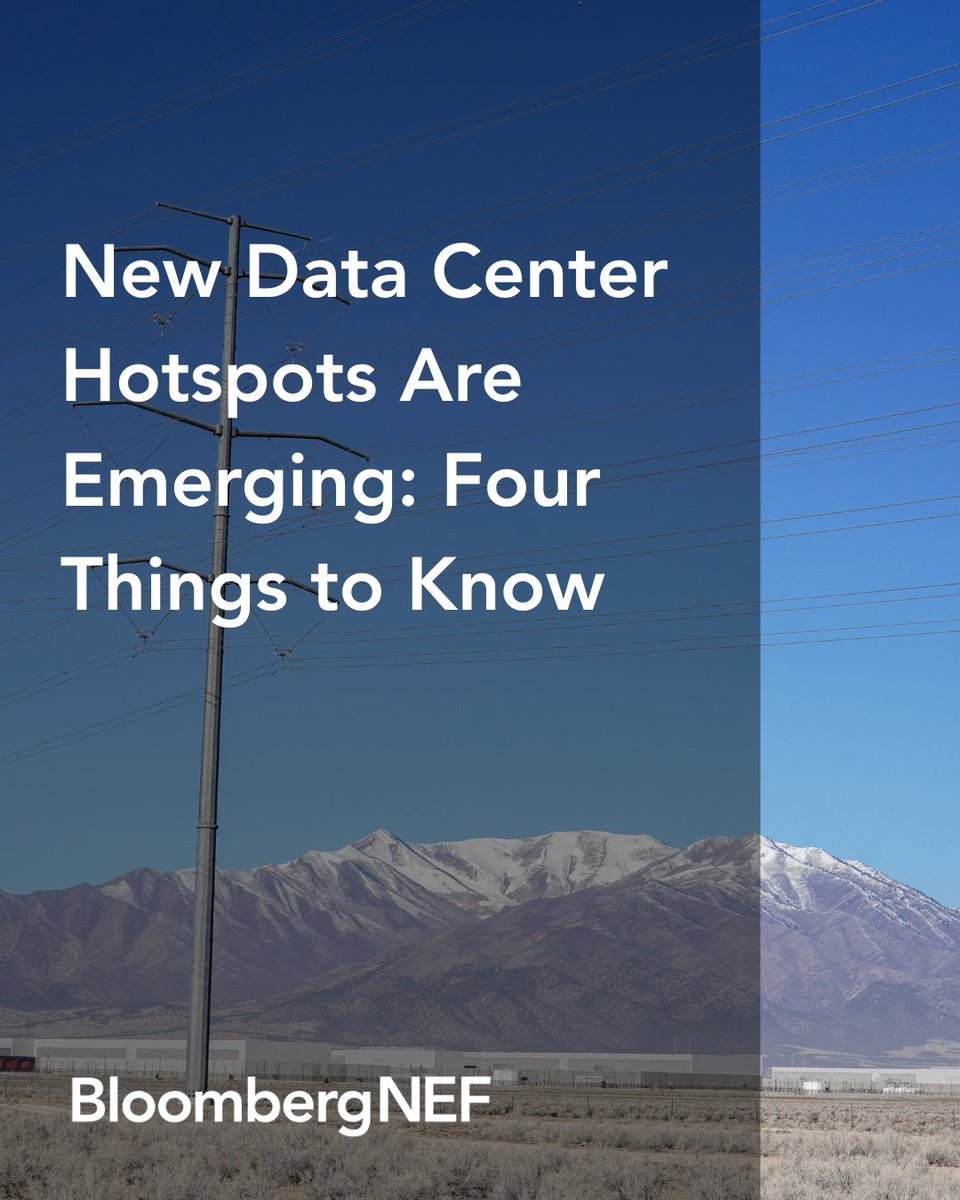
The geography of data center development is being redrawn at speed. ⚡🌍 BloombergNEF is tracking nearly 23GW of IT capacity under construction globally, as AI and cloud workloads drive the next phase of digital infrastructure growth. But energy availability, permitting and grid constraints are reshaping where capacity lands. Tax policy, fiber connectivity and existing ecosystems continue to influence competitiveness. Our experts outline four key themes in the article, and the companion podcast explores what really determines where the next gigawatt gets built. 📖 Read: bloom.bg/3P67LGV
BloombergNEF tweet mediaBloombergNEF tweet media
English
2
13
26
2.8K
BloombergNEF
BloombergNEF@BloombergNEF·
The International Energy Agency (IEA) has announced a record 400 million-barrel release from emergency oil reserves to help ease market turmoil caused by the Iran war. But that quantity will only cover about four days of global demand. 🛢️📉 “It is a relief for the oil market, but apparently not enough to stem overall supply concerns,” said David Doherty, BloombergNEF's Head of Natural Resources Research, citing days of whipsawing oil prices following the IEA release. “We see structural oversupply re-anchoring prices if the supply shock is temporary.” Here are three things to know from BNEF’s analysis: 📊 Oil balance: There was near consensus among key agencies on 2026 being a year of surplus oil production. That may change. 🛳️ Production cuts: Disruption of oil flows through the Strait of Hormuz has led Saudi Arabia and others to start reducing oil production. 🔁 Supply support: The IEA’s decision to release 400 million barrels is more than double the 183 million barrels unlocked after Russia invaded Ukraine. Read more here: bloom.bg/4lpjP1X
BloombergNEF tweet mediaBloombergNEF tweet media
English
3
0
4
1.3K
BloombergNEF
BloombergNEF@BloombergNEF·
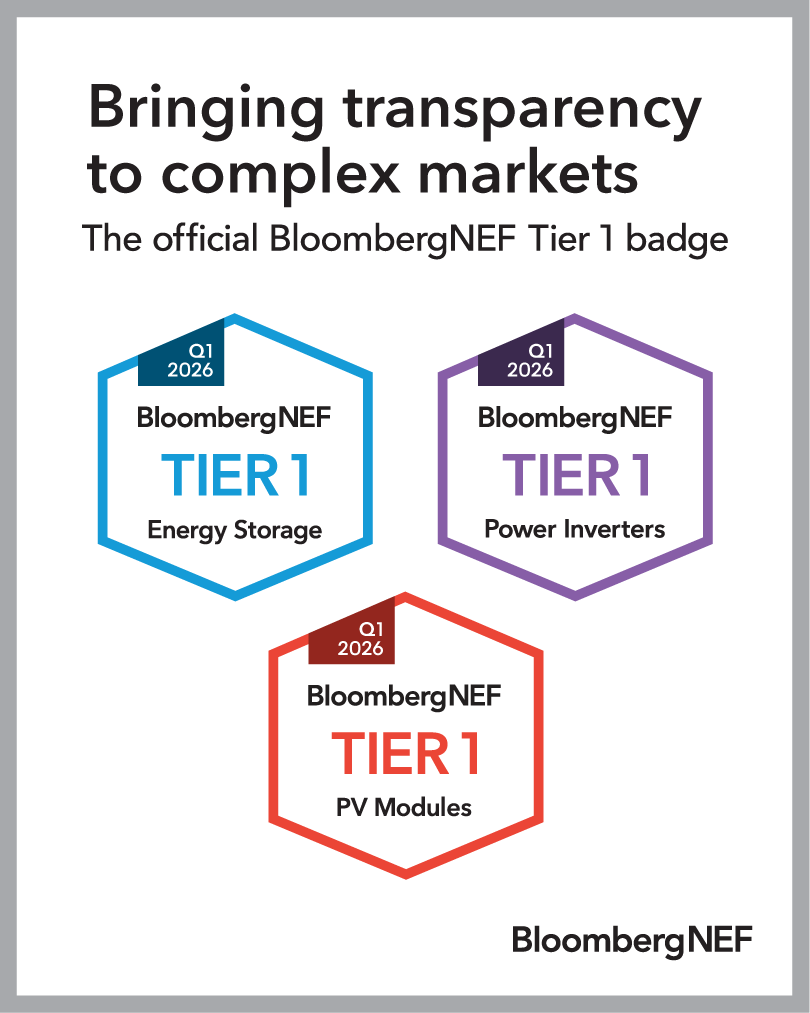
Bringing Transparency to Complex Markets: The Official BloombergNEF Tier 1 Badge. We are pleased to announce the launch of the BloombergNEF Tier 1 badge, introduced today at the BNEF Summit Beijing. Built on over 20 years of experience assessing companies and their role in the energy transition, BloombergNEF’s Tier 1 reports identify leading manufacturers and suppliers of PV Modules, Power Inverters, and Energy Storage Systems. Drawing on a proprietary database of 200,000 individual projects and asset finance transactions, our classification system uses data-driven, objective criteria to separate the top tier of companies from the many other players in their respective fields. Alongside this launch, Tier 1 lists are published quarterly to align with industry workflows. Explore our new dedicated website to learn more about the BloombergNEF Tier 1 classification and our methodologies: bloom.bg/4b5HxNr Join us in celebrating this next step in advancing industry transparency and helping the world’s leading energy players stand out. #BNEF #BNEFTier1 #CleanEnergy #SolarPV #EnergyStorage #Renewables #BNEFSummit #Tier1 #EnergyFinance
BloombergNEF tweet media
English
0
1
2
1K
BloombergNEF
BloombergNEF@BloombergNEF·
The #BNEFSummit Beijing 2026 is right around the corner! 📢 We are delighted to announce the participation of the following distinguished speakers: 🔸Jianjun Cao, Chief Expert, SINOPEC Economics & Development Research Institute Co., Ltd. 🔸Jiaquan Dai, Chief Economist, CNPC Economics & Technology Research Institute (CNPC ETRI) 🔸Shengwei Guo, Vice President, CNOOC Energy Economics Institute 🔸Peter Huang, Global President of Thermal Management & Data Centre, Castrol 🔸Hao Jiang, Assistant Director General / Chief Technical Expert, China Renewable Energy Engineering Institute (CREEI) We're looking forward to welcoming our Sponsor 🤝 ⬇ ⬇ ⬇ 🔷 @Castrol 📍 Beijing 📅 12 March 2026 🔗 Learn more: bloom.bg/4umTfe4
GIF
English
0
1
5
902
BloombergNEF
BloombergNEF@BloombergNEF·
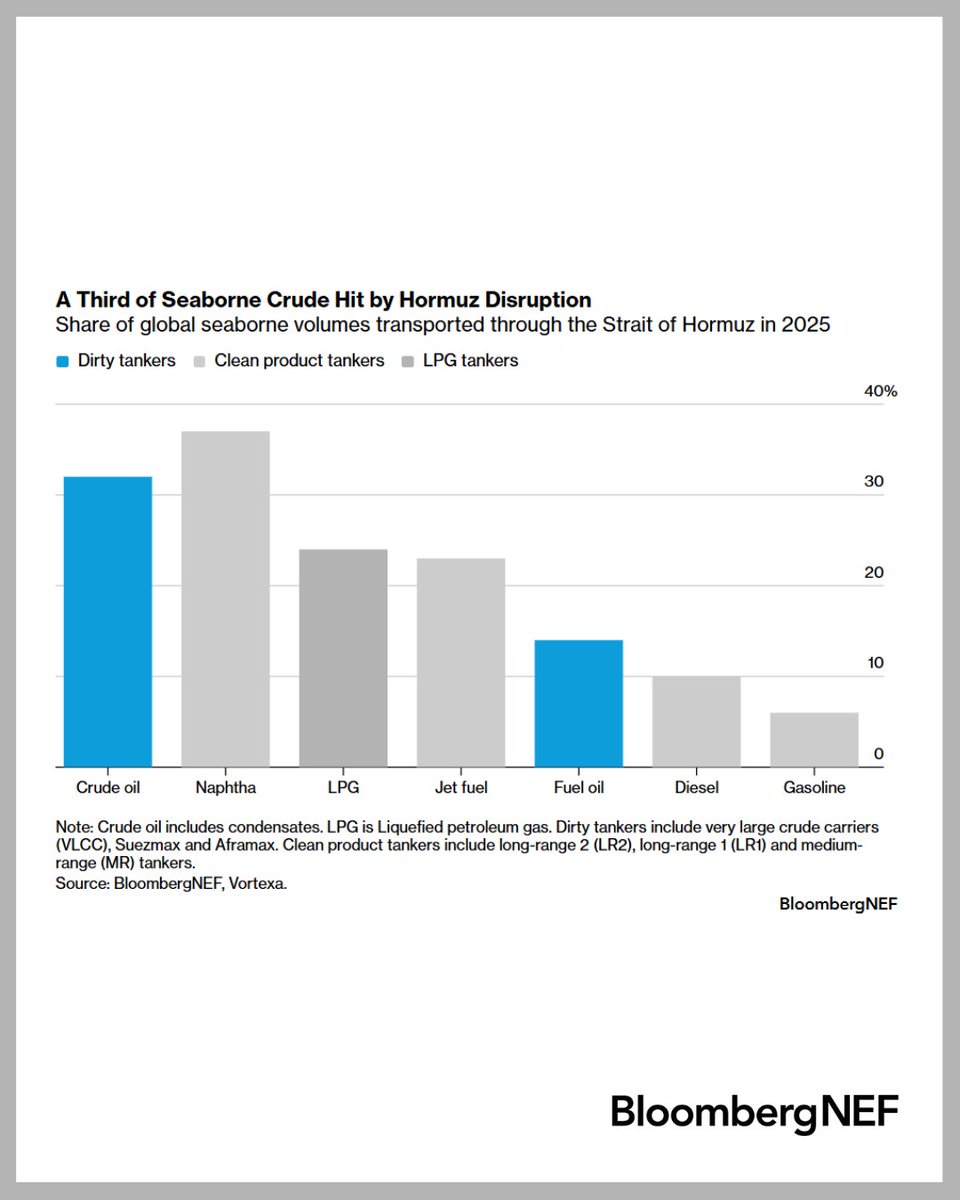
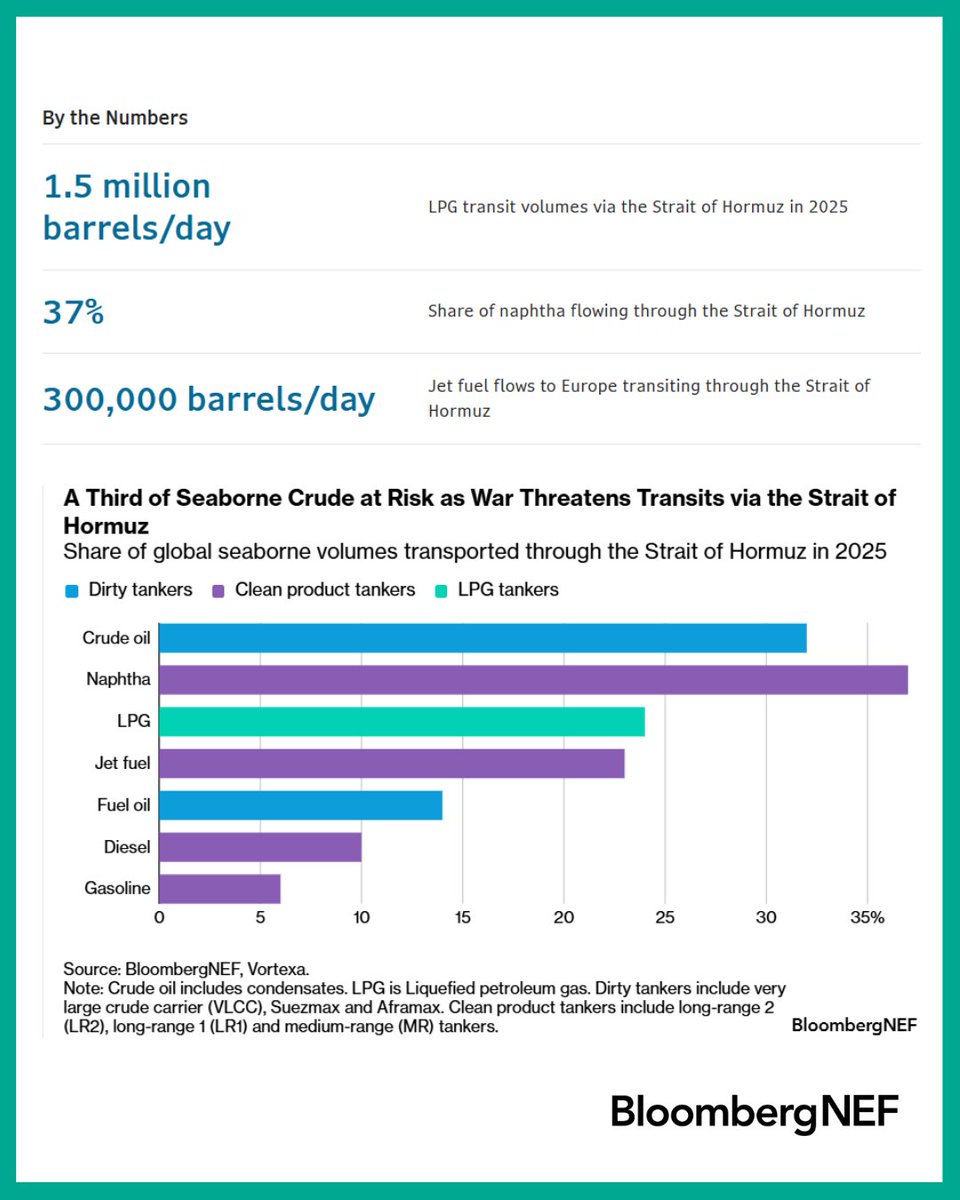
Escalating conflict involving Iran is threatening flows through the Strait of Hormuz, a corridor for 13.7 million b/d of crude, representing 32% of global seaborne trade, and 20% of global LNG supply. A disruption would impact 16% of global seaborne oil products trade, including: • 24% of global LPG 🔥 • Over 37% of global seaborne naphtha 🏭 • More than half of Europe’s jet fuel imports ✈ • Over 10% of global seaborne diesel 🌏 Read more about the risks to crude, LNG and oil products flows through the Strait of Hormuz in BloombergNEF’s latest analysis: bloom.bg/4r7EjO3
BloombergNEF tweet media
English
2
6
12
1.8K
BloombergNEF
BloombergNEF@BloombergNEF·
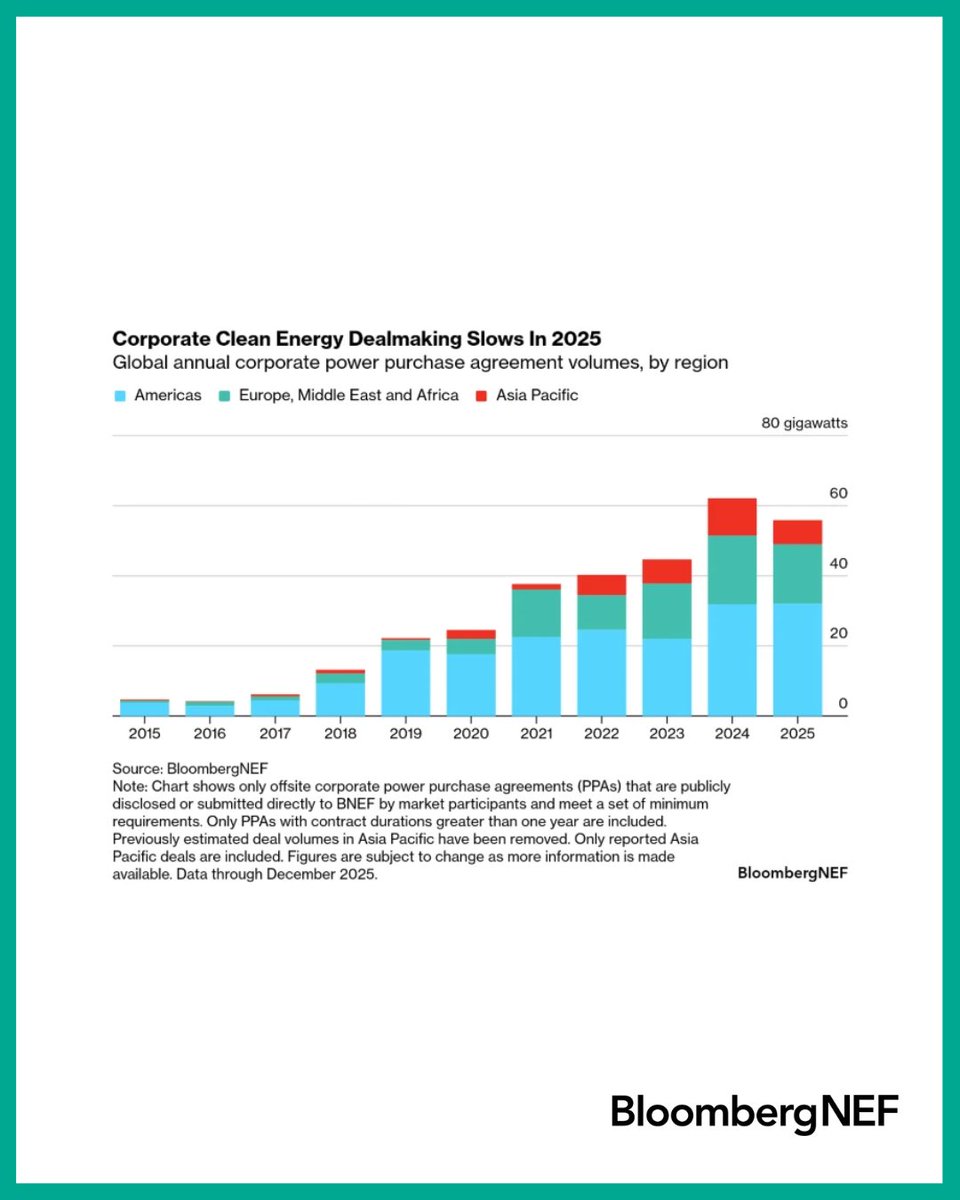
Corporate clean energy buying fell in 2025, ending nearly a decade of growth. BloombergNEF’s Corporate Energy Market Outlook shows power purchase agreement volumes declined year-on-year, reversing a sustained expansion in voluntary procurement. Big Tech companies remained key buyers, accounting for nearly half of global deal activity. However, despite rising power market volatility and policy uncertainty, corporations are becoming more sophisticated as their appetite for clean, firm power grows. Explore the insights → bloom.bg/4tHqicx
BloombergNEF tweet media
English
0
2
9
1.4K
BloombergNEF
BloombergNEF@BloombergNEF·
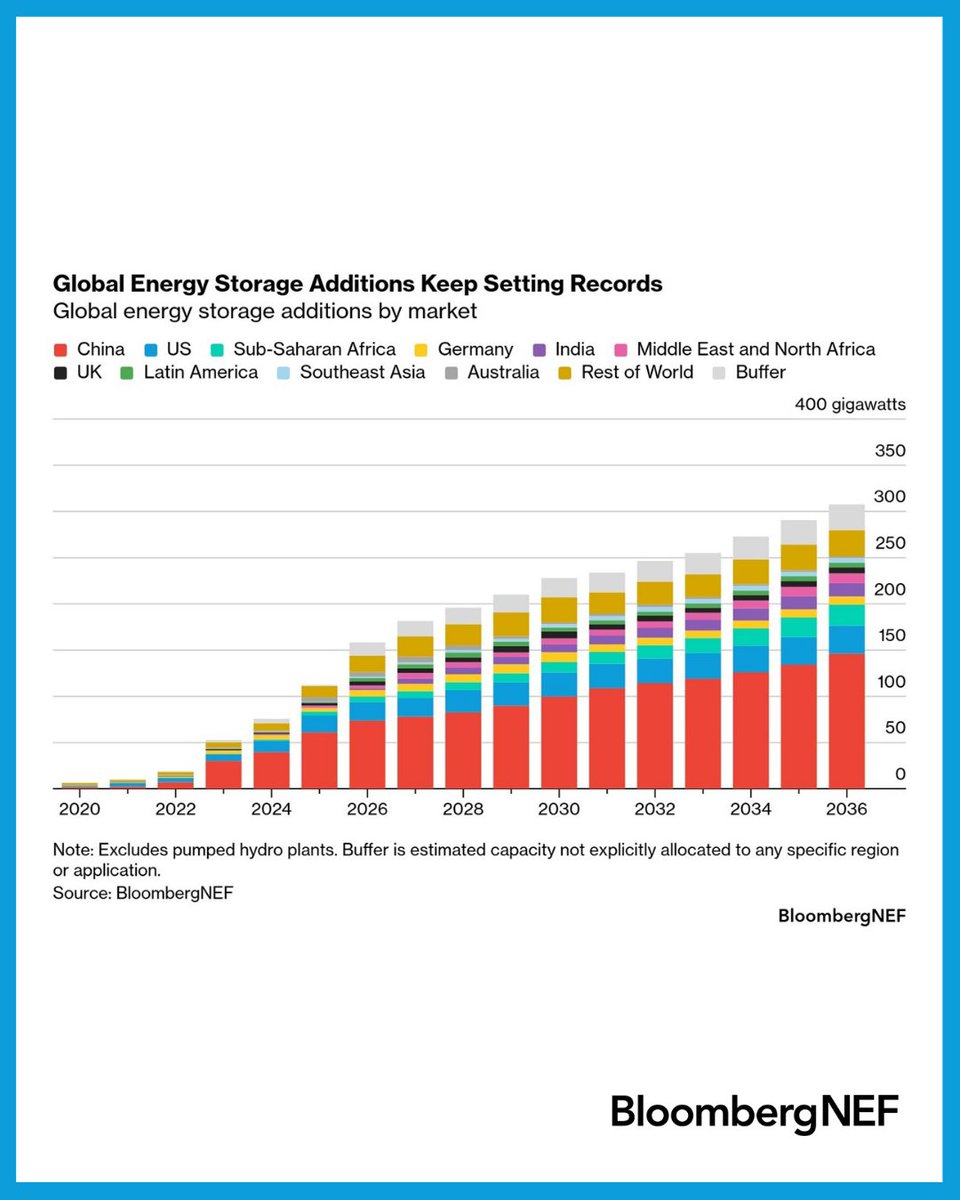
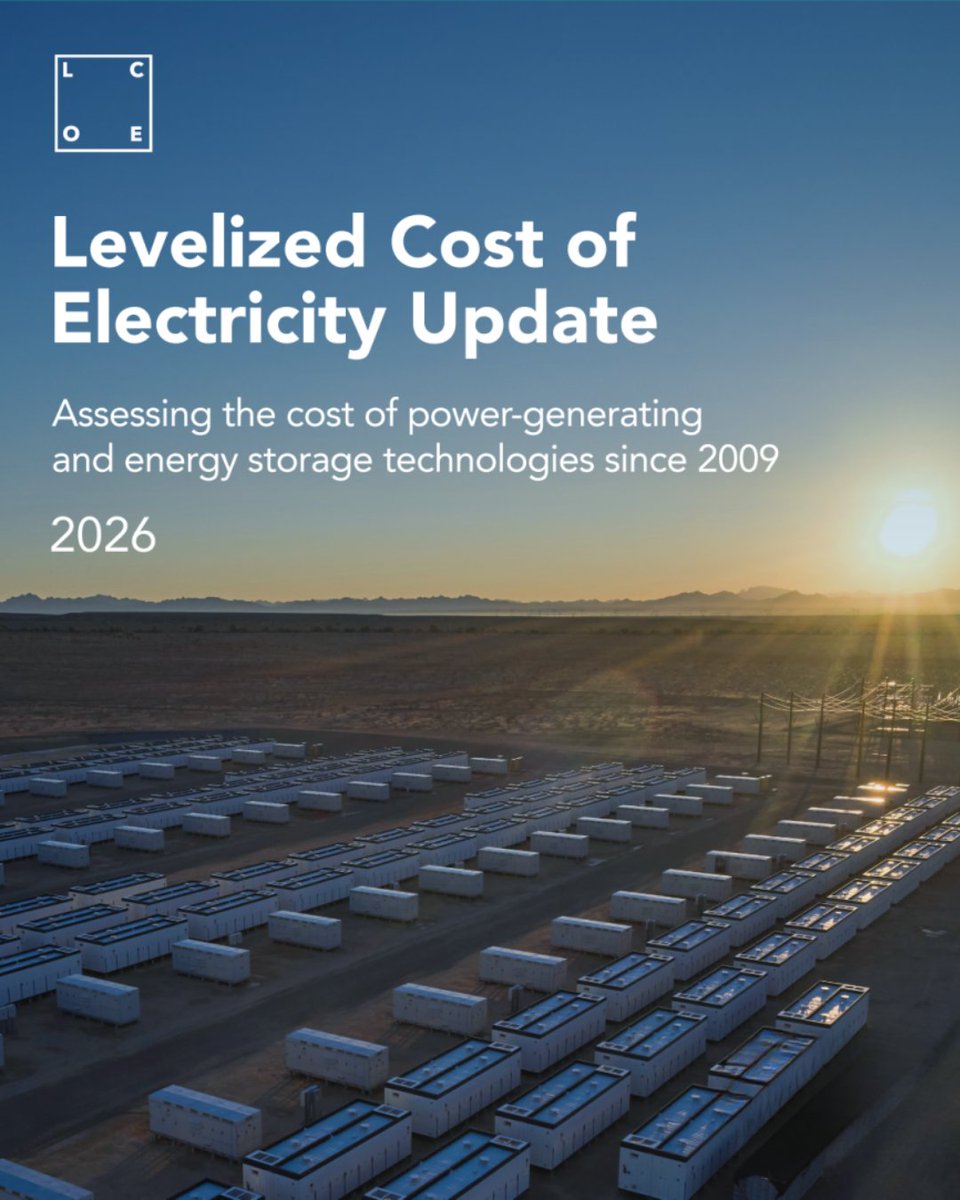
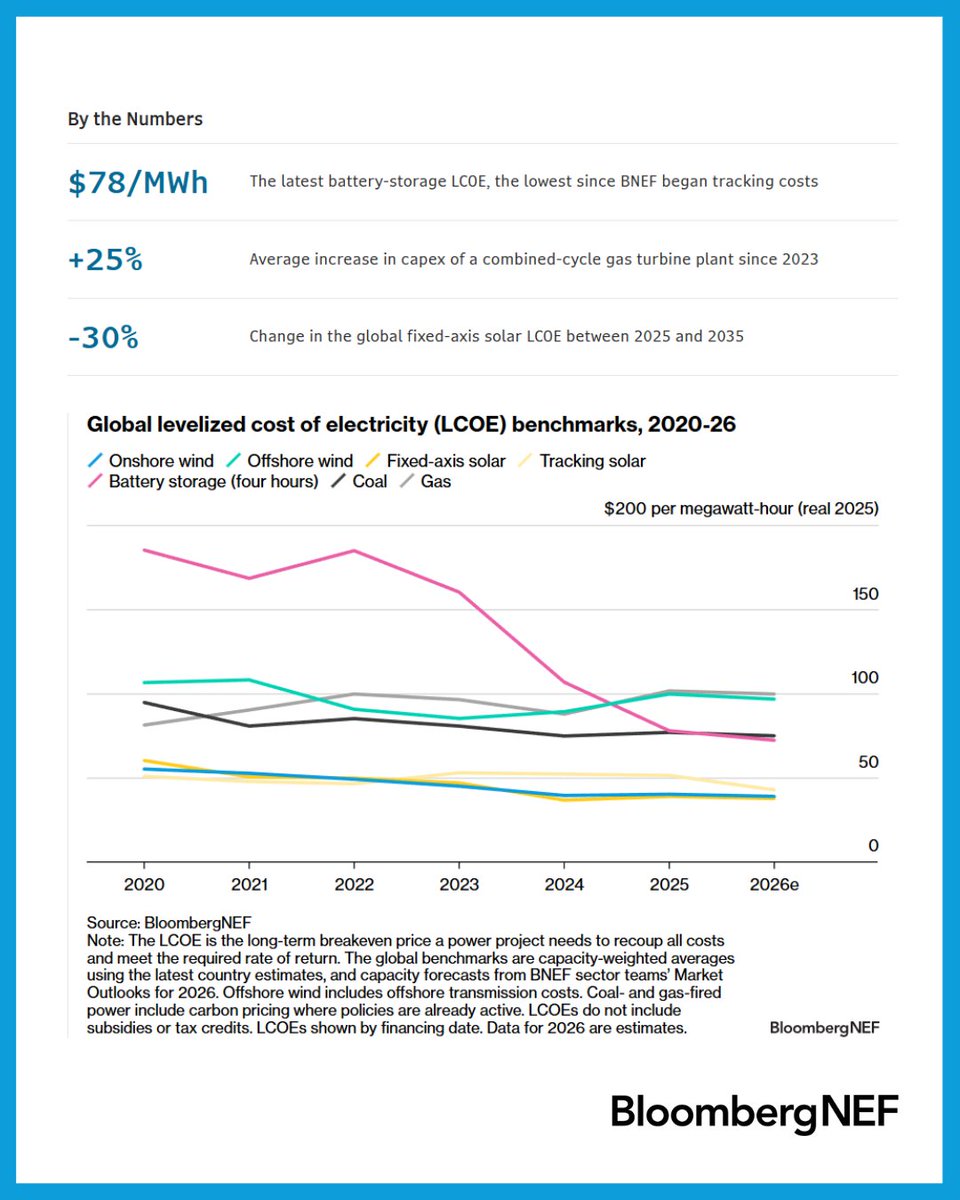
📉 Battery storage costs have fallen to a record low, even as solar, wind and gas turbine costs increased. BloombergNEF’s research shows the global benchmark levelized cost of electricity (LCOE) for a four-hour battery storage project declined 27% year-on-year to $78/MWh. By contrast, global LCOEs in 2025 rose for: • Solar: +6% • Onshore wind: +2% • Offshore wind: +12% • Combined-cycle gas turbine plant: +16% The data underscores diverging cost trends across generation and storage technologies this year. Explore the research ➡️ bloom.bg/4aqBNxh
BloombergNEF tweet mediaBloombergNEF tweet media
English
5
75
182
14.3K
BloombergNEF
BloombergNEF@BloombergNEF·
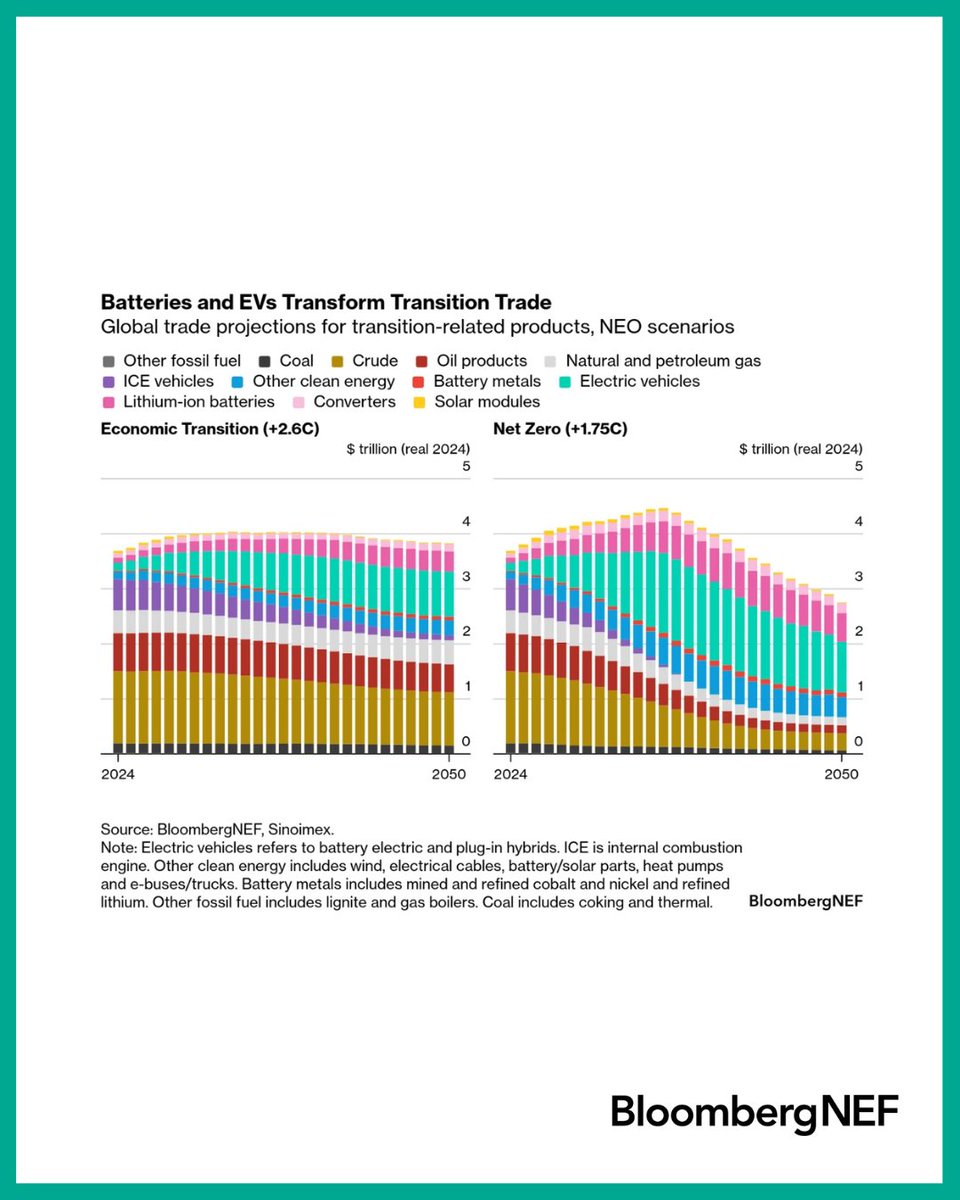
How will the global shift to lower-carbon, more secure energy reshape trade flows? 🌍 Which countries stand to gain or lose as clean technologies scale? Clean energy accounted for just 2.2% of total cross-border goods trade in 2024, but that share is set to rise as the transition gathers momentum. Our inaugural Trade Transition Scenarios model trade-flow projections through 2050, spanning 28 geographies and 28 transition-related product categories. Key insights from our Economic Transition Scenario: 📈 Electric vehicle (EV) and battery trade more than triples to $880 billion by 2035, up from $234 billion in 2024. 📉 Internal combustion engine (ICE) vehicle trade declines sharply. Rising EV adoption shrinks ICE vehicle trade to $340 billion by 2035, down 39% from 2024 levels. 🛢️ Crude oil and refined products keep fossil-fuel trade near $3 trillion through 2030 before a prolonged decline to 2050. Expanding natural-gas trade does not offset oil demand destruction in dollar terms. Learn more: bloom.bg/4tIaYwe
BloombergNEF tweet media
English
0
2
13
1.4K
BloombergNEF
BloombergNEF@BloombergNEF·
Transition funds dedicated to the move away from fossil fuels have taken off more recently, accelerating private-market energy capital. 💠Private markets have raised $2.7 trillion for funds investing in energy over the past decade. 💠Clean energy focused private market funds drew in about $178 billion since 2021 – triple the sum of thematic fossil and broad energy funds combined. 💠With aggressive fundraising, clean energy strategies now sit on about $92 billion of dry powder – the amount of capital committed to a fund but not yet called from investors. 💡Learn more about the drivers behind the shift: bloom.bg/3MaZe4s
BloombergNEF tweet media
English
1
3
5
1.2K
BloombergNEF
BloombergNEF@BloombergNEF·
As transport electrifies, power grids expand, and renewables scale up, demand for metals critical to the energy transition continues to accelerate. But which markets are seeing energy-transition demand grow the fastest? 📈 Looking out to 2035, BNEF finds that energy transition demand for: ▪️lithium could triple ▪️aluminum and graphite could rise by around 1.5x ▪️copper could climb by 1.6x 💡Explore the full Transition Metals Outlook for deeper analysis: bloom.bg/3Z5h3Vl
BloombergNEF tweet media
English
1
4
9
1.1K
BloombergNEF
BloombergNEF@BloombergNEF·
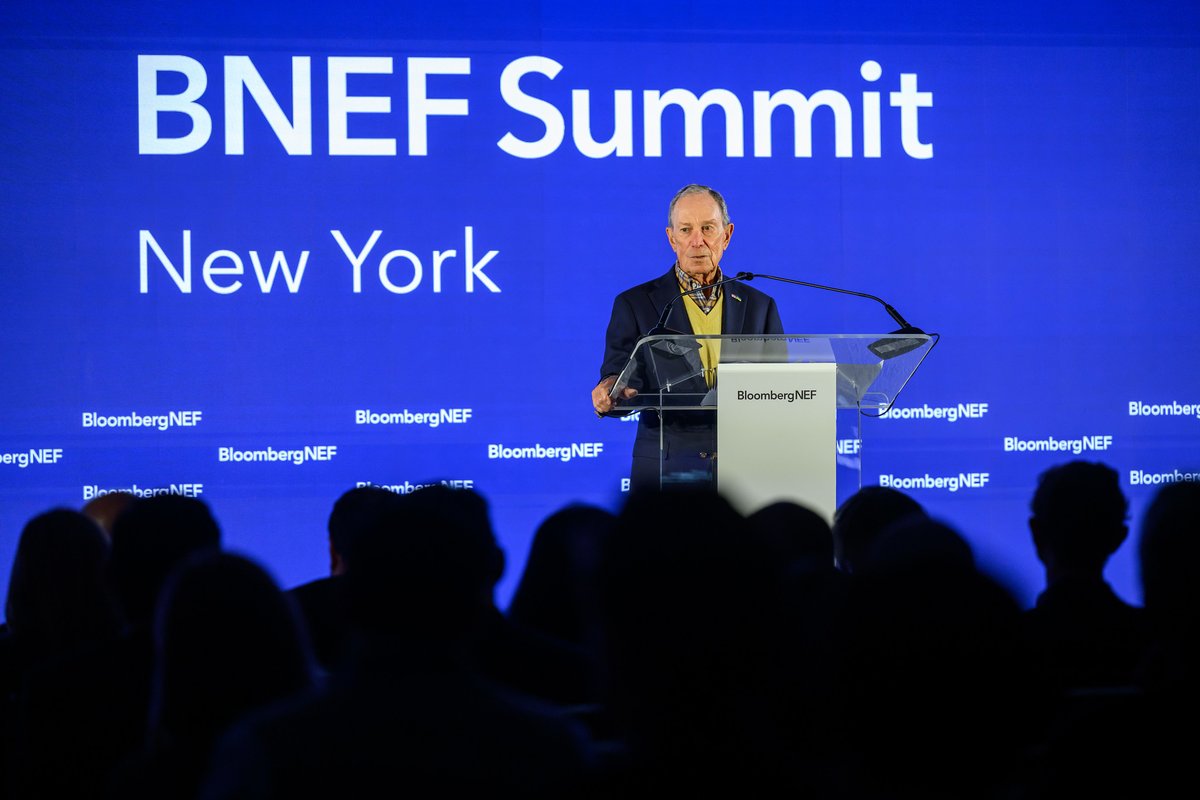
Day 1 of the #BNEFsummit in San Francisco put a spotlight on how AI/data centers are rewriting power demand—and exposing the limits of a grid built for decades of flat load. ⚡ Energy Transition & Investment BNEF’s latest tracking shows energy transition investment rising to $2.3 trillion (from ~$2.1T the year prior) and continued scale-up: ~650GW solar and ~250GWh storage added last year (storage costs down ~⅓ vs 2020). 🤖 AI, Data Centers & “Speed-to-Power” After ~20 years of flat demand, growth is back — with data centers arriving “one gigawatt at a time.” Flexibility helps but is still small today (PJM load management/demand response is ~9GW, with data centers only ~0.4GW of that today). 🔧 24/7 Clean Power Data-center demand could reach ~1,600 TWh by 2035; without scalable clean firm options, BNEF warned ~64% of incremental supply could still come from coal and gas. 🌊 Climate Risk & Water Climate damages cited at ~$1.4T (2024); by 2050, 31% of global GDP could face high water stress — with an infrastructure gap up to $7T. 📸 Photos: flickr.com/photos/bloombe… 🔗 Learn more: bloom.bg/45l9gq4
BloombergNEF tweet mediaBloombergNEF tweet mediaBloombergNEF tweet mediaBloombergNEF tweet media
English
0
2
10
1.1K
BloombergNEF
BloombergNEF@BloombergNEF·
🚨 Global energy transition investment set a new record in 2025, in a year marked by trade disruptions and geopolitical tension. BloombergNEF’s Energy Transition Investment Trends 2026 reviews global investment across clean technology deployment, clean energy supply chains, climate-tech equity, and energy transition debt issuance. Key highlights: 🌍 $2.3tn in global energy transition investment in 2025 📈 +8% year-on-year growth 🇺🇸 US investment increased 3.5% to $378bn 🚗 Electrified transport was the largest investment category, with $893bn invested, up 21% from 2024 🏗️ Data center investment was around $500bn globally in 2025 ⬇️ Download the abridged report: bloom.bg/3LYtHm9
BloombergNEF tweet mediaBloombergNEF tweet media
English
1
13
25
2.1K
BloombergNEF
BloombergNEF@BloombergNEF·
World Economic Forum discussions keep circling back to the same question: how fast can the energy system scale? These 3 takeaways from Bloomberg analysts capture what’s changing and what that means for investment and regional pathways. 👇​ ​ #Renewables #WEF26 #BloombergHouse
Bloomberg Terminal@TheTerminal

Leaders across business, politics, and civil society are gathering at the 56th Annual Meeting of the @wef in Davos to tackle the world’s most pressing issues and help set priorities for a more sustainable future. 🌱 Bloomberg analysts are tracking three key shifts behind the scale-up, falling costs, maturing technologies and accelerating adoption driving renewables and storage into a new phase of scale. 🔸By 2050, output from renewables is expected to nearly quadruple. That’s compared with 25% growth between 2024 and 2050 for natural gas and a long-term decline for coal and oil. 🔸Artificial intelligence is causing power demand to skyrocket. Data centers could account for 4.5% of power consumption in 2035, up from 1.4% today. 🔸Renewables are now the most economic option when it comes to satisfying the world’s energy needs. In countries accounting for two-thirds of global power supply, wind or solar is the cheapest source of new bulk electricity generation. #Renewables #WEF26 #BloombergHouse

English
0
3
7
1.5K
BloombergNEF
BloombergNEF@BloombergNEF·
The protests in Iran have heightened the risks of political instability and potential US military intervention. Any disruption to Iranian crude production or exports — whether from conflict or trade restrictions — could push prices up 📈🛢️. 📊 Base case: BloombergNEF estimates Brent crude to average $55/bbl in 2026, assuming the situation in Iran does not disturb global oil markets. 🚨 Extreme scenario (currently viewed as unlikely): If Iran’s oil exports were completely removed from the market starting in February, Brent could average $71/bbl in 2Q 2026; if disruption persisted through the rest of 2026, Brent could average $91/bbl in 4Q 2026. Read more → bloom.bg/4jRWu8n
BloombergNEF tweet media
English
1
0
3
986
BloombergNEF
BloombergNEF@BloombergNEF·
The #BNEFSummit San Francisco 2026 is right around the corner! 📢 We are delighted to announce the participation of the following distinguished speakers: 🔸Lauren Sanchez, Chair, @AirResources 🔸Kurt Kelty, VP, Battery, Propulsion & Sustainability, @GM 🔸Takajiro Ishikawa, President and CEO, @MHI_Group 🔸Shinjini Menon, SVP, System Planning & Engineering, @SCE 🔸Marc Winterhoff, Chief Executive Officer, @LucidMotors 🔸Chelle Izzi, Chief Commercial Officer, @PGE4Me We're looking forward to welcoming our Sponsors 🤝 ⬇️ ⬇️ ⬇️ 🔷 Partner Plus: @edisonintl 🔷 Partner: @WellsFargo 📍 San Francisco 📅 26 - 27 January 2026 🔗 Learn more: bloom.bg/4qtp1DD
GIF
English
1
1
5
1K
BloombergNEF
BloombergNEF@BloombergNEF·
Commodity markets have had a turbulent year as sanctions, wars and new administrations rewired markets. As 2026 begins, here’s a snapshot of what BloombergNEF thinks will be the most important topics to watch: 🪙 Metals – 1 million metric tons. The copper supply and demand balance swings by 1 million metric tons into a deficit, as data centers and electric vehicles drive demand. 🇯🇵⚡ Japan power – ¥11.4 per kilowatt-hour. Japan’s average baseload power price in 2026 signals relief now, volatility ahead. 🧊🚢 LNG – 29 million metric tons. New supply capacity to come online in 2026. 🌱 Renewable fuels – 1.07 billion gallons. China adds a record amount of new renewable fuel production capacity, reordering global markets. 🇺🇸⚡ US power – 48.3 gigawatts. Power demand from data centers to reach this figure, pushing electricity grids toward reliability limits. 🛢️ Oil – 13.8 million barrels per day. US oil production growth slows to 3% year-on-year as a 2026 global oil supply glut pressures prices. Read the full article → bloom.bg/3LRCSol
BloombergNEF tweet media
English
2
0
7
1.1K