Blue Cure

22.5K posts

Blue Cure banner
Blue Cure

Blue Cure

@BlueCure

🧔‍♂️ Prostate cancer awareness & advocacy 🧬 #MensHealth | 🥦🏃‍♂️🏋️‍♂️ Lifestyle-driven prevention 📊 Know your numbers. Get checked. Live well.

Houston, Texas Katılım Ocak 2011
3.1K Takip Edilen2.7K Takipçiler
Blue Cure
Blue Cure@BlueCure·
Prostate health conversations should start earlier than most men think. In this clip, Dr. Amy Pearlman, MD, explains that conversations about prostate cancer risk should begin early — even in a man’s 20s — and that nutrition plays an important role across the lifespan. In our earlier discussion, she emphasized a simple principle: You do not have to be perfect. Start by adding more whole, plant-based foods — fruits, vegetables, beans, whole grains, and minimally processed foods — to support an anti-inflammatory eating pattern that benefits overall health and may help reduce prostate cancer risk over time. Small changes, repeated consistently, can make a meaningful difference. About Dr. Pearlman: Dr. Amy Pearlman, MD is a board-certified urologist specializing in men’s sexual and hormonal health and genital reconstruction. She is the co-founder of Prime Institute in South Florida and a nationally recognized educator in men’s health. She hosts the podcasts Fertility and Other F Words and Pearls & Perspectives, where she translates medical science into practical, patient-centered guidance. Share this with a man in your life — especially younger men — so these conversations begin earlier. Educational content only. Not medical advice. Always discuss personal health decisions with your physician.
English
0
1
2
59
Blue Cure
Blue Cure@BlueCure·
Why Heart Health Matters in Prostate Cancer Many men think of prostate cancer as a “urology issue” alone. But the truth is, heart health and prostate health are closely connected. In this clip, Geoffrey Sonn, MD, urologic oncologist at Stanford Medicine, explains why cardiovascular health is a priority for men with prostate cancer—noting that many men, especially those with low-grade cancer, are actually at higher risk from heart disease than the cancer itself. What keeps your heart healthy—regular movement, nutrition, and managing metabolic health—may also help slow the progression of prostate cancer. These habits do not replace medical care, but they create a stronger foundation for longevity and general health. The takeaway: prostate cancer care is not just about one organ. It is about the whole man. CTA: Talk with your urologist or primary care physician about heart-healthy lifestyle habits that make sense for you. Ask how exercise, nutrition, and cardiovascular health factor into your long-term care plan. Disclaimer: This content is for educational purposes only and does not replace medical advice. Always consult a qualified healthcare professional about your individual health, screening, and treatment decisions.
English
0
1
1
63
Blue Cure retweetledi
Gabe Canales
Gabe Canales@GabeCanales·
Testosterone and prostate cancer is more nuanced than most men think. It’s also one of the most misunderstood topics in men’s health. In this clip, urologist Dr. Amy Pearlman, MD shares research from her early work at Baylor College of Medicine alongside Dr. Larry Lipschultz, where they studied men who had already been treated for prostate cancer. The question they were trying to answer: If a man has low testosterone after treatment, will testosterone therapy increase the risk of the cancer coming back? To find out, she reviewed patient charts, tracked PSA (a blood test used to monitor prostate cancer), and followed outcomes over time. What they found helped challenge a long-standing belief: Men in that group who were treated with testosterone did not show an increased risk of their prostate cancer returning. That does not mean testosterone therapy is right for every man. It does mean the conversation is more nuanced than many people think. Decisions around testosterone should always be individualized and made with a qualified physician who understands your history. About Dr. Pearlman Amy Pearlman, MD is a board-certified urologist specializing in men’s sexual and hormonal health. She is the co-founder of the Prime Institute in South Florida and hosts the podcasts Fertility and Other F Words and Pearls & Perspectives with Urology Times. pearlmanmds.com If you have questions about testosterone, prostate cancer, or changes in energy, talk with a urologist you trust. These are conversations worth having. Share this with someone who may have heard conflicting information. Educational content only. Not medical advice. Always consult a qualified healthcare professional regarding your individual situation.
English
0
1
2
67
Blue Cure retweetledi
Gabe Canales
Gabe Canales@GabeCanales·
An elevated PSA does NOT automatically mean prostate cancer. In this clip, Dr. Adam B. Weiner, MD, a Urologic Oncologist at Cedars-Sinai, explains an important point many men misunderstand. PSA (Prostate-Specific Antigen) is a blood test used to screen for prostate cancer. But PSA is not a diagnosis. An elevated PSA simply means your doctor may need to investigate further. There are several non-cancer reasons PSA can rise, including: • Larger prostate (a common part of aging) • Inflammation or irritation of the prostate • Infection Because PSA can rise for several reasons, doctors often look beyond the PSA number alone when deciding what to do next. The key takeaway Dr. Weiner emphasizes: Don’t panic over a single PSA result. It’s a signal that more information may be needed. Share this with a friend or family member. Many men don’t know this. Dr. Adam B. Weiner, MD Urologic Oncologist Cedars-Sinai Medical Center AdamWeinerMD.com Educational information only. This content is not medical advice. Always discuss screening and test results with your healthcare professional.
English
0
1
2
45
Blue Cure retweetledi
Gabe Canales
Gabe Canales@GabeCanales·
This resonates. After a low-risk prostate cancer diagnosis at 35, I shifted toward a plant-based dietary pattern. Sixteen years later, still on active surveillance, with a May 2025 MRI at NCI showing no progression. I’m seeing more research supporting plant-forward patterns in urologic health. I have not seen comparable evidence for keto or carnivore in prostate cancer. What stands out in conversations with men with prostate cancer is how rarely diet and lifestyle guidance are part of the visit or include referral to a dietitian. There’s opportunity there!
English
2
2
5
943
Blue Cure retweetledi
Stacy Loeb, MD
Stacy Loeb, MD@LoebStacy·
Plant based for the win! Another independent study corroborating that patients w #prostatecancer after treatment who ate the most plant based/least animal-based food was associated with better scores for quality of life especially sexual function 🍆 -Sandhu #gu26 #ascogu26
Stacy Loeb, MD tweet media
English
0
12
34
1.9K
Blue Cure retweetledi
Gabe Canales
Gabe Canales@GabeCanales·
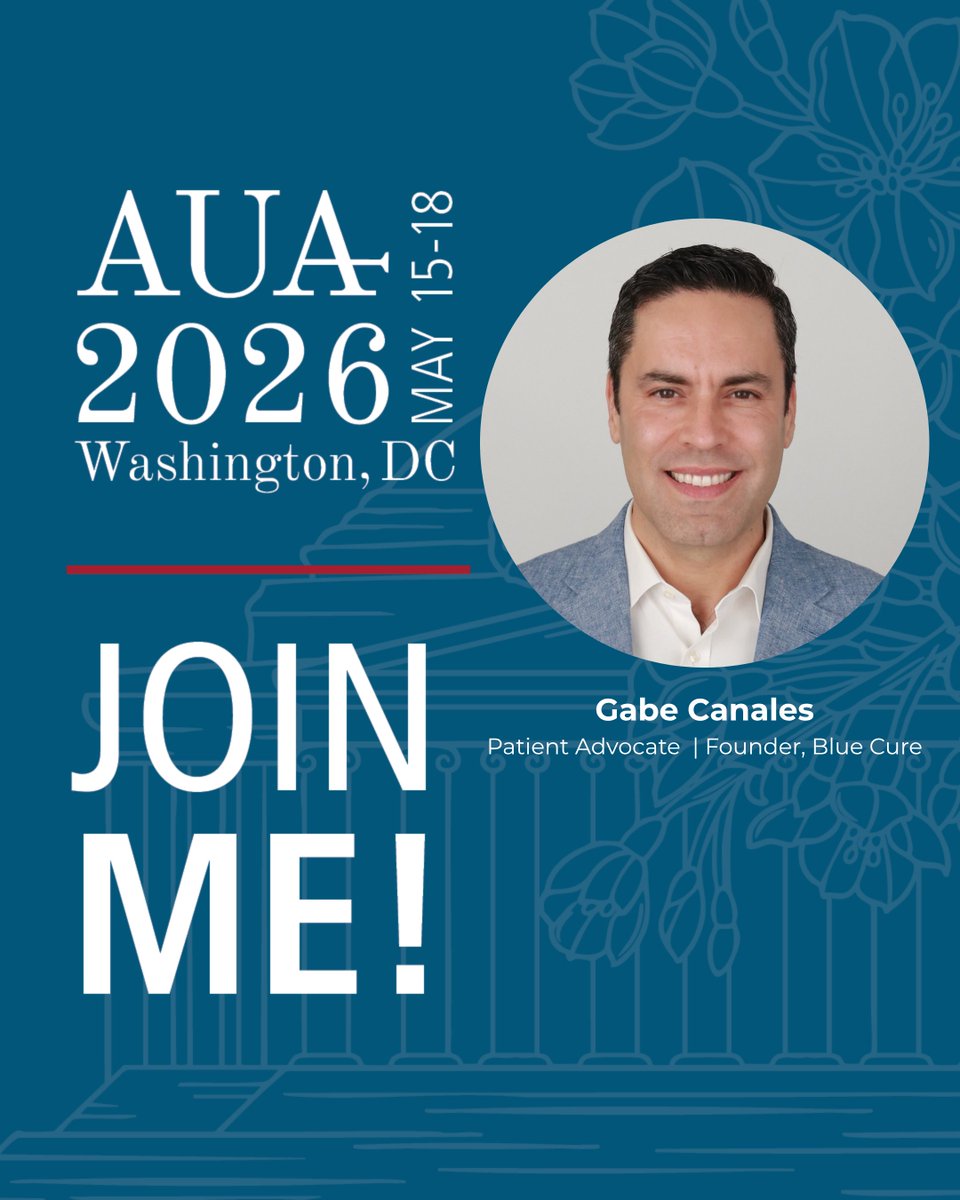
Today on Capitol Hill, I joined fellow patient advocates, urologists, and medical residents with the Texas delegation in meetings with Congressional offices to support establishing a Federal Office of Men’s Health at HHS. Thank you @AmerUrological for your leadership on this. #AUASummit26 Living with prostate cancer for 16 years has shown me how much earlier awareness around prevention, screenings, and lifestyle can matter. A coordinated national focus on early detection and outcomes could help move the needle on awareness, action, and lives saved.
Gabe Canales tweet mediaGabe Canales tweet mediaGabe Canales tweet mediaGabe Canales tweet media
English
1
2
10
640
Blue Cure
Blue Cure@BlueCure·
TESTOSTERONE AFTER PROSTATE CANCER Short-acting vs long-acting — why it matters Men who have been treated for prostate cancer sometimes experience symptoms of low testosterone — fatigue, low sex drive, mood changes, or loss of muscle mass. If testosterone therapy is being considered, one practical question comes up: Does the type of testosterone matter? In this clip, Dr. Leon Telis explains that in men with a history of prostate cancer, doctors often think carefully about duration — meaning how long the medication stays active in the body. In simple terms: • Short-acting testosterone (like gels or shorter-interval injections) can be stopped quickly if there’s concern. • Long-acting options (like pellets or extended-duration injections) remain in the body longer and are harder to reverse immediately. • After prostate cancer, doctors monitor PSA (prostate-specific antigen) — a blood test used to help track prostate activity. If PSA rises unexpectedly after starting testosterone, a short-acting option is easier to discontinue while doctors evaluate what’s happening. This does not mean one form is “safer” for cancer control. It reflects a cautious approach that prioritizes monitoring and reversibility. Leon Telis, MD Urologist Director, Men’s Health Program, Mount Sinai Assistant Professor of Urology, Icahn School of Medicine at Mount Sinai CTA: If you have a history of prostate cancer and are experiencing symptoms of low testosterone, speak with a qualified urologist about your options, the risks, and how monitoring would work in your specific case. Disclaimer: This content is for educational purposes only and is not medical advice. Medical decisions should always be made with your personal physician.
English
0
0
0
126
Blue Cure retweetledi
Amer. Urol. Assn.
Amer. Urol. Assn.@AmerUrological·
Whether you're a patient or a clinician, the advocacy happening at #AUASummit26 is something you’ll want to follow. Did you know 65% of men avoid going to the doctor for as long as possible? That’s exactly why the push to establish an Office of Men’s Health matters. Want to stay plugged in? Follow @GabeCanales and the other nine leaders on our Who to Follow list for live updates from the AUA Summit, plus ways you can help drive change in your community and across the country. Check out the Who to Follow List: bit.ly/SummitWhoToFol…
English
0
3
3
669
Blue Cure retweetledi
Gabe Canales
Gabe Canales@GabeCanales·
Most men could benefit from meaningful changes to their diet. The good news is those changes can start one meal at a time. (1/2) In this clip, Dr. Amy Pearlman, MD, (@AmyPearlman1) a board-certified urologist and men’s health specialist, explains why an anti-inflammatory, plant-forward approach can play a meaningful role in reducing prostate cancer risk and supporting overall health. This is not about being perfect. It is about adding more whole, plant-based foods over time. Fruits. Vegetables. Beans. Whole grains. Simple, recognizable foods. Small shifts add up. And they matter at every age. About Dr. Pearlman: Dr. Amy Pearlman, MD is a board-certified urologist specializing in men’s sexual and hormonal health and genital reconstruction. She is the co-founder of Prime Institute in South Florida and a nationally recognized voice in men’s health education. She hosts two podcasts: • Fertility and Other F Words, focused on evidence-based conversations around fertility, sexual health, and wellness • Pearls & Perspectives, produced by Urology Times, offering clinical insights and real-world takeaways in urology She regularly appears in national media and is known for translating complex medical science into practical, patient-centered guidance. ▶️ Watch the full clip and share with someone who needs encouragement, not guilt. Educational content only. Not medical advice. Always discuss personal health decisions with your physician.
English
1
2
3
118
Blue Cure
Blue Cure@BlueCure·
Most men could benefit from meaningful changes to their diet. The good news is those changes can start one meal at a time. In this clip, Dr. Amy Pearlman, MD, a board-certified urologist and men’s health specialist, explains why an anti-inflammatory, plant-forward approach can play a meaningful role in reducing prostate cancer risk and supporting overall health. This is not about being perfect. It is about adding more whole, plant-based foods over time. Fruits. Vegetables. Beans. Whole grains. Simple, recognizable foods. Small shifts add up. And they matter at every age. About Dr. Pearlman: Dr. Amy Pearlman, MD is a board-certified urologist specializing in men’s sexual and hormonal health and genital reconstruction. She is the co-founder of Prime Institute in South Florida and a nationally recognized voice in men’s health education. She hosts two podcasts: • Fertility and Other F Words, focused on evidence-based conversations around fertility, sexual health, and wellness • Pearls & Perspectives, produced by Urology Times, offering clinical insights and real-world takeaways in urology She regularly appears in national media and is known for translating complex medical science into practical, patient-centered guidance. Watch the full clip and share with someone who needs encouragement, not guilt. Educational content only. Not medical advice. Always discuss personal health decisions with your physician.
English
0
0
0
34
Blue Cure
Blue Cure@BlueCure·
“CAREFULLY SELECTED” FOR TESTOSTERONE THERAPY What doctors actually mean You’ll often hear doctors say testosterone therapy may be appropriate for a “carefully selected” patient. But what does that actually mean? In this clip, Dr. Leon Telis breaks it down in plain language. In simple terms: Being “carefully selected” is not just about lab numbers. Doctors look at: • Medical risk: Is testosterone reasonable given the person’s overall health? • Follow-up reliability: Will the patient show up for labs, appointments, and monitoring? • Shared decision-making: Does the patient understand the risks and benefits, not just the potential upside? Testosterone therapy requires ongoing monitoring. If someone is unlikely to follow up, skip blood work, or treat it casually, that’s a red flag. As Dr. Telis explains, there is no obligation to start testosterone. The decision depends on whether the potential benefits outweigh the risks and whether the patient is willing to stay engaged in long-term care. Leon Telis, MD Urologist Director, Men’s Health Program, Mount Sinai Assistant Professor of Urology, Icahn School of Medicine at Mount Sinai CTA: If you’re considering testosterone therapy, talk with a qualified urologist about whether it’s appropriate for you and what responsible follow-up actually involves. Disclaimer: This content is for educational purposes only and is not medical advice. Medical decisions should always be made with your personal physician.
English
0
0
0
35
Blue Cure retweetledi
Amer. Urol. Assn.
Amer. Urol. Assn.@AmerUrological·
Stay connected and in the know during the 2026 Annual Urology Advocacy Summit! 📣✨ We’ve put together a Who to Follow list featuring 10 incredible voices you should be following on X. These individuals will be sharing real-time updates, key takeaways, behind-the-scenes moments and expert insight throughout the Summit. 📲 Give them a follow, join the conversation, engage with their posts and share your experience along the way. Let’s keep the advocacy momentum going together! 🤝💬 @GabeCanales @RuchikaTalwarMD @DrDenise_ @kvnkoo @MaheethaB @HansArora @candacegranberg @AllisonS_Meling @MargoWickersham @BenPockros Be sure to use #AUASummit26 so we can see and amplify your posts! 🚀
Amer. Urol. Assn. tweet media
English
0
15
38
12.2K
Blue Cure retweetledi
Gabe Canales
Gabe Canales@GabeCanales·
2011 • Eugene, Oregon: The night before I gave this talk, urologists questioned why I was on testosterone while on active surveillance for prostate cancer. At the time, even experts had no clear consensus. What we’re learning now: conta.cc/4bf4XAr
Gabe Canales tweet media
English
0
1
4
97
Blue Cure
Blue Cure@BlueCure·
Testosterone and Prostate Cancer: Why the Thinking Changed If you’re confused by the headlines, you’re not alone. For decades, men were told testosterone and prostate cancer didn’t mix — based largely on early research in advanced, metastatic disease. That testosterone “fed” cancer. End of story. But over the last few years, the science — and the headlines — have started telling a more nuanced story. In this clip, Leon Telis, MD, urologist, Director of the Men’s Health Program at Mount Sinai Hospital, and Assistant Professor of Urology at the Icahn School of Medicine at Mount Sinai, explains why doctors once believed testosterone was dangerous — and why that thinking is changing. Large modern studies, updated guidelines, and new treatment approaches have all forced medicine to take a second look at long-held assumptions. The message today isn’t “testosterone is good” or “testosterone is bad” — it’s that the relationship is more complex than we were taught. That matters for men who: • have low testosterone • have had prostate cancer • are on active surveillance • or are trying to make sense of conflicting advice The takeaway isn’t to self-diagnose or self-treat. It’s to start the conversation. Talk to a doctor you trust. Ask questions. Understand your own risk. This conversation is from the Blue Cure Men’s Health Podcast, where we speak with leading physicians to help men get clear, evidence-based information — without fear or hype. Call to action: If something feels off, don’t guess. Talk to a doctor. Get checked. Educational content only. Not medical advice. Always consult your own physician.
English
0
0
1
60
Blue Cure
Blue Cure@BlueCure·
Many men don’t avoid doctors because they don’t care. They avoid them because they don’t want to feel weak or embarrassed. That’s a mistake. In this clip, Leon Telis, MD, urologist, Director of the Men’s Health Program at Mount Sinai Hospital, and Assistant Professor of Urology at the Icahn School of Medicine at Mount Sinai, explains something every man should hear: You don’t have to have all the answers. You can start the conversation with a primary care physician — and when it makes sense, a urologist often becomes a key part of that relationship. Erectile dysfunction, low libido, or sexual changes aren’t just “in your head.” They can be early signals of bigger health issues, including cardiovascular or metabolic disease. Here’s the truth: Doctors have seen and heard everything. Nothing you bring up is embarrassing. Avoiding the conversation doesn’t protect your masculinity — it risks your health. Have the conversation. Build a relationship with a physician you trust. Stay around longer for the people who count on you. This conversation is from the Blue Cure Men’s Health Podcast, where I speak with leading physicians to help men get clear, evidence-based information — without fear or hype. Call to action: If something feels off, don’t wait. Talk to a doctor. Get checked. Educational content only. Not medical advice. Always consult your own physician.
English
0
0
2
388
Blue Cure
Blue Cure@BlueCure·
Active Surveillance Requires Follow-Up Being told you have prostate cancer does not always mean you need immediate treatment. In this clip, Geoffrey Sonn, MD, urologic oncologist at Stanford Medicine, explains why active surveillance is the preferred approach for many men with low-grade prostate cancer, and for select men with intermediate-grade disease. What is active surveillance? It means carefully monitoring prostate cancer over time using PSA tests, imaging, and follow-up visits rather than rushing into treatment. The goal is to avoid unnecessary side effects while still catching changes early, when cure is still possible. Dr. Sonn also explains why monitoring matters. Many men never see their cancer progress. But for those who do, staying on top of follow-up allows doctors to intervene early, when treatment options are still effective. Key takeaway: Active surveillance only works if it is truly active. About the expert Geoffrey Sonn, MD Urologic Oncologist Stanford Medicine What to do next If you are on active surveillance or considering it, talk with your urologist about how often PSA testing, imaging, and follow-up are recommended for your specific situation. Disclaimer This content is for educational purposes only and does not replace medical advice. Always consult your physician or urologic oncologist about diagnosis and treatment decisions.
English
0
0
1
31