
Blue Devil Nation
71.9K posts
Blue Devil Nation
@BlueDevilNation
Mark Watson has covered Duke Basketball from courtside in Cameron since the 2009-10 natty season. OG. #TheBrotherhood #BleedBlue
Somewhere near Cameron & Wade Katılım Nisan 2009
600 Takip Edilen38.9K Takipçiler
Blue Devil Nation retweetledi
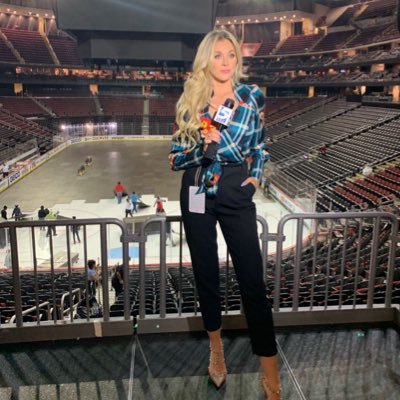
Cameron Boozer at Trump National
Doral this afternoon for the final round of the Cadillac Championship
#Duke
English
You may have been hearing about the Big Ten, kicking up a fuss over Duke's Amazon deal and the game with Michigan. This guy goes into the absurdity, but his last sentence is what was in my head before reading it. The BIG is mad because they didn't come up with the idea
David McKenzie@mckenzielaw
This is what I think is going on with the Duke-Amazon deal and why the Big Ten is whining. It's all about a direct-to-consumer model and risk allocation. Let's start with the law because the law explains the deal. College sports media rights flow through a stacked architecture that schools rarely discuss in public but that governs everything they can and cannot do. Every ACC member, Duke included, has executed a Grant of Rights to the conference— an irrevocable assignment of media rights running through 2036. The ACC then licensed that aggregated catalogue to ESPN under a parallel agreement of comparable duration. The Big Ten and Fox sit atop an identical structure on their side of the ledger. The consequence is that Duke does not own the broadcast rights to its own basketball games in any meaningful sense. ESPN does. And Michigan's rights belong to Fox. That architecture is the entire reason the Amazon deal required permission rather than a checkbook, as suggested by @RossDellenger. Duke could not license a game to Amazon any more than a tenant could sell the building. What Duke could do is ask the actual rights holder — ESPN, through the ACC — to carve out three games from its exclusive bundle and allow Amazon to distribute them. ESPN agreed. Dellenger's reporting suggests ESPN extracted a licensing fee plus future Duke scheduling commitments in return. That is a sublicense, structured as a limited waiver of exclusivity, and it is the legal mechanism that makes the entire arrangement possible. Without ESPN's consent, the deal is a straightforward breach of the Grant of Rights cascade. With it, the deal is unremarkable contract law. Which brings us to the Big Ten. Its claim that it "owns" the Duke-Michigan game is the sound of a conference dressing up a contractual reciprocity provision as a property right. The actual mechanism the B1G is invoking is an alternation arrangement between the conferences and their rights holders for neutral-site games played in shared metropolitan territory with New York, a virtual home game for Duke, being the one at issue. Even taking that at face value, it is a contract claim running between the conferences, not a proprietary interest enforceable against Duke, Amazon, or Madison Square Garden. And the party whose alternation turn was supposedly violated, ESPN, has already blessed the deal. It is hard to articulate a coherent legal theory under which the B1G or Fox enforces ESPN's contractual entitlement against ESPN's wishes. The B1G's posture is a negotiating marker, not a litigation position, and any honest reading of the underlying agreements would say so. So why did ESPN say yes? This is where the law stops explaining things and strategy takes over. I'm not just guessing here. ESPN launched its standalone streaming flagship into a market in which the most important commercial question in sports media remains unanswered: will cord-cutters pay to watch a Tuesday-night college basketball game? Disney has spent the better part of a decade rearranging its streaming portfolio without producing a clean answer, and the cost of running that experiment on ESPN's own platform —with ESPN's own marquee inventory and ESPN's own reputation on the line — is considerable. The Pac-12 tried a version of this experiment with Apple two years ago. Apple would not pay linear money, the schools would not accept streaming-only reach, and the conference disintegrated before the deal did. The lesson the industry absorbed was that premium college sports was not yet ready for direct-to-consumer exclusivity. ESPN needs to know whether that lesson still holds, and it would prefer not to find out the hard way. The structure of the Duke deal seems to be the answer. Amazon bears the production cost, the promotional spend, and the conversion risk against Prime's installed 200M+ worldwide subscriber base. ESPN collects a licensing fee, future scheduling inventory it can deploy on its own terms, and a clean read on whether streaming-exclusive premium college basketball actually works as a commercial proposition. If Amazon's experiment succeeds, ESPN learns the model and pulls future games back in-house at the next negotiation. If it fails, Amazon absorbs the loss and ESPN quietly concludes the market is not ready, having paid nothing for the information beyond the foregone value of three games it was compensated for anyway. That is not a concession. It is a hedged bet, and a clever one. Fox cannot afford the same posture, which is why the B1G is whining. Fox One and Tubi are real but considerably smaller than the combined Disney streaming footprint, and every individual rights leak feels more existential to a network without the same DTC depth to fall back on. ESPN can be magnanimous because Disney has room to be patient. Fox and the B1G have less room, so the B1G is now tasked with escalating a routine reciprocity dispute into a public claim of ownership it cannot sustain. That tells you more about the B1G and Fox's competitive position than it does about the merits of the contract. The deeper point, and the one worth dwelling on, is that the rights architecture schools accepted a decade ago to keep their conferences intact is now being tested by the schools themselves. Duke did not break the system. Duke worked within it, asked ESPN for permission, gave up something in return, and brought a streaming partner to the table that the network was apparently happy to let bear the risk of an experiment Disney has not figured out how to run on its own. The B1G and Fox would prefer that schools not learn this trick. They are about to learn it anyway. And the next negotiation, whenever it comes, will reflect what Amazon's three games taught everyone about who the audience really is and what they will pay to watch. The Duke-Amazon arrangement is being described as a turning point for college sports media. My honest guess is that it's more of a market test, structured by a rights holder who needed information from a 200M+ subscriber base more than it needed three basketball games. It's now being resisted by a competitor who cannot afford to be that patient. The law explains how the deal got done. The strategy explains why ESPN wanted it done this way. And the B1G's complaint, stripped of its proprietary language, is the complaint of a conference that wishes it had thought of it first.
English
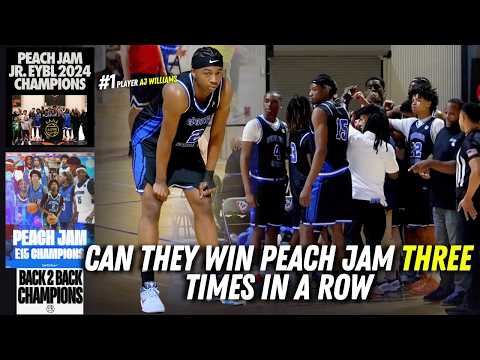
#1 Ranked AJ WILLIAMS LEADING THE WAY This Team Might Win Peach Jam AGAIN. Smooth, young baller that Duke is showing more interest in. youtu.be/AvWy9Jj9iS4?si… via @YouTube
YouTube
English
AJ Williams is getting a look, a guy who will likely reclassify to make him a junior. Duke has had their eyes on him longer than some know. They don't miss on evals much.
English
Blue Devil Nation retweetledi

Brotherhood😈#Committed
A huge thanks to Coach Scheyer, Coach Schrage, and the entire Duke men’s basketball coaching staff as well as Coach Joe for their support and faith in me. #DDMF @DukeMBB @CoachSchrage @coachs717


English
Blue Devil Nation retweetledi
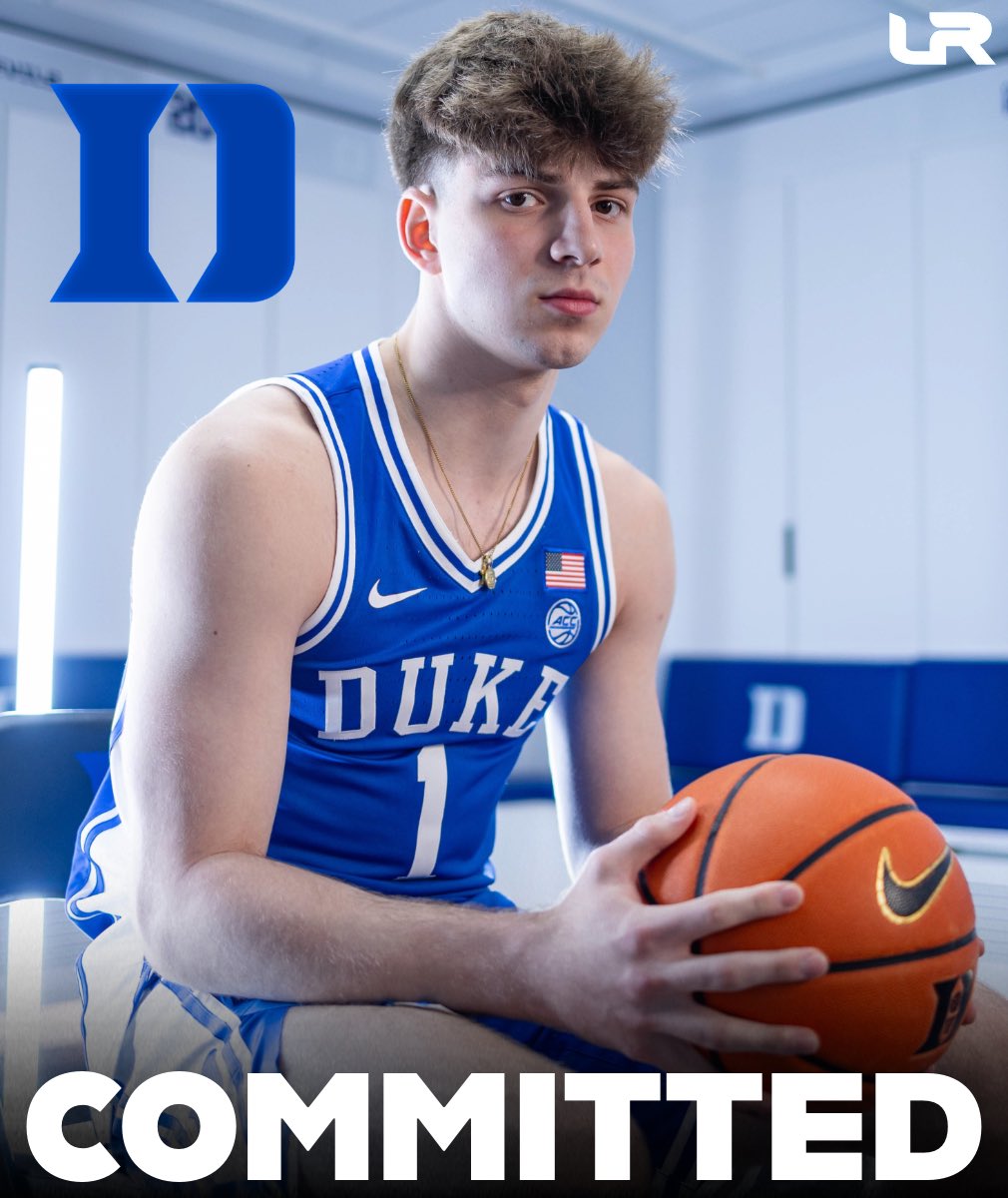
NEWS: Loyola Maryland transfer Jacob Theodosiou has committed to Duke, he told @LeagueRDY.
The 6-foot-4 guard played two seasons at Loyola Maryland and averaged 13.1PPG, 3.6RPG, 2.7APG and 1.6SPG in 2025-26. Began his career at Wyoming.
Sam Kayser@KayserHoops
NEWS: Loyola Maryland guard Jacob Theodosiou (@JacobTheodosiou) plans to enter the transfer portal, he told @LeagueRDY. Theodosiou has spent the last two seasons at Loyola, leading the league in steals last season and scoring 20+ points 15 times along the way. He averaged 13.1PPG, 3.6RPG, 2.7APG and 1.6SPG this season. Shots 46.1% from the floor.
English
RJ Barrett hit the shot of his life to save the Raptors season.
English
@jana616 Yeah, it is odd. I have no commentators on either game, but commercials have normal audio.
English

The detractors of Duke's success claim it is money. The truth is, the program adapted its tradition and brand to the modern era with a plan.
English
Five-time NBA All-Star John Wall has become the president of basketball operations at Howard, returning to Washington to partner with the top-ranked HBCU in the country, per ESPN. He is already at work with Duke alum and head coach, Kenny Blakeney, evaluating talent.
Duke kicked the wheels on Wall back in the day. His dominant Kentucky team lost to West Virginia, which faced the Blue Devils in the 2010 Final Four, where Jon Scheyer and company won the natty.
A big addition for the Howard program.
English
NBA Combine invitees from Duke: Cam Boozer, Isaiah Evans, Maliq Brown, and John Blackwell. A year ago, Duke lost a guy to the pros late. All eyes will be on Blackwell.

English
@CardPurchaser Stupid video and glitch killed any chance of megas.
English
Available in 10 minutes! Be ready. If it says out of stock immediately keep trying. If errors ordering keep trying. There will be bots.
Card Purchaser@CardPurchaser
2025 Topps Chrome Football Mega Boxes release on the Topps website at 11am central today, May 1! #ad Buy Here: thetoppscompany.sjv.io/aOev7b
English
English

John Scheyer and the Blue Devils are STACKED for next season 👀
Duke returns players such as Cayden Boozer, Dame Sarr, Caleb Foster, and Pat Ngongba which will be in the rotation again.
Along with their returning pieces, they are bringing in John Blackwell, Deron Rippey Jr, and Cameron Williams.
How far can Duke go next year? 🤔

English
Blue Devil Nation retweetledi
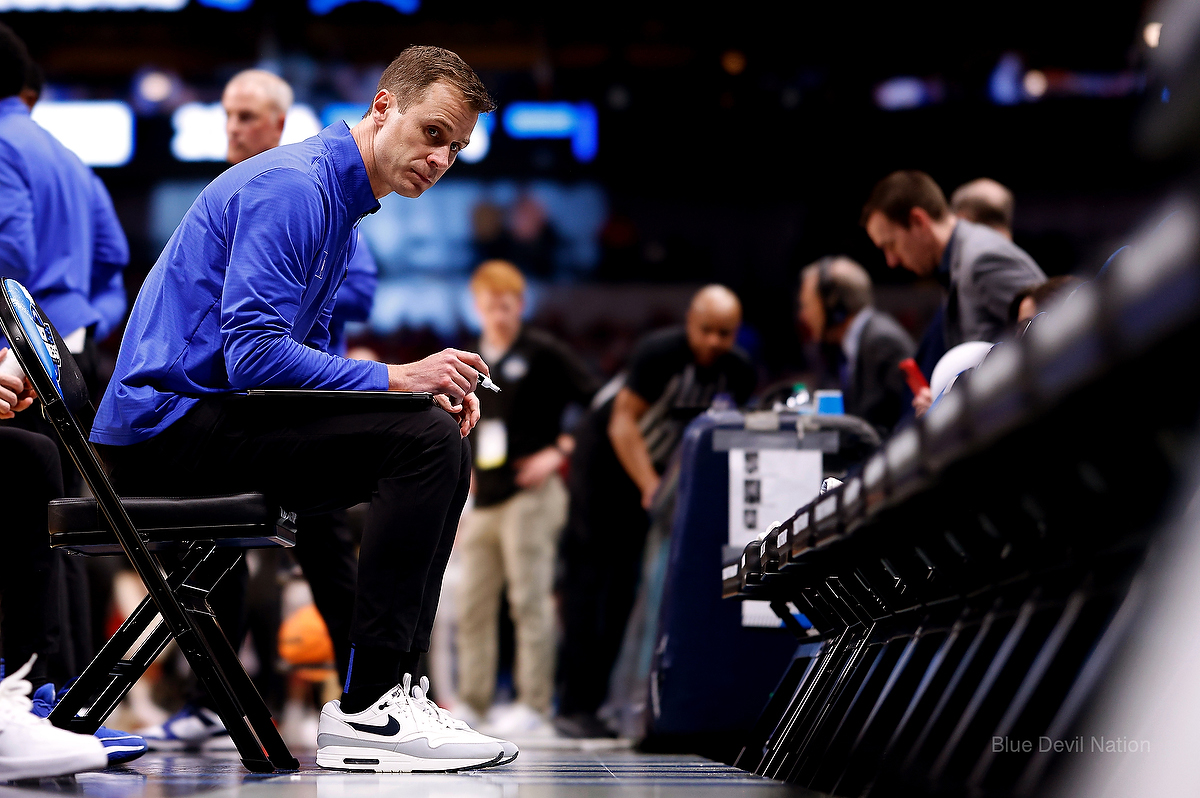
One thing about Jon Scheyer is that each time he has lost Heatbreaker in back-to-back years, he rolls up his sleeves without sulking, re-flexes, reloads, and goes after it again.
English
A lot of firsts are going on in Durham. Duke is showing off its brand with a first-of-its-kind deal with Amazon, a company serious about sports programming. Opens some major revenue streams, shows ESPN should hope Duke doesn't go independent, lol. Seriously, Duke is carrying others as is in hoops, yet their brand is valued greatly.
English
Blue Devil Nation retweetledi
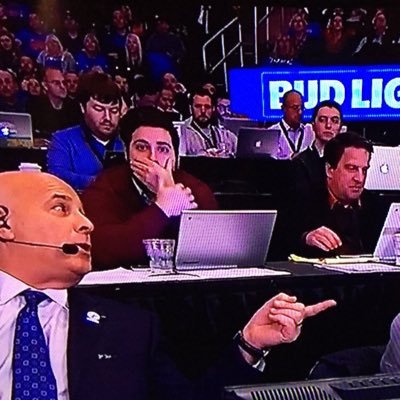
BREAKING: Duke is entering into a first-of-its-kind partnership with Amazon that includes exclusive rights to three games next season:
Nov. 25: vs. UConn in Las Vegas
Dec. 21: vs. Michigan at MSG
Feb. 20: vs. Gonzaga in Detroit
Details with @PeteThamel:
espn.com/mens-college-b…
English
So, Jon and Duke get UConn in Vegas around Turkey Day (birthday trip), and they play Michigan again in MSG and later Gonzaga in Detroit. The Duke brand is a bear.
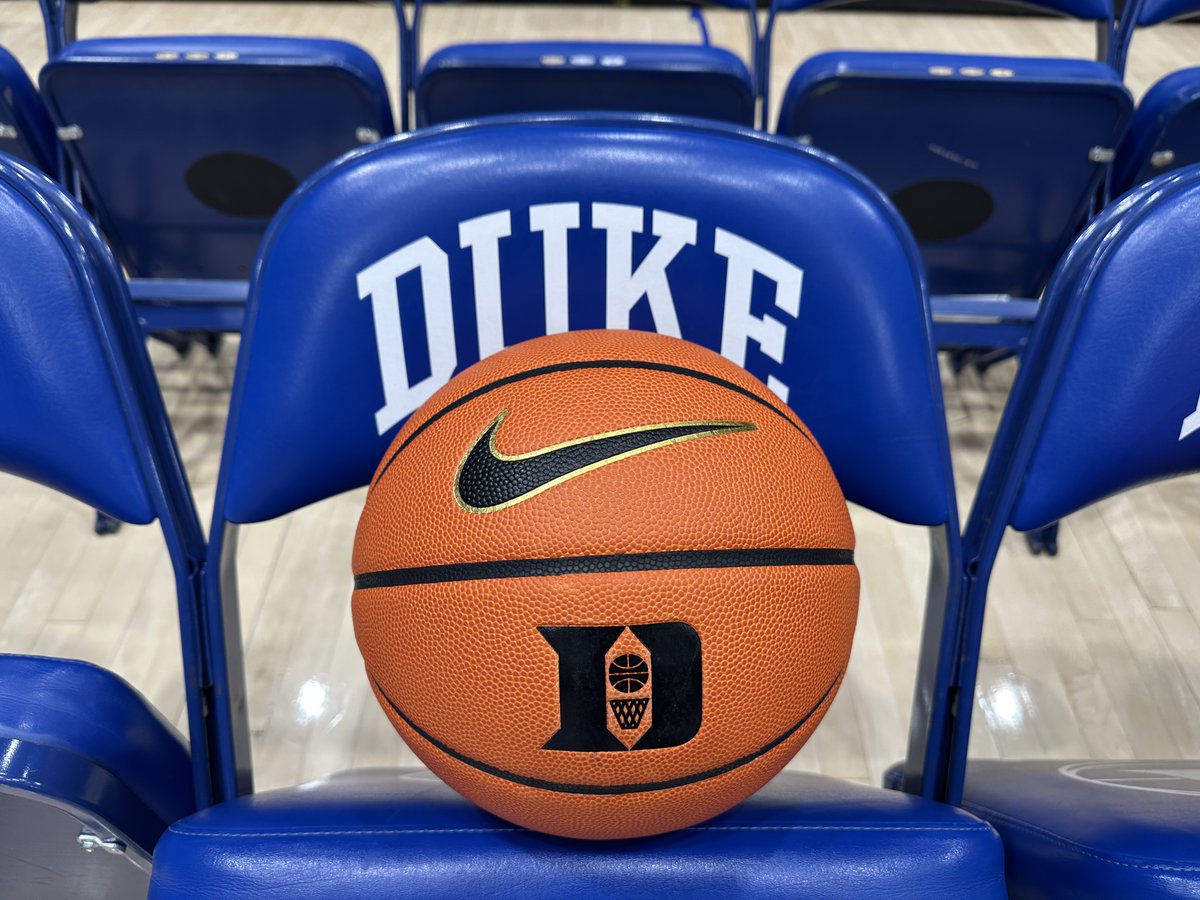
"In addition to our outstanding partnership with ESPN, we are excited to work with Prime Video on this groundbreaking initiative," said Nina King, Vice President and King-Compton Families Director of Athletics, Duke.
"As Prime Video's first college sports partner, this collaboration not only expands the global reach of Duke Men's Basketball but also creates meaningful opportunities for our student-athletes in a way that reflects innovation and excellence."
English