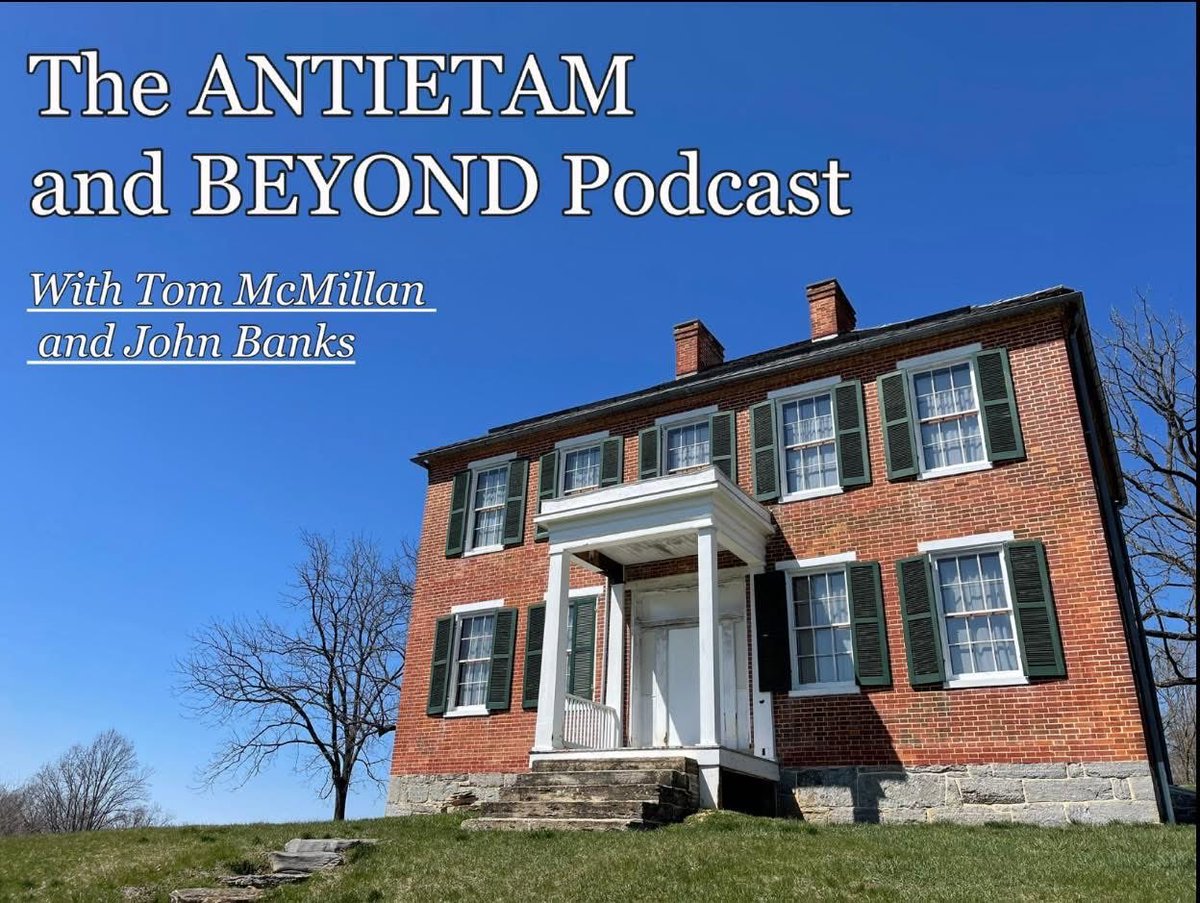
MICHIGAN MONUMENT AT ANTIETAM? The latest episode of the “Antietam and Beyond” podcast features Brian Egen and Jack Dempsey, who are leading the charge to place a monument to Michigan troops at Antietam. Listen at antietambeyond.transistor.fm
No more shall the war cry sever,
Or the winding rivers run red;
They banish our anger forever
When they laurel the graves of our dead
Under the sod and the dew,
Waiting the judgment-day,
Love and tears for the Blue,
Tears and love for the Gray.
•
Happy Memorial Day everyone! 🇺🇲
This is a light travel year for me but will be hitting a few historical places like Bunker Hill, Gettysburg, Boston area, and more.
But let me live vicariously through you—what are some of your travel plans this year?!
@2ndMississippi I have a relative who served in the 198th Pennsylvania Infantry! It's so cool that I have a relative who has a connection to Chamberlain since he's my favorite! Great post! 👍
OTD - March 29, 1865 - The Beginning of the End - the Battle of Lewis Farm, Virginia
[OK, two days early, but my schedule is uncertain for tomorrow and the next!]
Lee Punched at Stedman, Grant Countered at Lewis Farm: The Opening of the Final Petersburg Campaign
INTRODUCTION: DESPERATION TO DETERMINATION
As the winter of 1864-1865 grudgingly gave way to spring, the American Civil War had reached its critical final phase. For nearly ten months, the opposing armies had faced each other across an ever-expanding network of trenches and fortifications around Petersburg, Virginia. General Robert E. Lee's Army of Northern Virginia, once the most formidable fighting force in the Confederacy, found itself gradually strangled by Lieutenant General Ulysses S. Grant's relentless pressure.
By late March 1865, Lee understood that his army's situation was becoming untenable. Desertion had thinned his ranks, supplies dwindled as Union forces systematically cut his supply lines, and the overwhelming numerical advantage of the Federal forces threatened to finally envelop his increasingly stretched defensive perimeter. With characteristic audacity, Lee approved a bold plan devised by General John B. Gordon to strike the Union lines at Fort Stedman on March 25, hoping to disrupt Grant's anticipated spring offensive.
The attack at Fort Stedman initially achieved surprise, but Union counterattacks quickly regained the lost ground and inflicted heavy casualties that Lee could ill afford. More telling than the failure itself was Grant's reaction—the planned offensive remained completely on schedule, beginning just four days later on March 29 with a movement that would commence at the little-known Lewis Farm along the Quaker Road.
The story of these two battles—Lee's failed gamble at Fort Stedman and Grant's successful opening move at Lewis Farm—encapsulates the changing fortunes of the two great armies as the war approached its conclusion. What follows is an account of the battle that began Grant's final, victorious campaign.
THE STRATEGIC CHESSBOARD: MARCH 1865
Lee's Diminishing Options
By late March 1865, Robert E. Lee faced a strategic nightmare. His defensive lines stretched for over thirty miles, from northeast of Richmond to southwest of Petersburg. With fewer than 50,000 effectives remaining, many suffering from malnutrition and exhaustion, Lee had to defend against more than twice that number of well-supplied Union troops. The Army of Northern Virginia depended on just two remaining supply routes: the Boydton Plank Road and the South Side Railroad.
The situation had become so dire that Lee considered abandoning both Richmond and Petersburg to preserve his army's fighting capability. However, such a move would surrender the Confederate capital and its crucial manufacturing capacity, a political decision that President Jefferson Davis was not yet prepared to make. Lee thus found himself in the unenviable position of defending an untenable line with insufficient forces while awaiting the inevitable hammer blow from Grant.
Grant's Methodical Approach
In contrast to Lee's desperation, Grant pursued a methodical strategy of gradual encirclement. Having learned painful lessons from the high-casualty frontal assaults earlier in the war, Grant now preferred to maneuver around Lee's flank, forcing the Confederates to extend their lines beyond their capacity to maintain them. Each extension weakened the Confederate defensive system and created new opportunities for Union forces.
Grant's plan for what would become his Ninth Offensive reflected this approach. He would dispatch three major commands—the Second Corps under Major General Andrew Humphreys, the Fifth Corps under Major General Gouverneur Warren, and the Cavalry Corps under Major General Philip Sheridan—to swing around Lee's right flank southwest of Petersburg. Their objective was to sever Lee's remaining supply lines and potentially trap a portion of the Confederate army.
THE BATTLE OF LEWIS FARM: MARCH 29, 1865
Setting the Stage
The morning of March 29 dawned with low-hanging clouds and intermittent rain—typical early spring weather in Virginia. As daylight broke, Union forces began their movements according to Grant's design. Humphreys' Second Corps crossed Hatcher's Run at the Vaughan Road and advanced northwest, while Warren's Fifth Corps crossed Rowanty Creek at the Perkins House via pontoon bridge and moved westward along Monks' Neck Road.
Around 10:20 a.m., Army of the Potomac commander Major General George G. Meade altered Warren's orders, directing the Fifth Corps to move north up the Quaker Road rather than continuing west to the Boydton Plank Road as originally planned. This change confused Warren and created logistical challenges, particularly when the bridge across Gravelly Run proved to be out of service and required repairs.
The Opposing Forces
The Union advance up the Quaker Road was led by Brevet Brigadier General Joshua Lawrence Chamberlain's First Brigade of Griffin's First Division, Fifth Corps. Chamberlain, still recovering from a near-fatal wound received at Petersburg the previous June, commanded just two large regiments: the 185th New York and the 198th Pennsylvania. Both were relatively new units, formed only six months earlier in September 1864.
On the Confederate side, Major General Bushrod Johnson, commanding a division in Major General Richard Anderson's Corps, detected the Union movement and recognized the threat to the vital Boydton Plank Road. Johnson dispatched Brigadier General Henry Wise's Virginia Brigade south of his entrenchments to protect the area near Lewis Farm. The brigades of Ransom, Wallace, and Moody would follow to provide support.
First Contact and Union Advance
As Chamberlain's brigade moved north up the Quaker Road in the early afternoon, a battalion of the 198th Pennsylvania under Major Glenn, operating as skirmishers, encountered Wise's Virginians posted in the woods north of Lewis Farm. Chamberlain quickly deployed his main force, with the 198th Pennsylvania forming the right of his line and the 185th New York on the left, separated by the Lewis farmhouse. Battery B, 4th U.S. Artillery established a position near the farmhouse.
Around 4:00 p.m., First Division commander Charles Griffin ordered Chamberlain forward. The Union brigade advanced toward the woods, enduring heavy fire before reaching the relative protection of the trees. Initially, Chamberlain's men pushed Wise's Brigade back steadily, advancing well into the wooded area.
The Confederate Counterattack
The situation changed dramatically when Confederate resistance suddenly stiffened. Bushrod Johnson had ordered Wallace's South Carolina Brigade and Moody's Alabama Brigade to reinforce Wise, striking the Union force's flanks. This powerful counterattack drove Chamberlain's men all the way back to Lewis Farm and onto their supporting artillery position.
As the Federal right flank began to buckle, both Chamberlain and Brevet Brigadier General Sickel (commanding a battalion of the 198th Pennsylvania) personally rallied their men—at great cost, as both officers were wounded in the fighting. Meanwhile, the 185th New York on the left flank was outflanked and collapsed, falling back to a position parallel to the Quaker Road facing west. With his brigade in danger of disintegration, Chamberlain urgently called for reinforcements.
Union Reinforcement and Victory
Griffin responded swiftly to Chamberlain's plea for assistance, sending three regiments from the Third Brigade (155th Pennsylvania, 1st Michigan, and 16th Michigan) forward around 6:00 p.m. Additionally, Second Brigade commander Gregory dispatched the 188th New York, which moved to Chamberlain's left and caught the Confederate attackers in a flanking movement.
This combination of frontal assault and flank attack broke the Confederate line. As darkness descended, Southern troops retreated in disorder through the woods north of Lewis Farm. Johnson, recognizing he faced a substantial Union force, ordered his brigades to withdraw to the main Confederate entrenchments along White Oak Road.
Securing the Strategic Prize
After Griffin's remaining units and Crawford's Second Division arrived and consolidated their positions, the Fifth Corps pushed forward in the darkness to the Boydton Plank Road and slightly beyond. The Federals immediately entrenched, securing their gains and preparing for further advances against the White Oak Road line. Ayres' Division remained at the Quaker Road crossing of Gravelly Run to protect this vital point.
The battle exacted a significant toll, with each side suffering approximately 400 casualties. Chamberlain's brigade bore the brunt of Union losses. More importantly from a strategic perspective, Lee's critical supply route along the Boydton Plank Road had been permanently cut, leaving only the South Side Railroad still in Confederate hands.
THE IMMEDIATE AFTERMATH
Lee's Response
Robert E. Lee quickly grasped the significance of the Union breakthrough at Lewis Farm. He immediately reinforced the White Oak Road line, sending MacGowan's South Carolina Brigade, MacRae's North Carolinians, and Willie Pegram's artillery battalion to bolster Johnson's position. Additionally, Lee dispatched Hunton's Brigade of Pickett's Division from Richmond to Petersburg.
In perhaps his most critical move, Lee ordered Major General George Pickett with three brigades to travel by rail to Sutherland's Station and then march to Five Forks, where they would join three of Lee's cavalry divisions. This force would serve as a blocking position against the threat Lee anticipated from Sheridan's cavalry approaching from Dinwiddie Court House.
Grant's Adjustment
Grant also modified his strategy based on the day's success. Originally, he had planned for Sheridan's cavalry to conduct a long-distance raid around Lee's right flank to cut the South Side and Danville railroads far from the main Confederate army. Now sensing the possibility of a decisive victory, Grant ordered Sheridan to locate Lee's right flank and attempt to get astride the South Side Railroad closer to Petersburg.
Meanwhile, Warren's Fifth Corps and Humphreys' Second Corps would continue probing Confederate defenses south of Hatcher's Run, looking for weaknesses that could be exploited. The Battle of Lewis Farm had provided Grant with the opening he needed to begin the final encirclement of Petersburg.
SIGNIFICANCE AND HISTORICAL CONTEXT
The Beginning of the End
The Battle of Lewis Farm marked the opening of Grant's Ninth Offensive, which would culminate in the fall of Petersburg and Richmond just ten days later. This engagement demonstrated the increasing vulnerability of Lee's overextended forces and the growing power of the Union army. With supplies dwindling and his defensive perimeter compromised, Lee faced increasingly desperate circumstances.
Often Overlooked Importance
Though overshadowed by the larger battles that followed—White Oak Road, Five Forks, and the final breakthrough at Petersburg—Lewis Farm deserves recognition as the crucial first step in Grant's final offensive. The battle achieved several important objectives:
- It permanently cut the Boydton Plank Road, one of Lee's two remaining supply lines
- It established a Union presence on Lee's vulnerable right flank
- It forced Lee to dispatch troops from other sectors, further weakening his overstretched lines
- It provided Grant with valuable intelligence about Confederate dispositions
Personal Courage and Leadership
The battle also highlighted the personal courage of commanders on both sides. Joshua Lawrence Chamberlain, despite having nearly died from wounds received nine months earlier, led from the front and was wounded yet again while rallying his troops. Confederate brigadiers like Henry Wise also displayed remarkable leadership in organizing a powerful counterattack against superior numbers.
CONCLUSION: FROM LEWIS FARM TO APPOMATTOX
The Battle of Lewis Farm on March 29, 1865, set in motion a rapid sequence of events that would lead to the surrender of Lee's army less than two weeks later. After Fort Stedman, Lee had punch left in him, but Grant's counterpunch at Lewis Farm began an offensive sequence that the Confederates simply could not withstand.
For the men who fought at this little-known crossroads in Virginia, the battle represented one more brutal episode in a war that had consumed the nation for four long years. For Chamberlain and the Fifth Corps, Lewis Farm was just the beginning of a series of engagements that would ultimately lead them to witness Lee's surrender at Appomattox Court House on April 9, 1865.
As we study the final campaign of the Civil War, we would do well to remember Lewis Farm—not just as a footnote in a larger narrative, but as the crucial opening move in the sequence that finally brought America's bloodiest conflict to a close.
FURTHER READING AND SOURCES
For those interested in exploring this battle in greater depth, several excellent sources provide detailed accounts:
- Joshua Lawrence Chamberlain's memoir, "The Passing of the Armies: An Account of the Final Campaign of the Army of the Potomac"
- "The Final Battles of the Petersburg Campaign" by A. Wilson Greene
- "The Petersburg Campaign Volume II" by Ed Bearss, edited by Bryce Suderow
- "In the Trenches at Petersburg" by Earl J. Hess
- "The Petersburg Campaign June 1864-April 1865" by John Horn
- Various official reports from the Official Records of the War of the Rebellion
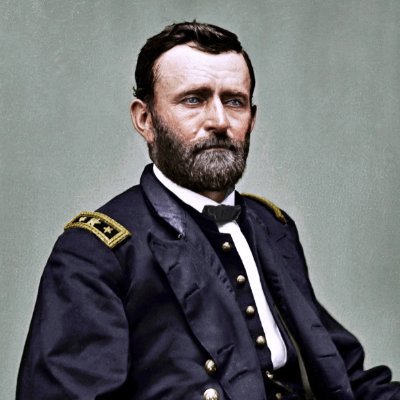
Graphics - colorized: 1) General Robert E. Lee; 2) Lieutenant General Ulysses S. Grant; 3) Petersburg Campaign - March 29 - April 1; 4) Battle of Lewis Farm - March 29, 1865
In Episode 33 of the “Antietam and Beyond” podcast, co-hosts John and Tom talk Rufus Dawes of the Iron Brigade (and his G-Grandfather William Dawes, who rode with Paul Revere in April 1775). Check it out at antietambeyond.transistor.fm
On this day in 1802, the United States Army establishes America's first military academy at West Point, New York. In its 200+ year history, the school has graduated nearly 65,000 alumni, including Grant, Lee, Sherman, Pershing, MacArthur, Patton, Eisenhower and Schwarzkopf.
@CwNewbie11 In the morning is the great battle. Tomorrow or the next day will determine the war. Virginia is here. All the South is here. What will you do tomorrow? In the morning, the enemy will be up in fortified positions on high ground. .
OTD 160 years ago - The Battle of Wyse Fork, North Carolina, March 7-10, 1865
Bragg's Eastern Defensive: The Strategic Importance of Wyse Fork Before Bentonville
Strategic Context: March 1865
By March 1865, the American Civil War was entering its final phase. The Confederacy was in dire straits—Richmond was threatened, Lee's Army of Northern Virginia was essentially besieged at Petersburg, and Sherman's forces had completed their devastating march through Georgia and were cutting a path of destruction through the Carolinas.
After the fall of Savannah in December 1864, Sherman had turned northward. His ultimate strategic goal was to link up with Grant's forces in Virginia, completely isolating Lee's army and rendering the Confederate capital indefensible. By February 1865, Sherman's 60,000-man army had reached South Carolina, capturing Columbia on February 17 and compelling the Confederates to evacuate Charleston.
The Confederate leadership, desperate to stop Sherman's advance, reassigned General Joseph E. Johnston—who had opposed Sherman during the Atlanta Campaign—to command the scattered Confederate forces in the Carolinas. Johnston's unenviable task was to concentrate these dispersed units and somehow halt Sherman's seemingly unstoppable progress north.
Meanwhile, a separate Federal force under General John M. Schofield had captured Wilmington, North Carolina, on February 22, 1865. Schofield's next objective was to march inland and link up with Sherman's forces at Goldsboro, creating an even more formidable Union presence in North Carolina. The capture of Goldsboro was particularly important because it would give the Federal forces control of the Wilmington & Weldon Railroad, a critical supply line.
The Battle of Wyse Fork: March 7-10, 1865
Prelude to Battle
As Schofield's forces moved inland from Wilmington, they divided into two columns. One column under General Jacob D. Cox proceeded toward Goldsboro along the Atlantic & North Carolina Railroad. By March 6, Cox's forces, numbering around 13,000 men, had reached Gum Swamp, about two miles from Wyse Fork (sometimes spelled "Wise Fork"), near Kinston, North Carolina.
Opposing them was a Confederate force of approximately 8,500 men under the command of General Braxton Bragg. Bragg, who had been widely criticized for his leadership at Chickamauga and Chattanooga, was hoping to redeem his reputation with a victory that might slow the Federal advance. His force consisted primarily of remnants from the Army of Tennessee and North Carolina reserves.
Day 1: March 7, 1865
The battle began on the morning of March 7 when Confederate forces under General D.H. Hill launched a surprise attack against the advance elements of Cox's column, specifically the division of General Samuel P. Carter. Hill's Confederates struck hard along the Dover Road, driving back Carter's division and capturing two artillery pieces and several hundred prisoners.
Cox quickly responded by ordering his reserve forces forward and establishing a defensive line anchored on both flanks by swampy terrain. The natural barrier of Southwest Creek provided additional protection for the Union position. By nightfall, the initial Confederate assault had been contained, though they had succeeded in delaying the Federal advance.
Day 2: March 8, 1865
On March 8, Bragg received reinforcements from General Robert F. Hoke's division, bringing Confederate strength to around 8,500 men. Rather than immediately renewing the attack, Bragg spent the day conducting reconnaissance and planning for a major assault on the Union left flank, which he believed was vulnerable.
Meanwhile, Cox used the respite to strengthen his defensive position, constructing field fortifications and repositioning units to better cover potential avenues of Confederate attack. Additional Union reinforcements also began arriving from Schofield's main body, gradually shifting the numerical advantage toward the Federal forces.
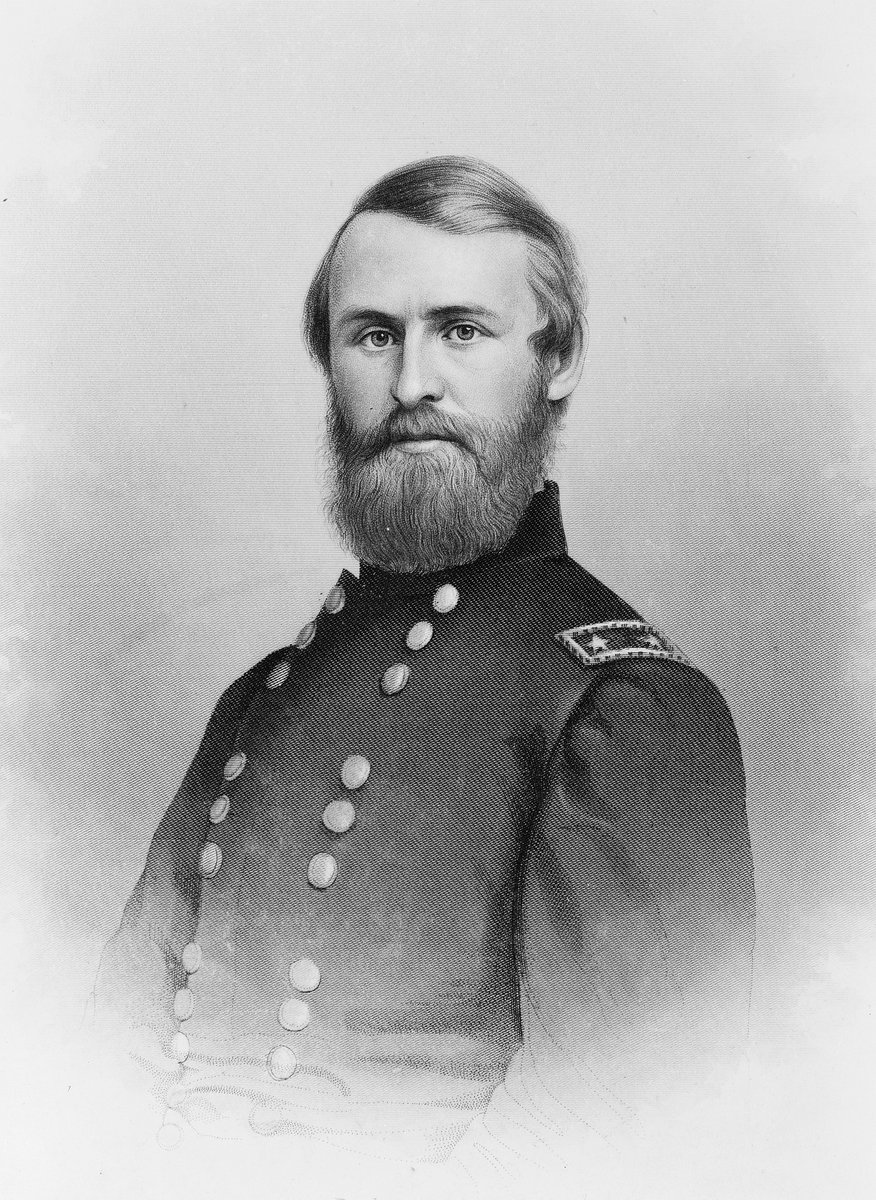
Graphics: 1) General Braxton Bragg; 2) Major General Jacob D. Cox; 3) Battle of Wyse Fork painting
In the next issue of the Antietam Journal, Institute member and battlefield guide Michael Hill reviews Stephen Budiansky’s book, “A Day in September.” The Journal is a perk of Institute membership.
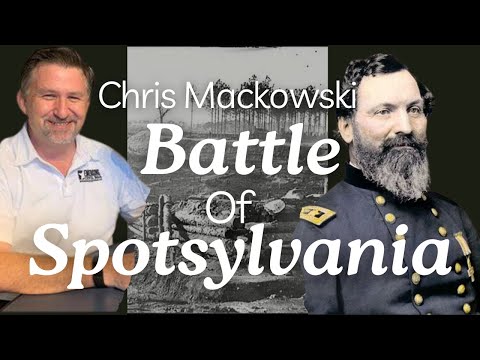
If you haven’t seen it please go watch. Great conversation with Chris Mackowski every history buff will love. Battle of Spotsylvania : Live With Chris Mackowski youtube.com/live/DLTlJfFaF… via @YouTube
Blood in the Desert: How a Drunken General, Brave Lancers, and Artillery Heroism Shaped the Battle of Valverde
I realize I'm a couple of days early, but since I never know for sure if I'll be too busy to post on any given day, the anniversary date is close enough that I thought I'd go ahead with the battle of Valverde, 163 years ago.
The Battle of Valverde, fought on February 21, 1862, represented a crucial engagement in the Confederate campaign to establish a transcontinental nation during the American Civil War. The battle's roots trace back to the summer of 1861, when Confederate forces under Lt. Col. John R. Baylor had established a foothold in southern New Mexico's Mesilla Valley. By December 1861, a more substantial Confederate force began assembling at Franklin (modern-day El Paso), setting the stage for an ambitious campaign.
The Confederate forces were led by Brigadier General Henry H. Sibley, whose background made him particularly suited for this campaign. As a twenty-two-year veteran of the pre-war army who had served in New Mexico, Sibley possessed valuable knowledge of the territory. His ultimate objective, though never explicitly defined, appeared to be the conquest of Colorado and California, a strategic move that would have significantly enhanced the Confederacy's chances of gaining European diplomatic recognition.
The opposing Union forces at Fort Craig consisted of approximately 2,600 men under Colonel Edward Richard Sprigg Canby, comprising both Regular Army troops and New Mexico volunteers and militia. This force represented a diverse mix of professional soldiers and hastily recruited local forces, reflecting the Union's attempt to maintain control over the vast New Mexico Territory.
The battle itself developed from Sibley's attempt to outmaneuver Fort Craig. After realizing that the fort was too well fortified for a direct assault, Sibley executed a flanking movement, crossing to the east bank of the Rio Grande at Paraje. This maneuver aimed to bypass Fort Craig and secure the Valverde Ford, though the difficult terrain slowed the Confederate advance more than anticipated.
The morning of February 21 saw the battle begin in earnest when Major Charles L. Pyron's Confederate reconnaissance force of 180 men encountered Union cavalry near the ford. The engagement quickly escalated as both sides rushed reinforcements to the area. The battle's intensity increased throughout the morning, with artillery playing a significant role. Captain Alexander McRae's Union battery proved particularly effective, forcing the Confederates to seek shelter behind sandhills east of the river.
By early afternoon, the battle took a dramatic turn when General Sibley, incapacitated by illness and alcohol, turned command over to Colonel Thomas Green. It was during this critical phase that one of the battle's most remarkable and tragic episodes occurred. On the Confederate right, Captain Willis L. Lang led Company B of the Fifth Regiment—a unique unit armed only with lances—in a bold charge against a company of Colorado Volunteers who had been hastily recruited from Denver.
The Colorado troops demonstrated remarkable discipline, holding their fire until the lancers were nearly upon them before delivering a devastating volley. The result was catastrophic for the Texas Lancers: Company B suffered the highest casualties of any company in the entire Confederate Army of New Mexico. Captain Lang was so severely wounded that he later took his own life, and his second in command, Lieutenant Demetrius M. Bass, sustained multiple wounds and died several days later.
This rare use of lancers in the Civil War—a weapon more commonly associated with European warfare—proved disastrous against modern firearms, illustrating the rapid evolution of military tactics during this period.
Following this tragic cavalry charge, Colonel Green decided on an all-out attack on the Federal artillery. His advance on the Union center proved to be the decisive maneuver of the battle. Although McRae's battery poured deadly grapeshot into the charging Texans, the Confederates fell upon the Union guns with extraordinary ferocity. Within eight minutes, they had overrun the Union battery in savage hand-to-hand combat. McRae and half his men died at their guns, with eighty percent of Union casualties occurring around this battery position.
The battle's conclusion saw Union forces retreating to Fort Craig, with Colonel Canby requesting a cease-fire to tend to the dead and wounded. The casualty figures tell a story of the battle's intensity: 222 Union and 183 Confederate soldiers were killed or wounded. While the Confederates could claim victory by holding the battlefield, their failure to capture Fort Craig would prove strategically significant.
The aftermath of Valverde illustrates how tactical victory doesn't always translate to strategic success. Although the Confederates proceeded to occupy Albuquerque and Santa Fe, their campaign in New Mexico ultimately failed. The destruction of their supply train at Apache Canyon during the Battle of Glorieta in March 1862 forced a Confederate retreat to the Mesilla Valley, and by summer, Sibley's entire force had withdrawn to San Antonio, marking the end of Confederate ambitions in the Southwest.
The Battle of Valverde stands as one of the most significant Civil War engagements in the Rocky Mountain West, a crucial battle that demonstrates the truly continental scope of the Civil War. While Valverde ended in Confederate tactical victory, the subsequent Battle of Glorieta Pass would prove more strategically decisive, earning it the name "Gettysburg of the West."
Together, these New Mexico battles show how the war's impact extended far beyond the better-known eastern theaters, affecting territories that would prove crucial to America's westward expansion and development. The courage and sacrifice displayed at Valverde - from the doomed charge of the Texas Lancers to the desperate defense of McRae's battery - provide a testament to the determination of both sides in this often-overlooked theater of the Civil War.
Graphics: 1) Tactical Battle Map, Battle of Valverde, NM territory; 2) The Charge of the 5th Texas Lancers by Don Troiani; 3) Brig. Gen. Henry Hopkins Sibley; 4) Col. (later Maj. Gen.) Edward Canby
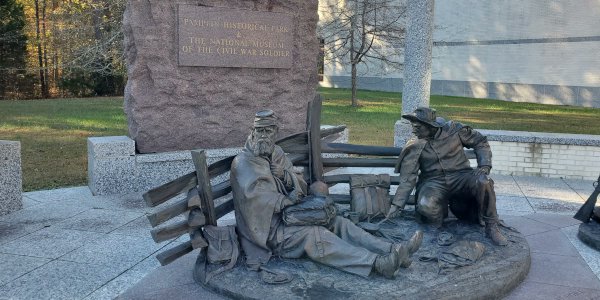
SPOTLIGHT ON LESSER KNOWN HISTORY: Pamplin Park, a private Civil War park has museums, films, exhibits, period buildings, & exact location where Gen Grant's Army finally broke through the defenses of Gen Lee around Petersburg/Richmond to storm the capitol. americasbesthistory.com/spotlight2025-…
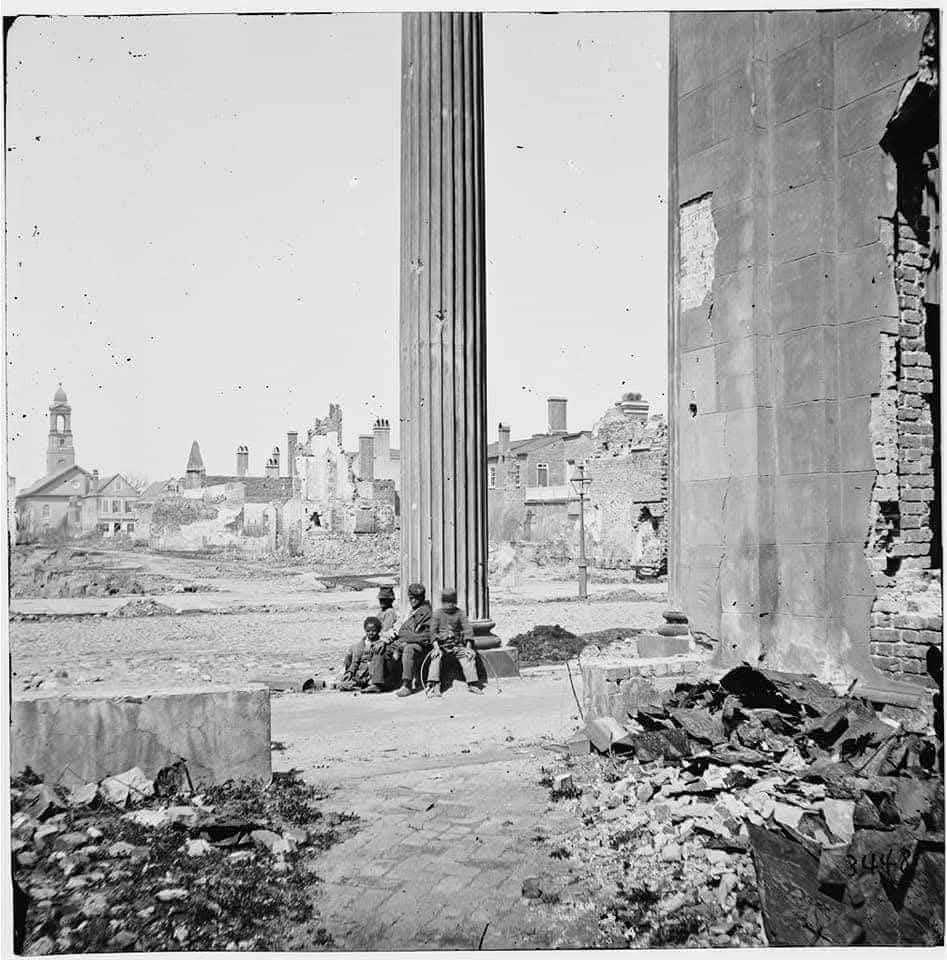
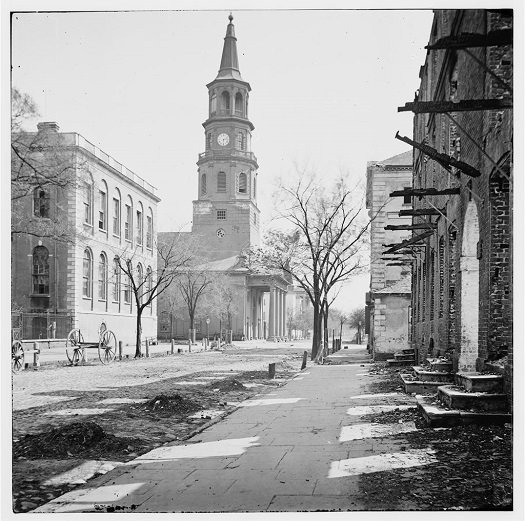
The mayor of Charleston, South Carolina, surrendered control of the city to Union Brigadier General Alexander Schimmelfennig at 9:00 a.m. on Saturday, February 18, 1865.