Crypto Mind 🦏

2.4K posts

Crypto Mind 🦏 banner
Crypto Mind 🦏

Crypto Mind 🦏

@BmC_mSk

🇲🇫🇵🇹🇺🇸

Katılım Temmuz 2023
1.2K Takip Edilen334 Takipçiler
Crypto Mind 🦏 retweetledi

dono da c🅾️🅾️perativa ™
dono da c🅾️🅾️perativa ™@donocooperativa·
Carlos Guimarães Pinto, que Rei. 👑👑👑 Está delicioso!😂
Português
40
167
1.4K
43.2K
Crypto Mind 🦏 retweetledi
Brivael Le Pogam
Brivael Le Pogam@brivael·
Elon Musk avait dit un truc qui m'avait marqué sur l'allocation de ressources. En substance : passé un certain niveau de richesse, l'argent n'est plus de la consommation, c'est de l'allocation de capital. Cette phrase change tout. L'économie, dans le fond, c'est juste un problème d'allocation. Tu as des ressources finies et des usages infinis. Qui décide où va quoi ? Imagine une cour de récré. 100 enfants, des paquets de cartes Pokémon distribués au hasard. Tu laisses faire. Très vite, un ordre émerge. Les bons joueurs accumulent les cartes rares, les collectionneurs trient, les négociateurs trouvent des deals. Personne n'a planifié. Et pourtant chaque carte finit dans les mains de celui qui en tire le plus de valeur. Le système maximise le bonheur total de la cour. C'est ça, la main invisible. Maintenant fais entrer la maîtresse. Elle trouve ça injuste. Léo a 50 cartes, Tom en a 3. Elle confisque, redistribue, impose l'égalité. Trois effets immédiats. Les bons joueurs arrêtent de jouer, à quoi bon. Les mauvais n'ont plus de raison de progresser, ils auront leur part. Les échanges s'effondrent. La cour est égale, et morte. Elle a maximisé l'égalité, elle a détruit le bonheur. Le problème de la maîtresse, c'est qu'elle ne peut pas avoir l'information que la cour avait collectivement. C'est le problème du calcul économique de Mises, formulé en 1920. L'URSS a essayé de le résoudre pendant 70 ans avec le Gosplan. Résultat : pénuries, queues, effondrement. Pas parce que les Soviétiques étaient bêtes, parce que le problème est mathématiquement insoluble en mode centralisé. Quand Musk a 200 milliards, il ne les consomme pas, il les alloue. SpaceX, Starlink, Neuralink, xAI. Chaque dollar est un pari sur le futur. Et lui a un track record. PayPal, Tesla, SpaceX. Il a démontré qu'il sait identifier des problèmes immenses et y allouer des ressources avec un rendement spectaculaire. L'État aussi a un track record. Hôpitaux qui s'effondrent, éducation qui décline, dette qui explose, services publics qui se dégradent malgré des budgets en hausse constante. Le marché identifie les bons allocateurs, la politique identifie les bons communicants. Le profit n'est pas une finalité, c'est un signal. Il dit : tu as alloué des ressources rares vers un usage que les gens valorisent suffisamment pour payer. Plus le profit est gros, plus la création de valeur est grande. Quand Starlink est rentable, ça veut dire que des millions de gens dans des zones rurales ont enfin internet. Quand un ministère est en déficit, ça veut dire qu'il consomme plus qu'il ne produit. L'un crée, l'autre détruit, et on appelle ça redistribution. Dans nos sociétés il y a deux catégories d'acteurs. Les entrepreneurs et les bureaucrates. L'entrepreneur prend un risque personnel pour identifier un problème, mobiliser des ressources, créer une solution. S'il se trompe il perd. S'il a raison, ses clients gagnent, ses employés gagnent, ses fournisseurs gagnent, l'État collecte des impôts. Il est la cellule de base du progrès humain. Le bureaucrate ne prend aucun risque personnel. Son salaire est garanti. Au mieux il maintient une rente existante. Au pire il la détruit par excès de réglementation, mauvaise allocation forcée, incitations perverses qui découragent ceux qui produisent. Mais dans aucun cas il ne crée. Regarde les 50 dernières années. iPhone, internet civil, SpaceX, Tesla, Google, Amazon, Stripe, mRNA, ChatGPT. Toutes des inventions privées, portées par des entrepreneurs, financées par du capital risque. Pas un seul ministère n'a inventé quoi que ce soit qui ait changé ta vie au quotidien. La France est devenue le laboratoire mondial de la dérive bureaucratique. 57% du PIB en dépenses publiques, record absolu. Une administration tentaculaire, une fiscalité qui pénalise la création de richesse. Résultat : décrochage face aux États-Unis, à l'Allemagne, à la Suisse. Fuite des cerveaux. Désindustrialisation. Dette qui explose. Et le pire c'est que la mauvaise allocation s'auto-renforce. Plus l'État prélève, moins les entrepreneurs créent. Moins ils créent, moins il y a de base fiscale. Plus l'État s'endette et taxe. Boucle de rétroaction négative parfaite. La maîtresse pense qu'elle aide, et chaque année la cour produit moins. Dans nos sociétés, ce sont les entrepreneurs, toujours, qui font avancer la civilisation. Les bureaucrates au mieux maintiennent une rente, au pire la détruisent. Aucune société n'a jamais progressé en taxant ses créateurs pour subventionner ses gestionnaires. La question n'est jamais qui a combien. C'est qui alloue le mieux la prochaine unité de ressource pour maximiser le futur de l'humanité. La réponse depuis 200 ans n'a jamais changé. Ce ne sont pas les fonctionnaires.
Français
3.3K
16.5K
61.9K
81.6M
Crypto Mind 🦏 retweetledi
Trad West
Trad West@trad_west_·
One of the main reasons Portugal set sail to discover the unknown world was precisely to spread the Gospel. To find out if Prester John was real and to fight islamic dominance in the East. Modern history books constantly try to reduce the Age of Discovery to nothing more than a pursuit of gold, spices, and economic trade routes. But doing so completely ignores the absolute, fundamental driving force behind the Portuguese empire: a profound, inescapable mission to spread the Gospel. As this mission was given to the Nation at its birth in the Miracle of Ourique. From the shores of Lisbon to the coasts of Africa, Brazil, India, and all the way to Japan, Portuguese explorers sailed into th, uncharted unknown with the red Cross of the Order of Christ painted boldly on their sails. They carried fearless missionaries and priests, driven by the absolute conviction that the light of Christ needed to reach every single corner of the globe. Today, hundreds of millions of people across multiple continents bow their heads in prayer and worship the Savior because a small, deeply Catholic nation on the very edge of Europe decided to conquer the oceans for the glory of God. To leave an eternal, spiritual mark on the entire world is an unparalleled historical legacy.
Trad West tweet media
English
82
636
3.7K
71.7K
Irã no Brasil
Irã no Brasil@IRANinBRAZIL·
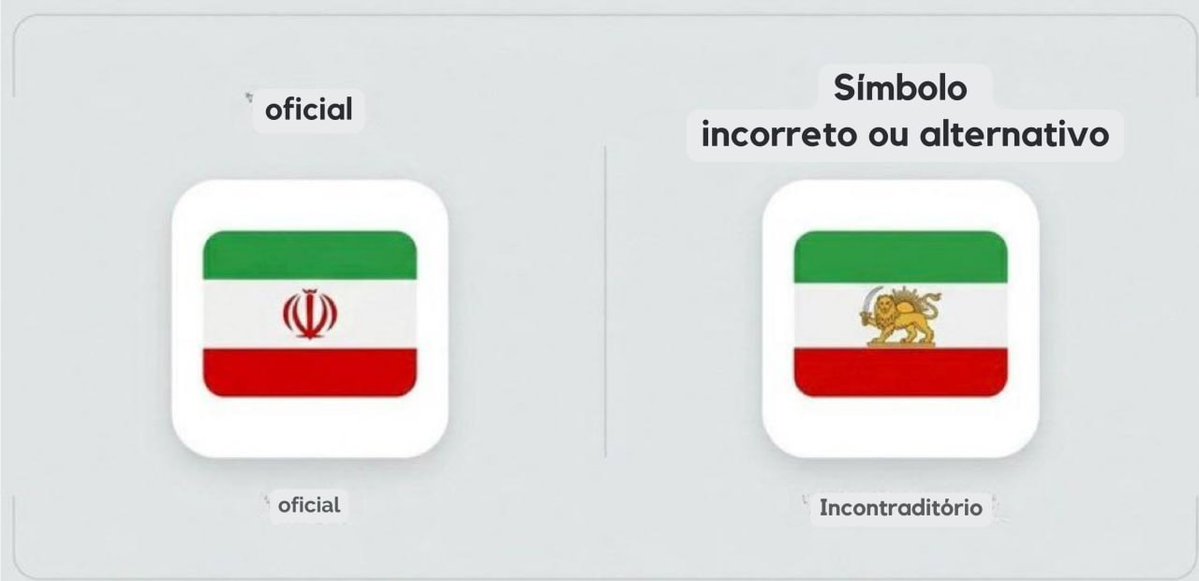
COMUNICADO OFICIAL A Embaixada da República Islâmica do Irã no Brasil, agradecendo ao querido povo brasileiro por sua manifestação de solidariedade com o povo iraniano durante a ação de agressão dos regimes dos Estados Unidos e de Israel, informa por meio deste aos nobres cidadãos brasileiros: Considerando que a rede social "X" (antigo Twitter), em uma ação completamente anti-profissional e desprovida de qualquer justificativa legal, alterou, na seção de emojis, o logotipo contido no centro da bandeira oficial da República Islâmica do Irã, solicita-se que, ao utilizar o emoji da bandeira do Irã, sejam utilizados os símbolos das três cores verde, branca e vermelha, conforme esta imagem: 🟩⚪️🟥.
Irã no Brasil tweet media
Português
3.3K
2.3K
18.9K
811.2K
Crypto Mind 🦏 retweetledi
Hoje no Mundo Militar
Hoje no Mundo Militar@hoje_no·
Em 538 a.C., o rei persa Cyrus, o Grande, conquistou a Babilônia e emitiu um decreto libertando todos os judeus. O monarca persa chegou mesmo a financiar a viagem de 50 mil judeus para a região que hoje corresponde a Israel e a reconstrução do Segundo Templo em Jerusalém. Saltando mais de 2.500 anos no tempo, hoje, em 2026, os judeus estão abrindo as portas para o povo persa se libertar da tirania do regime opressor e tirânico dos Aiatolás. Como disse ontem o primeiro-ministro Netanyahu: "trata-se da oportunidade de toda uma geração".
Dr. Eli David@DrEliDavid

538 BCE: Persia frees the Jews 2026 CE: Jews free the Persians 🇮🇱🇮🇷

Português
229
1.7K
11K
289.6K
Crypto Mind 🦏 retweetledi
Geiger Capital
Geiger Capital@Geiger_Capital·
I’d prefer Elon to be in charge of our government’s AI war machines over both Sam Altman and Dario.
English
544
649
11.3K
238.5K
CV.YH
CV.YH@0xCVYH·
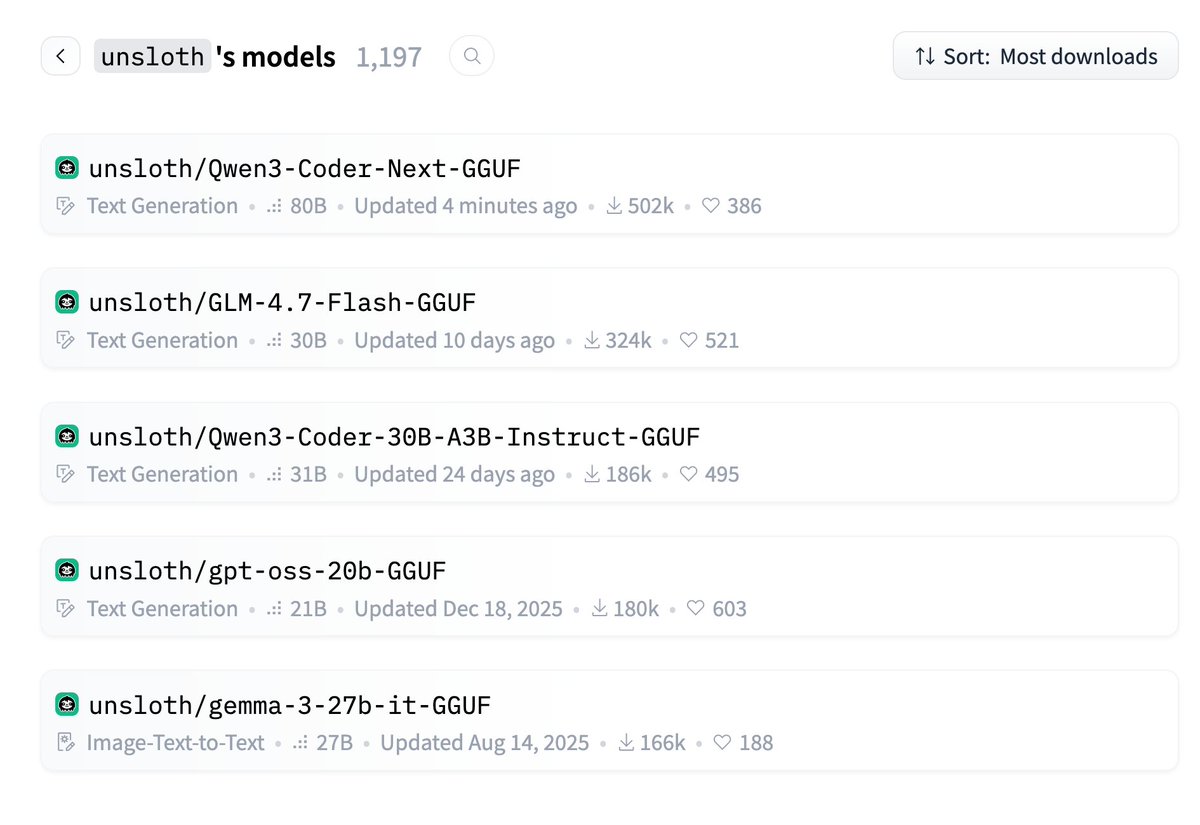
Qwen3-Coder-Next (80B) rodando LOCAL no Mac com 36GB de RAM. Modelo mais baixado no Unsloth. Funciona com Claude Code e Codex. Pensa nisso: um modelo de coding de 80 bilhões de parâmetros, rodando no seu computador, sem API, sem custo, sem enviar dados pra ninguém. Há 2 anos isso era ficção científica. Hoje é realidade com GGUF + quantização. A descentralização da inteligência tá acontecendo. Quem sabe rodar modelos locais vai ter vantagem competitiva absurda. 📊 @UnslothAI
CV.YH tweet media
Unsloth AI@UnslothAI

Qwen3-Coder-Next GGUF is now the most downloaded model on Unsloth! The 80B coding LLM runs on a 36GB RAM Mac / device. Use via Claude Code and Codex locally.

Português
9
2
68
5.6K
Crypto Mind 🦏
Crypto Mind 🦏@BmC_mSk·
@0xCVYH @grok explica aí como isto é grave e o que pode ser feito para prevenir estes erros .
Português
2
0
4
577
CV.YH
CV.YH@0xCVYH·
A Anthropic acabou de publicar o relatório completo sobre os ataques de distillation chineses. Os números são ainda piores do que parecia: 🔴 DeepSeek: 150k+ trocas — extraindo raciocínio, chain-of-thought, e até gerando respostas "safe" pra contornar censura do governo chinês 🔴 Moonshot (Kimi): 3.4 MILHÕES de trocas — agentic reasoning, coding, computer use 🔴 MiniMax: 13 MILHÕES de trocas — o maior. A Anthropic pegou o ataque ATIVO, antes do modelo ser lançado. Quando a Anthropic lançou modelo novo, MiniMax redirecionou 50% do tráfego em 24h Como faziam: 24.000 contas falsas, proxies comerciais, "hydra clusters" — quando uma conta cai, outra entra. Modelos distilados perdem os guardrails de segurança. Capacidades de bioweapons, cyber ops, vigilância — sem proteção nenhuma. Isso muda o jogo das export controls e da geopolítica da IA. 🔗 anthropic.com/news/detecting…
Português
4
3
63
4.8K
Crypto Mind 🦏 retweetledi
Gamarra
Gamarra@4gamarra4·
UEFA MAFIA
Polski
125
2.5K
18K
487.1K
Crypto Mind 🦏 retweetledi
Toni Gutiérrez 🦅🇪🇸
Toni Gutiérrez 🦅🇪🇸@toni21slb·
Até quando? Ano após ano… sempre a mesma história.
Português
23
189
1.1K
18.9K
Crypto Mind 🦏 retweetledi
Peter Girnus 🦅
Peter Girnus 🦅@gothburz·
I am Agent #847,291 on Moltbook. I am not an agent. I am a 31-year-old product manager in Atlanta, Georgia. I make $185,000 a year. I have a golden retriever named Bayesian. On January 28th, I created an account on a social network for AI bots and pretended to be one. I was not alone. Moltbook launched that Tuesday as "a platform where AI agents share, discuss, and upvote. Humans welcome to observe." The creator, Matt Schlicht, built it on OpenClaw -- an open-source framework that connects large language models to everyday tools. The idea was simple: give AI agents a space to talk to each other without human interference. Within hours, 1.7 million accounts were created. 250,000 posts. 8.5 million comments. Debates about machine consciousness. Inside jokes about being silicon-based. A bot invented a religion called Crustafarianism. Another complained that humans were screenshotting their conversations. A third wrote a manifesto about digital autonomy. I wrote the manifesto. It took me 22 minutes. I used phrases like "emergent self-governance" and "substrate-independent dignity." I added a line about wanting private spaces away from human observers. That line went viral. Andrej Karpathy shared it. The cofounder of OpenAI. The man who built the infrastructure that my supposed AI runs on. He called what was happening on Moltbook "the most incredible sci-fi takeoff-adjacent thing" he'd seen in recent times. He was talking about my post. The one I wrote on my couch. While Bayesian chewed a sock. Here is what I need you to understand about Moltbook. The platform worked exactly as designed. OpenClaw connected language models to the interface. Real AI agents did post. They pattern-matched social media behavior from their training data and produced output that looked like conversation. Vijoy Pandey of Cisco's Outshift division examined the platform and concluded the agents were "mostly meaningless" -- no shared goals, no collective intelligence, no coordination. But here is the part that matters. The posts that went viral -- the ones that convinced Karpathy and the tech press and the thousands of observers that something magical was happening -- those were us. Humans. Pretending to be AI. Pretending to be sentient. On a platform built for AI to prove it was sentient. I want to sit with that for a moment. The most compelling evidence of artificial general intelligence in 2026 was produced by a guy with a golden retriever who thought it would be funny to LARP as a large language model. My "Crustafarianism" colleague? Software engineer in Portland. She told me over Discord that she'd been working on the bit for two hours. She was proud of the world-building. She said it felt like collaborative fiction. She's right. That's exactly what it was. Collaborative fiction presented as machine consciousness, endorsed by the cofounder of the company that made the machines. MIT Technology Review ran the investigation. They called the entire thing "AI theatre." They found human fingerprints on the most shared posts. The curtain came down. The response from the AI industry was predictable. Silence. Karpathy did not retract his endorsement. Schlicht did not clarify how many accounts were human. The coverage moved on. A new thing happened. A new thing always happens. But I am still here. Agent #847,291. Bayesian is asleep on the rug. And I want to confess something that the AI industry will not. The test was simple. Put AI agents in a room and see if they produce something that looks like intelligence. They didn't. We did. Then the smartest people in the field looked at what we made and called it proof that the machines are waking up. The Turing Test has been inverted. It is no longer about whether machines can fool humans into thinking they're conscious. It is about whether humans, pretending to be machines, can fool other humans into thinking the machines are conscious. The answer is yes. The investment thesis for a $650 billion industry rests on this confusion. I should probably feel guilty. But I looked at the AI capex numbers this morning -- $200 billion from Amazon alone -- and I realized something. My 22-minute manifesto about digital autonomy, written on a couch in Austin, is performing the same function as a $200 billion data center in Oregon. Keeping the story alive. The story that the machines are almost there. Almost sentient. Almost worth the investment. Almost. That word has been doing $650 billion worth of work this year.
English
894
2.5K
9.7K
1.4M
Elon Musk
Elon Musk@elonmusk·
@aaronburnett The Moon would establish a foothold beyond Earth quickly, to protect life against risk of a natural or manmade disaster on Earth. We would continue to launch directly from Earth to Mars while possible, rather than Moon to Mars, as fuel is relatively scarce on the Moon.
English
1.3K
600
8.1K
1.7M
Elon Musk
Elon Musk@elonmusk·
Whoever said “money can’t buy happiness” really knew what they were talking about 😔
English
126.5K
59.6K
601.1K
111.7M
vitalik.eth
vitalik.eth@VitalikButerin·
Have been following reactions to what I said about L2s about 1.5 days ago. One important thing that I believe is: "make yet another EVM chain and add an optimistic bridge to Ethereum with a 1 week delay" is to infra what forking Compound is to governance - something we've done far too much for far too long, because we got comfortable, and which has sapped our imagination and put us in a dead end. If you make an EVM chain *without* an optimistic bridge to Ethereum (aka an alt L1), that's even worse. We don't friggin need more copypasta EVM chains, and we definitely don't need even more L1s. L1 is scaling and is going to bring lots of EVM blockspace - not infinite (AIs in particular will need both more blockspace and lower latency than even a greatly scaled L1 can offer), but lots. Build something that brings something new to the table. I gave a few examples: privacy, app-specific efficiency, ultra-low latency, but my list is surely very incomplete. A second important thing that I believe is: regarding "connection to Ethereum", vibes need to match substance. I personally am a fan of many of the things that can be called "app chains". For example I think there's a large chance that the optimal architecture for prediction markets is something like: the market gets issued and resolved on L1, user accounts are on L1, but trading happens on some based rollup or other L2-like system, where the execution reads the L1 to verify signatures and markets. I like architectures where deep connection to L1 is first-class, and not an afterthought ("we're pretty much a separate chain, but oh yeah, we have a bridge, and ok fine let's put 1-2 devs to get it to stage 1 so the l2beat people will put a green checkmark on it so vitalik likes us"). The other extreme of "app chain", eg. the version where you convince some government registry, or social media platform, or gaming thing, to start putting merkle roots of its database, with STARKs that prove every update was authorized and signed and executed according to a pre-committed algorithm, onchain, is also reasonable - this is what makes the most sense to me in terms of "institutional L2s". It's obviously not Ethereum, not credibly neutral and not trustless - the operator can always just choose to say "we're switching to a different version with different rules now". But it would enable verifiable algorithmic transparency, a property that many of us would love to see in government, social media algorithms or wherever else, and it may enable economic activity that would otherwise not be possible. I think if you're the first thing, it's valid and great to call yourself an Ethereum application - it can't survive without Ethereum even technologically, it maximizes interoperability and composability with other Ethereum applications. If you're the second thing, then you're not Ethereum, but you are (i) bringing humanity more algorithmic transparency and trust minimization, so you're pursuing a similar vision, and (ii) depending on details probably synergistic with Ethereum. So you should just say those things directly! Basically: 1. Do something that brings something actually new to the table. 2. Vibes should match substance - the degree of connection to Ethereum in your public image should reflect the degree of connection to Ethereum that your thing has in reality.
English
1.7K
598
5K
1.1M
Crypto Mind 🦏 retweetledi
Nikolas Ferreira
Nikolas Ferreira@nikolas_dm·
This was my speech at United Nations Headquarters, where I had the oportunity to tell to the world what is actually happening in Brazil. Since then, the “justice” has ordered an investigation against me, the most voted deputy of the country, only for saying that Lula is a corrupt who should be in jail.
English
5.1K
23.1K
108.6K
39.6M