

Bob Bruner
4.4K posts

Bob Bruner
@Bob_Bruner
University Professor at University of Virginia, Distinguished Professor of Business Administration and Dean Emeritus of Darden School of Business
Charlottesville, Virginia Katılım Temmuz 2008
357 Takip Edilen5.2K Takipçiler

My first thought on getting a letter from the University President, "oh god, what have I done now."
Turned out to be a Presidential Medal for Faculty Excellence.
English
See my new blog post, "An End-of-Year Reflection on "Declinism" and Some Suggested Readings" blogs.darden.virginia.edu/brunerblog/202…
English
See my new blog post, "Recommended Books for 2024." I highlight ten items worth your attention. blogs.darden.virginia.edu/brunerblog/202…
English
See my latest blog post, "The Unbearable Lightness of Forecasting," in which I reflect on the challenges of determining whether recent events amount to an "inflection point" in history. See blogs.darden.virginia.edu/brunerblog/202…
English
See my Veterans Day blog post, "What Can We Learn from Veterans?" in which I discuss three lessons: mission focus, self-restraint, and getting the details right as a basis for getting big things right. blogs.darden.virginia.edu/brunerblog/202…
English
See my new blog post, "How Should We Teach Capitalism?" blogs.darden.virginia.edu/brunerblog/202… In it, argue that a high-engagement teaching approach affords a positive way through challenges posed by capitalism's complexity, dynamism, and fraught issues.
English
See my new blog post, "Is Capitalism Broken?" blogs.darden.virginia.edu/brunerblog/202…
English
Today, I posted this essay at my blog, "What is Capitalism? Why Definitions Matter" See blogs.darden.virginia.edu/brunerblog/202…
English
See my recent blog post, "Book Recommendations on the History of Capitalism." blogs.darden.virginia.edu/brunerblog/202…
English
Bob Bruner retweetledi

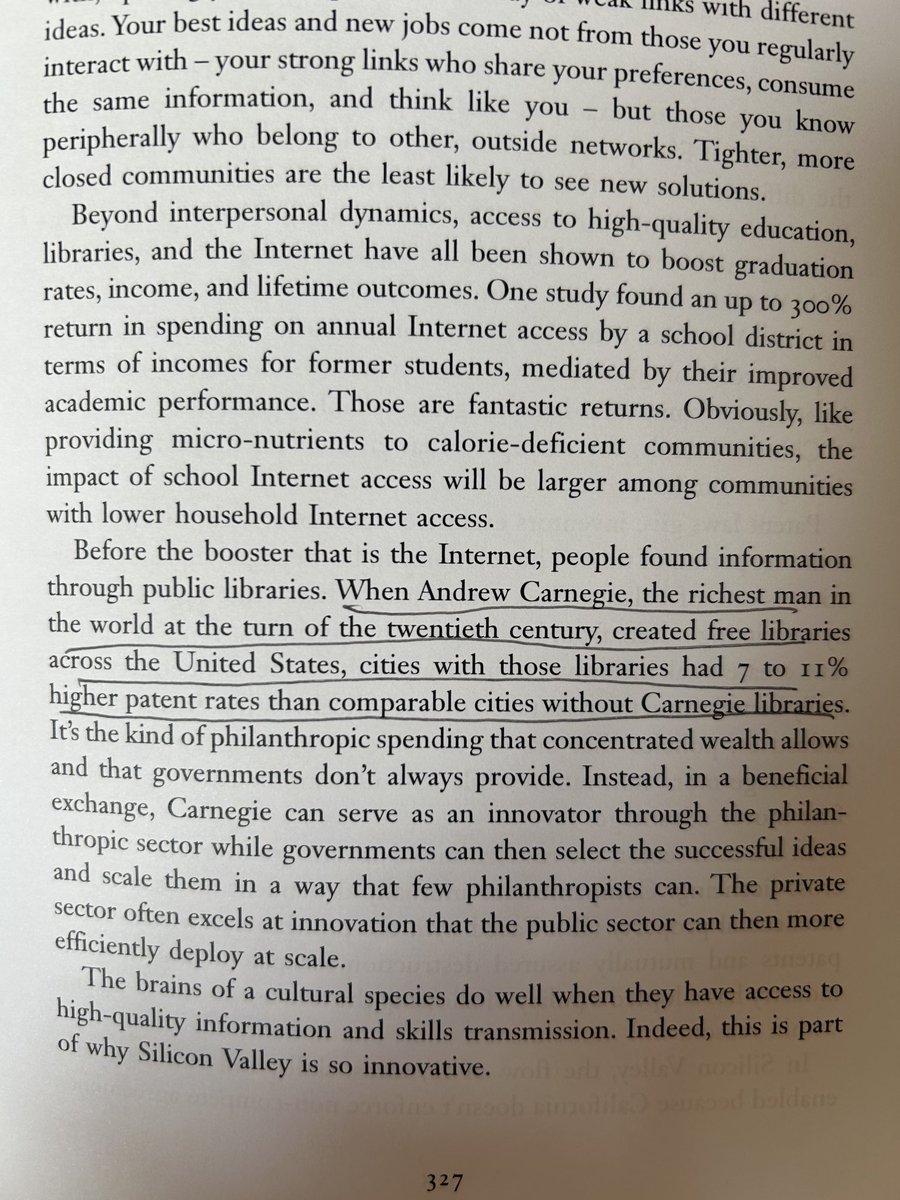
"When Andrew Carnegie, the richest man in the world at the turn of the twentieth century, created free libraries across the United States, cities with those libraries had 7 to 11% higher patent rates than comparable cities without Carnegie libraries." a.co/d/bI8gt5X
English
See my new blog post, The Importance of Reading...And My Recommended Books for 2023
blogs.darden.virginia.edu/brunerblog/202…
English
Bob Bruner retweetledi

Believe it or not, house affordability hasn't changed much in the last 40 years.
What got inflated was people's desire for bigger and more luxurious homes. The median new house today is almost 1000 sqft bigger than 40 years ago.
Price per sqft, inflation adjusted:

English
Bob Bruner retweetledi

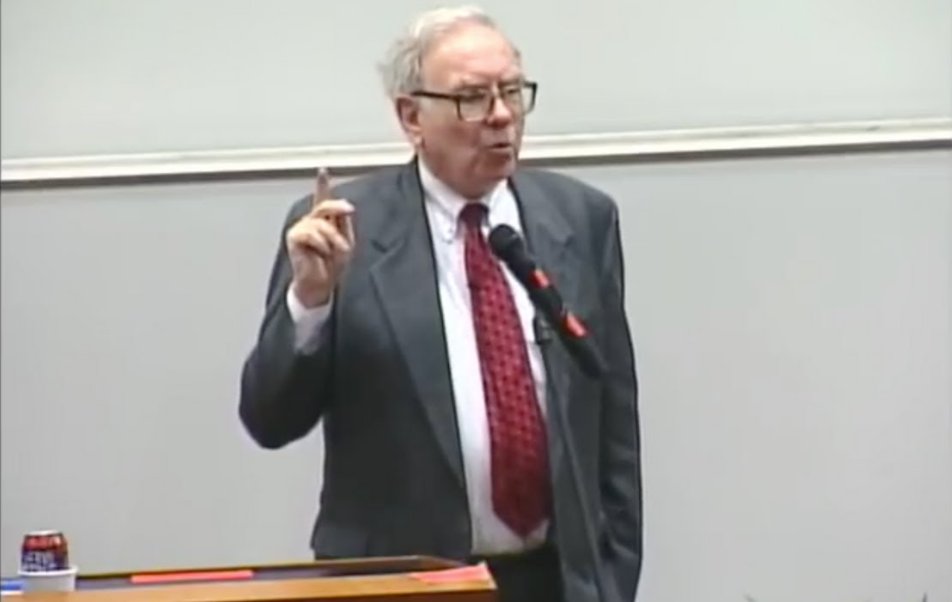
In 2001, Warren Buffett gave a talk at the University of Georgia.
He asked them the most Warren Buffett question ever:
• If you could invest in a friend and get 10% of their income for life -- who would you pick?
Once the students answered the question, he then asked this:
• Why would you invest in that person?
• What character traits do they have?
Now they have a list of character traits to adopt.
Shortly after this, Buffett asked:
If you could short a friend's earnings, who would you pick and why?
Now you have a list of character traits to avoid.
----
1. Do not think this thought experiment is only about money.
You can use it for whatever currency you value.
E.g. Happiness coin
If you could get 10% of a friend's happiness, who would you invest in and why?
If you could short someone's happiness, who would you pick and why?
You can run the same thought experiment with Fitness coin, Friendship coin, Romance coin, etc`
2. This thought experiment is genius because it hacks a bug in life's video game:
Humans are terrible at self-awareness.
But we are great at spotting things in other people.
E.g. If your friend is in the wrong relationship, you can realize in 10 minutes what may take them 10 years.
Daniel Kahneman summarised his book on cognitive biases with the following:
“The premise of this book is that it is easier to recognize other people’s mistakes than our own.” - Daniel Kahneman
3. Nuance - It has to be purely from merit.
Buffett says it can't be because someone will inherit a large sum from their parents.
It has to be based on their behavior.
E.g. If you want 10% of someone's fitness coin, it's not because of incredible genetics -- is because of the actions they take.
English
Bob Bruner retweetledi

The principle of spending money to be paid by posterity, under the name of funding, is but swindling futurity on a large scale. - Thomas Jefferson
English
Bob Bruner retweetledi

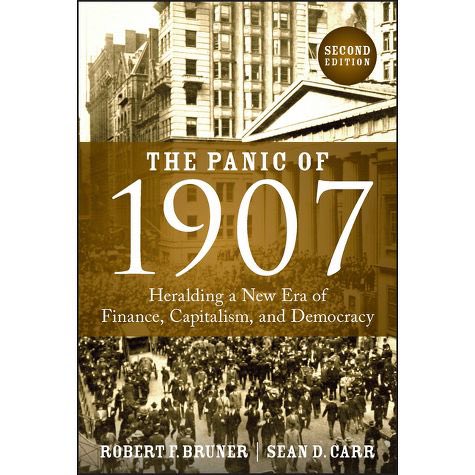
Just finished narrating “The Panic of 1907, 2nd Edition: Heralding a New Era of Finance, Capitalism, and Democracy” by @Bob_Bruner and Sean D. Care for @ascent_audio Back to my finance roots! #nonfiction #business #audiobook #narrator
English
In my new article, "Financial Crises and Collective Action: Why so Hard to Mobilize?" I argue that collective action can be thwarted by market inefficiencies, risk intolerance, information asymmetries, incentives, ideologies, and interests. For more, see internationalbanker.com/finance/financ…
English
Bob Bruner retweetledi

Financial Crises and Collective Action: Why So Hard to Mobilize?
By Robert F. Bruner (@Bob_Bruner), Distinguished Professor of Business Administration, Dean Emeritus of the Darden School of Business (@DardenMBA), University of Virginia
internationalbanker.com/finance/financ…
English
Bob Bruner retweetledi
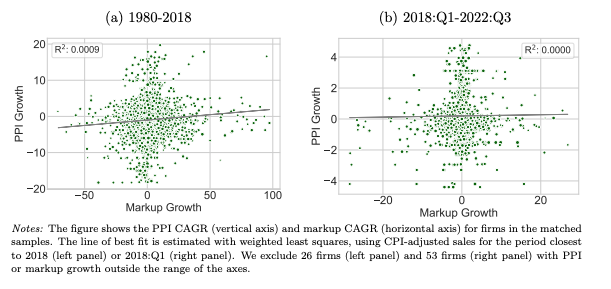
It is just mind-blowing that for all the journalistic chatter about "greedflation" the correlation between firm-markups [profit margins] and industry-level inflation is basically zero.
NYU Stern Economics@NYUSternEcon
@conlon_chris (with Nathan Miller, Tsolmon Otgon, and Yi Yao) study the correlation between changes in firm-level markups and changes in industry-level prices, finding little to no relationship. aeaweb.org/articles?id=10…
English
Bob Bruner retweetledi

“Years ago, anthropologist Margaret Mead was asked by a student what she considered to be the first sign of civilization in a culture. The student expected Mead to talk about fishhooks or clay pots or grinding stones.
But no. Mead said that the first sign of civilization in an ancient culture was a femur (thighbone) that had been broken and then healed. Mead explained that in the animal kingdom, if you break your leg, you die. You cannot run from danger, get to the river for a drink or hunt for food. You are meat for prowling beasts. No animal survives a broken leg long enough for the bone to heal.
A broken femur that has healed is evidence that someone has taken time to stay with the one who fell, has bound up the wound, has carried the person to safety and has tended the person through recovery. Helping someone else through difficulty is where civilization starts, Mead said.
We are at our best when we serve others.”
Credit: Ira Byock
English