Brain

7K posts

Brain banner
Brain

Brain

@Brain1878

Brain: A Journal of Neurology. Publishing leading studies in neurological science since 1878.

London Katılım Ocak 2014
167 Takip Edilen74.6K Takipçiler
Brain
Brain@Brain1878·
Lyndon proposes that functional neurological disorder reflects disordered precision control in predictive coding. Arousal can transiently over-amplify confidence in maladaptive predictions so that they override sensory feedback, giving rise to symptoms. shorturl.at/FYqYG
Brain tweet media
English
1
3
14
1K
Brain
Brain@Brain1878·
Koutsouleris et al. applied machine learning to structural MRI data and found that self-reported cognitive symptoms, but not ultra-high-risk psychosis symptoms, are linked to a distinctive brain signature also seen in schizophrenia. shorturl.at/USI4d
Brain tweet media
English
0
15
63
3.4K
Brain
Brain@Brain1878·
Damage to the amygdala is associated with reduced empathic accuracy. However, Scheffer et al. show that patients with amygdala lesions are as motivated to empathise as controls, indicating that motivational components of empathy are preserved. shorturl.at/QgvdF
Brain tweet media
English
1
11
27
1.8K
Brain
Brain@Brain1878·
Zhang et al. show that maternal antibiotic-induced gut dysbiosis is associated with hypomyelination in offspring. Postnatal propionate supplementation rescues the deficit. shorturl.at/TX1o7
Brain tweet media
English
1
3
13
1.4K
Brain
Brain@Brain1878·
Jones Jagaraj et al. show that cofilin is hyperphosphorylated in spinal cord from pts with sporadic ALS, disrupting actin dynamics and promoting TDP-43 mislocalisation and aggregation. Preventing cofilin phosphorylation in vitro reduced TDP-43 pathology. shorturl.at/ImyBo
Brain tweet media
English
0
4
22
1.3K
Brain
Brain@Brain1878·
Mutations in PTEN cause neuronal hypertrophy & excess synaptogenesis linked to epilepsy. Prina et al. show that deleting Akt1 and Akt3 in Pten-conditional ko mice rescues these abnormalities and prevents seizures, identifying AKT as a therapeutic target. shorturl.at/pNXVI
Brain tweet media
English
1
6
26
2.7K
Brain
Brain@Brain1878·
Corazzolla et al. used PET-MRI to measure TSPO in the skull bone of patients with MS. TSPO was elevated in secondary progressive disease and correlated with disability, white matter loss and cognitive impairment, suggesting biomarker potential. shorturl.at/sqXkq
Brain tweet media
English
1
4
40
2.8K
Brain
Brain@Brain1878·
Seizures & sleep disturbances are common in AD. Shandilya et al. show that modifying a key region of tau in mice reduces its pathological interactions with proteins implicated in seizures and excitotoxicity, while preserving cognitive and motor function. shorturl.at/jfzGR
Brain tweet media
English
2
6
52
2.8K
Brain
Brain@Brain1878·
Donadio et al. show that the detection of phosphorylated alpha-synuclein in skin nerves is a highly reliable biomarker for the early identification of Parkinson’s disease. shorturl.at/iRKBE
Brain tweet media
English
1
25
76
5.5K
Brain
Brain@Brain1878·
The symbol for DNA is all around us, on advertising and in the news. Yet it is almost always drawn incorrectly. Elizabeth Fisher explains how it should be depicted, and why it is important that we get the famous double helix right. shorturl.at/D5P91
Brain tweet media
English
0
7
29
2.4K
Brain
Brain@Brain1878·
Using data from the SMArtCARE registry, Voigt-Müller et al. examine how treatment preferences for spinal muscular atrophy have evolved over time in response to the sequential approval of new therapies. shorturl.at/vGZMD; commentary: shorturl.at/zvwNW
Brain tweet media
English
1
0
9
1.6K
Brain
Brain@Brain1878·
Chen et al. show that rigid and repetitive behaviours occur across dementia syndromes, most prominently in behavioural variant FTD. These symptoms are linked to structural and functional changes in the brain’s reward hub, the nucleus accumbens. shorturl.at/I75YN
Brain tweet media
English
2
14
63
3.3K
Brain
Brain@Brain1878·
Many people with schizophrenia experience problems with movement. While these are often attributed to medication, Joseph et al. explore evidence suggesting that sensorimotor abnormalities may instead be a core element of the disease. shorturl.at/YdlmJ
Brain tweet media
English
1
12
60
4.4K
Brain
Brain@Brain1878·
Delamare et al. present a computational model of memory formation inspired by recent experimental data, in which individual memories are encoded not only in synapses, but also in the nucleus via epigenetic plasticity. shorturl.at/HJ1Hi
Brain tweet media
English
0
10
36
4.4K
Brain
Brain@Brain1878·
Zheng et al. identify plasma neuron-derived extracellular vesicles carrying tau proteins as biomarkers for PSP. These markers accurately distinguish PSP from PD, even in early stages, offering a promising non-invasive blood test for diagnosis. shorturl.at/3pB6r
Brain tweet media
English
0
6
33
1.9K
Brain
Brain@Brain1878·
Chrysostomidou et al. have developed a human iPSC co-culture model that reveals a role for macrophages in sensitising damaged sensory neurons, suggesting that targeting macrophages could be an alternative strategy for treating neuropathic pain. shorturl.at/vMqd6
Brain tweet media
English
0
4
28
1.9K
Brain
Brain@Brain1878·
Histone deacetylase 6 is upregulated in AD, but its role in disease pathogenesis is unclear. Lee et al. show that HDAC6 stabilizes BACE1 via deacetylation – thereby increasing Aβ production – and promotes NLRP3 inflammasome activation. shorturl.at/TETUK
Brain tweet media
English
2
8
44
2.8K
Brain
Brain@Brain1878·
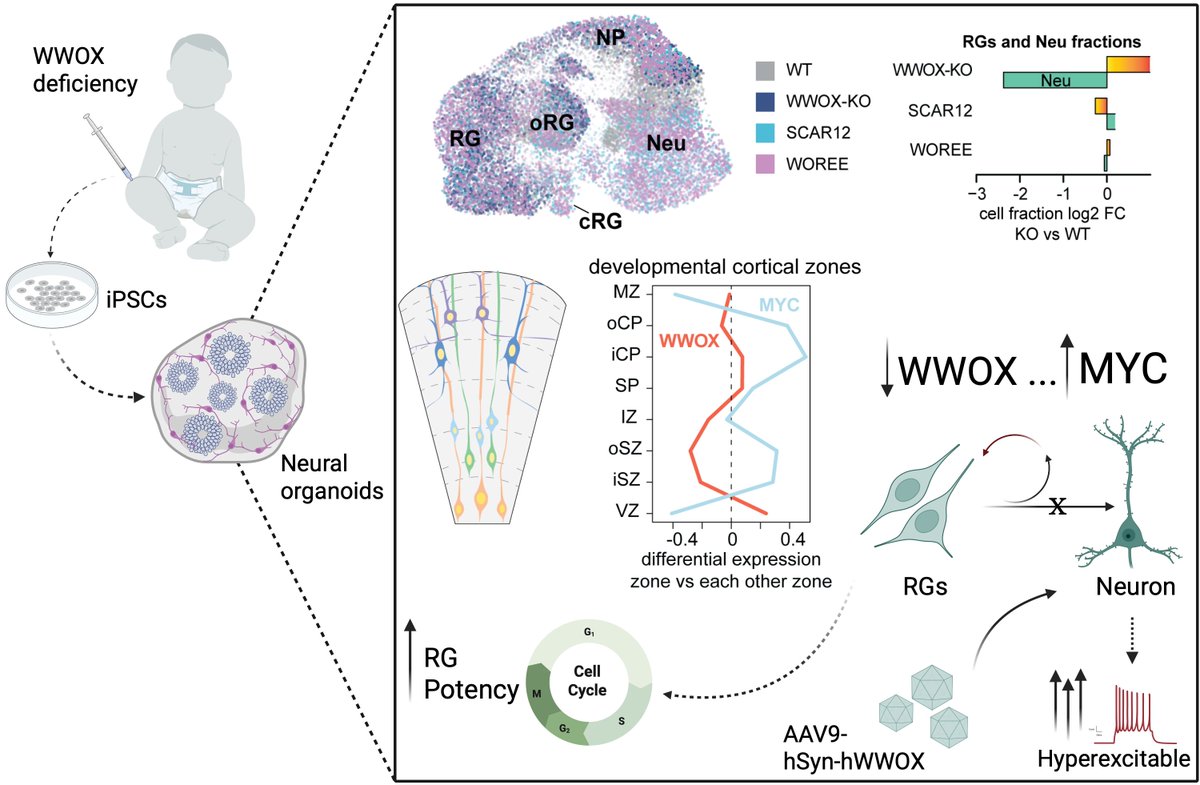
Maletic et al. used patient-derived mosaic cortical organoids to model focal cortical dysplasia caused by two-hit DEPDC5 mutations. They show that biallelic DEPDC5 loss disrupts corticogenesis and increases neuronal excitability. shorturl.at/k7Puc
Brain tweet media
English
0
2
2
1.2K
Brain
Brain@Brain1878·
Rajicic et al. performed bulk RNA seq on temporal cortex from patients with FTLD-TDP C. After excluding tauopathy-related genes and adjusting for neuronal loss, they found a specific downregulation of postsynaptic pathways. shorturl.at/JnRj4
Brain tweet media
English
0
6
18
1.9K
Brain
Brain@Brain1878·
Siew et al. show that berbamine hydrochloride – a brain-penetrant small molecule inhibitor of intracellular galectin-3 – reduces microglial activation and improves symptoms in a Huntington’s disease mouse model. shorturl.at/gohTh
Brain tweet media
English
0
2
14
2.1K