Chapel Street

11.5K posts

Chapel Street banner
Chapel Street

Chapel Street

@BravestStreet

Author of Chapel Street: 'the bravest little street in England'. Publisher The History Press. WW1 Factual History.

Katılım Aralık 2017
312 Takip Edilen287 Takipçiler
Chapel Street
Chapel Street@BravestStreet·
Really interesting article about the cheese industry, and the rural economy. Liz Truss eat your heart out!
GIF
Sama Hoole@SamaHoole

The British cheese course used to be a wedge of cheddar at the end of dinner, eaten on a chunk of bread with a small pickle or an apple, washed down with whatever was left in the bottle. Not a tasting flight. Not a board with seven varieties and a slate. A wedge. From the wheel that had been on the slab for the past fortnight, sweating slightly under a muslin cloth, cut to order with a wire by a man who knew which one was ready. Cheddar in the West Country. Lancashire in the North West. Wensleydale in the Dales. Cheshire on the Welsh border. Stilton in the Vale of Belvoir. Caerphilly across the Severn. Each made from raw milk, from cows on the same fields the cheesemaker's grandfather had worked, aged on slate or pine in a cool room at the back of the dairy, wrapped in greaseproof paper for the customer to take home. In 1914 Britain had roughly 3,500 farmhouse cheesemakers. By 1945 the number was 126. The mechanism was specific. In 1939 a wartime law banned regional farmhouse production and compelled every dairy in the country to produce a single uniform block called Government Cheddar. Hundreds of regional cheeses, evolved over centuries on particular hillsides for particular milks, were ordered out of existence by a Ministry of Food memo in the same year war was declared. Farmhouse Wensleydale dropped from 176 producers in 1939 to 9 by 1946. The last one gave up in 1957. The restriction was lifted in 1954, too late for most. The Milk Marketing Board then guaranteed farmers a price for liquid milk until 1994, which kept on-farm cheesemaking economically pointless for another four decades. Supermarket pasteurised cheddar, made in a stainless steel plant in Wiltshire and vacuum-packed for shelf life, became, for two generations, what the word cheddar meant. A handful of producers held the line. Montgomery's still hangs cloth-bound truckles in a Somerset shed. Westcombe still does it the proper way. Mrs Kirkham's in Lancashire is one of the last raw-milk cheesemakers in the county. Their cheddar is to the supermarket product what a hand-raised Melton pie is to the petrol-station equivalent. The wheel is still being cut by the man who made it. The wire is in his hand. He will tell you about the cow, the field she grazes on, the slope of the field, the wildflowers that come up in May, and his grandfather who started the dairy in 1934, all of it free of charge, as part of buying a quarter-pound wedge from a five-stone wheel in a small Somerset dairy on a Saturday morning. You will not find any of that in a supermarket cold cabinet. Nor will you find the cheese. Which is, on reflection, the whole point.

English
0
0
0
7
Chapel Street
Chapel Street@BravestStreet·
My mum attended his lecture advertised in Manchester Evening News: cod liver oil (we followed regime), trans fats, margarine, spots and carbonated drinks, sugar, cooking oils and process etc. Sadly passed away. Article brings it full circle. theguardian.com/lifeandstyle/1…
English
0
0
0
32
Chapel Street retweetledi
Yesterday's Britain, A Better Britain.
Front gardens with colourful flowers seem to be a thing of the past today. A lot of them have been concreted over, to provide parking for three SUV's and two wheelie bins.
Yesterday's Britain, A Better Britain. tweet media
English
202
357
2.8K
182.4K
Chapel Street retweetledi
Scotty
Scotty@scottyeders·
Spare a moment tonight to remember the courage of 133 aircrew from 617 Squadron RAF. On the night of 16/17 May 1943, they took off from RAF Scampton in 19 Lancasters for Operation Chastise — the legendary Dambusters Raid. We will remember them. 🇬🇧 🫡
Scotty tweet media
English
20
88
512
4.4K
Chapel Street retweetledi
ALEXIS ™I ❤️🇷🇼•
Britain has lost around half its hedgerows since the Second World War. The wildlife that depended on them has followed a similar trajectory. 🌿 The old field boundary — a strip of blackthorn, hawthorn, dog rose, and elder two to five metres wide between cultivated ground — was not wasted agricultural space. It was a functioning ecological system that maintained pollinators, pest predators, and farmland birds across centuries of working land. Each hedgerow is a nesting corridor for grey partridge and skylark, a foraging habitat for brown hares and hedgehogs, a site for solitary bee colonies, and a windbreak for the crops alongside it. The field cultivated to its very edge gives the maximum return this season. It removes the populations of beneficial insects, farmland birds, and small mammals on which stable long-term production depended. The field with a hedgerow yields a few percent less per cultivated hectare — but remains productive across decades without compensatory chemical inputs. The documented declines in grey partridge, lapwing, and skylark across the British agricultural landscape since the 1970s are directly linked to field consolidation and hedgerow removal. Practical equivalents for the garden or smallholding: - A strip of wildflower meadow at least one metre wide at the plot boundary - A clump of nettles in a shaded corner as a habitat base for red admiral, small tortoiseshell, and peacock butterflies - A native mixed hedge of blackthorn and hawthorn in place of post-and-wire fencing - A section of uncut grass between rows of fruit trees #HedgerowHabitat #FarmlandWildlife #NativeHedge #GardenWildlife
ALEXIS ™I ❤️🇷🇼• tweet media
English
170
3K
9.2K
200.1K
Chapel Street
Chapel Street@BravestStreet·
@SamaHoole This is what Dale Alexander US nutritionist said years ago...he was ridiculed. 'Nutritionist' was a derided term. Comment to me by dr. over trans fats was 'No. It's the other way around'! Meaning his credibility was nil.
English
1
0
5
276
Sama Hoole
Sama Hoole@SamaHoole·
The low-fat era, 1980 to 2010. They took away butter. We got margarine with trans fats that were banned thirty years later for causing the disease the butter was blamed for. They took away whole milk. We got skimmed milk, with the fat-soluble vitamins skimmed off and synthetic ones added back in. They took away the egg yolk. We got egg-white omelettes, three of them, with toast, and a multivitamin to replace the choline. They took away red meat. We got Quorn, made in a vat in Billingham from a fungus nobody had eaten before 1985. They took away cheese. We got fat-free cottage cheese with the texture of damp newspaper. They took away cream. We got fat-free yoghurt sweetened with aspartame and twelve grams of sugar per pot. They took away dripping on toast. We got Flora, advertised by a doctor who is now in a textbook on medical fraud. The advice ran for thirty years. Obesity tripled. Type 2 diabetes quadrupled. Heart disease did not fall. The dieticians who wrote it have not apologised. They have written new guidelines. The new guidelines blame meat. The new guidelines are written by the same people.
English
15
199
650
11.4K
Chapel Street retweetledi
Sama Hoole
Sama Hoole@SamaHoole·
British regional foods that almost nobody under forty has eaten: Lancashire hotpot with mutton and kidney. Welsh cawl with mutton and leek. Devonshire clotted cream with the crust on it. Yorkshire curd tart with sheep's-milk curd. Cornish pasty made with skirt steak and swede. Bath chap from a pig's cheek. Stargazy pie from Mousehole. Cumberland sausage from a single coiled link. British regional foods that have appeared in the last twenty years: A Pret a Manger in every town. A Greggs vegan sausage roll. A Costa flat white. A McDonald's McPlant. The first list is the regional identity of an island. The second list is the same five chains repeated in every postcode. A country without distinctive food is a country without a distinctive culture. Britain has both, on paper. In practice, the high streets all sell the same six items. Eat a Cornish pasty made by a man in Cornwall. The food that built the country is still findable, but you have to look.
Sama Hoole tweet media
English
49
132
611
17K
Chapel Street
Chapel Street@BravestStreet·
True...Also the Catholic church deregulation of fish on Fridays (not allowed meat), which affected local chippies and school dinners...
I’M FINE 🏴󠁧󠁢󠁥󠁮󠁧󠁿🇬🇧😸🐶💚🤍💜@Lynette55

@SamaHoole The fishing industry collapsed after uk joined EEC (EU) because the French were allowed to take “our” sites and our fishermen were encouraged to sell their boats to them or in some cases burn them. We had a chance to reverse that (Brexit) but we caved & sold out our stocks

English
0
0
1
55
Chapel Street
Chapel Street@BravestStreet·
'Thou shalt have a fishy on a silver dishy - when the boat comes in!'
Sama Hoole@SamaHoole

The British wet fish van was, from roughly 1920 to 1995, the way coastal Britain delivered fresh fish to inland towns. A small refrigerated van. A man called Eric, or George, or Ron, who had been driving the route for thirty years. He left the harbour at four in the morning, after the boats had come in, with that day's catch packed on ice in plastic crates. He drove the same route every Tuesday and Thursday, through three villages and one market town, parking in the same lay-by at the same time, sounding his horn twice, and waiting while the housewives came out with their shopping bags. The slab in the back of the van, opened on a hinge, was a wet fishmonger's counter in miniature. Cod, haddock, plaice, sole, herring, mackerel, sprats, smoked haddock dyed yellow with annatto, kippers in pairs, oysters on Tuesdays if the boat had got them, brown shrimps from Morecambe Bay, cockles from the Thames estuary, and a crab or two for the household that knew how to dress one. The fishmonger boned the fillet on the lid of a plastic crate with a knife he had been using since 1976. He weighed it on a brass scale. He wrapped it in newspaper. He took the money in coins. He drove on to the next village. The wet fish van required: a coastal fishery, a working harbour, a road network, a refrigerated vehicle, a knowledgeable operator, and a population that knew what to do with a whole fish. The fishery collapsed in the 1970s through industrial overfishing. The operator retired. The population forgot what to do with a whole fish. The van is in a barn in Lincolnshire. The horn no longer sounds in any village. The North Sea is still there.

English
0
0
0
25
Chapel Street
Chapel Street@BravestStreet·
Not a council estate but private? In Davyhulme? One of the first with mortgages (around £4,000). Wimpey house. Design inspired by Dutch housing. All closes, ways, drives, roads etc. named after Scottish islands: Arran, Skye, Iona, Coll, Benbecula, Shetland etc. @FlixtonUrmston
Yesterday's Britain, A Better Britain.@YesterdaysBrit1

A British council estate from the 1970s. A breeding ground for many of us, from a time when we knew our neighbours and there was a decent sense of community spirit.


English
0
1
2
430
Chapel Street retweetledi
Give A Shit About Nature
Give A Shit About Nature@giveashitnature·
That little patch of moss on your fence or shady spot is doing work on a planetary scale. Moss stores 6 billion tons of carbon globally. It pulls carbon out of the air, holds moisture, and supports tiny ecosystems. So maybe stop spraying it with chemicals and power-washing it off. Your moss is on the job, let it stick around.
Give A Shit About Nature tweet media
English
67
1K
3K
29.3K
Chapel Street retweetledi
Mr PitBull Stories
Mr PitBull Stories@MrPitbull07·
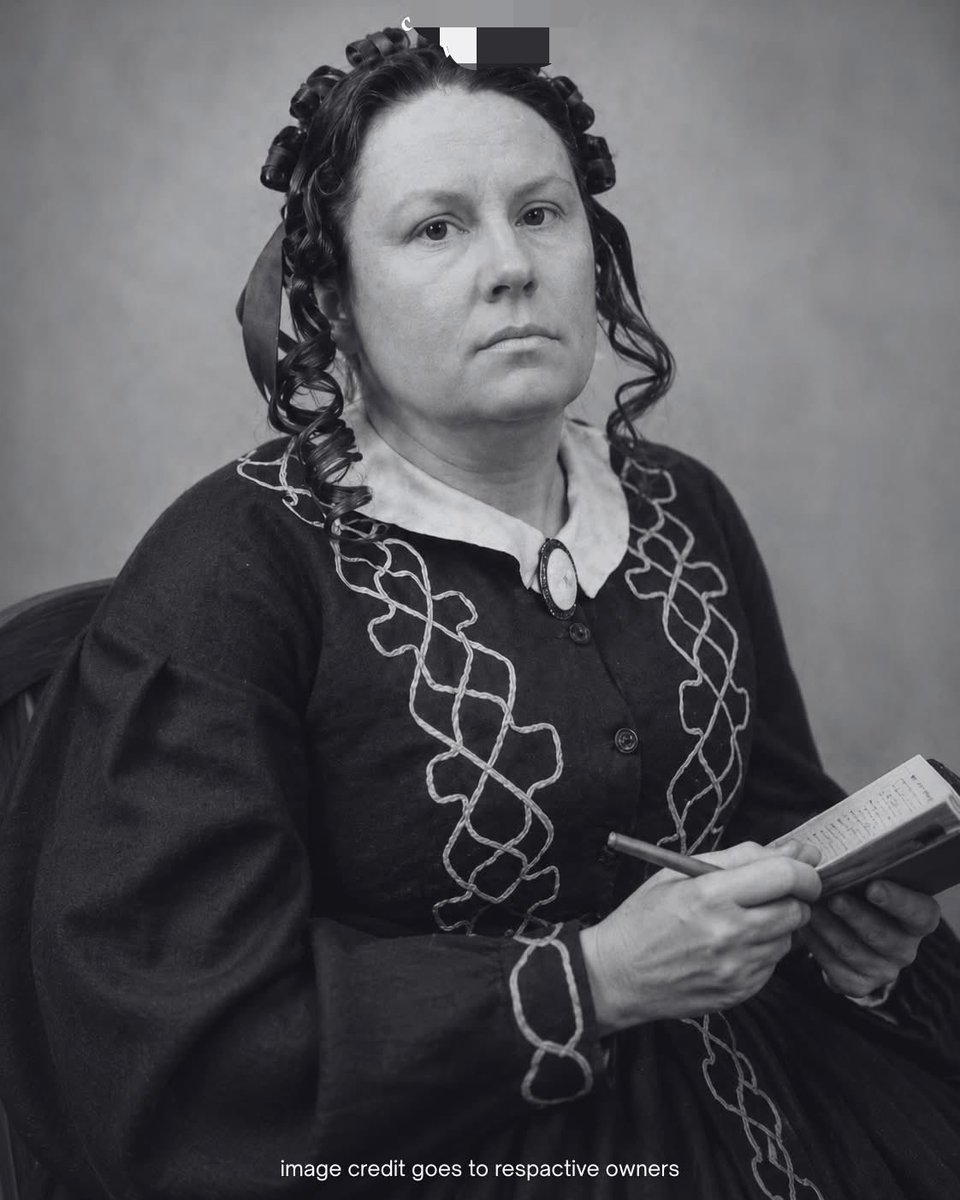
In May 1860, she kissed her six children goodbye. She thought about the dinner she would cook later. She thought about the laundry. She thought about the quiet life of a mother in Illinois. She had no idea that when the front door clicked shut, it would stay locked for three long years. Her husband, Theophilus Packard, was a respected minister. To the neighbors, he was a man of God. But inside their home, he was a man who could not stand a wife who thought for herself. Elizabeth Packard liked to read. She liked to debate religion. She had her own opinions about life and faith. In the 19th century, for a woman to have a brain was considered a danger. Theophilus decided to end the argument once and for all. He didn’t need a crime. He didn't need a witness. In those days, the law in Illinois said a man could commit his wife to an insane asylum without any evidence or a public hearing. He simply had to say she was "disturbed." One morning, a group of men arrived at her home. They didn't listen to her logic. They didn't care about her tears. They dragged her away to the Jacksonville Insane Asylum. Elizabeth was 43 years old, perfectly sane, and suddenly a prisoner. When she entered the asylum, she expected to see people who needed medical help. Instead, she found a warehouse of "inconvenient" women. There were wives who had argued with their husbands about money. There were daughters who refused to marry men they didn't love. There were women who were simply too loud or too independent. "This is not a hospital," Elizabeth realized. "It is a cage for the unwanted." The doctors tried to break her spirit. They told her that if she just admitted her husband was right and she was wrong, she could go home. They wanted her to say she was crazy for wanting her own thoughts. Elizabeth looked them in the eye and said, "I cannot buy my liberty by a lie." She didn’t give up. Instead, she started to write. She hid scraps of paper in the linings of her clothes. She tucked notes under floorboards. She recorded every abuse, every scream in the night, and every story of the women around her. She became a secret journalist inside a living nightmare. After three years, she was finally released, but her husband locked her in a room at home. He planned to move her to another asylum in a different state. This time, Elizabeth’s friends helped her get a message to a judge. A trial was finally ordered to determine if she was actually insane. The courtroom was packed. Theophilus was confident. He brought "experts" to say that her religious doubts proved her mind was broken. But then, Elizabeth stood up. She didn't shout. She spoke with the calm power of the truth. She explained her beliefs. She showed the jury that having a different opinion is not a disease. The jury only needed seven minutes. They came back with a single word: Sane. Elizabeth walked out as a free woman, but she found that her husband had taken everything. He had sold their furniture, taken her money, and disappeared with their children. She was alone and penniless. Most people would have disappeared into the shadows. Elizabeth did the opposite. She spent the next forty years traveling the country. She stood before the legislature and demanded new laws. She said, "A woman's mind is her own, and the law must protect it." Because of her, states changed their laws. They made it illegal to lock a person away without a fair trial and a medical exam. She turned her private pain into a public shield for thousands of other women. She proved that even if you take away a woman’s home, her money, and her children, you can never truly take away her voice. Follow us Lost in Yesterday
Mr PitBull Stories tweet media
English
29
241
1.1K
27.3K
Chapel Street retweetledi
Higgy
Higgy@higgyboson·
I submitted my tax return to HMRC one day late. I was fined £100. And I didn't even owe them any tax! Angela Rayner tried to avoid paying £40,000 stamp duty for nearly a year and could have been fined £8,000 by the HMRC after she recently coughed up the money, (shortly after being gifted £50,000 from a refrigeration company for 'Office Expenses'). She wasn't fined a single penny. No fine. No penalty. No comeback whatsoever. Is it any wonder that us little folk are getting so pissed off with these freeloading, opportunistic, money grabbing, holier than thou, two faced charlatans?
Higgy tweet media
English
921
6.6K
22K
419.4K