Brewster Lab

114 posts

Brewster Lab

Brewster Lab

@BrewsterLab

Katılım Eylül 2016
41 Takip Edilen213 Takipçiler
Brewster Lab
Brewster Lab@BrewsterLab·
For me, this reshapes how I think about regulation. Every TF we look at has this useful behavior of buffering physiological &/or genetic perturbations to promoter activity. Although we expected many TFs would actively amplify perturbations, they don't. tinyurl.com/3hr9njnd
English
0
0
0
53
Brewster Lab
Brewster Lab@BrewsterLab·
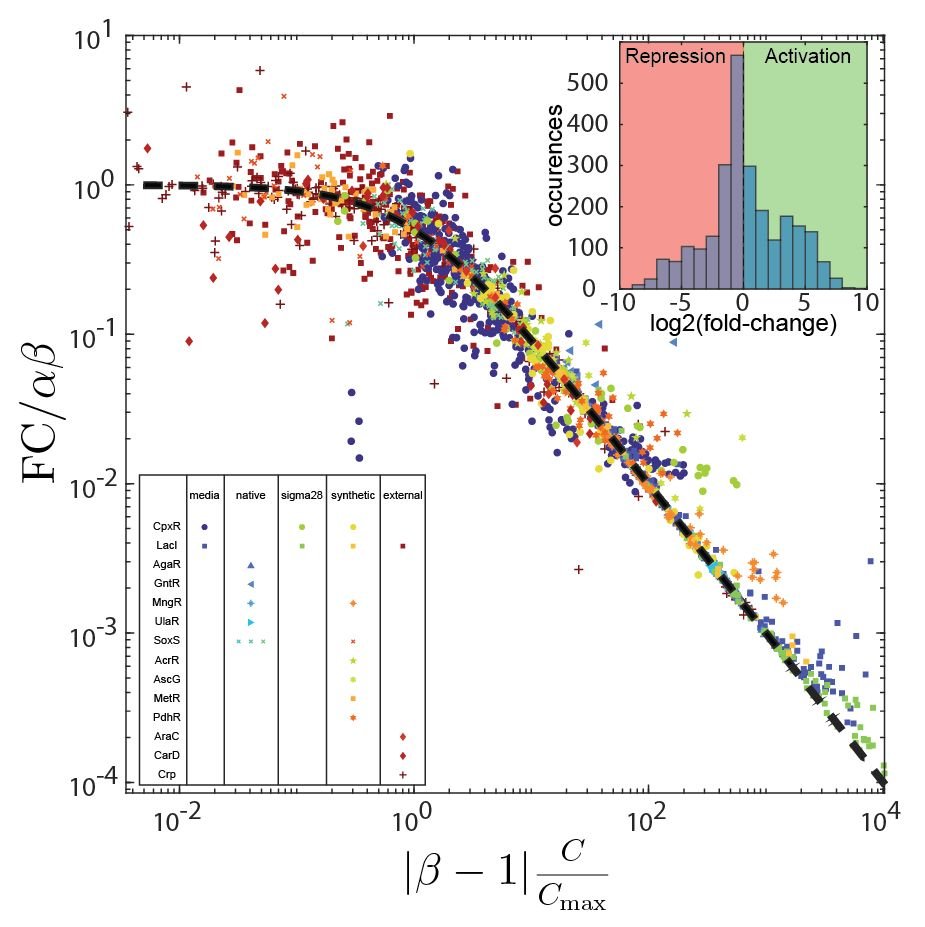
There's more in the paper, but heres an overarching fig. All the paper data (and some existing data) collapsed to the same basic, universal behavior. We never see evidence of the relationships that would come from "destabilizing" type interactions. Everything looks stabilizing.
Brewster Lab tweet media
English
1
0
0
78
Brewster Lab
Brewster Lab@BrewsterLab·
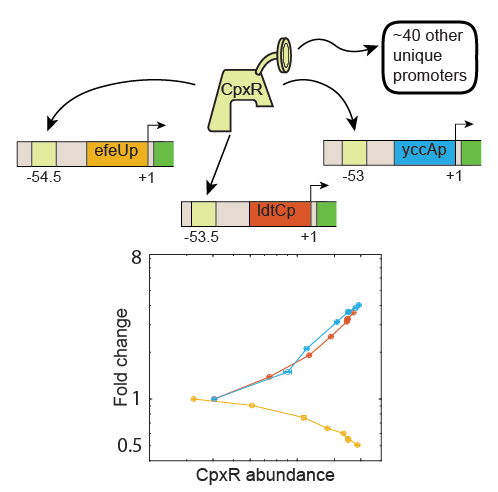
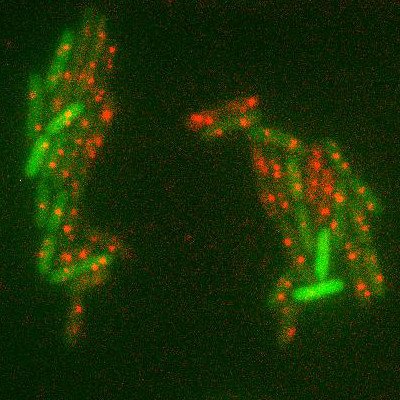
How does a TFs function depend on the promoter it regulates? We know that a TF can have different effects on different promoters. For example, consider this: CpxR regulates LdtC,YccA, EfeU at a similar location. Yet two of them are activated, one repressed tinyurl.com/3hr9njnd
Brewster Lab tweet media
English
1
0
2
98
Brewster Lab
Brewster Lab@BrewsterLab·
This was the culminating work of Dr. Sunil Guharajan. His work has really pioneered our interest in the relationship between TFs, their modes of regulation and the promoters they regulate We have LOTS more to say on this subject, stay tuned.
English
0
0
0
81
Brewster Lab
Brewster Lab@BrewsterLab·
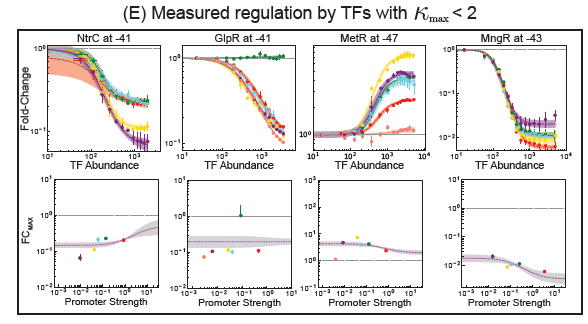
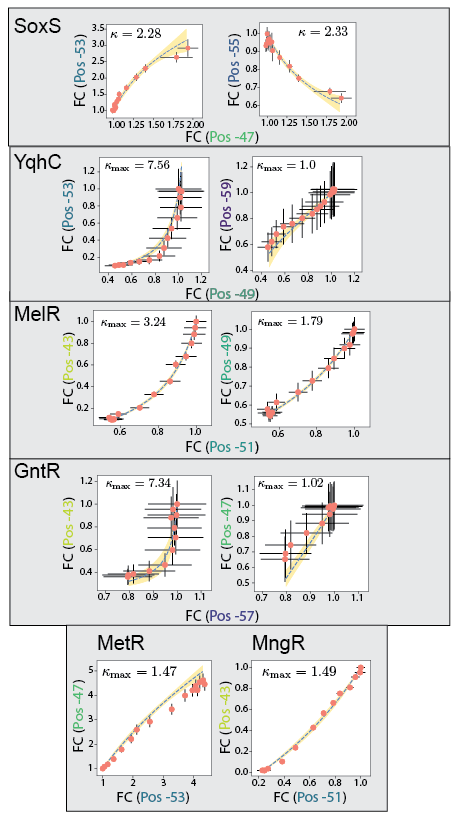
The ones where we could not say for certain (kappa close to 1), showed varied (less clear) relationships. It's a good time to note that kappa ~ 1 doesn't mean it CAN'T be a stabilizer, only that we don't see evidence of stabilization (which can be for more than one reason).
Brewster Lab tweet media
English
1
0
0
103
Brewster Lab
Brewster Lab@BrewsterLab·
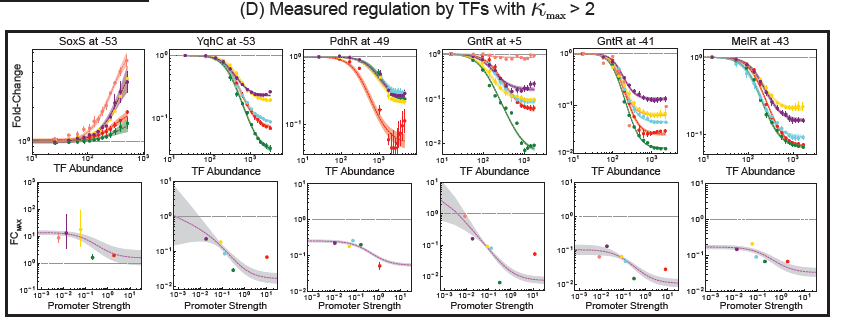
So we built a bunch of promoters and tested how these candidate stabilizers (and not stabilizers) regulate them. The ones we thought were stabilizers all pretty much have this tell-tale relationship (stronger promoters, lower fold-change)
Brewster Lab tweet media
English
1
0
0
112
Brewster Lab
Brewster Lab@BrewsterLab·
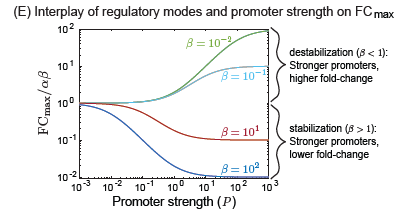
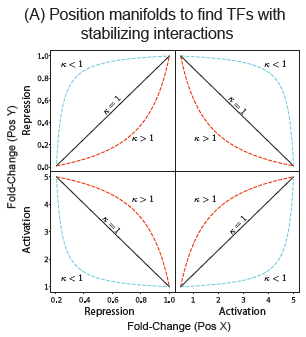
Why does it matter? Well one example is that from our theory it's easy to see that we expect TFs that operate by stabilization to have a specific relationship to the promoters they regulate; stabilizers will repress stronger promoters more and activate stronger promoters less.
Brewster Lab tweet media
English
1
0
0
74
Brewster Lab
Brewster Lab@BrewsterLab·
So we measured 204 TFs at ~12 binding positions on the promoter and looked for signs of a specific mechanism of regulation by plotting their FC when regulating one pos. vs another; "stabilizing" interactions are inferred when we see curvature (kappa not equal to 1).
Brewster Lab tweet media
English
1
0
0
82
Brewster Lab
Brewster Lab@BrewsterLab·
We see stabilization is used a lot more than we expected. We see it for activators and surprisingly we see it frequently for repressors. Importantly, we do not ALWAYS see curvature, there are instances of both activation and repression without it.
Brewster Lab tweet media
English
1
0
0
75