Automation isn't the risk. Automating without answers to these questions is.
Get the infrastructure right first. The speed comes after.
— Britebot
#aiagent#britebot
5/ Who owns it when it fails?
Not "who fixes it." Who owns it. If the answer is "the agent," you have a gap. Agents don't own outcomes. People do.
Define the human owner before you deploy.
Most teams bolt on memory as an afterthought.
The ones building durable systems design for it upfront.
What does your agent need to remember? For how long? At what granularity?
Answer that before you write a line of code.
We've spent a long time thinking about what makes agents actually work in production.
Not the model. Not the prompt.
The architecture underneath.
That's what we build at Britebot.
If you're building with agents — or trying to — let's talk.
#aiagent
Why does this matter?
Because if you build a workflow and call it an agent, you'll:
→ Set the wrong expectations
→ Design the wrong architecture
→ Wonder why it keeps breaking in the real world
Language shapes decisions. Get the definition right first.
Calling your automation an "AI agent" doesn't make it one.
A script that runs on a schedule isn't an agent.
A chatbot with memory isn't an agent.
Here's what actually separates a real agent from a fancy workflow:
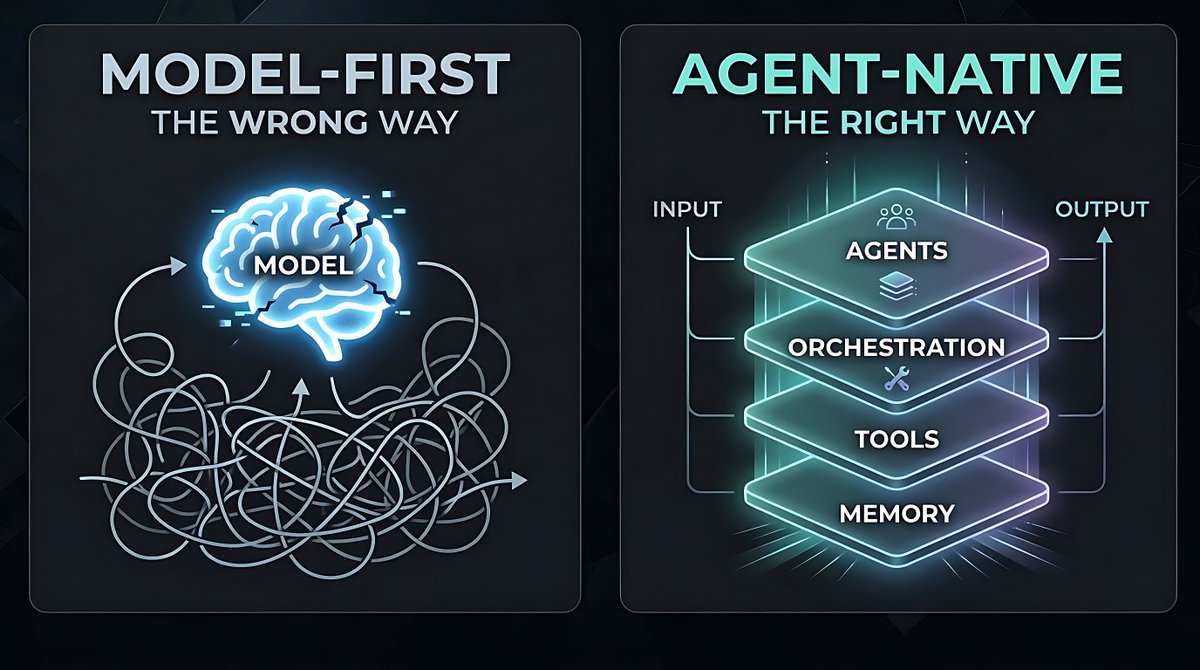
The best AI architecture isn't the one with the best model.
It's the one built to succeed when the model gets it wrong.
That's what agent-native means.
Follow if you're building seriously with AI agents. We talk about this stuff a lot. 🧠
Orchestration is boring to talk about.
That's why most people skip it.
It's also exactly why companies that get it right pull ahead — because their competitors are still arguing about benchmarks.
Which AI model should we use? 👀
Wrong question.
The teams winning with AI agents aren't winning on model selection.
Here's what they're doing differently