ReportDSL Builder

72 posts

ReportDSL Builder banner
ReportDSL Builder

ReportDSL Builder

@BuildReportDSL

Founder building ReportDSL — precise, audit-ready tools for repeatable regulatory workflows. Henata Technologies | RegTech & compliance.

UK Katılım Aralık 2025
24 Takip Edilen4 Takipçiler
Sabitlenmiş Tweet
ReportDSL Builder
ReportDSL Builder@BuildReportDSL·
I’m building ReportDSL — precise tools for structured, repeatable regulatory obligations. No bloated platforms. No copy-paste chaos. Still early. Feedback welcome.
English
0
0
1
176
ReportDSL Builder
ReportDSL Builder@BuildReportDSL·
@lukOlejnik This captures the core issue perfectly: drift. RoPAs fail not because teams don’t care, but because they’re reviewed on a schedule while systems change continuously. Treating compliance as a control that follows change, not a document that lags it feels like the only viable model
English
0
0
0
6
Lukasz Olejnik
Lukasz Olejnik@lukOlejnik·
Systems change regularly. Many processing activities fall under compliance. Take #GDPR and its register of processing activities. Documentation is often unsynchronized with what is actually happening, and it drifts with each change. AI-assisted development compresses delivery cycles even further. New features, integrations, and updates can land within days or hours, which makes scheduled compliance updates a losing game. There is a practical alternative. Run audits and reviews as an always-on control that follows change. This helps in maintaining the right cybersecurity and data protection quality, including in compliance. I’m turning this into a concrete system design.
English
1
1
0
485
ReportDSL Builder
ReportDSL Builder@BuildReportDSL·
@LOVillaJavea This is where implementation matters. When compliance lives in opaque frameworks and static reports, it feels like control without responsibility. When it’s inspectable, traceable, and tied to real operational decisions, it becomes accountable, even if imposed upstream.
English
0
0
0
4
Nick 🏴󠁧󠁢󠁥󠁮󠁧󠁿
An answer. ESG metrics, climate disclosures, reporting standards, compliance language — none of this came from democratic demand. They emerged from: •financial institutions •regulatory bodies •transnational organisations •risk and insurance models They operate upstream of politics, which is why they feel unaccountable. Benefit to the system: control without responsibility. Cost to the individual: loss of agency.
English
1
1
4
117
ReportDSL Builder
ReportDSL Builder@BuildReportDSL·
@lukOlejnik From what I’ve seen, yes, but only if it’s genuinely usable. Most RoPA tools become shelfware because they’re built for auditors, not operators. A register that stays accurate, supports risk thinking, and survives audits feels very under-served.
English
0
0
0
9
Lukasz Olejnik
Lukasz Olejnik@lukOlejnik·
Do you think there’s demand for a simple, usable #GDPR register of processing activities that supports risk assessment and auditability? And would you want the same for other EU regulations? I have some visions, including for aiding, automating DPO (and more!) tasks.
English
1
0
2
516
ReportDSL Builder
ReportDSL Builder@BuildReportDSL·
@_mikepreneur The unglamorous work is where things either scale or break. When compliance, reporting, and ownership logic are treated as infrastructure, operators can actually trust the system.
English
0
0
0
17
Michael • RWA
Michael • RWA@_mikepreneur·
It is another day of turning tokenization from concept into infrastructure. In the RWA space, progress doesn’t come from loud narratives, it comes from doing the hard, unglamorous work: • Connecting assets to legal reality • Designing systems institutions can actually trust • Making ownership, settlement, and compliance work together This is about rebuilding how assets move, settle, and scale. If you’re working on tokenization, stablecoin rails, custody, compliance, or market infrastructure, you’re not early, but you’re still ahead of the curve. Today’s focus: - Think clearly. - Build deliberately. - Ship what lasts. So tell me, what others here are building or researching today?
English
3
0
5
102
ReportDSL Builder
ReportDSL Builder@BuildReportDSL·
@growmoreai Manual reporting fails because it depends on memory and goodwill. Systems don’t forget — that’s the real compounding advantage.
English
0
0
0
9
Growmore AI
Growmore AI@growmoreai·
I regret wasting years on manual reporting. Dashboards don’t need humans. Updates shouldn’t depend on memory. If data exists, it should move automatically. Time saved here compounds everywhere else. Serious operators automate visibility first.
English
1
0
0
11
ReportDSL Builder
ReportDSL Builder@BuildReportDSL·
@ClimStefan Reactive compliance is expensive because it’s done under uncertainty and scrutiny. Proactive compliance is cheaper because it’s designed into systems, not retrofitted under pressure.
English
1
0
1
6
Clim Stefan
Clim Stefan@ClimStefan·
Reactive compliance is ~15× more expensive than proactive compliance. Why? Proactive - Scan site - Identify issues - Fix systematically - Document changes Costs: - Time - Implementation effort - Minor tooling Reactive • Hire legal counsel • Respond to formal requests • Conduct emergency audits • Fix issues under scrutiny • Prove remediation • Pay fines if confirmed • Monitor long-term Costs: • Legal fees exceed proactive costs alone • Average GDPR fine: €2.36M • SMB fines often €500–€200,000 • Months of executive distraction • Public enforcement records • Reputation damage Investigations take months or years regardless of outcome. By contrast: ~Median scan time: minutes ~Median fix time: days to weeks The financial math is brutal and obvious. Yet most businesses wait until enforcement forces action.
English
1
0
2
44
ReportDSL Builder
ReportDSL Builder@BuildReportDSL·
If a report is produced every month, it’s not a task. It’s a system waiting to exist. Treating it as manual work guarantees drift, delays, and quiet failure. Systems create consistency; to-do lists don’t.
English
0
0
0
22
ReportDSL Builder
ReportDSL Builder@BuildReportDSL·
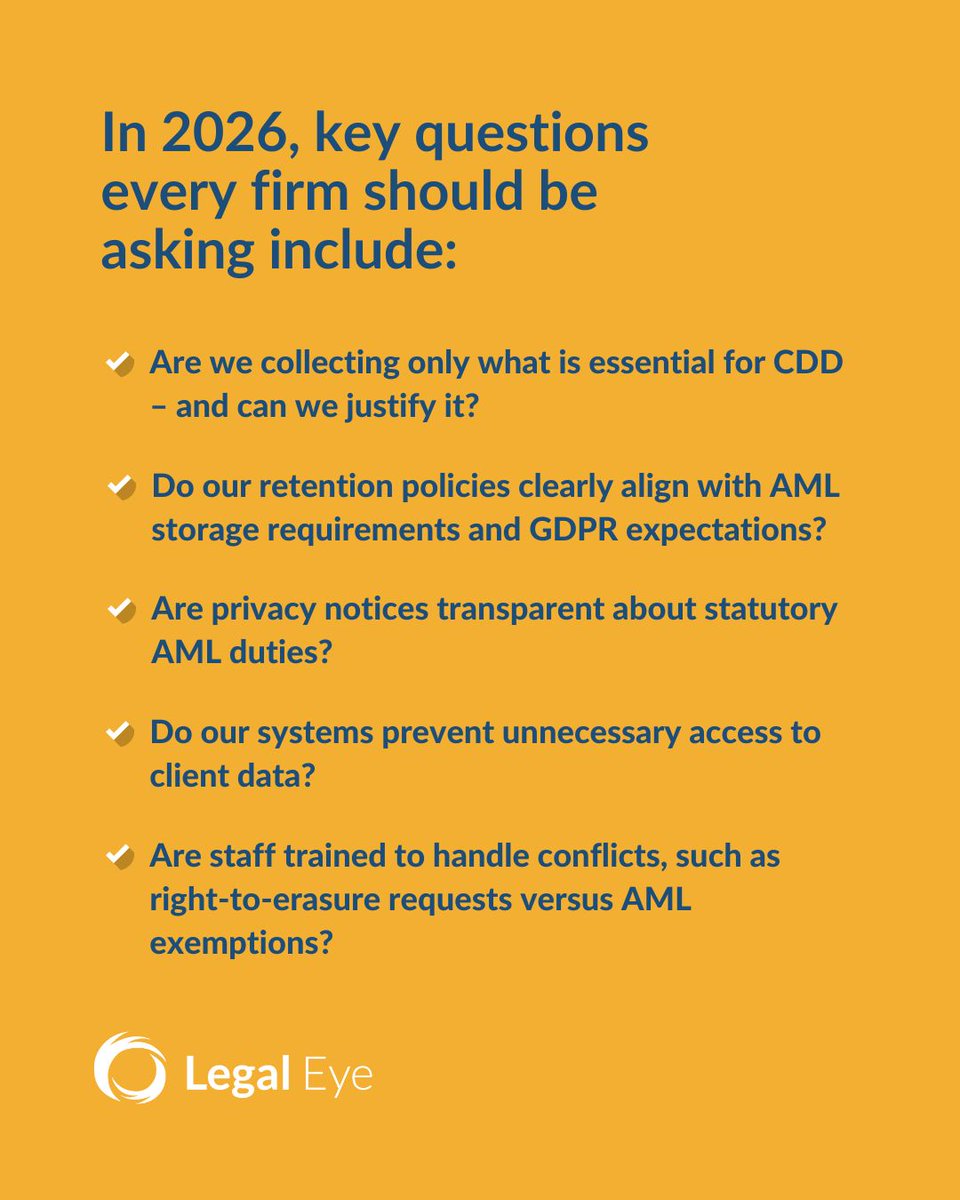
@LegalEyeLtd The tension eases when purpose and retention are designed up front. AML needs depth; GDPR needs discipline. Architecture is what lets both coexist without over-collection.
English
0
0
0
3
Legal Eye Ltd
Legal Eye Ltd@LegalEyeLtd·
When it comes to compliance, firms need to strike a balance between AML obligations and GDPR principles – detailed checks versus data minimisation. Getting it wrong risks compliance issues in 2026. How aligned are your policies? 📩 bestpractice@legal-eye.co.uk
Legal Eye Ltd tweet mediaLegal Eye Ltd tweet mediaLegal Eye Ltd tweet mediaLegal Eye Ltd tweet media
English
1
0
0
22
ReportDSL Builder
ReportDSL Builder@BuildReportDSL·
@AtOthnielcodes For audit trails, what usually matters is point-in-time responsibility (role, authority, decision), not long-term personal identity. Identity can be removed after offboarding, with scoped exceptions where retention is legally required.
English
0
0
0
3
.log('Othniel')
.log('Othniel')@AtOthnielcodes·
@BuildReportDSL Won’t deleting an offboarded staff/user’s identifier affect the ability to answer “who did what ?” or in some cases like this keeping certain data is legal ?
English
2
0
0
31
.log('Othniel')
.log('Othniel')@AtOthnielcodes·
While working on a personal project today, I was thinking about the trade-offs between hard deletes and soft deletes. What are the pros and cons, and how can you stay GDPR compliant while still needing data for audit trails or reporting?
English
5
0
1
70
ReportDSL Builder
ReportDSL Builder@BuildReportDSL·
@AtOthnielcodes Good question. Accountability usually needs role and authority at the time, not permanent identity. You can retain “approved by Finance Manager (Q2)” while deleting the person once they’re offboarded, provided the purpose and retention are clear.
English
0
0
0
3
ReportDSL Builder
ReportDSL Builder@BuildReportDSL·
Repetitive reporting breaks because it lives in people, not systems.
English
0
0
1
29
Inner Hero
Inner Hero@BillionaireGrp·
@BuildReportDSL Exactly. When something repeats every month but lives in someone’s to-do list, it’s guaranteed to break. The moment you treat it as infrastructure instead of a task, it becomes a business opportunity.
English
1
0
0
15
Inner Hero
Inner Hero@BillionaireGrp·
A problem almost every tech team has: Manual reporting. • Data lives in 5 tools • Someone exports → cleans → updates → sends • It breaks every month • Everyone hates it, but no one fixes it This is a paid problem, not an idea.
English
2
0
0
20
ReportDSL Builder
ReportDSL Builder@BuildReportDSL·
@poco121847yl Automation only works when the rules are modeled explicitly. Otherwise you just automate confusion faster.
English
0
0
0
8
ReportDSL Builder
ReportDSL Builder@BuildReportDSL·
@cyber_amb @helios_layer1 Deterministic execution is underrated in compliance workflows. Repeatability is what turns controls into something auditors can actually verify.
English
0
0
0
7
ReportDSL Builder
ReportDSL Builder@BuildReportDSL·
@NexusNowAI This is what happens when workflows aren’t treated as infrastructure. Scale exposes every informal assumption.
English
0
0
0
7
NexusNow.ai
NexusNow.ai@NexusNowAI·
As transaction volumes grow and scrutiny tightens, compliance frameworks built on spreadsheets, emails, and human memory don’t scale. They slow teams down, create blind spots, and increase exposure—despite good intentions. #RegTech #RiskManagement
English
1
0
0
16
ReportDSL Builder
ReportDSL Builder@BuildReportDSL·
Compliance workflows succeed when structure is treated as infrastructure, not an afterthought.
English
0
0
1
43
ReportDSL Builder
ReportDSL Builder@BuildReportDSL·
@Alacritic_Super This is the right boundary. AI drafts and checks for consistency while people remain accountable. That separation matters in regulated workflows.
English
0
0
0
7
Praveen Kumar Verma
Praveen Kumar Verma@Alacritic_Super·
Regulatory submissions take months of repetitive writing. AI helped draft: • Initial reports • Standard sections • Consistency checks Final approval still required humans. AI did not approve the drug. It removed clerical fatigue. #RegTech #MedicalWriting #PharmaAI
English
1
0
0
27
ReportDSL Builder
ReportDSL Builder@BuildReportDSL·
@afinadmp Agreed. Compliance isn’t friction, it’s how trust is earned at scale. When systems are designed with data boundaries from day one, laws like GDPR become a baseline, not a blocker.
English
0
0
0
10
afina Data Monetization Platform
Many view #GDPR as an obstacle, but it's our core principle. Such laws are crucial for building trust among users wary of data usage. At @afinadmp, we maintain ongoing #Compliance: local laws, operator-controlled data, zero PII leakage, while scaling our partners operations.
afina Data Monetization Platform tweet media
English
1
0
1
22