Sabitlenmiş Tweet

Bunta Fujiwara (Je suis apprendre le français )
51.5K posts

@BuntaFujiAE86
Administrador de una casa de pique, especialista: en tofu y blanqueo de capitales. Y hater de la ISI. #Liftocracy #MentalidadDeTiburón #FinanzasParaÑeros




Ustedes no me creerán pero yo si desconfío de los fármacos de la India y de la China y ni siquiera es porque formen parte del BRICS

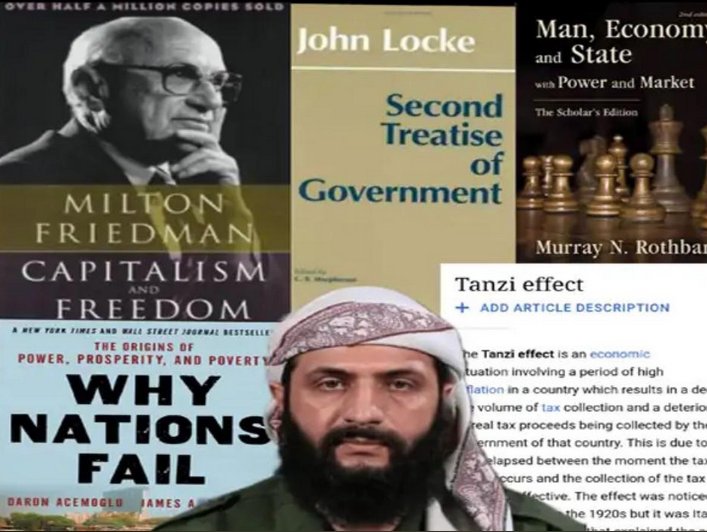
Syrian President Ahmad Al-Sharaa claims GDP grew by 30–35% in 2025. Almost certainly overstated... but before dismissing it entirely, it is worth unpacking what might explain the gap. Syria's pre-liberation GDP estimates (~$20 billion) almost certainly excluded large parts of the country: the SDF-controlled northeast, HTS-controlled northwest, and other non-regime zones. These areas had real economic activity. We have reported time and time again on the dynamism of Idlib's economy, with companies being established with paid-up capital of millions of dollars, industrial zones, and hundreds of millions in exports. I am not entirely sure the government in Damascus took this into account. I am also unsure about the extent to which Damascus was able to incorporate data from the vast agricultural lands east of the Euphrates — even if drought-stricken — or from oil output in those areas. I would argue that unifying these into a single national figure mechanically inflates the number. This also helps explain why the government was able to significantly increase the size of the budget. There is also an exchange rate effect. If GDP is calculated in Syrian pounds and converted to USD, the result is highly sensitive to which rate is used. The post-liberation exchange rate appreciated significantly. The same pound-denominated output produces a much larger USD figure, with no real change in production. Add to this the partial formalization of the informal economy: under Assad, vast activity ran through militia-controlled channels and parallel markets. Money previously lost to checkpoints can now be used for consumption or production (and also imports, of course). In fact, there is also a supply-side confidence effect. My hunch (though this remains to be studied), is that businesses that had been deliberately holding back investment under Assad (fearing expropriation, predation, or instability) began deploying capital rapidly after liberation, also thanks to capital from abroad. Capacity utilization recovered, dormant firms reopened, and new ones were established at pace. This specific point is not hypothetical; company registration data is clear on this. Foreign company incorporation is a very strong indicator (read here: x.com/BenjaminFeve/s…). On the demand side, the return of 1.5 million refugees (which could represent nearly a 10% increase in population) may have brought savings accumulated abroad (though I would argue that most returnees were among those faring the worst in their host countries). Remittances surged, as conversations with bankers and exchange agents will confirm, and there was a genuine injection of activity into retail, construction, and services. Yes, imports mathematically subtract from GDP, but Syrians are not only importing consumer goods, they are also importing capital goods and inputs. Looking at proxies for economic activity, nighttime lights data , a proxy for grid-based electricity use, shows significant increases across most major Syrian cities in 2025, with transitional government-held areas recording year-on-year growth ranging from 17% to 61% (in Aleppo). The national trend points toward structural recovery rather than short-term fluctuation (read more: karamshaar.com/syria-in-figur…). While NTL and GDP are not equivalent, they are nonetheless correlated. So, while it is easy to dismiss the figures given by the Syrian President, I think it is worth examining the potential explanations behind such numbers. Even if I believe the 30–35% figure may be partly an accounting effect, Syria nonetheless grew quite significantly over the past year; and I would not automatically rule out real growth having reached around 10%. The bottom line is that we cannot verify how this number was reached. What we can say is that the direction of travel is clear.

Syrian President Ahmad Al-Sharaa claims GDP grew by 30–35% in 2025. Almost certainly overstated... but before dismissing it entirely, it is worth unpacking what might explain the gap. Syria's pre-liberation GDP estimates (~$20 billion) almost certainly excluded large parts of the country: the SDF-controlled northeast, HTS-controlled northwest, and other non-regime zones. These areas had real economic activity. We have reported time and time again on the dynamism of Idlib's economy, with companies being established with paid-up capital of millions of dollars, industrial zones, and hundreds of millions in exports. I am not entirely sure the government in Damascus took this into account. I am also unsure about the extent to which Damascus was able to incorporate data from the vast agricultural lands east of the Euphrates — even if drought-stricken — or from oil output in those areas. I would argue that unifying these into a single national figure mechanically inflates the number. This also helps explain why the government was able to significantly increase the size of the budget. There is also an exchange rate effect. If GDP is calculated in Syrian pounds and converted to USD, the result is highly sensitive to which rate is used. The post-liberation exchange rate appreciated significantly. The same pound-denominated output produces a much larger USD figure, with no real change in production. Add to this the partial formalization of the informal economy: under Assad, vast activity ran through militia-controlled channels and parallel markets. Money previously lost to checkpoints can now be used for consumption or production (and also imports, of course). In fact, there is also a supply-side confidence effect. My hunch (though this remains to be studied), is that businesses that had been deliberately holding back investment under Assad (fearing expropriation, predation, or instability) began deploying capital rapidly after liberation, also thanks to capital from abroad. Capacity utilization recovered, dormant firms reopened, and new ones were established at pace. This specific point is not hypothetical; company registration data is clear on this. Foreign company incorporation is a very strong indicator (read here: x.com/BenjaminFeve/s…). On the demand side, the return of 1.5 million refugees (which could represent nearly a 10% increase in population) may have brought savings accumulated abroad (though I would argue that most returnees were among those faring the worst in their host countries). Remittances surged, as conversations with bankers and exchange agents will confirm, and there was a genuine injection of activity into retail, construction, and services. Yes, imports mathematically subtract from GDP, but Syrians are not only importing consumer goods, they are also importing capital goods and inputs. Looking at proxies for economic activity, nighttime lights data , a proxy for grid-based electricity use, shows significant increases across most major Syrian cities in 2025, with transitional government-held areas recording year-on-year growth ranging from 17% to 61% (in Aleppo). The national trend points toward structural recovery rather than short-term fluctuation (read more: karamshaar.com/syria-in-figur…). While NTL and GDP are not equivalent, they are nonetheless correlated. So, while it is easy to dismiss the figures given by the Syrian President, I think it is worth examining the potential explanations behind such numbers. Even if I believe the 30–35% figure may be partly an accounting effect, Syria nonetheless grew quite significantly over the past year; and I would not automatically rule out real growth having reached around 10%. The bottom line is that we cannot verify how this number was reached. What we can say is that the direction of travel is clear.



50 años infiltrando la educacion, aterrorizando en paros y tomas, la Segunda Marquetalia mata a un candidato opositor, Presidente en campaña con el presupuesto mas grande de la historia y estan ahi estaticos en el 30-35%? La izquierda colombiana es la mas tonta de America.

"One Piece no tiene relleno" One Piece: