Marina Busico

965 posts

Marina Busico

Marina Busico

@BusicoMarina

Lic. en Kinesiologia Especialista en Cuidados Críticos. Jefa de Kinesiologia CLIO SMG. Mamá de dos bombones, Bostera, Peronista y 💚.

Katılım Ağustos 2018
227 Takip Edilen407 Takipçiler
Marina Busico retweetledi
Dr. Oscar Atienza
Dr. Oscar Atienza@oscaratienza·
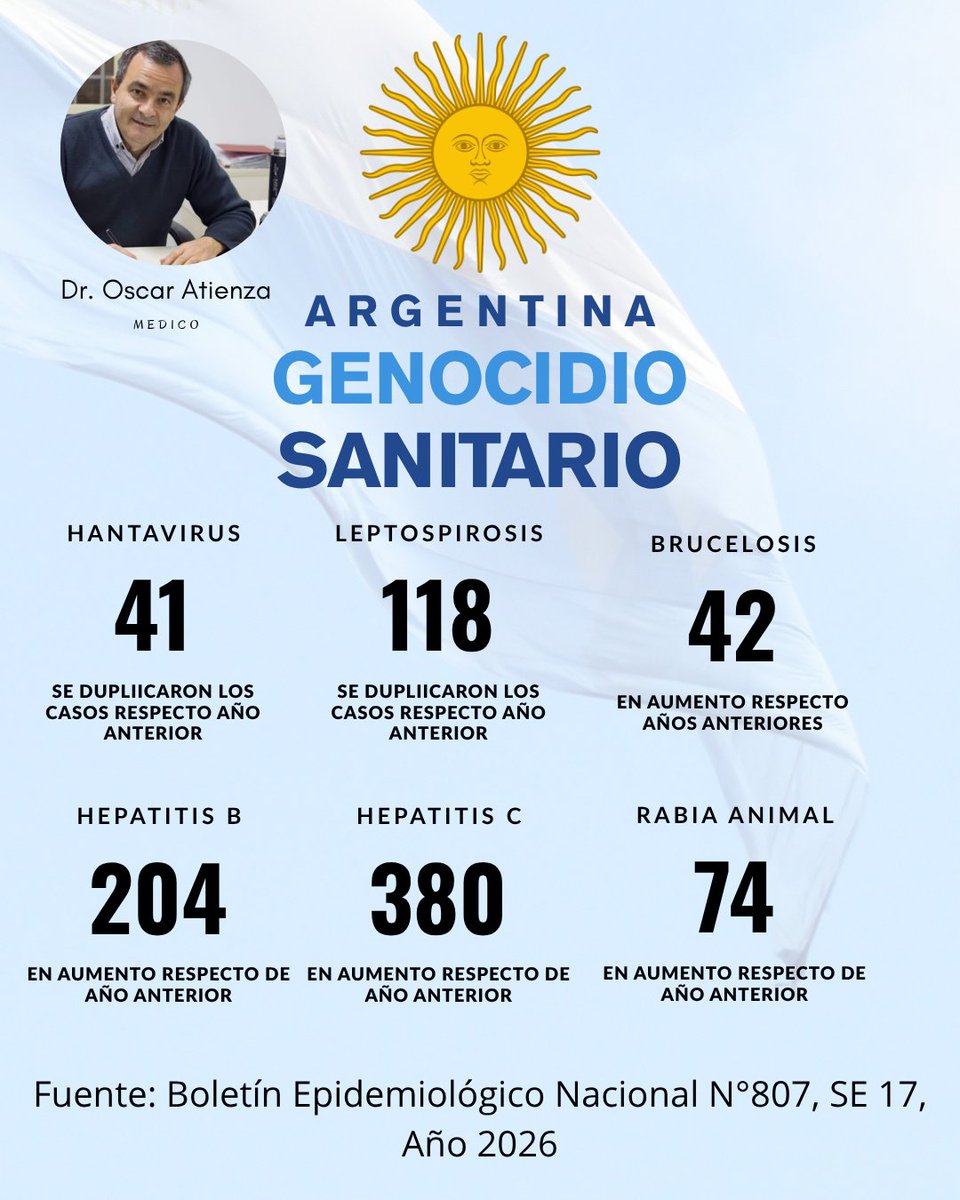
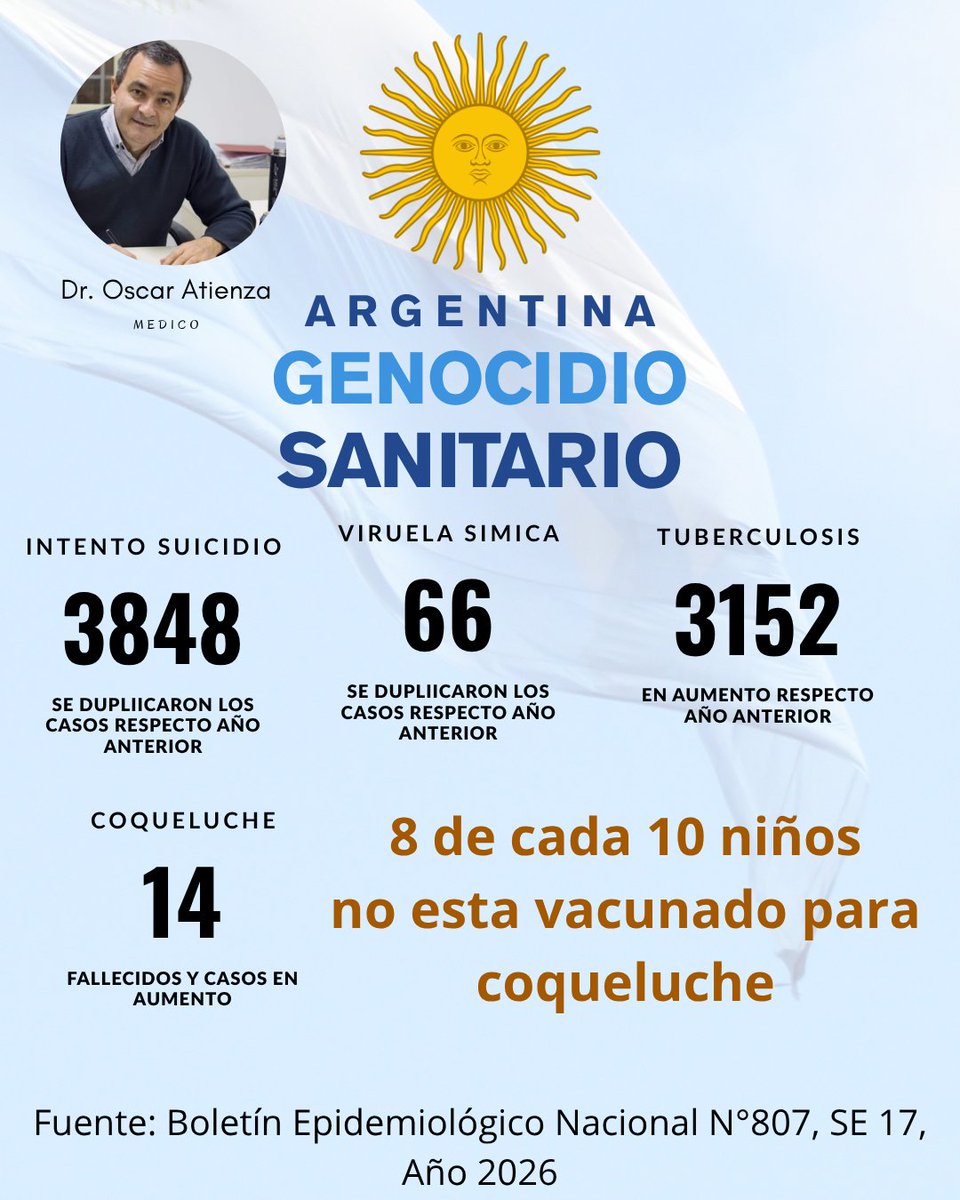
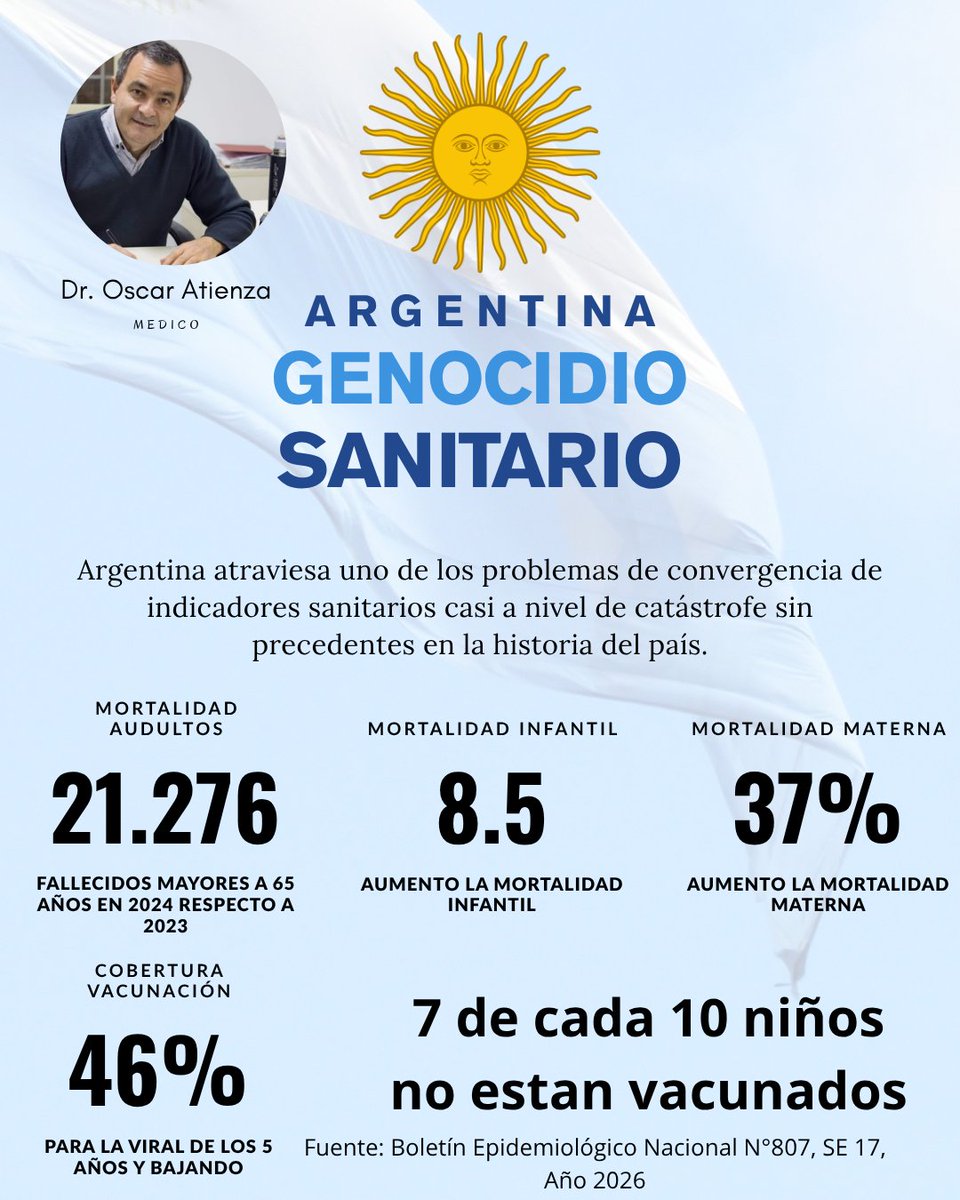
CATASTROFE SANITARIO UN VERDADERO GENOCIDIO Cuando hablamos de salud fijamos como objetivos que las personas puedan desarrollar su proyecto de vida de acuerdo a como lo imaginaron. Un proyecto de país no puede ser un truncador de posibilidades, nunca debería ser un determinante negativo para el logro de sus objetivos. Un pueblo sano es un pueblo feliz y productivo, nuestro objetivo debe ser "el goce del grado máximo de salud y bienestar que se pueda lograr como uno de los derechos fundamentales de todo ser humano sin distinción de raza, religión, ideología política o condición económica social". Exigiendo un conjunto de criterios sociales que propicien la salud de todas las personas, entre ellos la disponibilidad de servicios de salud, condiciones de trabajos seguros, vivienda adecuada y alimentos nutritivos. El goce del derecho a la salud está estrechamente relacionado con el de otros derechos humanos tales como los derechos a la alimentación, la vivienda, el trabajo, la educación, la no discriminación, el acceso a la información y la participación; abarcando libertades y derechos. Debemos comenzar con la reestructuración de la Argentina pensando en el trabajo como eje y normalizador de la salud, garantizando acceso a la educación para lograr mejores posibilidades de progreso, crecimiento individual, familiar y colectivo. Desde hace un año estamos trabajando en un proyecto integral junto a equipos de profesionales, ONG, referentes sociales y otros actores de la vida argentina, este proyecto lo estaremos presentando en breve y será de cara a la sociedad. Adjuntamos algunos datos sobre la situación actual de la Argentina. Un pueblo enfermo es un pueblo sin futuro. Dr. Oscar Atienza
Dr. Oscar Atienza tweet mediaDr. Oscar Atienza tweet mediaDr. Oscar Atienza tweet mediaDr. Oscar Atienza tweet media
Español
7
205
233
4.9K
Marina Busico retweetledi
Maguy-Ta🔥
Maguy-Ta🔥@maguyar83·
Feliz día del Trabajador Peronista. ✌🏼🇦🇷❤️
Español
33
768
2.9K
57.7K
Marina Busico retweetledi
Dr. Oscar Atienza
Dr. Oscar Atienza@oscaratienza·
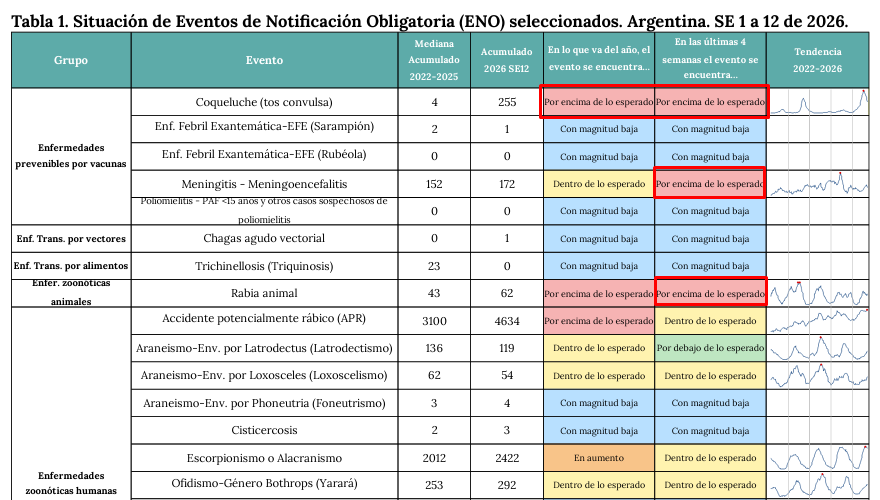
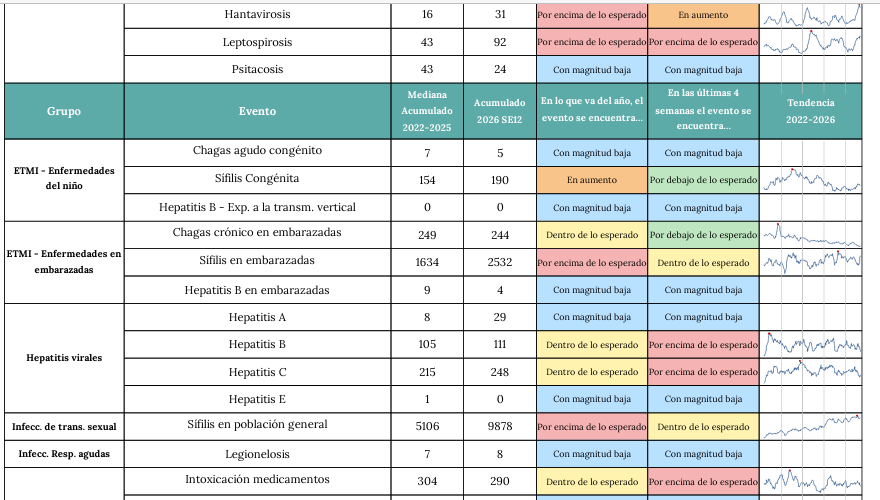
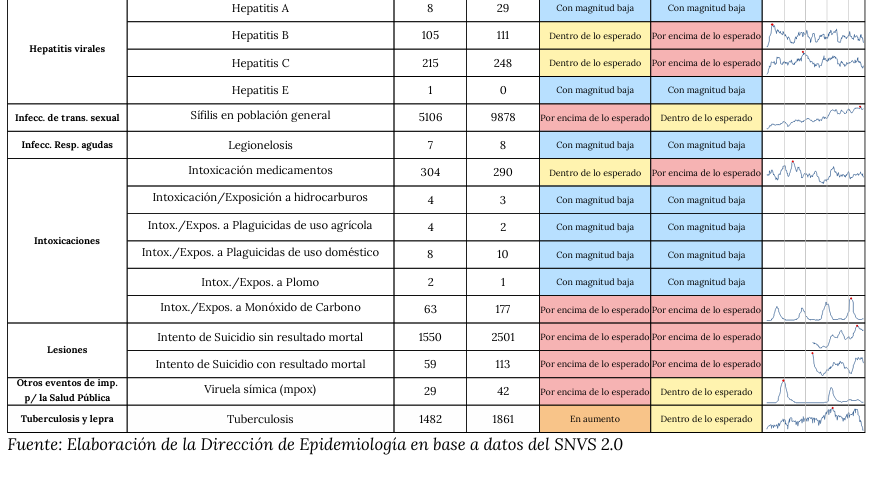
Enfermedades por encima de lo esperado Coqueluche Meningitis Rabia Hantavirus Leptospirosis Sífilis Intoxicación Medicamentos Intox. Monóxido de carbono Suicidio Viruela Tuberculosis. Fuente: Boletín Epidemiológico Nacional Una catástrofe.
Dr. Oscar Atienza tweet mediaDr. Oscar Atienza tweet mediaDr. Oscar Atienza tweet media
Español
61
2K
3.3K
75.8K
Marina Busico retweetledi
Dr. Chacón-Lozsán F .'.
Dr. Chacón-Lozsán F .'.@franciscojlk·
💉🩺Rapid sequence intubation in 2026: we are no longer “protecting the airway.” We are managing physiology under extreme stress. The latest evidence challenges one of the oldest dogmas in critical care. RSI was designed to prevent aspiration. But today, the real enemy is often hypoxemia and cardiovascular collapse. 1. Aspiration is no longer the central problem For decades, RSI was built around one fear: aspiration. But emerging data suggest: RSI may not significantly reduce aspiration It may increase hypoxemia and hemodynamic instability The paradigm is shifting: 👉 From aspiration avoidance → to physiologic optimization 2. First-pass success is everything Every additional attempt increases: Hypoxia Hemodynamic collapse Mortality Modern RSI is built around one goal: Get it right the first time. That means: Videolaryngoscopy first-line Stylet routinely Team choreography, not improvisation 3. Preoxygenation is now a therapeutic intervention Not just a step—a determinant of survival NIV > face mask HFNO as adjunct Semi-upright positioning And one key shift: 👉 Gentle ventilation is no longer taboo Done correctly, it reduces hypoxemia without increasing aspiration risk. 4. Hemodynamics matter more than ever Up to 40–50% of patients experience peri-intubation instability. The modern approach: Avoid propofol in unstable patients Favor etomidate or ketamine Consider prophylactic vasopressors Fluid loading? Not routinely beneficial. 5. Cricoid pressure: from dogma to doubt No clear benefit in preventing aspiration May worsen laryngoscopy and ventilation Current thinking: 👉 Use selectively, or not at all 6. RSI is no longer a rigid protocol It is now: Patient-specific Physiology-driven Team-dependent With tools like: Gastric ultrasound POCUS-guided decisions Structured airway protocols 7. The real determinant of success: human factors Preparation, communication, and coordination matter as much as drugs. Because in critical care: The airway is not just anatomy. It is a moment of systemic vulnerability. 🤓Final message RSI has evolved: From speed → to precision From protocol → to physiology From individual skill → to team performance And ultimately: The goal is no longer just to intubate. It is to intubate without killing the patient. 📃Reference Boulos NM et al. Anaesth Crit Care Pain Med. 2026. doi.org/10.1016/j.accp…
Dr. Chacón-Lozsán F .'. tweet media
English
13
257
844
62K
Marina Busico retweetledi
La estamos viendo
La estamos viendo@LaEstamosViendo·
"Adorni se encargó personalmente de estigmatizar y criminalizar a las personas con discapacidad. Con saña, con fake news como la de la cola del perrito. Él se encargó de relacionar la discapacidad con el curro. ¿Para qué lo hizo? Para poder robar tranquilo" Admirable Valentina ❤️
Español
77
4.6K
11K
131.5K
Marina Busico retweetledi
Fabio Wasserman
Fabio Wasserman@fwasserm·
LOS DOCENTES UNIVERSITARIOS ESTAMOS DE PARO PORQUE EL GOBIERNO NO CUMPLE CON LA LEY DE FINANCIAMIENTO VOTADA POR EL CONGRESO, REAFIRMADA TRAS EL VETO PRESIDENCIAL Y CON FALLO JUDICIAL A FAVOR. EN DOS AÑOS PERDIMOS EL 40% DE PODER ADQUISITIVO SOBRE SUELDOS QUE YA ERAN MISERABLES.
Español
100
2K
8.3K
106.7K
Marina Busico retweetledi
PlanB🩺⚕️
PlanB🩺⚕️@RCPavanzado·
Salió un trabajo súper interesante en la revista JAMA, donde analizaron los resultados clínicos de más de un millón y medio de pacientes hospitalizados por médicas mujeres y hombres Y se vio q los pacientes atendidos por médicas tienen menor mortalidad y mejores resultados
Español
78
648
7.1K
171.7K
Marina Busico retweetledi
Aguz ✨️🇦🇷
Aguz ✨️🇦🇷@sweeter_gxs·
🗣NO ME VA A TEMBLAR EL PULSO PARA VOLAR TODOS LOS DNU Y LEYES DE MILEI Acá estamos para acompañar PROCEDA COMPAÑERO🔥🇦🇷
Español
871
1.4K
7.6K
123.8K
Marina Busico retweetledi
Dr. Oscar Atienza
Dr. Oscar Atienza@oscaratienza·
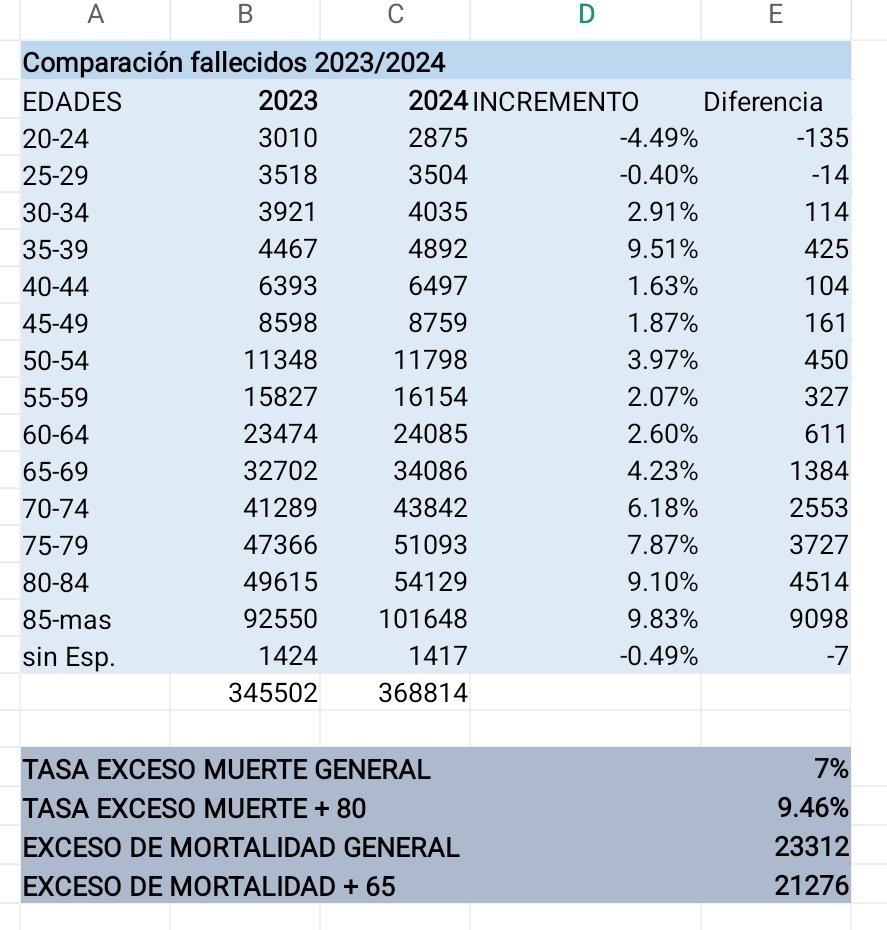
En el 2024 primer año de Milei murieron 21276 personas de más de 65 años que en el 2023. Es una tasa del 9.5%. Ese año le quitaron los remedios a los jubilados. No fue inocuo. Dale RT los jubilados merecen difusión de su problema.
Dr. Oscar Atienza tweet media
Español
169
1.9K
2K
141K
Marina Busico
Marina Busico@BusicoMarina·
@CFKArgentina te deseo un muy feliz cumpleaños y te quiero hasta el infinito y más allá ☆♡
Español
0
0
0
13
Marina Busico
Marina Busico@BusicoMarina·
@diegosantilli porqué no te venis a laburar al aeropuerto de ezeiza que es un quilombo. Enterate!
Español
0
0
0
31
Marina Busico retweetledi
Ismael Sanz
Ismael Sanz@sanz_ismael·
El auge de una cultura postalfabetizada —pantallas, vídeos cortos, textos fragmentados— no solo está erosionando la concentración y la lectura profunda. Está empezando a generar una nueva forma de desigualdad cognitiva. The New York Times Como con la comida ultraprocesada, leer bien exige recursos, tiempo y entorno. La “lectura experta” reconfigura el cerebro y sostiene ciencia, democracia y pensamiento crítico. Si se convierte en un lujo, las consecuencias serán sociales y políticas nytimes.com/es/2025/07/30/…
Ismael Sanz tweet media
Español
46
2.7K
8.3K
270.5K
Marina Busico retweetledi
GP Q
GP Q@argosaki·
BREASTMILK She thought she was studying milk. What she uncovered was a conversation. In 2008, evolutionary anthropologist Katie Hinde was working in a primate research lab in California, analyzing breast milk from rhesus macaque mothers. She had hundreds of samples and thousands of data points. Everything looked ordinary—until one pattern refused to go away. Mothers raising sons produced milk richer in fat and protein. Mothers raising daughters produced a larger volume with different nutrient balances. It was consistent. Repeatable. And deeply uncomfortable for the scientific consensus. Colleagues suggested error. Noise. Statistical coincidence. But Katie trusted the data. And the data pointed to a radical idea. Milk is not just nutrition. It is information. For decades, biology treated breast milk as simple fuel. Calories in. Growth out. But if milk were only calories, why would it change depending on the sex of the baby? Katie kept digging. Across more than 250 mothers and over 700 sampling events, the story grew more complex. Younger, first-time mothers produced milk with fewer calories but significantly higher levels of cortisol—the stress hormone. The babies who drank it grew faster. They were also more alert, more cautious, more anxious. Milk wasn’t just building bodies. It was shaping behavior. Then came the discovery that changed everything. When a baby nurses, microscopic amounts of saliva flow back into the breast. That saliva carries biological signals about the infant’s immune system. If the baby is getting sick, the mother’s body detects it. Within hours, the milk changes. White blood cells surge. Macrophages multiply. Targeted antibodies appear. When the baby recovers, the milk returns to baseline. This was not coincidence. It was call and response. A biological dialogue refined over millions of years. Invisible—until someone thought to listen. As Katie reviewed existing research, she noticed something unsettling. There were twice as many scientific studies on erectile dysfunction as on breast milk composition. The first food every human consumes. The substance that shaped our species. Largely ignored. So she did something bold. She launched a blog with a deliberately provocative name: Mammals Suck Milk. It exploded. Over a million readers in its first year. Parents. Doctors. Scientists. People asking questions research had skipped. The discoveries kept coming. Milk changes by time of day. Foremilk differs from hindmilk. Human milk contains over 200 oligosaccharides babies can’t digest—because they exist to feed beneficial gut bacteria. Every mother’s milk is biologically unique. In 2017, Katie brought this work to a TED stage. In 2020, it reached a global audience through Netflix’s Babies. Today, at Arizona State University’s Comparative Lactation Lab, she continues reshaping how medicine understands infant development, neonatal care, formula design, and public health. The implications are staggering. Milk has been evolving for more than 200 million years—longer than dinosaurs walked the Earth. What we once dismissed as simple nourishment is one of the most sophisticated communication systems biology has ever produced. Katie Hinde didn’t just study milk. She revealed that nourishment is intelligence. A living, responsive system shaping who we become before we ever speak. All because one scientist refused to accept that half the story was “measurement error.” Sometimes the biggest revolutions begin by listening to what everyone else ignores.
GP Q tweet media
English
3K
22.1K
86K
6.1M
Marina Busico retweetledi
Arrepentidos de Milei
Arrepentidos de Milei@ArrepentidosLLA·
Volvió el confinamiento y barbijo obligatorio en Reino Unidos por la Gripe H3N2. Por suerte si llega a Sudamérica el Javo y Lugones su super ministro antivacunas la van a declarar agenda woke, así que no tenemos de qué preocuparnos
Español
257
1.5K
8K
373K
Marina Busico retweetledi
Carlos Briones
Carlos Briones@brionesci·
"De joven era discriminada por ser mujer, hoy por ser mayor. (...) Lo importante es no tener arrugas en el cerebro". Margarita Salas (30.11.1938 - 7.11.2019)
Carlos Briones tweet media
Español
52
3.4K
32.2K
324.6K
Marina Busico retweetledi
Ismael Serrano
Ismael Serrano@SerranoIsmael·
Lo de ayer en Buenos Aires fue inolvidable. Faltan palabras. Gracias, gracias, gracias.
Español
49
246
3.2K
27.9K