Roes CaIian Ivnastmants 🌹

85 posts

Roes CaIian Ivnastmants 🌹

Roes CaIian Ivnastmants 🌹

@CAMARAM33071044

Katılım Ağustos 2020
41 Takip Edilen41 Takipçiler
Rose Celine Investments 🌹
Rose Celine Investments 🌹@realroseceline·
$MELI The market is focused on margins compressing, operating income declining 20%, and some experimentation with the credit products but underneath the surface this may have actually been one of the strongest strategic quarters in $MELI history. Revenue grew 49% to $8.8b, TPV grew 50% to $87b, and GMV grew 42% to $19b. This is not a mature company struggling to grow a few extra percentage points. This is a company already operating at massive scale while still growing like a startup. The really important thing is that growth is actually accelerating in several key areas even while they are intentionally sacrificing short term profitability. There’s a big difference between weak margins caused by weakening demand and weak margins caused by aggressive reinvestment. The entire philosophy behind this quarter is actually pretty simple. $MELI believes Latin America is still extremely early in the digital commerce and fintech transition, so management is choosing to maximize long term ecosystem dominance instead of optimizing near term margins. Honestly, when you look at the underlying numbers, it becomes pretty hard to argue against that logic. The average American makes around 40 online purchases per year while the average Latin American makes just 7. Even buyers on $MELI only average around 11 purchases annually today, which means ecommerce penetration still looks extremely early. If management believes that number can eventually double or triple over time, then aggressively investing today probably makes a lot of sense. The lower free shipping threshold in Brazil is probably the clearest example of this strategy. Most investors initially saw it as margin destruction, but $MELI clearly views it as long term habit formation. After lowering the threshold, Brazil GMV growth accelerated to 38%, items sold growth accelerated to 56%, and unique buyers accelerated to 32%, the fastest growth in five years. What stood out to me most was that daily active users are now growing faster than monthly active users. That usually means engagement itself is deepening, not just user acquisition. Anyone can temporarily buy growth through promotions, but when conversion, frequency, and retention all improve simultaneously, it usually means consumer habits are actually changing. That’s where internet businesses become extremely powerful. What makes this even more interesting is that the economics are already improving faster than expected. Unit shipping costs in Brazil declined 17% versus 11% last quarter, and almost half of the profitability hit from the lower shipping threshold has already been offset through efficiency and scale of logistics. They said that lower cost shipments are already breakeven. This is basically the classic ecommerce flywheel playing out in real time. Lower shipping costs improve conversion, better conversion drives higher order density, and higher density improves logistics efficiency which lowers costs further. Over time, the ecosystem becomes stronger and more profitable because scale itself becomes the advantage. That is exactly why companies like $AMZN became so dominant over time. I also think people massively underestimate the importance of the logistics network itself. $MELI now operates more than 50 fulfillment facilities and fulfillment handled 55% of shipments during the quarter while growing 39%. The moat is no longer just the marketplace or app itself. The moat becomes warehouses, delivery routes, seller relationships, underwriting data, payments infrastructure, advertising infrastructure, and consumer habits all compounding together into one ecosystem. 1/ 👇
English
24
26
327
32.5K
Rose Celine Investments 🌹
Rose Celine Investments 🌹@realroseceline·
$DLO TPV grows the fastest because it’s top of the funnel. It is simply the amount of money flowing through the system. They are aggressively winning merchants and expanding across countries, so even if pricing comes down, volume more than makes up for it. That is why you can see TPV growing 30–40%+. Gross profit grows, but slower, and this is where most people get tripped up. Take rates are compressing because they are pricing aggressively to win relationships and drive volume. So even if TPV is up 40%, gross profit might only grow 20–25%. Still strong, just not keeping pace with payment volume. This is usually where the bear case comes in and people say it is a race to zero. That sounds logical on the surface, but it completely misses what is happening. Because the real story is not gross profit, it’s what happens below it in the economics. Specifically EBITDA and net income. Once the platform is built, costs do not scale with revenue. They do not need to double headcount or infrastructure to handle more volume. So if gross profit grows 25% and expenses only grow 10%, profit starts to grow much faster due to operating leverage. Now you have a situation where pricing is going down, but profits are going up. That feels counterintuitive, which is exactly why people miss it. This is how operating leverage works and it only really shows up once scale kicks in. The model is also capital light with negative working capital. They are not building warehouses, not holding inventory, and not taking balance sheet risk like a bank. So a large portion of earnings turns into cash at an extraordinary rate. That cash can be reinvested or returned to shareholders. So the structure looks like this. TPV grows the fastest because they keep winning volume. Gross profit grows slower because pricing is strategic. EBITDA and net income grow faster because costs scale slower. Over time, that turns into meaningful cash generation. Think of it like a toll road. At first, you lower the toll to get more cars on the road. So revenue per car drops, but traffic explodes. And the road is already built, so costs barely increase. Now you’re making way more total money even though you charge less per car. 🌹
English
8
2
111
8K
Rose Celine Investments 🌹
Rose Celine Investments 🌹@realroseceline·
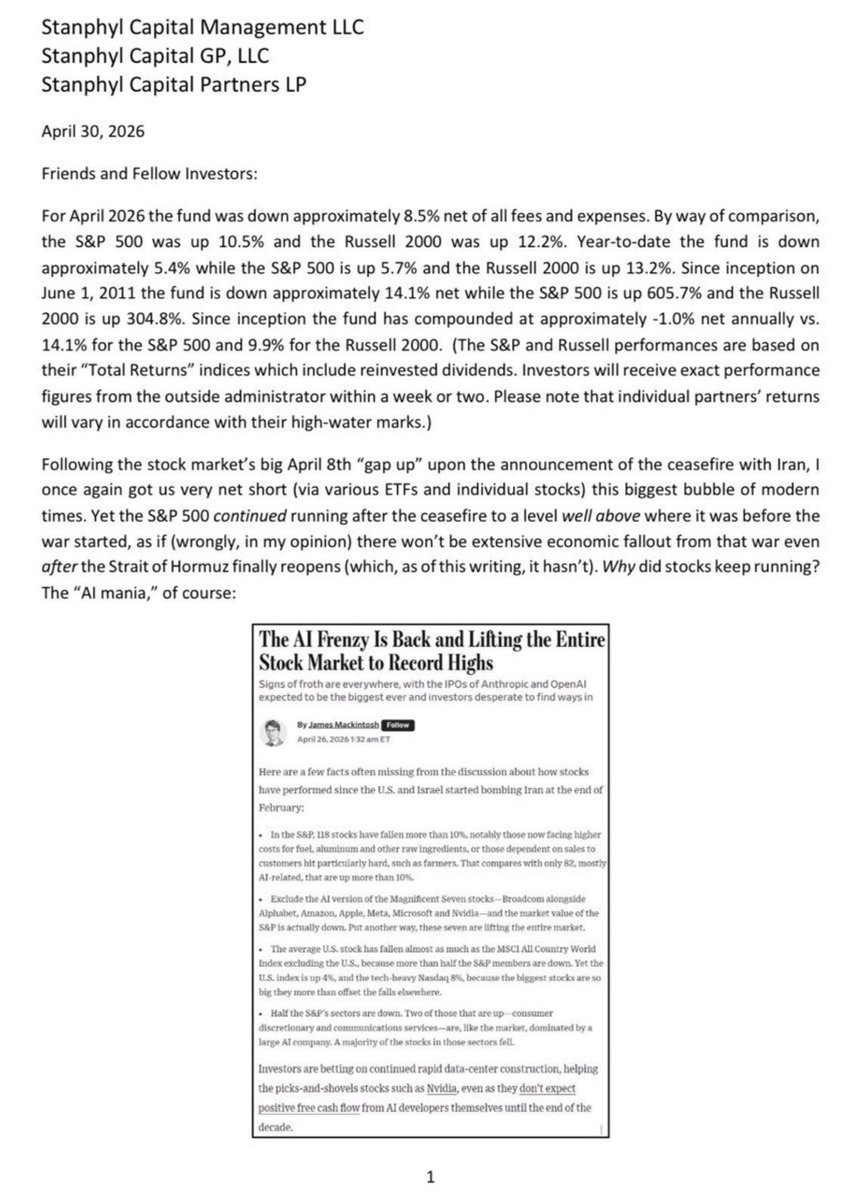
If you underperform the market for like 15 years, at some point you have to wake up and smell the roses (pun intended), stop blaming the market and start questioning your abilities. At some point you have to look in the mirror, because when you point one finger, the rest are pointing back at you. I wouldn’t usually say it this bluntly, but getting blocked kind of removes the incentive to be polite. Either he’s one of the greatest salesmen alive or his investors are to put it mildly retarded. 🌹
Rose Celine Investments 🌹 tweet media
English
20
2
102
13.9K
Rose Celine Investments 🌹
Rose Celine Investments 🌹@realroseceline·
If your company beats guidance ~20 times in a row is that because your company is elite or is management not trustworthy because they keep sandbagging? 🌹
English
37
1
71
13.2K