Chad Crowley

18.1K posts

Chad Crowley banner
Chad Crowley

Chad Crowley

@CCrowley100

Riding the Tiger. Writer & Translator. https://t.co/ZHLU66URd1

America Katılım Aralık 2021
2.4K Takip Edilen77.5K Takipçiler
Sabitlenmiş Tweet
Chad Crowley
Chad Crowley@CCrowley100·
People have been asking me to start a podcast for years. Plans with various “movement” figures and organizations have come and gone, which is the nature of our circles. So I will do it myself. A private podcast is coming for paid X and Substack subscribers.
English
8
35
335
14.9K
Chad Crowley
Chad Crowley@CCrowley100·
The Great Replacement is real Act now and take our nations back, or accept extinction Choose
English
15
221
839
12.6K
Chad Crowley
Chad Crowley@CCrowley100·
I don’t usually post this type of thing, but this literally made me laugh out loud.
English
2
0
69
2.1K
Chad Crowley
Chad Crowley@CCrowley100·
Access to White people is not a human right.
English
23
363
6K
53.3K
Chad Crowley retweetledi
Frank L. DeSilva
Frank L. DeSilva@desilva_frank·
Obviously, resistance was not strong enough, or lasted long enough. Everything, and we mean everything, turned out exactly how these Parents, Mothers and Fathers, saw coming; the children had to fight...and in one generation, were outnumbered, and put in harms way. These uniformed pinkertons, roughed up women and children, and arrested fathers, brothers, and sons, who fought the good fight. Of course this is what happens when people fail to see themselves as 'counterrevolutionaries', and lack the necessary support from entrenched political hacks, as well as funding. Your world is not the panacea that was promised you, by the hiss of the serpent then, as it is now. If you want to save your heritage, then this heritage must be the only mission, that you are willing to struggle for. Nothing else matters, if you are to survive. Truth Matters
Cigarette Nostalgia@CigsMake

Response to desegregation in Boston Massachusetts (1974)

English
9
145
947
19.4K
Chad Crowley
Chad Crowley@CCrowley100·
If you think the West is lost, remember this: Spain was under Islamic rule for over 700 years. The Reconquista began with 200 men in the mountains. It took centuries of hard-fought struggle, but we were ultimately victorious. It is never truly over. We will prevail again.
English
267
746
5.8K
209.9K
Chad Crowley
Chad Crowley@CCrowley100·
@WodenWanderer @cerautomas @9mmsmg I don’t block people for disagreeing with me. That’s asinine and juvenile. I do however block people who are rude, disrespectful, and incapable of basic civility.
English
0
0
3
18
9mmSMG
9mmSMG@9mmsmg·
There should be a way to pick individual countries. I want to filter the entirety of Africa, but I can't because I actually have a lot of good followers from SA and that's unfair, so I won't. This whole feature was designed so people could filter out India, Pakistan, Bangladesh and Nigeria. This was the only politically correct way of doing it. I wish we could just add countries to the list of places we want to block instead of choosing entire regions we want to see stuff from.
Chad Crowley@CCrowley100

X is rolling out a location geoblock filter. Great. I’m currently in South Africa myself, and I would ask: what about our fellow White South African posters?

English
30
31
566
25.9K
Chad Crowley retweetledi
Chad Crowley
Chad Crowley@CCrowley100·
To understand this passage, it is necessary to clarify what Evola means by freedom and the tradition from which that concept arises, since it belongs to a conception fundamentally different from the modern understanding of the term. When Evola speaks of freedom in Revolt Against the Modern World, and throughout his work more generally, he means freedom in an aristocratic and traditional sense. This conception does not belong exclusively to Evola’s account of the Perennial Tradition, but to the older inheritance of Western aristocratic civilization itself. It is the freedom known to the Indo-European warrior, the Greek aristos, the Roman patrician, the Germanic thane, and the medieval knight. It is the freedom of the man who rules himself first. Evola is contrasting two forms of freedom. What philosophy later termed positive freedom is the ancient, hierarchical conception: the freedom to act in accordance with one’s higher nature. It is the liberty of self-mastery and command over the passions, achieved through conscious discipline and inner sovereignty. Such freedom is not granted from without, but cultivated from within. It is what Aristotle meant when he held that only the man capable of ruling himself is fit to rule others, and what the Stoics understood as a freedom of the soul that no external power can truly extinguish. Opposed to this is negative freedom, the modern egalitarian notion of liberty defined not by self-mastery but by the absence of restraint. It defines freedom as the removal of limits rather than the ordering of the self. In the traditional view, such freedom is empty. It produces men governed by impulse rather than will. A people may appear liberated outwardly, enjoying unrestricted movement and choice, while remaining inwardly enslaved to appetite, vanity, fear, or the need for approval, in short, all that is “human, all too human.” In the formulation above, Evola is describing an order in which freedom and hierarchy were once united. The ruler is great not because he subjugates, but because he governs others as he governs himself. Those who serve him are not slaves, for their obedience is freely given, arising from recognition of a higher authority that reflects their own inner discipline. To love freedom in those who serve is to affirm the same principle of inner sovereignty in them. The Roman emperor, in this sense, does not extinguish the freedom of others but gathers it into a coherent order. Each man stands within a framework of duty and obligation beyond himself, bound into a greater whole, yet remains inwardly free because he knows his place and measure and lives in accordance with his proper purpose. For Evola, true freedom rests on form and proportion. It is the steadiness of spirit that endures without surrender to external pressure. The ancients regarded such freedom as inseparable from hierarchy, since order alone gives it meaning. The Roman ideal, and it is an ideal, was to be self-governing and sovereign, holding within oneself the same discipline one embodied in command. The passage presupposes this understanding. Nobility consists in ruling free men rather than slaves, since only those who are inwardly free can sustain a civilization worthy of reverence, one oriented beyond the fleeting present toward a higher principle. Evola located that principle in what transcends the merely temporal condition of man, and it was this vertical orientation that once gave authority its legitimacy and freedom its measure. When that binding orientation is lost, freedom ceases to be a discipline of the soul and becomes a license for indulgence, while authority survives only as an empty shell. What remains is order without inner form and liberty without self-command, not simply a political failure, but the inward dissolution of a world that has lost all orientation toward what stands above it.
Chad Crowley tweet media
English
7
25
169
5.2K
Chad Crowley retweetledi
Tom Rowsell
Tom Rowsell@Tom_Rowsell·
Remembering in 2022 when I politely pushed back on the Southern Arc hypothesis, and suggested Harvard didn't have proper evidence of the alleged sub-Caucasian source of PIE and that they had ignored Sredny Stog. Then loads of brown people said I was "coping" or "crashing out". Then in 2024 when the same authors published a paper debunking their own claims and showing Sredny Stog was indeed, as I had suggested, the original PIE culture, there was not one among my detractors decent enough to admit "Rowsell was right".
Tom Rowsell tweet mediaTom Rowsell tweet media
English
46
106
1.7K
56.1K
Chad Crowley retweetledi
Aeon
Aeon@myechtra·
Book Thread Everything that occurs in our world is a reflection, shadow and effect of some cause from another world. Tradition was based on a proper mediation between the two worlds, the natural and supernatural. The emperor as “pontifex”, a bridge and intermediary between god and his country, is the philosophy of Imperium. Traditional magic was like a science, consisting of techniques which allowed one to command and control numinous forces. The sheer and otherwise unbridled powers of the other world. Egyptian priests were like sorcerers and could even challenge the “great gods” if they knew the right incantations. And the king “affects the divine more than being affected by it.” In India (once literally called, "land of Aryans") such sorcerers existed in later ages and were feared even by rulers who had entire armies and kingdoms at their disposal. The Romans had two words for god; one for those that were always divine, and one for those that became one. The racial integrity of early Roman aristocracies was based not solely or even primarily on blood purity but the contact with supernatural forces maintained through mysterious fire rites. It was through this that they claimed divine ancestry In Persia “the higher castes were believed to correspond to emanations of the heavenly fire descended to earth” Similarly, royal Germanic stocks attributed their origins to Wotan, “he who bestowed on the noble ones that spirit that lives on and which does not die when the body is dissolved into the earth.” Evola describes reincarnation as a “spiritual disease”, representing bondage to telluric and lunar forces. Burial and cremation reflect opposite conceptions of life after death. One being a returning to the earth, the other a transcending and rising. Fire is a purifying and transformative agent. Sati, the Indian custom where the widow burns alive alongside her dead husband, would apparently create a “divine body of light” which grants an immortality Fire is reserved for the heroic and noble. It would be wrong to pollute it with impure elements. In the Golden Age the world becomes a perfect symbol. Having strength, power and victory would all reflect god’s favour. The harmony that can exist between a man and woman microcosmically reflects the order between natural and supernatural Man can provide for the woman a stability and stillness which gives the fullest expression to her occult power. But he must fulfil his own masculine nature, and exert his own magnetism, “acting without acting.” “According to myth Siva, who was conceived as the great ascetic of the mountain peaks, turned Kama (the god of love) into ashes with a single glance when the latter tried to awaken in him passion for his bride, Parvati.” Lust is equivalent to drunkenness and contrary to manhood Evola traces Aryan spirituality back to the Hyperborean tradition, which dispersed and fragmented The Hyperboreans are a mysterious race said to live in the Far North's eternal light It was here Apollo dwelled as an unconquered sun, perfectly still and not, like Helios, subject to rising and setting In numerous myths and legends, from Rome to Tibet, a coming hero from the utmost north is expected to inaugurate a new heroic age The spread of Traditional civilisation, evinced by symbols like the swastika, battle-axe, swan and wolf, reveal the outward migrations and offshoots of Hyperboreans But the land itself is elusive and might exist on another plane. As Pindar said it can be found “neither by ship nor by marching feet.” “Montezuma, the last Mexican emperor, may enter Aztlan only after performing magical operations and undergoing a transformation of his physical body. Plutarch relates that the inhabitants of Northern regions could commune with Kronos (the king of the Golden Age) and with the inhabitants of the Far Northern region only in their sleep. According to Lieh-tzu, those marvelous regions he mentions that are connected to the Arctic and the Atlantic seat, "you cannot reach by boat or carriage or on foot, only by a journey of the spirit.” According to the Tibetan lamas' teachings, Shambhala, the mystical Northern seat, is within everyone. This is how the testimonies concerning what once was a real location inhabited by nonhuman beings survived and assumed a metahistorical value, providing at the same time symbols of states beyond ordinary life, that can only be reached through initiation. Besides the symbol, we find the idea that the original center still exists in an occult and usually unreachable location (similar to what Catholic theology said about the Garden of Eden): only a change of state or of nature can open its doors to the generations living in the last ages.” Evola saw medieval civilisation as a virile expression of Aryan Germanic spirituality. “Concerning the cult of truth, the knights’ oath was “In the name of God, who does not lie!” Which corresponded to the Aryan cult of truth. According to this cult, Mithras was the god of all oaths and the Iranian mystical “glory” was believed to have departed from King Yima the first time he lied.” Medieval civilisation left its testament in the legend that, “Frederick I still lives with his knights, although asleep, on the Kifhauser heights inside a symbolic mountain. He awaits the appointed time when he will descend to the valleys below at the head of his faithful in order to fight the last battle, whose successful outcome will cause the Dry Tree to bloom again and a new age to begin.” But victory is not assured: "In some versions of the saga - which were probably influenced by the Eddic theme of ragna rok - the last emperor cannot overcome the forces of the last age and dies after hanging his scepter, crown and sword in the Dry Tree."
Aeon tweet media
English
2
14
87
3.5K
Chad Crowley
Chad Crowley@CCrowley100·
Reply #1: Evola and the Question of Struggle x.com/CCrowley100/st…
Chad Crowley@CCrowley100

Like all serious thinkers, Evola’s thought did not remain static, but unfolded in response to the civilizational rupture of modernity; it is precisely this development that is so often overlooked when he is reduced to a posture of mere withdrawal, a reading shaped largely by post-war retrospective interpretation advanced by his detractors, many of whom have not, in fact, read him with any seriousness. His early writings bear a more overtly militant character, formed in the immediate aftermath of the First World War, amid a European civilization torn apart, when the possibility of political and spiritual regeneration still appeared tangible. In those years, his engagement extended from esoteric currents and the avant-garde into the orbit of Fascist and National Socialist movements, not as abstraction but as lived commitment, grounded in the conviction that dissolution could not only be arrested, but reversed and ultimately overthrown through the formation of a new elite and the reassertion of a transcendent order. What follows in his later, post-1945 work is not a renunciation of struggle, but a recognition of altered conditions, the stance of a man among ruins rather than a partisan within a still-living order. By the time of his mature reflections, particularly in “Ride the Tiger,” the historical horizon had shifted. The forces of leveling modernity, expressed through mechanization and spiritual exhaustion, had advanced to such an extent that the prospect of civilizational reversal, at least in any immediate or conventional sense, had receded from view. What appears as passivity is, in fact, a strategic and philosophical recalibration, a new orientation, as Evola himself framed it, for the terrain itself had changed, and with it the form of struggle. Evola’s emphasis thus shifts from external restoration to internal sovereignty, a transformation paralleled, in a different register, by Ernst Jünger, wherein the locus of resistance no longer resides in the state or the movement, but in the man who refuses inward capitulation. This is not survival in any diminished sense, but endurance of a more exacting kind, requiring the preservation of form and inner orientation in a world that no longer sustains either. To stand upright amid disintegration, without illusion and without submission, constitutes for Evola a higher and more demanding form of resistance, one that dispenses with spectacle and demands a discipline surpassing that required for revolutionary overthrow under more favorable conditions. The desire to die for the glory of a new dawn presupposes that such a dawn remains historically attainable, that the age still permits that mode of tragic affirmation. Evola’s later position calls this assumption into question. He does not deny destiny, but relocates it beyond the fluctuations of historical fortune. The arena ceases to be primarily collective or political and becomes existential, where action derives its legitimacy not from the promise of victory, but from adherence to a higher principle irrespective of outcome. In this sense, his thought does not abandon the heroic, but frees it from dependence on historical optimism. What remains is a colder and more exacting conception of strength, one that refuses both despair and illusion, and demands a mode of being unconditioned by the age in which it stands.

English
0
2
9
1.1K
Chad Crowley
Chad Crowley@CCrowley100·
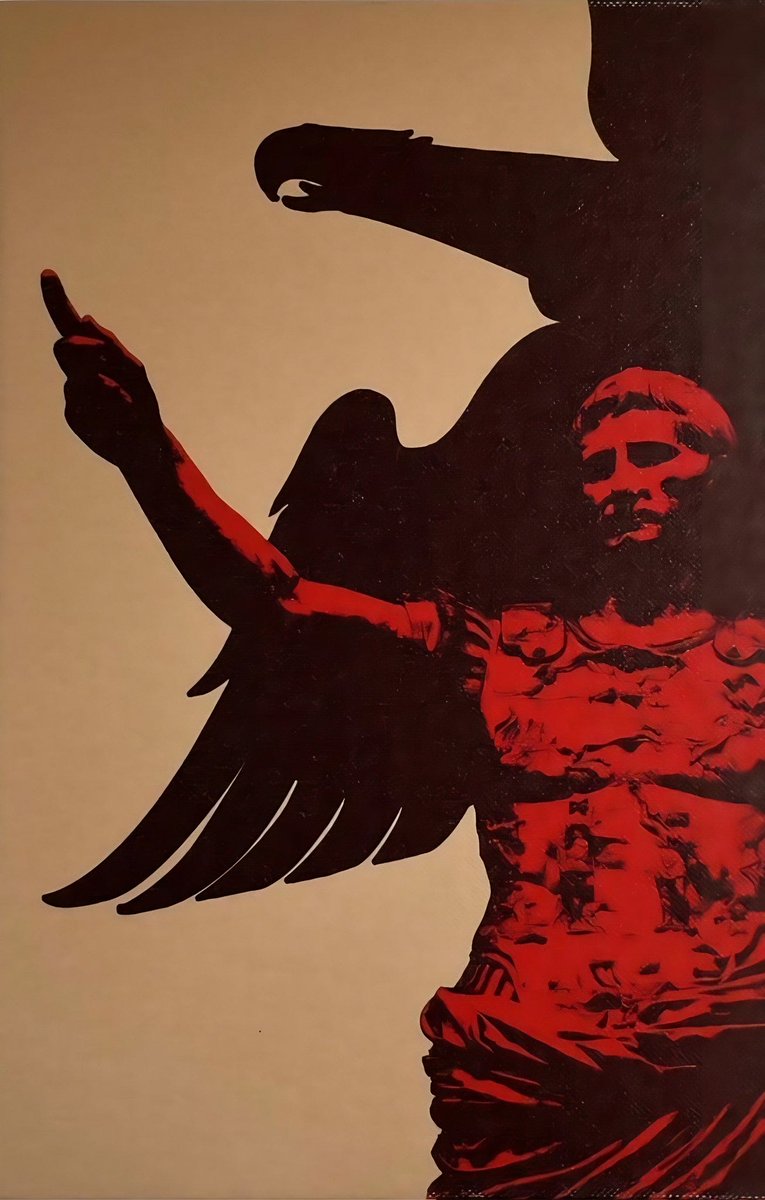
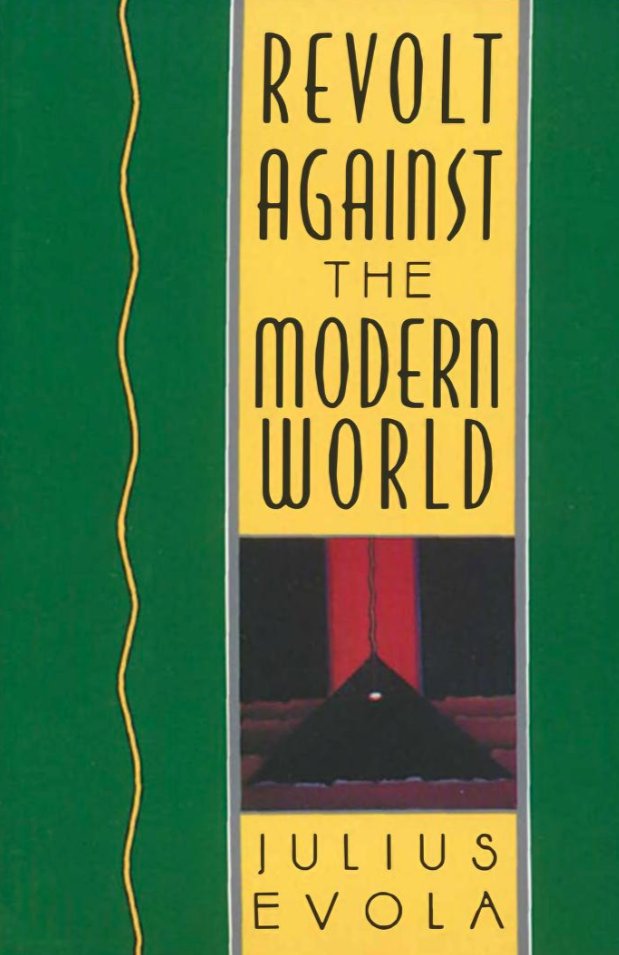
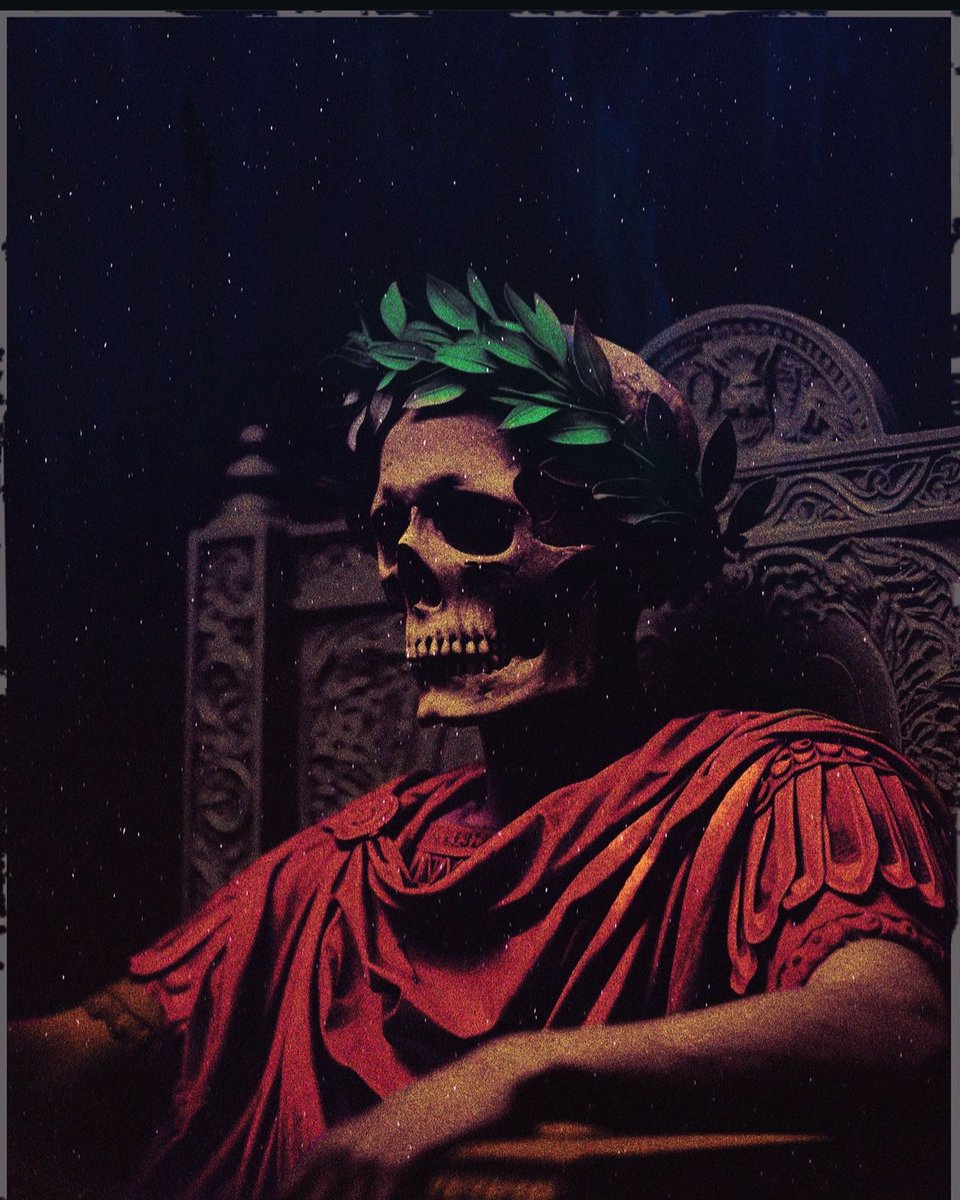
“The supreme nobility of a Roman emperor does not consist in being a master of slaves, but in being a lord of free men, who loves freedom even in those who serve him.” —Julius Evola, Revolt Against the Modern World
Chad Crowley tweet media
English
12
138
962
20.3K
Chad Crowley
Chad Crowley@CCrowley100·
Like all serious thinkers, Evola’s thought did not remain static, but unfolded in response to the civilizational rupture of modernity; it is precisely this development that is so often overlooked when he is reduced to a posture of mere withdrawal, a reading shaped largely by post-war retrospective interpretation advanced by his detractors, many of whom have not, in fact, read him with any seriousness. His early writings bear a more overtly militant character, formed in the immediate aftermath of the First World War, amid a European civilization torn apart, when the possibility of political and spiritual regeneration still appeared tangible. In those years, his engagement extended from esoteric currents and the avant-garde into the orbit of Fascist and National Socialist movements, not as abstraction but as lived commitment, grounded in the conviction that dissolution could not only be arrested, but reversed and ultimately overthrown through the formation of a new elite and the reassertion of a transcendent order. What follows in his later, post-1945 work is not a renunciation of struggle, but a recognition of altered conditions, the stance of a man among ruins rather than a partisan within a still-living order. By the time of his mature reflections, particularly in “Ride the Tiger,” the historical horizon had shifted. The forces of leveling modernity, expressed through mechanization and spiritual exhaustion, had advanced to such an extent that the prospect of civilizational reversal, at least in any immediate or conventional sense, had receded from view. What appears as passivity is, in fact, a strategic and philosophical recalibration, a new orientation, as Evola himself framed it, for the terrain itself had changed, and with it the form of struggle. Evola’s emphasis thus shifts from external restoration to internal sovereignty, a transformation paralleled, in a different register, by Ernst Jünger, wherein the locus of resistance no longer resides in the state or the movement, but in the man who refuses inward capitulation. This is not survival in any diminished sense, but endurance of a more exacting kind, requiring the preservation of form and inner orientation in a world that no longer sustains either. To stand upright amid disintegration, without illusion and without submission, constitutes for Evola a higher and more demanding form of resistance, one that dispenses with spectacle and demands a discipline surpassing that required for revolutionary overthrow under more favorable conditions. The desire to die for the glory of a new dawn presupposes that such a dawn remains historically attainable, that the age still permits that mode of tragic affirmation. Evola’s later position calls this assumption into question. He does not deny destiny, but relocates it beyond the fluctuations of historical fortune. The arena ceases to be primarily collective or political and becomes existential, where action derives its legitimacy not from the promise of victory, but from adherence to a higher principle irrespective of outcome. In this sense, his thought does not abandon the heroic, but frees it from dependence on historical optimism. What remains is a colder and more exacting conception of strength, one that refuses both despair and illusion, and demands a mode of being unconditioned by the age in which it stands.
Chad Crowley tweet media
English
1
9
76
4.6K
ShootYourself ℠
ShootYourself ℠@ShootYourself·
@CCrowley100 only negative about Evola, so far as I can see, is that he was not about fighting the decay, just surviving it. That doesn't speak to my soul quite as much as the concept of living out your destiny and dying for the glory of a new dawn.
English
1
0
3
139
Chad Crowley
Chad Crowley@CCrowley100·
Chad Crowley@CCrowley100

Some will instinctively doubt the above quotation’s authenticity, but that reaction reflects modern sensibilities rather than the historical record from which it derives. The passage appears in William Hazlitt’s “The Life of Napoleon Buonaparte” (1828), a four-volume work composed in the years immediately following the Emperor’s death. Hazlitt did not coin the line himself, but translated it from an earlier French source. That source is Antoine-Claire Thibaudeau’s “Le Consulat et l’Empire” (“The Consulate and the Empire”), volume three, page 323. Thibaudeau was no distant compiler of anecdotes. He knew Napoleon personally, having served with him in the Council of State and participating directly in his deliberations. A deputy during the Revolution, he later served as a councillor under the Consulate and went on to hold administrative office under the Empire, occupying a position that allowed him to observe Napoleon’s speech and temperament at close range. His memoirs preserve these elements as recorded by one who had served him directly. Hazlitt drew upon Thibaudeau’s account alongside those of Bourrienne, Napoleon’s secretary, and Emmanuel de Las Cases, who accompanied him into exile on St. Helena. Through these firsthand witnesses, Hazlitt sought to recover Napoleon’s character from partisan distortion and to present him as he appeared to those who had known him in life, rather than as the propagandistic image cultivated by his enemies. The passage from which the quotation is taken concerns Martinique, the birthplace of Joséphine de Beauharnais, Napoleon’s wife, born on the island in 1763 into a Creole planter family. Thibaudeau records Napoleon’s remark in this setting, in direct relation to the insurrection in Saint-Domingue, which culminated in the Haitian Revolution and profoundly shaped French imperial policy in the Caribbean. The statement reflects the wider fear among European colonial populations that such uprisings might spread to other colonies, including Martinique, and is framed by Napoleon’s assertion that, in such circumstances, he would stand with the Whites. Objections tend to center on the use of the ethnonym “White.” Historically, however, the term reflects the language of the period rather than a later imposition. In the French Antilles, “blanc” (“White”) had already been employed in the seventeenth century to distinguish Europeans from “les noirs” (“the Blacks”) and “les gens de couleur” (“people of color”). The same terminology appeared early in the English colonies of North America, where “White” entered both legal and social usage in Maryland and Virginia records from the early seventeenth century, serving to differentiate Europeans from Africans and Indians. By the eighteenth century, European naturalists and philosophers had formalized these distinctions within the emerging language of natural history and early racial anthropology. Figures such as Buffon, Voltaire, Linnaeus, Kant, Blumenbach, and later Cuvier operated within a taxonomic framework that explicitly spoke of “la race blanche” (“the White race”), “la race jaune” (“the yellow race”), and “la race noire” (“the Black race”), classifying mankind according to physical form and geographic origin. Read in this context, the terminology of the quotation conforms to the conceptual vocabulary of its age rather than representing a later anachronism.

QME
0
0
12
549
⭐️
⭐️@primalalphatop·
@CCrowley100 Wignats are making up history, they’re getting desperate
English
1
0
0
621
Chad Crowley
Chad Crowley@CCrowley100·
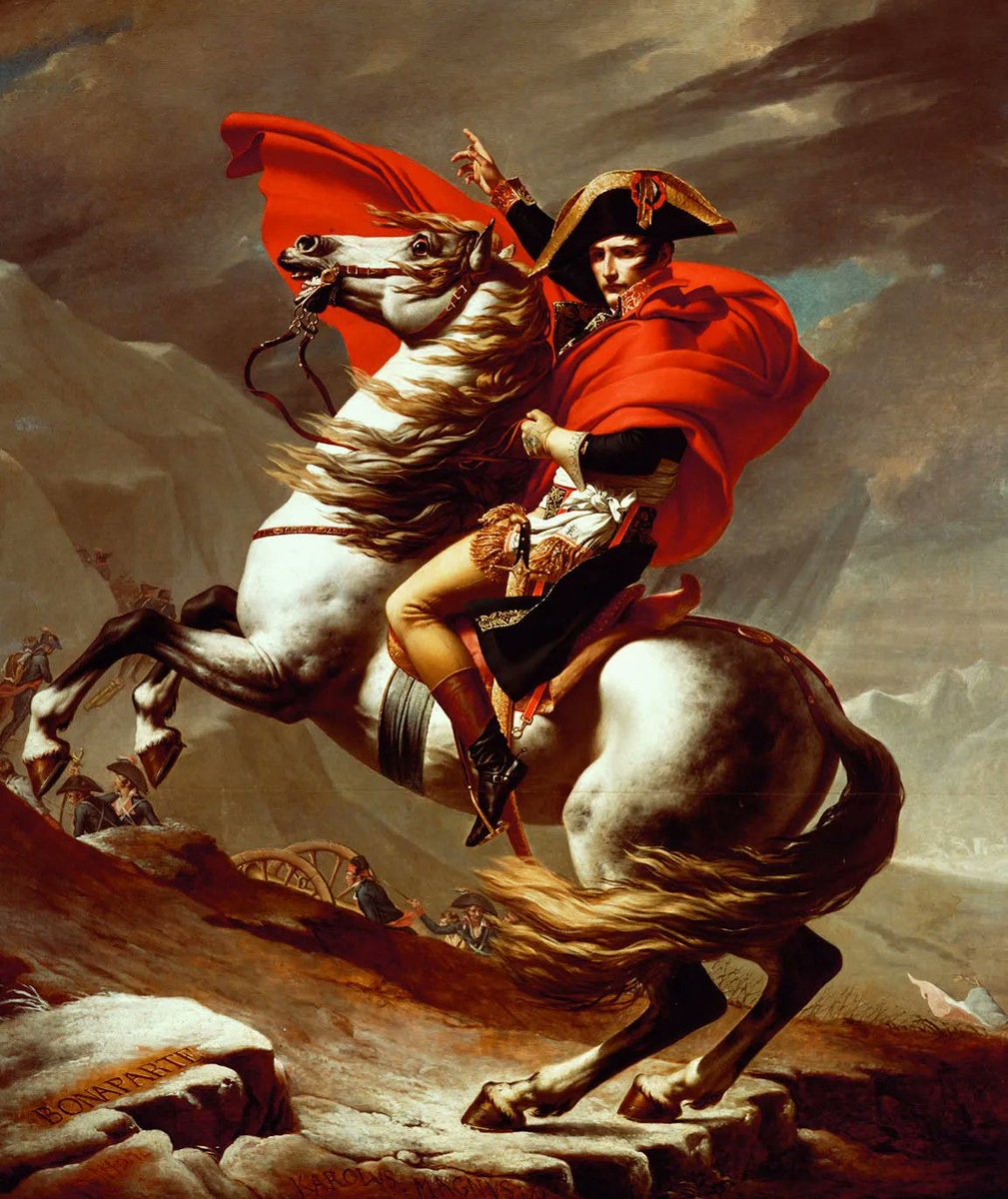
“I am for the Whites, because I am White; I have no other reason, yet that is reason good enough.” —Napoleon
Chad Crowley tweet media
English
59
532
4.6K
69.7K
Chad Crowley
Chad Crowley@CCrowley100·
Chad Crowley@CCrowley100

Some will instinctively doubt the above quotation’s authenticity, but that reaction reflects modern sensibilities rather than the historical record from which it derives. The passage appears in William Hazlitt’s “The Life of Napoleon Buonaparte” (1828), a four-volume work composed in the years immediately following the Emperor’s death. Hazlitt did not coin the line himself, but translated it from an earlier French source. That source is Antoine-Claire Thibaudeau’s “Le Consulat et l’Empire” (“The Consulate and the Empire”), volume three, page 323. Thibaudeau was no distant compiler of anecdotes. He knew Napoleon personally, having served with him in the Council of State and participating directly in his deliberations. A deputy during the Revolution, he later served as a councillor under the Consulate and went on to hold administrative office under the Empire, occupying a position that allowed him to observe Napoleon’s speech and temperament at close range. His memoirs preserve these elements as recorded by one who had served him directly. Hazlitt drew upon Thibaudeau’s account alongside those of Bourrienne, Napoleon’s secretary, and Emmanuel de Las Cases, who accompanied him into exile on St. Helena. Through these firsthand witnesses, Hazlitt sought to recover Napoleon’s character from partisan distortion and to present him as he appeared to those who had known him in life, rather than as the propagandistic image cultivated by his enemies. The passage from which the quotation is taken concerns Martinique, the birthplace of Joséphine de Beauharnais, Napoleon’s wife, born on the island in 1763 into a Creole planter family. Thibaudeau records Napoleon’s remark in this setting, in direct relation to the insurrection in Saint-Domingue, which culminated in the Haitian Revolution and profoundly shaped French imperial policy in the Caribbean. The statement reflects the wider fear among European colonial populations that such uprisings might spread to other colonies, including Martinique, and is framed by Napoleon’s assertion that, in such circumstances, he would stand with the Whites. Objections tend to center on the use of the ethnonym “White.” Historically, however, the term reflects the language of the period rather than a later imposition. In the French Antilles, “blanc” (“White”) had already been employed in the seventeenth century to distinguish Europeans from “les noirs” (“the Blacks”) and “les gens de couleur” (“people of color”). The same terminology appeared early in the English colonies of North America, where “White” entered both legal and social usage in Maryland and Virginia records from the early seventeenth century, serving to differentiate Europeans from Africans and Indians. By the eighteenth century, European naturalists and philosophers had formalized these distinctions within the emerging language of natural history and early racial anthropology. Figures such as Buffon, Voltaire, Linnaeus, Kant, Blumenbach, and later Cuvier operated within a taxonomic framework that explicitly spoke of “la race blanche” (“the White race”), “la race jaune” (“the yellow race”), and “la race noire” (“the Black race”), classifying mankind according to physical form and geographic origin. Read in this context, the terminology of the quotation conforms to the conceptual vocabulary of its age rather than representing a later anachronism.

QME
0
0
2
22
Chad Crowley
Chad Crowley@CCrowley100·
This is historically anachronistic and clearly shaped more by your ideological preferences than by the historical record. The appeal to “unanimous” modern French historians only reinforces the point, since the vast majority of contemporary historians function as court historians of the reigning ideological zeitgeist and should not be taken seriously by anyone genuinely interested in the pursuit of historical truth. x.com/i/status/20343…
English
1
0
28
857
ExtremGoku
ExtremGoku@Gajueo·
@CCrowley100 That's incorrect. French historians unanimously agree that Napoleon was primarily pragmatic and that his statement must be understood within its context. There were Black soldiers holding important positions in Napoleon's army.
English
7
1
0
1.1K
Chad Crowley
Chad Crowley@CCrowley100·
Chad Crowley@CCrowley100

Some will instinctively doubt the above quotation’s authenticity, but that reaction reflects modern sensibilities rather than the historical record from which it derives. The passage appears in William Hazlitt’s “The Life of Napoleon Buonaparte” (1828), a four-volume work composed in the years immediately following the Emperor’s death. Hazlitt did not coin the line himself, but translated it from an earlier French source. That source is Antoine-Claire Thibaudeau’s “Le Consulat et l’Empire” (“The Consulate and the Empire”), volume three, page 323. Thibaudeau was no distant compiler of anecdotes. He knew Napoleon personally, having served with him in the Council of State and participating directly in his deliberations. A deputy during the Revolution, he later served as a councillor under the Consulate and went on to hold administrative office under the Empire, occupying a position that allowed him to observe Napoleon’s speech and temperament at close range. His memoirs preserve these elements as recorded by one who had served him directly. Hazlitt drew upon Thibaudeau’s account alongside those of Bourrienne, Napoleon’s secretary, and Emmanuel de Las Cases, who accompanied him into exile on St. Helena. Through these firsthand witnesses, Hazlitt sought to recover Napoleon’s character from partisan distortion and to present him as he appeared to those who had known him in life, rather than as the propagandistic image cultivated by his enemies. The passage from which the quotation is taken concerns Martinique, the birthplace of Joséphine de Beauharnais, Napoleon’s wife, born on the island in 1763 into a Creole planter family. Thibaudeau records Napoleon’s remark in this setting, in direct relation to the insurrection in Saint-Domingue, which culminated in the Haitian Revolution and profoundly shaped French imperial policy in the Caribbean. The statement reflects the wider fear among European colonial populations that such uprisings might spread to other colonies, including Martinique, and is framed by Napoleon’s assertion that, in such circumstances, he would stand with the Whites. Objections tend to center on the use of the ethnonym “White.” Historically, however, the term reflects the language of the period rather than a later imposition. In the French Antilles, “blanc” (“White”) had already been employed in the seventeenth century to distinguish Europeans from “les noirs” (“the Blacks”) and “les gens de couleur” (“people of color”). The same terminology appeared early in the English colonies of North America, where “White” entered both legal and social usage in Maryland and Virginia records from the early seventeenth century, serving to differentiate Europeans from Africans and Indians. By the eighteenth century, European naturalists and philosophers had formalized these distinctions within the emerging language of natural history and early racial anthropology. Figures such as Buffon, Voltaire, Linnaeus, Kant, Blumenbach, and later Cuvier operated within a taxonomic framework that explicitly spoke of “la race blanche” (“the White race”), “la race jaune” (“the yellow race”), and “la race noire” (“the Black race”), classifying mankind according to physical form and geographic origin. Read in this context, the terminology of the quotation conforms to the conceptual vocabulary of its age rather than representing a later anachronism.

QME
1
1
3
281
Chad Crowley
Chad Crowley@CCrowley100·
Chad Crowley@CCrowley100

Some will instinctively doubt the above quotation’s authenticity, but that reaction reflects modern sensibilities rather than the historical record from which it derives. The passage appears in William Hazlitt’s “The Life of Napoleon Buonaparte” (1828), a four-volume work composed in the years immediately following the Emperor’s death. Hazlitt did not coin the line himself, but translated it from an earlier French source. That source is Antoine-Claire Thibaudeau’s “Le Consulat et l’Empire” (“The Consulate and the Empire”), volume three, page 323. Thibaudeau was no distant compiler of anecdotes. He knew Napoleon personally, having served with him in the Council of State and participating directly in his deliberations. A deputy during the Revolution, he later served as a councillor under the Consulate and went on to hold administrative office under the Empire, occupying a position that allowed him to observe Napoleon’s speech and temperament at close range. His memoirs preserve these elements as recorded by one who had served him directly. Hazlitt drew upon Thibaudeau’s account alongside those of Bourrienne, Napoleon’s secretary, and Emmanuel de Las Cases, who accompanied him into exile on St. Helena. Through these firsthand witnesses, Hazlitt sought to recover Napoleon’s character from partisan distortion and to present him as he appeared to those who had known him in life, rather than as the propagandistic image cultivated by his enemies. The passage from which the quotation is taken concerns Martinique, the birthplace of Joséphine de Beauharnais, Napoleon’s wife, born on the island in 1763 into a Creole planter family. Thibaudeau records Napoleon’s remark in this setting, in direct relation to the insurrection in Saint-Domingue, which culminated in the Haitian Revolution and profoundly shaped French imperial policy in the Caribbean. The statement reflects the wider fear among European colonial populations that such uprisings might spread to other colonies, including Martinique, and is framed by Napoleon’s assertion that, in such circumstances, he would stand with the Whites. Objections tend to center on the use of the ethnonym “White.” Historically, however, the term reflects the language of the period rather than a later imposition. In the French Antilles, “blanc” (“White”) had already been employed in the seventeenth century to distinguish Europeans from “les noirs” (“the Blacks”) and “les gens de couleur” (“people of color”). The same terminology appeared early in the English colonies of North America, where “White” entered both legal and social usage in Maryland and Virginia records from the early seventeenth century, serving to differentiate Europeans from Africans and Indians. By the eighteenth century, European naturalists and philosophers had formalized these distinctions within the emerging language of natural history and early racial anthropology. Figures such as Buffon, Voltaire, Linnaeus, Kant, Blumenbach, and later Cuvier operated within a taxonomic framework that explicitly spoke of “la race blanche” (“the White race”), “la race jaune” (“the yellow race”), and “la race noire” (“the Black race”), classifying mankind according to physical form and geographic origin. Read in this context, the terminology of the quotation conforms to the conceptual vocabulary of its age rather than representing a later anachronism.

QME
0
0
3
97
Chad Crowley
Chad Crowley@CCrowley100·
@Frenchskiphd @grok Grok n’est pas fiable pour le sourçage des textes historiques, en particulier lorsqu’il s’agit d’ouvrages obscurs qui ne sont pas facilement accessibles en ligne. x.com/i/status/20343…
Chad Crowley@CCrowley100

Some will instinctively doubt the above quotation’s authenticity, but that reaction reflects modern sensibilities rather than the historical record from which it derives. The passage appears in William Hazlitt’s “The Life of Napoleon Buonaparte” (1828), a four-volume work composed in the years immediately following the Emperor’s death. Hazlitt did not coin the line himself, but translated it from an earlier French source. That source is Antoine-Claire Thibaudeau’s “Le Consulat et l’Empire” (“The Consulate and the Empire”), volume three, page 323. Thibaudeau was no distant compiler of anecdotes. He knew Napoleon personally, having served with him in the Council of State and participating directly in his deliberations. A deputy during the Revolution, he later served as a councillor under the Consulate and went on to hold administrative office under the Empire, occupying a position that allowed him to observe Napoleon’s speech and temperament at close range. His memoirs preserve these elements as recorded by one who had served him directly. Hazlitt drew upon Thibaudeau’s account alongside those of Bourrienne, Napoleon’s secretary, and Emmanuel de Las Cases, who accompanied him into exile on St. Helena. Through these firsthand witnesses, Hazlitt sought to recover Napoleon’s character from partisan distortion and to present him as he appeared to those who had known him in life, rather than as the propagandistic image cultivated by his enemies. The passage from which the quotation is taken concerns Martinique, the birthplace of Joséphine de Beauharnais, Napoleon’s wife, born on the island in 1763 into a Creole planter family. Thibaudeau records Napoleon’s remark in this setting, in direct relation to the insurrection in Saint-Domingue, which culminated in the Haitian Revolution and profoundly shaped French imperial policy in the Caribbean. The statement reflects the wider fear among European colonial populations that such uprisings might spread to other colonies, including Martinique, and is framed by Napoleon’s assertion that, in such circumstances, he would stand with the Whites. Objections tend to center on the use of the ethnonym “White.” Historically, however, the term reflects the language of the period rather than a later imposition. In the French Antilles, “blanc” (“White”) had already been employed in the seventeenth century to distinguish Europeans from “les noirs” (“the Blacks”) and “les gens de couleur” (“people of color”). The same terminology appeared early in the English colonies of North America, where “White” entered both legal and social usage in Maryland and Virginia records from the early seventeenth century, serving to differentiate Europeans from Africans and Indians. By the eighteenth century, European naturalists and philosophers had formalized these distinctions within the emerging language of natural history and early racial anthropology. Figures such as Buffon, Voltaire, Linnaeus, Kant, Blumenbach, and later Cuvier operated within a taxonomic framework that explicitly spoke of “la race blanche” (“the White race”), “la race jaune” (“the yellow race”), and “la race noire” (“the Black race”), classifying mankind according to physical form and geographic origin. Read in this context, the terminology of the quotation conforms to the conceptual vocabulary of its age rather than representing a later anachronism.

Français
0
0
2
59
Chad Crowley
Chad Crowley@CCrowley100·
Your understanding of history is puerile, to say the least. You are collapsing centuries of Roman development into a single, incoherent claim. Historical philistinism aside, a term you would do well to learn, you have entirely missed the point. Evola is articulating a conceptualization of freedom grounded in the Roman concept of libertas, understood as a status of hierarchical rank within the Roman social order. Your invocation of slave populations, whether in number or proportion, is a crude irrelevance that betrays a complete inability to grasp even the most elementary of arguments. It has no bearing on the philosophical question at hand. It is a non sequitur.
English
1
1
9
1.1K
The New Megalithic Times
The New Megalithic Times@megalithictimes·
@CCrowley100 You should study Roman history. There's no such a concept of free men there. Other you were a Roman or you were not. And by Roman it was not meant someone living in Rome. Most of Rome people were slaves.
English
2
0
1
213