Sabitlenmiş Tweet
The College Gridiron Showcase
8.8K posts

The College Gridiron Showcase
@CGSAllStar
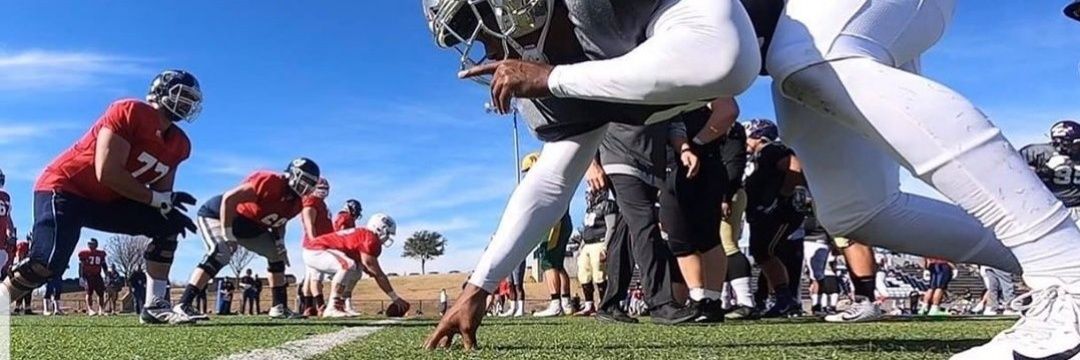
The College Gridiron Showcase is a 5-day event for ALL College FB Divisions, providing exposure & education for top seniors from around the country.
Fort Worth, TX Katılım Eylül 2014
10.2K Takip Edilen14.7K Takipçiler
The College Gridiron Showcase retweetledi

From a scouting perspective, Sam Hubbard is a great example of evaluating transferable athletic traits rather than simply the position next to a player’s name. His path from high school safety to NFL defensive end shows how athleticism, frame development, versatility, and football intelligence can shape a player’s projection
At @MoellerFootball, Hubbard played safety, displaying length, range, instincts, tackling ability, and movement skills while helping the program win back-to-back Ohio Division I state championships
He was also a highly recruited lacrosse player who originally committed to Notre Dame for lacrosse before choosing football at @OhioStateFB
His lacrosse and safety backgrounds helped develop transferable traits such as lateral quickness, coordination, change of direction, spatial awareness, body control, and pursuit ability
At Ohio State, Hubbard’s transition to defensive end was gradual. He was initially evaluated at linebacker and spent time at tight end before settling at defensive end as his frame developed. Despite adding significant size, he maintained the movement skills that made him unique
2018 Combine / Pro Day:
6’5⅜”, 270 pounds | 33⅛” arms
35” vertical | 116” broad
6.84 three-cone | 4.32 shuttle
Approx. 4.95 40 at Ohio State’s Pro Day
Hubbard finished his Ohio State career with 116 tackles, 29.5 TFLs, and 17 sacks, earning Second-Team All-Big Ten honors in 2017 before the @Bengals selected him 77th overall in the 2018 NFL Draft
Those athletic traits translated to the NFL, where Hubbard developed into a dependable, well-rounded defensive end who could set the edge, defend the run, pressure the quarterback, redirect, and pursue in space. His historic 98-yard “Hubbard Yard Dash” playoff touchdown was a fitting example of the athleticism he carried from safety and lacrosse all the way to NFL defensive end while finishing his NFL career (2018–2024) playing 104 games (88 starts) with 398 combined tackles, 38.5 sacks, six forced fumbles, and five fumble recoveries

English
The College Gridiron Showcase retweetledi

A well-executed trap block is one of the best examples of how technique, timing, and deception can create explosive plays in the run game
Instead of trying to overpower an aggressive defensive lineman, the offense uses his upfield penetration against him by allowing a puller to trap him at the point of attack and create a vertical running lane
Every player has a critical role from the adjacent linemen trusting the scheme and executing their assignments, to the puller staying tight to the line of scrimmage with proper leverage and timing, to the running back pressing the aiming point before making one decisive cut
When coached and executed correctly, the trap concept forces defenses to play with greater discipline, slows down penetrating fronts, and complements the entire run game by creating hesitation that benefits concepts like power, counter, duo, and inside zone
It’s a reminder that great offensive football isn’t always about winning with brute strength it’s about leveraging angles, communication, discipline, and execution to make the defense play on your terms

English
The College Gridiron Showcase retweetledi

BOB (Big on Big) protection is one of the foundational pass protection concepts every offensive lineman must master because it combines communication, football IQ, disciplined technique, and trust
Whether it’s Full-Man BOB or Half-Man BOB with a slide, success starts before the snap by identifying the defensive front, locating the Mike linebacker, recognizing potential pressure, and understanding the protection call. Great offensive lines don’t just block defenders, they communicate, trust the rules, and execute as one unit
In Full-Man BOB, each offensive lineman is responsible for a designated pass rusher while maintaining awareness of second-level blitz threats, communicating late movement, and staying disciplined within the protection. The running back scans for the first uncovered second-level or extra pressure defender and, if no additional pressure develops, releases into the route
In Half-Man BOB, one side of the offensive line works together in a slide while the opposite side remains in man protection, providing additional flexibility against twists, overloads, and simulated pressures
The best pass protection units consistently protect the inside first, maintain leverage, keep their eyes disciplined, and communicate through every stunt and blitz without abandoning their assignments

English
The College Gridiron Showcase retweetledi

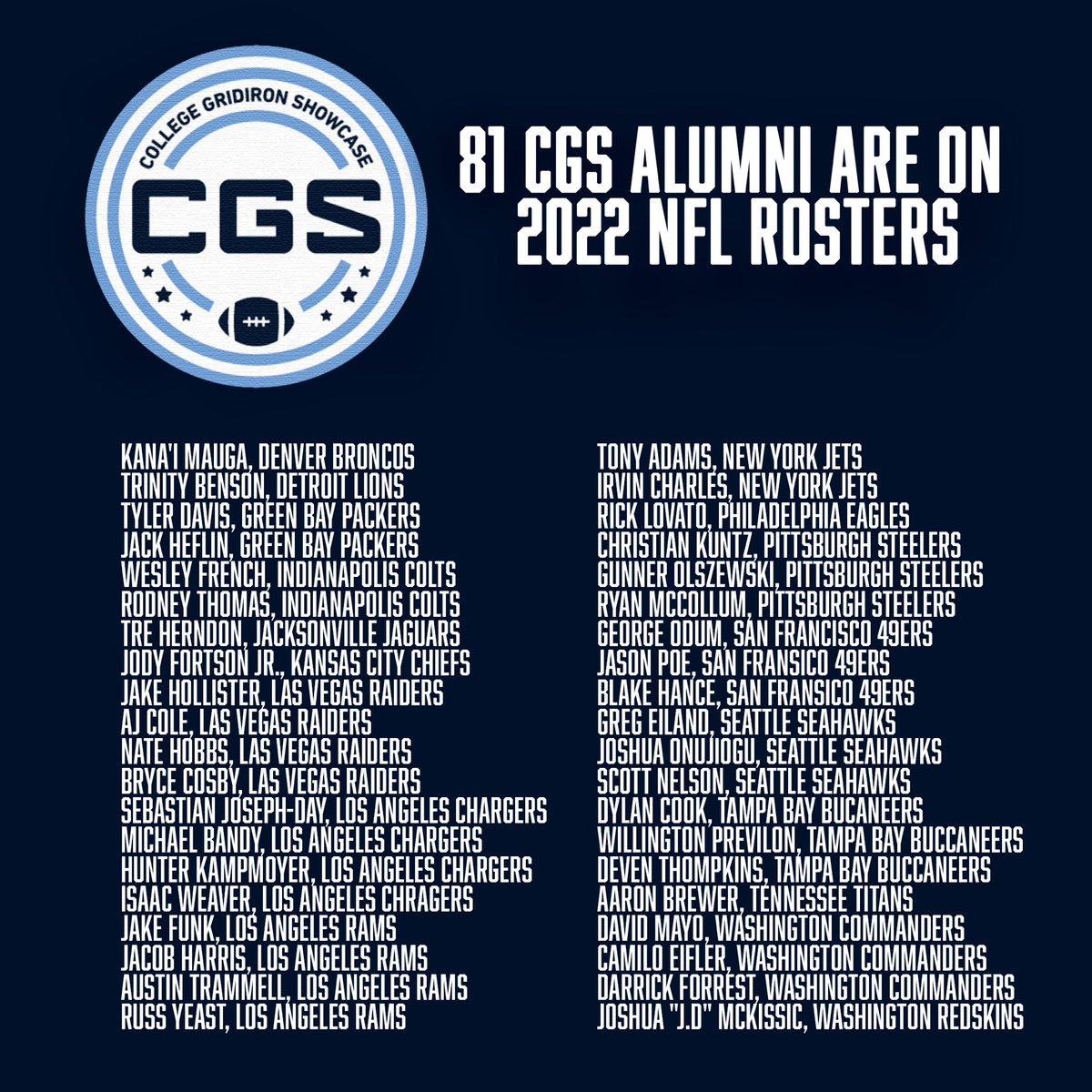
Great stuff @Steelers_DB
@CGSAllStar alum @dylanco10 doing great things!
#AllstarSeasonStartsWithCGS
Derrick@Steelers_DB
Steelers OT @dylanco10 joins me to discuss what’s next following his breakout season, pass blocking techniques and Pittsburgh’s offense in 2026. He was also gracious enough to dive into some film with me as well. Yinz won’t want to miss this one! youtu.be/xJ3J6zoUf6s?is…
English
The College Gridiron Showcase retweetledi

One of the first things I evaluate when studying defensive linemen is hand usage. While size, length, strength, and explosiveness may get a player noticed, refined hand technique is often what separates productive college players from long-term NFL contributors
Great defensive linemen don’t simply overpower blockers they consistently win the hand battle. They strike first with timing and violence, establish leverage, keep their chest clean, create separation, and disengage to finish plays. Every movement of the hands has a purpose, whether it’s controlling a blocker in the run game or executing a pass-rush move with precision
From a run-defense standpoint, hand usage allows defenders to lock out, stack and shed, maintain gap integrity, defeat reach blocks, control double teams, and prevent offensive linemen from climbing to the second level. Proper hand placement, extension, pad level, and leverage are all essential to consistently controlling the line of scrimmage
As a pass rusher, hand usage becomes even more critical. Elite defenders attack the offensive lineman’s hands before attacking his body, forcing him into recovery mode and disrupting his balance and timing. They build a complete pass-rush plan by sequencing clubs, chops, swipes, rips, long-arm techniques, push-pulls, spin moves, and counters together while keeping their feet active and maintaining leverage throughout the rep
Scouts also evaluate hand speed, independent hand usage, block recognition, and the ability to quickly adjust technique based on different blocking schemes. The most technically refined defensive linemen understand that every block requires a different response, and they consistently pair violent, disciplined hands with excellent footwork, pad level, and football IQ
At the highest levels of football, athletic ability alone is rarely enough. The defensive linemen who consistently create disruption are the ones who master the fundamentals of hand usage. Physical traits may help open the door, but technical refinement, discipline, and the ability to win with your hands are what allow defensive linemen to control the line of scrimmage and become complete, every-down players

English
The College Gridiron Showcase retweetledi

From a scouting perspective, Charlie Batch projected as an intelligent, poised, and efficient pocket quarterback whose leadership, decision-making, accuracy, and football IQ consistently stood out on film
He had good NFL-caliber arm strength and consistently won with timing, anticipation, sound mechanics, and an advanced understanding of defensive structures
At @EMUFB, Batch developed into one of the program’s most accomplished quarterbacks, leaving as the school’s career leader in passing yards, touchdown passes, and total offense while earning First Team All-Mid-American Conference honors and the team’s 1997 MVP award
On film, Batch consistently demonstrated excellent pre-snap recognition, coverage identification, and the discipline to work through full-field progressions without forcing throws into coverage. His compact release, balanced footwork, and sound lower-body mechanics allowed him to deliver an accurate football with consistent timing, while his anticipation, ball security, and decision-making enabled him to operate efficiently within the offense
He also showed good pocket awareness, toughness under pressure, and subtle pocket movement to create clean throwing lanes while keeping his eyes downfield.
Those traits translated well to the NFL. Selected by the @Lions with the 30th overall pick in the 1998 NFL Draft, Batch started 49 games over his first four seasons before becoming one of the NFL’s most respected veteran backup quarterbacks with the @steelers
His professionalism, football IQ, preparation, and leadership made him a trusted mentor and valuable contributor to two Super Bowl championship teams
NFL Combine Measurements & Testing:
Height: 6’2”
Weight: 216 lbs.
Arm Length: 33¾”
Hand Size: 9¾”
40-Yard Dash: 4.89
10-Yard Split: 1.73
20-Yard Split: 2.87
Vertical Jump: 33.5”
Short Shuttle: 4.11
College Accolades:
2nd Round (30th overall), 1998 NFL Draft – Detroit Lions
First Team All-Mid-American Conference
Led the MAC in passing efficiency (1995)
Led the MAC in total offense (1997)
Eastern Michigan Team MVP (1997)
Left Eastern Michigan as the program’s career leader in passing yards, touchdown passes, and total offense
Eastern Michigan E-Club Athletic Hall of Fame (2009)
Mid-American Conference Hall of Fame (2018)

English
The College Gridiron Showcase retweetledi

From both a coaching and scouting perspective, lower body mechanics are the foundation of quarterback play. Arm talent may grab headlines, but consistent accuracy, velocity, timing, and ball placement all begin from the ground up
Every throw is powered by an efficient kinetic chain, where force is generated through the feet, transferred through the legs, hips, and core, and ultimately delivered through the football
Quarterback coaches devote countless hours to developing footwork because disciplined feet create disciplined throws. Proper stance, balanced weight distribution, synchronized drops, efficient pocket movement, and quick resets allow quarterbacks to stay on rhythm, remain on schedule, and consistently deliver accurate footballs under pressure
The ability to recreate a balanced throwing platform after movement often separates elite quarterbacks from the rest
From a scouting perspective, evaluators study much more than completions and statistics. They look for quarterbacks who maintain a consistent base, generate power from the ground, sequence their lower and upper body efficiently, reset their feet quickly, and preserve their mechanics in pressure situations, on movement throws, and late in games
Those traits often translate to greater consistency, durability, and long-term success
The quarterbacks featured in this graphic Tom Brady, Peyton Manning, and Drew Brees are outstanding examples of how elite footwork, balance, rhythm, and lower body efficiency can maximize performance
None relied solely on overwhelming arm strength. Instead, they mastered the fundamentals, allowing them to consistently play at an elite level throughout their careers
The biggest takeaway is simple: every great throw starts with great feet. When a quarterback develops a repeatable lower body foundation, every aspect of his game improves, including timing, rhythm, velocity, accuracy, pocket movement, decision making, and overall consistency
‼️It’s one of the most important areas of quarterback development and one of the first things coaches teach and scouts evaluate

English
The College Gridiron Showcase retweetledi

One of the most overlooked positions in football is the 6th offensive lineman
While the starting five receive the recognition, championship organizations understand that quality offensive line depth is essential over the course of a long NFL season
Injuries are inevitable, and the ability to insert a versatile, dependable lineman without changing the offensive game plan is a tremendous advantage
From a scouting perspective, the best sixth offensive linemen possess positional versatility, football intelligence, technical consistency, and the mental preparation to step into the lineup at a moment’s notice
Whether it’s playing multiple positions, communicating protections, handling stunts and blitzes, or contributing in heavy personnel packages, these players provide value far beyond being “just a backup.”
The role has become even more important in today’s NFL, where offenses frequently utilize six offensive linemen to strengthen the run game, improve pass protection, and create physical mismatches at the point of attack
Players like Patrick Mekari, Evan Brown, Josh Jones, and Joseph Noteboom demonstrate exactly what NFL personnel departments look for: versatility, reliability, professionalism, and the ability to keep an offense functioning at a high level regardless of where they’re needed
Great teams are built with quality depth, and few positions embody that philosophy more than the 6th offensive lineman

English
The College Gridiron Showcase retweetledi

Evening reading for tonight
Once again tremendous job to @philsteele042 and his team on this years magazine!
An essential resource for my role with @CGSAllStar and @calstampeders

English
The College Gridiron Showcase retweetledi

One of the most overlooked positions in football is also one of the most important
A long snapper may only be involved in a handful of plays each game, but every snap directly impacts field position, scoring opportunities, and the success of the entire kicking operation. One inaccurate snap can lead to a blocked punt, missed field goal, turnover, or game changing mistake. That’s why coaches and personnel departments place such a premium on consistency and reliability at the position
From a scouting perspective, the evaluation starts with accuracy, snap velocity, and repeatable mechanics
The best long snappers consistently deliver a catchable ball with proper location, tight rotation, and the velocity needed to keep the operation on schedule
After the snap, they must quickly establish leverage, anchor against interior pressure, protect the A gaps, then transition into coverage while maintaining athleticism, balance, and body control. Hidden yardage created through disciplined protection, sound coverage, and tackling can have a significant impact over the course of a season
At the college level, coaches look for prospects who demonstrate consistent execution over hundreds of live snaps, not just impressive performances at specialist camps. They value football intelligence, coachability, mental toughness, communication, functional strength, length, flexibility, and the athletic ability to protect and cover. Programs want players who eliminate negative plays and provide confidence that the kicking operation will function efficiently in every situation
The best long snappers rarely receive headlines because their job is measured by consistency rather than statistics. Their value comes from executing the routine at an elite level, minimizing mistakes, and allowing the punter, holder, kicker, and protection unit to operate with complete confidence

English
The College Gridiron Showcase retweetledi

From a scouting perspective, Mike McGlynn projected as a technically sound, intelligent, and dependable offensive lineman whose toughness, leadership, and versatility made him an attractive NFL prospect. A 42-game starter at right tackle for Pittsburgh, evaluators believed his frame, football IQ, functional strength, and polished technique would allow him to transition inside to guard or center at the next level
At @Pitt_FB, McGlynn consistently won with fundamentals rather than elite athleticism. He played with good pad level, balanced footwork, disciplined hand placement, and strong leverage, allowing him to sustain blocks and limit mental mistakes
As a run blocker, he generated movement through technique, leg drive, and relentless effort while effectively climbing to the second level in both zone and gap schemes
In pass protection, McGlynn displayed a firm anchor, active hands, and disciplined footwork while quickly recognizing twists, stunts, and blitzes
His consistency, toughness, and football intelligence projected well to the interior offensive line. He also handled long-snapping duties on field goals and extra points, further showcasing his versatility and team-first mentality
Those traits translated directly to the NFL, where he played eight seasons, appearing in 83 games with 61 starts at both guard and center. His versatility, durability, professionalism, and football IQ made him a valuable multi-position offensive lineman
Combine Measurements & Testing:
Height: 6’4¼”
Weight: 311 lbs
Arm Length: 33¼”
Hand Size: 9½”
40-Yard Dash: 5.41 seconds
10-Yard Split: 1.86 seconds
20-Yard Split: 3.13 seconds
Bench Press: 30 reps
Vertical Jump: 23.0”
Broad Jump: 8’5”
20-Yard Shuttle: 4.72 seconds
College Accolades:
Team Captain (2007)
First Team All-Big East (2007)
Ed Conway Award (Pitt’s Most Improved Offensive Player)
42 starts over his final 43 games at right tackle
Long snapper on field goals and extra points
Selected by the Philadelphia Eagles in the 4th Round (109th overall) of the 2008 NFL Draft

English
The College Gridiron Showcase retweetledi

🚨 High School Football Recruits & Parents
‼️Be realistic with your recruiting expectations
The “Division I or bust” mentality is one of the biggest mistakes a recruit can make
The reality is that college programs, especially at the FBS and FCS levels, still build their rosters around measurable traits such as height, weight, length, speed, and overall athletic profile. While production, film, and character matter, physical traits remain a significant part of the evaluation process
That does not mean your football journey ends if you are not recruited by an FBS program
There are outstanding opportunities to play college football at every level:
• FCS
• Division II
• Division III
• JUCO
• NAIA
‼️ Playing college football at any level is a 🚨PRIVILEGE🚨 that thousands of athletes never have the opportunity to experience
Most importantly, take ownership of your recruiting process ⬇️
Don’t point fingers or blame coaches, trainers, or others because you didn’t receive the offer you wanted. Control what you can control, be honest about your abilities, and find the program that best matches your talent, goals, and development
The right fit is far more important than the logo on the helmet
English
The College Gridiron Showcase retweetledi

S/O to @CoachTatum90 for putting out some great OLine content!
Coaches helping Coaches!
English
The College Gridiron Showcase retweetledi

I could listen to @The_Coach_A break down defensive schemes and the personnel that make those schemes successful all day
Insightful, detailed, and full of valuable coaching perspective
English
The College Gridiron Showcase retweetledi

Blocking punts is one of the biggest momentum changing plays in football because it can instantly create explosive plays, flip field position, and completely change the outcome of a game
Even when the punt is not blocked, consistent pressure forces quicker operation times, lower trajectories, shorter punts, and protection adjustments that create valuable hidden yardage
That is why elite special teams units treat punt block as a calculated discipline built on preparation, technique, and execution rather than simply playing fast
From a scouting perspective, organizations place a premium on core special teamers who possess explosive first step quickness, snap anticipation, length, football intelligence, flexibility, balance, and relentless effort
Long arms and outstanding body control expand a player’s blocking radius, while disciplined rush lane integrity ensures every player executes his assignment within the pressure scheme. 🚨The best punt blockers attack the football, not the kicker🚨, using efficient angles, violent hand usage, and controlled finishes to maximize their chances of creating a game changing play while avoiding costly penalties
Ultimately, the teams that consistently win on special teams are the ones that identify and develop players with the athletic traits, discipline, toughness, and technical skill to create hidden yardage and game changing momentum through the punt block unit

English
The College Gridiron Showcase retweetledi

A great football head coach understands that accurate player evaluation is the foundation of building a successful team, consistently identifying each player’s unique strengths and putting them in the position where they can develop, play with confidence, maximize their potential, and contribute to winning football
English
The College Gridiron Showcase retweetledi