
ChazBerry
781 posts
@johnnyxbrown Need someone to explain how a $10 meal is not expensive? If you’re eating 3 meals a day and you eat for 30 days a month….that’s a $900 grocery bill….for 1 person!
English

Losing weight can be hard, but it doesn’t have to be.
I’ve created a step-by-step fat loss blueprint that works for everyone.
Like this tweet + reply “blueprint” and I’ll DM you a free copy ($99 value)!
Must be following @johnnyxbrown to receive DM 🤝

English

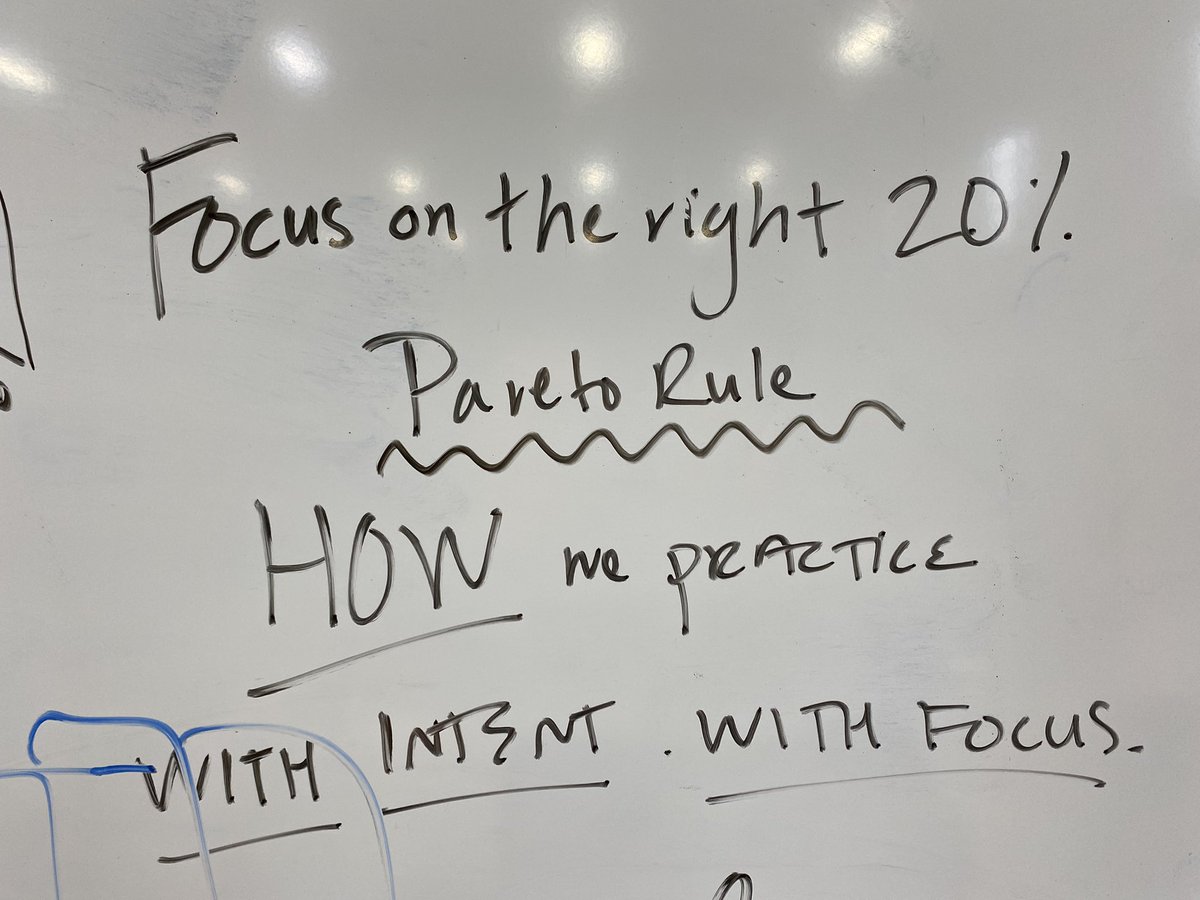
#TOTD = Pareto Principle
Priorities of how we practice & what we focus on. @GW_Softball is always learning. And always doodling.
#RaiseHigh

English
ChazBerry retweetledi

Back-to-back A-10 series wins! 🦾
@TorresReese with the game-winning grand slam in the 4th🔥
#RaiseHigh | #Together

English
ChazBerry retweetledi



English
@BenIannacchione @EricGuthrie07 You said actualization of full potential. Its more appropriate for you to simply say, actualization of untapped potential, not full potential. Actualization of potential is growth and yes, growth/improvement is still an outcome. Growth is the outcome and should be the aim.
English
@BenIannacchione @EricGuthrie07 If our purpose is not to facilitate change, then it is purposeless and senseless. If it is to exact change, we should acknowledge that change is indeed an outcome. So it is about the outcome.
English
@BenIannacchione @EricGuthrie07 Change is an outcome. The purpose of a coach crafting an exposure to difficulty is to facilitate change, positive change. Positive change is a victory. Victory is an outcome.
English
@BenIannacchione @EricGuthrie07 In that scenario its not about exposing people to difficulty but exposing them to victory, a victory achieved due to them being properly prepared both by themselves and the community surrounding them others. Reinforcing their self-efficacy and the importance of community.
English
@BenIannacchione @EricGuthrie07 All of that's good. I agree that there is space to give people difficult things because you know that you are going to also give them the tools that they need to succeed and to overcome the challenge.
English
@EricGuthrie07 @BenIannacchione We attribute poor performance in the face of difficulty to a lack of exposure to difficulty itself. It's not true though, that you just passively and magically develop the skills necessary for handling difficulty just by being exposed to difficulty. There should be a method.
English
@EricGuthrie07 @BenIannacchione I think an over preoccupation with doing "hard things" can be due to our assumption that people don't have enough practice grappling with "hard things". We are overconfident that we know their private lives so well. So our "love" is to give them the hard things.
English
To be “colorblind” is to have a problem with race and not racism.
To understand the history of “colorblindness” is to not be surprised that self-identified “colorblind” people who claim to advocate for “equality under the law regardless of race” do not spend their time challenging the many laws that keep yielding racial inequality. Instead, they spend their time attacking those of us who are challenging these racist laws and the racist ideas that justify them.
The moment people imagine themselves to be “colorblind” is the moment we stop identifying by race. The moment we stop identifying by race is the moment we cannot see racial inequality—Black and Natives peoples in the US being more likely than White people to be incarcerated, impoverished, killed by police, houseless, suspended from schools, unemployed, living in environmentally toxic neighborhoods, dying at childbirth and from pregnancy, dying of heart disease and cancer, etc. The moment we can’t see all this racial inequality and inequity and injustice is the moment we can’t see the structure of racism behind it. The moment we can’t see racism is the moment racism and White domination becomes eternal. Which is the point. Which has always been the point.
Supreme Court Justice John Harlan introduced the term “color-blind” into the U.S. racial lexicon when he wrote, “Our constitution is color-blind,” in his 1896 dissent of Plessy v. Ferguson. Justice Harlan also wrote in this dissent: “The white race deems itself to be the dominant race in this country. . .So, I doubt not, it will continue to be for all time, if it remains true to its great heritage. . .”
This pioneering “color-blind” jurist did not doubt that White domination was permanent. Which is the outcome of see nothing and do nothing “colorblind” thinking today in our deeply unequal society.
⚔️ Δοῦλος Χριστοῦ ⚔️@RichardAMcGough
Legal colorblindness means equality under law regardless of race. Social colorblindness means equality in social relations, where race has no more significance than hair color or eye color. Racism is possible only if people "see race" as a meaningful category by which to judge humans. Racism dies the moment people become colorblind.
English

ChazBerry retweetledi
ChazBerry retweetledi

We’re excited to welcome Jeremy Williams as the next Head Coach of our program. Welcome to Foggy Bottom! #RaiseHigh
gwsports.com/news/2023/12/2…
English