
Sabitlenmiş Tweet
Henry Mao
6.5K posts
Henry Mao
@Calclavia
Co-founder/CEO @ https://t.co/jUkhv9ulAd @SmitheryDotAI, backed by @southpkcommons; Prev. co-founded https://t.co/PrvwcJieE7 (exited)
Singapore Katılım Mayıs 2009
613 Takip Edilen6.7K Takipçiler


@grinich @Cloudflare @firecrawl @WorkOS Amazing to see more work in this area. It's a huge pain point for Smithery users to have to sign up to obtain API keys, and we've been experimenting with ID-JAG.
It's great to see this being pushed forward!
English

Today WorkOS is launching auth.md
An open protocol for agents to register for services on the web.
We're partnering with @Cloudflare and @Firecrawl as some of the first providers.
Why did we build this? And why now? 🧵

English
Brandfetch MCP is now on Smithery! @brandfetch
I've been using it to find high-quality brand icons/logos to display on decks and our pages.
Check it out:
smithery.ai/servers/brandf…
English
Thanks to @buildclub_ @AnnieLiao_2000 for having me talk about how we can move beyond the world of manual prompting towards agents with more autonomy.
Was great to demo with @SerenaLamAU, @picocreator, and @fatimarizwan!

Annie ❤️🔥@AnnieLiao_2000
excited to share that @buildclub_ community is officially live in Singapore in partnership with @singtelinnov8! 🇸🇬 last night, 250 builders gathered to witness the launch thanks Serena Lam, @picocreator, @Calclavia and more for demoing! if you want to get involved, we have some incredible exciting things in store (please reply or reach out!)
English

Here's how I got coding agents to relieve my allergy:
1. Connect it to all my contexts (via Smithery)
2. Spin up a long-running task via /goal that runs for 30 min+
3. Be bored
4. Realize I need to do higher leverage tasks: something agents can't do
5. Start cleaning my room, removing a substantial amount of dust
6. Checks agent => it's still running
7. Decides to clean the bathroom too
8. PR is shipped. Allergy is gone.
Insane increase in shareholder value.
English
Another analogy I heard from @GeoffreyHuntley at @aiDotEngineer is that vibe coding is like giving everyone an iPhone camera.
It didn't put wedding photographers out of business.
anirudh@kamathematic
vibe coding is cooking at home; software engineering is being a professional chef. access to kitchens didn't put restaurants out of business
English
Thanks to @SherryYanJiang, @agrimsingh, and the organizers/speakers/sponsors for making @aiDotEngineer Singapore happen over this weekend, letting me go into the rabbit hole of MCPs/CLIs, and how to wire up your agent.
Met a lot of new people and reconnected with many friends!

Henry Mao@Calclavia
We're settling the MCP vs. CLI debate by benchmarking Codex and Claude Code across 3 different APIs, totaling 756 runs. We also cover skills, code mode, pretraining bias, and how MCP fits in the broader picture. The results might surprise you👇
English

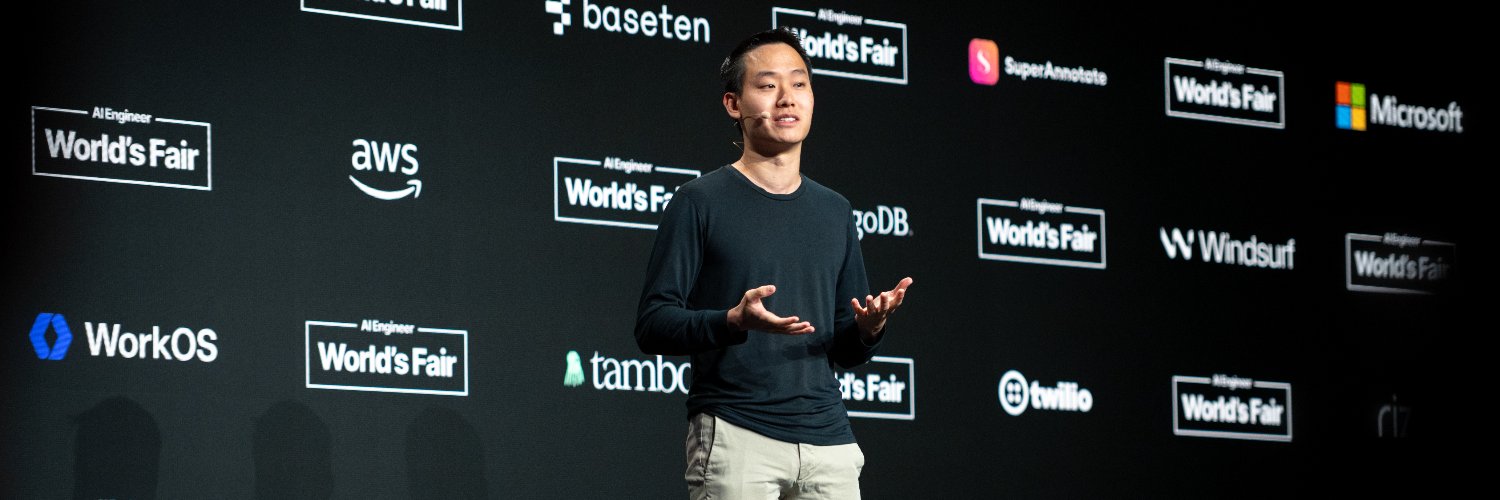
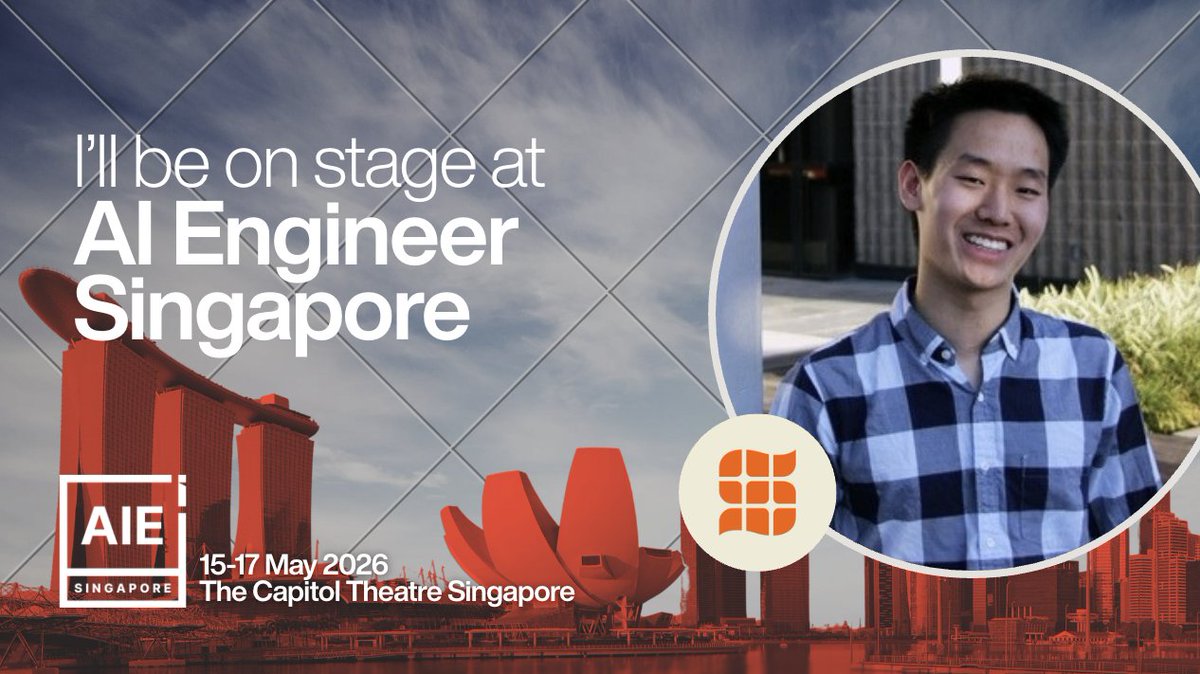
I'm back in Singapore and will be speaking at @aiDotEngineer this Sunday.
DM me if you want to hang out at the conference this weekend.
English

Auth0's official MCP is now on Smithery! 👇
Aydrian (エイドリアン)@itsaydrian
The @Auth0 MCP server is now available on @SmitheryDotAI. Manual configs kill velocity. Smithery acts as an AI package manager to remove that friction. Install the server so your AI can handle tenant setup & users. smithery.ai/servers/auth0 Auth0: a0.to/620
English
We're moving towards measuring outcomes rather than reviewing code.
The alpha is in wiring up your agents to all your data sources well so it can rip.
Chrys Bader@chrysb
i spoke to a founder yesterday - their CTO finally read their agent-made codebase after months and panicked when he realized it was impossible to understand wtf was going on my rule of thumb is: if your codebase starts written by agents, don’t try to understand it instead, align at the architectural level before any building happens, and ask the agent to maintain a living architecture diagram of how the system works there are three altitudes that matter: - Top-level: architecture - Mid-level: patterns & abstractions - Low-level: file-level code in today’s world, a CTO should be deeply concerned with #1. #2 matters too, but not as critical as #1. if #1 and #2 are dialed in, #3 is where most of the high leverage agentic gains live. as long as you understand the architecture and critical interfaces, it becomes much easier to reason about ground truth and meaningfully iterate understanding and informing the architecture / patterns / abstractions give your codebase maximum longevity and agent maintainability
English

Smithery is now generating TypeScript SDKs for all published MCP servers, so your agents can use them when writing code!
Check it out (in preview) 👇
anirudh@kamathematic
Trying something out, pretty experimental. Get a fully typed SDK (including output schemas!) for *any* of our 5,000+ servers on @SmitheryDotAI. Code mode, gen UI, and any workflow with only one API key needed: your Smithery API key (OAuth built-in!)
English