

Candy Hui 許璈暉 BSP RCIC-IRB
3.5K posts

Candy Hui 許璈暉 BSP RCIC-IRB
@Candy_BSP_RCIC
Mother of 2 | Wife | Pharmacist | RCIC-IRB| she/her/她 | Proud to call #YQR home | Tweets ≠ legal advice
Regina, SK, on Treaty 4 land Katılım Mayıs 2020
305 Takip Edilen1.6K Takipçiler
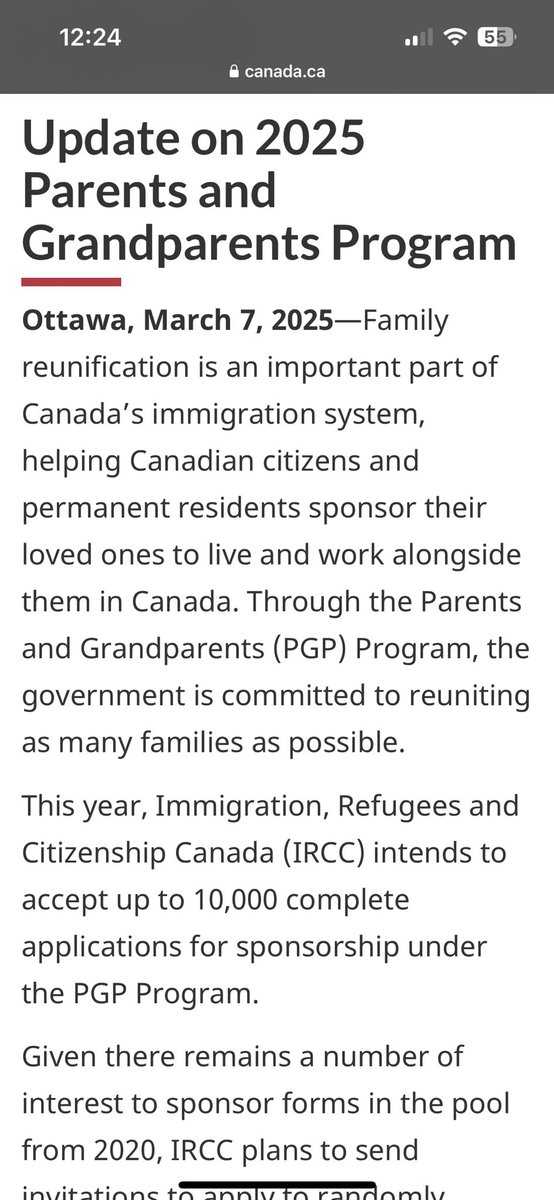
#parent #grandparent #UPDATE #IRCC plans to send invitations to apply to randomly selected potential sponsors from that pool instead of accepting new forms. This is the same approach taken for the intakes conducted from 2020 to 2024.
English
Candy Hui 許璈暉 BSP RCIC-IRB retweetledi

Update on 2025 Parents and Grandparents Program (PGP): This year, we plan to accept up to 10,000 applications under the PGP by inviting potential sponsors from the pool of remaining interest to sponsor forms submitted in 2020. For more information: canada.ca/en/immigration…
If you didn’t submit an interest to sponsor form in 2020, your parents and grandparents may still come to Canada for an extended visit by applying for a super visa. They will be able to visit for up to 5 years at a time and extend their stay while in Canada. Find out more: bit.ly/4kuAFvs
Further information will be provided in the coming months.
English
Candy Hui 許璈暉 BSP RCIC-IRB retweetledi
We’ve announced the 2025 Express Entry categories to reduce labour shortages, focusing on category-specific rounds inviting candidates with strong French language skills or work experience in key sectors such as health care, social services, trades and education. Learn more: bit.ly/3D8klzU

English
Candy Hui 許璈暉 BSP RCIC-IRB retweetledi
We’ve extended temporary measures for Ukrainian temporary residents and their family members living in Canada: bit.ly/41B16IH
If you were approved under the Canada–Ukraine authorization for emergency travel measures and arrived in Canada on or before March 31, 2024, you can now apply for a new open work permit, renew an existing work permit, or apply for a new study permit from within Canada until March 31, 2026. Standard application fees apply.
English
Candy Hui 許璈暉 BSP RCIC-IRB retweetledi

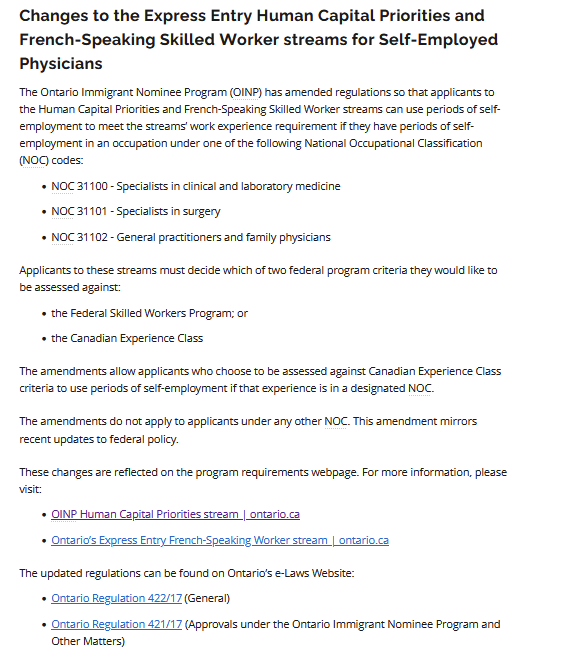
Changes to the Express Entry Human Capital Priorities and French-Speaking Skilled Worker streams for Self-Employed #Physicians #OINP #PNP - #Ontario will now permit "self-employed" work experience by physicians (i.e. "fee for service) #cndimm
ontario.ca/page/2025-onta…
English
Candy Hui 許璈暉 BSP RCIC-IRB retweetledi
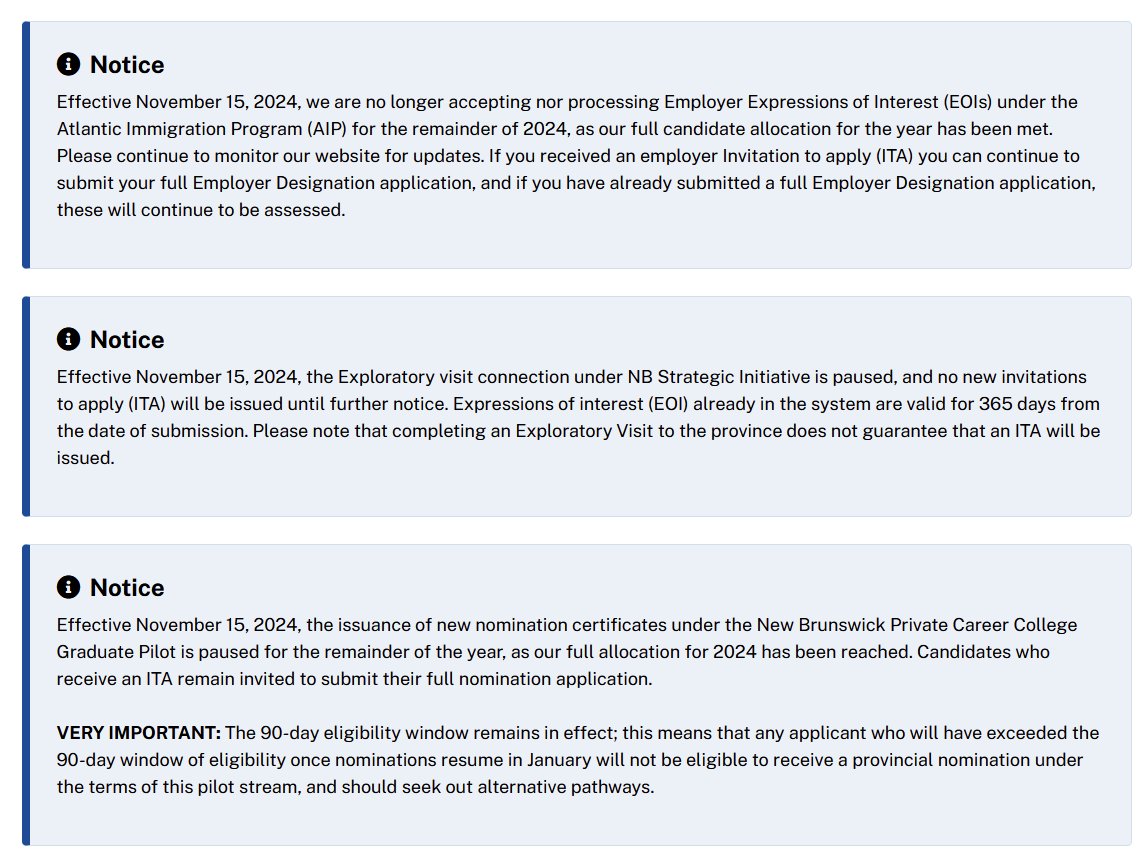
New Brunswick #PNP Closes certain streams for the remainder of 2024 effective November 15, 2024 #cndimm #NB www2.gnb.ca/content/gnb/en…
English
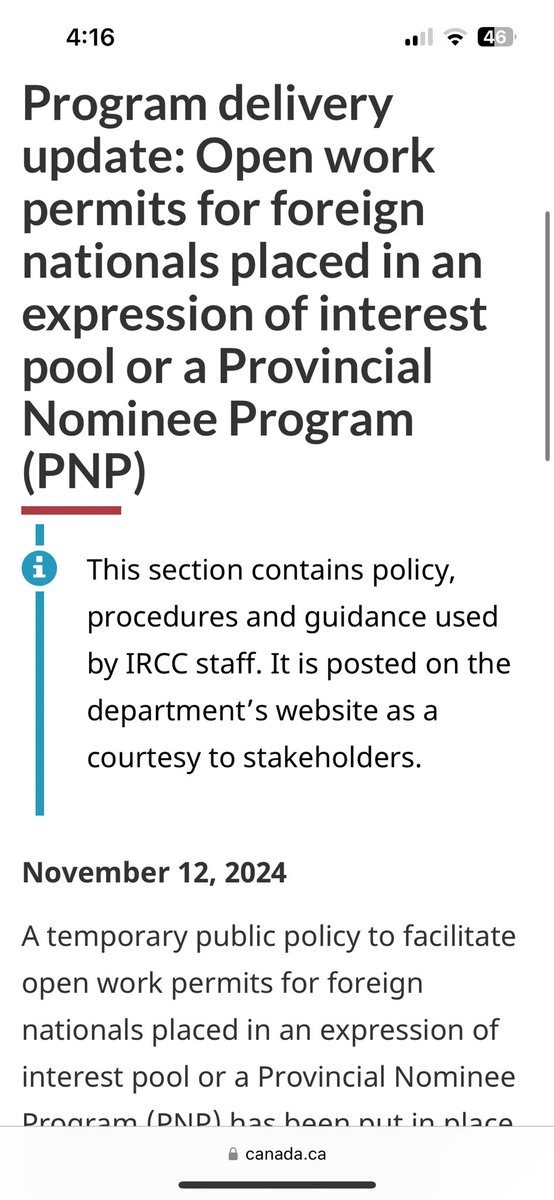
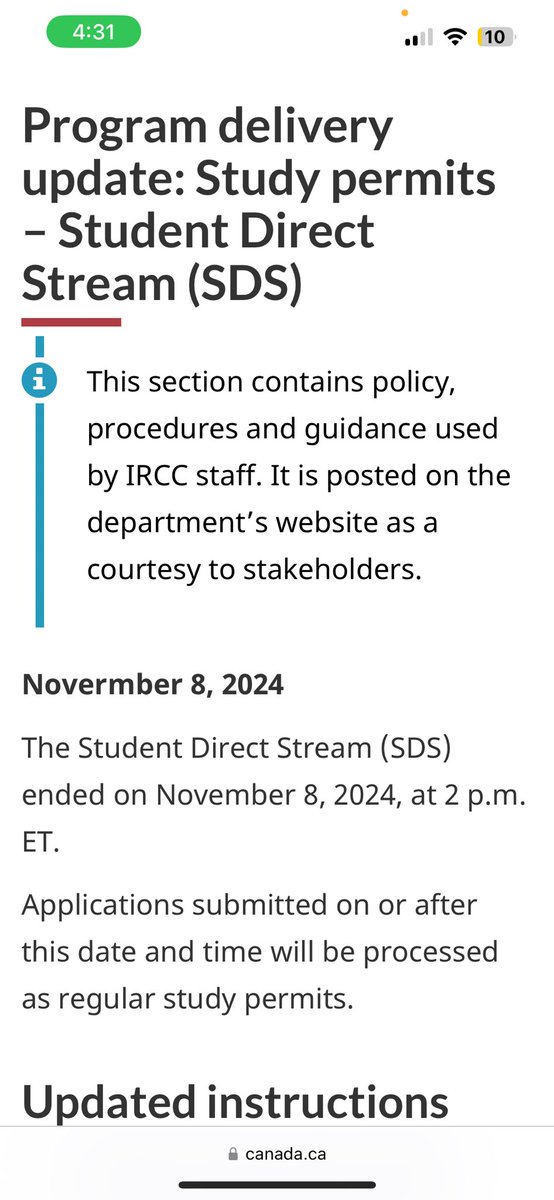
#cndimm #cdnimm #PDU #Update #Student Direct Stream (#SDS) ended on November 8, 2024, at 2 p.m. ET.
Applications submitted on or after this date and time will be processed as regular #studypermits. canada.ca/en/immigration…
English


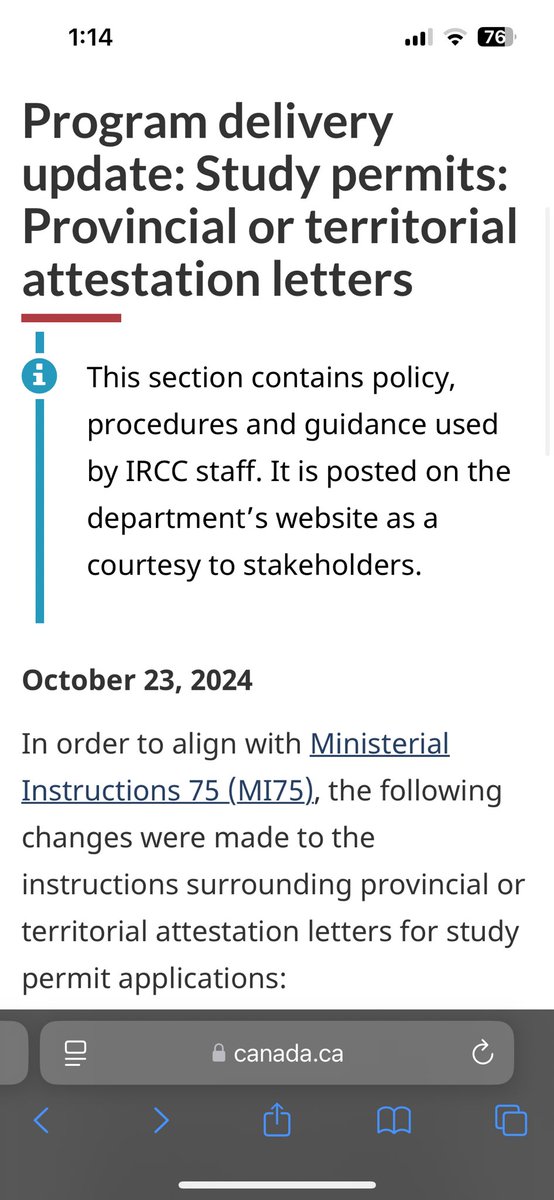
#cndimm #Cdnimm #PDU #Update
•terminology from provincial attestation letter (#PAL) to provincial or territorial attestation letter (PAL/TAL)
•removal of 2 #exceptions
•+ new exceptions & examples of documentary evidence of proof of exception
canada.ca/en/immigration…
English
#cndimm #cdnimm #PDU #Update instructions for #openworkpermits for #vulnerable workers (#OWP-V) have been updated
•additional ex (financial abuse)
•no longer processed by local IRCC
•+ guidance for interviews
•eligible for another OWP-V,etc.
canada.ca/en/immigration…

English
Candy Hui 許璈暉 BSP RCIC-IRB retweetledi

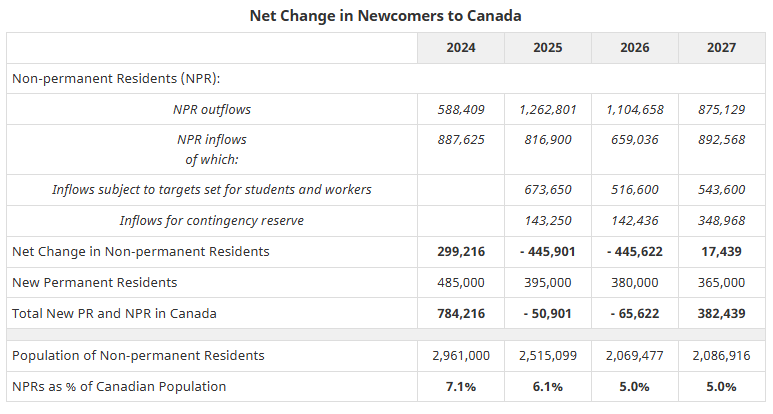
Canada expects over 1,000,000 foreign workers and international students to leave the country in the coming years due to its changes.
canada.ca/en/immigration…
English
Candy Hui 許璈暉 BSP RCIC-IRB retweetledi

🇨🇦 Ottawa to Raise Skilled LMIA Wages to 20% above Prevailing Wage (Tuesday October 22): cp24.com/news/canada/20…
Wow! TBH, I did not see this coming. If this change rolls out Nov 8th, as CP24 suggests, it will significantly impact the #TFWP. The number of TFWs in Canada will absolutely go down.
The prevailing wage has always been the benchmark for LMIAs. This figure was designed to ensure there was no negative pressure on wages within the labour market in Canada. The prevailing wage has always been set at the "median" level which was often higher than what Canadians were paid.
These changes are going to result in even more TFWs having to go home. It will impact not only employers seeking to obtain new LMIAs, but the scary part for existing foreign workers on LMIAs is that any renewal appears to be caught by these changes as well.
In other words, if your employer wants to extend your work permit, they are going to have to demonstrate that no Canadian/PR is available to take your position for 20% more than you are getting paid right now. And if the shortages in your industry are such that no CDN or PR is available, your employer will still have to agree to give you a 20% raise.
If the goal is to encourage employers to hire more Canadians, a 20% wage boost over the industry standard should have that effect. Who wouldn't leave their current job with one CDN employer to join a competitor offering a 20% raise? You can follow the chain reaction to see what this will do to industries suffering genuine labour shortages in some regions. It will drive wages up for everyone. As CDN employers cannibalize off each other for the staff they need to keep their business afloat. It could legitimately drive some businesses ... out of business! But maybe we do have too many McDonald and Tim Hortons franchises in Canada.
However, these proposed changes will have no effect on the "allegations of mistreatment of workers". And little impact on the "bad actors" selling job offers. The problem has always been a lack of enforcement. If the consequences of breaking the law were severe, there would be a huge disincentive for employers to abuse the system. But that is simply not the case. By the time ESDC gets around to conducting audits or site visits, the employer has already gained a significant economic advantage over their more honest competitors. And the fines imposed by ESDC are often insufficient to change behaviour. If more businesses received lifetime bans from abusing the program and their workers, real change will occur.
So with an election coming, the @liberal_party are in full damage control.
.....I get it. It's easy to look back with hindsight and criticize that things should have been handled differently. However, one can not ignore the fact that the problems faced by the TFWP are not new. The situation we are in now is dramatically similar to the landscape that existed back in June of 2014 when then Minister of Employment, Jason Kenney, set in motion broad sweeping changes to tackle the very thing we are faced with now. But with the @liberal_party election victory in 2015, many of these changes were allowed to fall by the wayside.
Take a look at the measures put in place by Kenney and the @CPC_HQ in 2014 (cbc.ca/news/politics/…).
Reforms to the program include:
➡️Barring employers from hiring low-wage temporary foreign workers in regions where the unemployment rate is above six per cent.
➡️A cap of 10 per cent on the number of low-wage temporary foreign workers employers can hire per work site by 2016. The cap will be gradually phased in, starting at 30 per cent effective immediately, then reduced to 20 per cent on July 1, 2015, and 10 per cent a year later in 2016.
➡️An increase in the number of inspections: one in four employers will be inspected each year. The government says it will hire approximately 20 more inspectors, bringing the number to about 60.
➡️An increase from $275 to $1,000 in the application fee employers must pay per worker requested, effective immediately.
➡️Fines of up to $100,000 for employers who abuse the program, starting in fall.
➡️Additional funding for the Canada Border Services Agency so it can pursue more criminal investigations.
➡️Posting the names of employers who receive permission to hire foreign workers.
➡️Making public the number of positions approved through the program on a quarterly basis.
➡️Reducing the amount of time a temporary foreign worker can be employed in Canada, to two years from four.
So I can't help but ask the question...what would the #TFWP world look like today if the @liberal_party had followed through with all of these measures?
What if....
❓ The low wage caps remained in place for regions of greater than 6% unemployment
❓The 10% cap was left in place for low wage workers
❓ 1 in 4 employers were actually inspected and more officers were hired to keep up with program demands
❓ Revenue generated from the $1,000.00 fee increase used to shore up TFWP enforcement
❓$100,000 fines were actually levied against non-compliant employers instead of a slap on the wrist (I know some employers have received larger fines, suspensions and bans, but the AMPs and Bans have not been severe enough to dissuade bad actors, IMHO!)
❓ The CBSA received the funding they were supposed to receive to ramp up criminal investigations
So where does this leave us? The annual levels plans are set to be released on November 1st. Does @liberal_party have more restrictions in mind? What stone is left unturned?
Given their willingness to take this fairly drastic step to reduce the of TFWs in Canada, could we see the following happen as well?
▶️ An overall cap on the number of LMIA-based work permits issued in Canada each year regardless low or high wage positions (similar to the H1B cap in the US)
▶️ Caps on the total number of IMP-based work permits. We are already seeing significant "front-end" eligibility restrictions designed to make it increasingly difficult to secure Intra-company Transfer work permits, so why stop there?
▶️ Complete removal of PGWP entirely, or a reduction of all PGWPs to one year (similar to the US)
▶️ And the list goes on...... I'd love to hear how far you feel the @liberal_party could take it?
English
Candy Hui 許璈暉 BSP RCIC-IRB retweetledi
The government is reportedly planning to announce a change to the High-Wage/Low-Wage distinction in Labour Market Impact Assessments (LMIAs), increasing the threshold to the provincial median wage plus 20%. This change is expected to affect up to 34,000 workers. While existing work permits won't be impacted, the new rules will apply when workers seek to renew them.
This shift comes at a time when it is especially challenging for foreign workers to qualify for permanent residency. If the article's information is accurate, one way of viewing this is that the government is essentially telling these workers that unless they can convince their employers to give them a 20% raise, they could face loss of status and evenutally deportation — all in an effort to meet the temporary residence target of 5.1%.
okotoksonline.com/articles/minim…

English
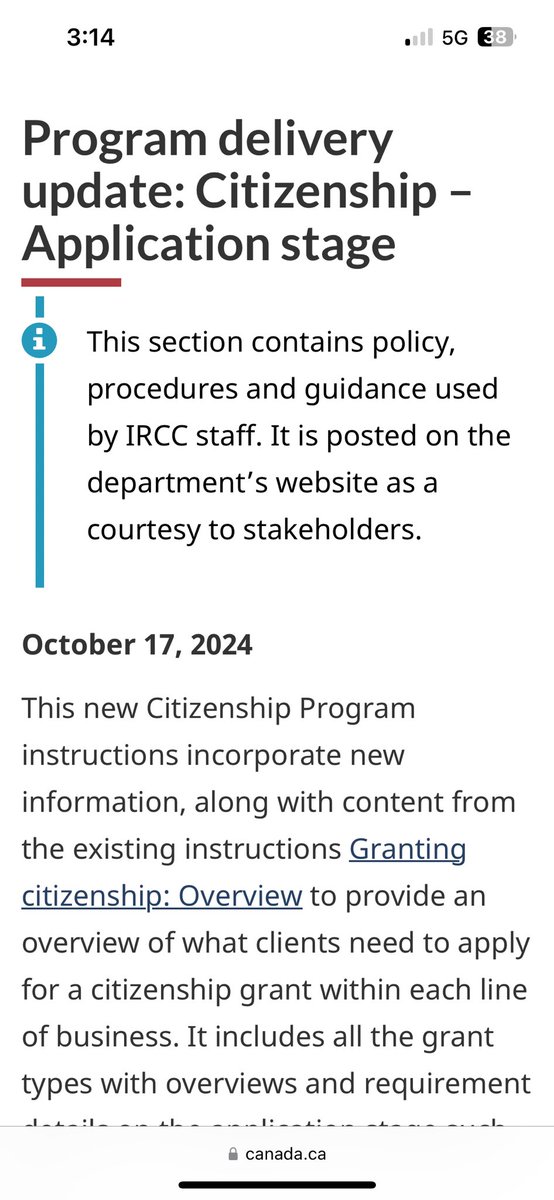
#cndimm #cdnimm #PDU #Update incorporate new information, along with content from the existing instructions Granting #citizenship: Overview to provide an overview of what clients need to apply for a citizenship grant within each line of business canada.ca/en/immigration…
English
Candy Hui 許璈暉 BSP RCIC-IRB retweetledi
Financial assistance for Gazans arriving in Canada canada.ca/en/immigration…
English
Candy Hui 許璈暉 BSP RCIC-IRB retweetledi

🇨🇦 Quebec implements a country-specific cap on immigration until October 9, 2025, with a mandate to not invite more than 25% of the total permanent residency invitations from the same country
🇨🇦 Get full details here 👇
immigrationnewscanada.ca/quebec-sets-im…
English