Capital Economics Canada

453 posts

Capital Economics Canada banner
Capital Economics Canada

Capital Economics Canada

@CapEconCanada

All about #cdnecon. Capital Economics is the world’s leading macroeconomic research firm. Subscribe: https://t.co/iC7hixzqRc Other a/cs: https://t.co/ClNpr4MSNe

Toronto, Ontario Katılım Aralık 2018
251 Takip Edilen1.8K Takipçiler
Capital Economics Canada
Capital Economics Canada@CapEconCanada·
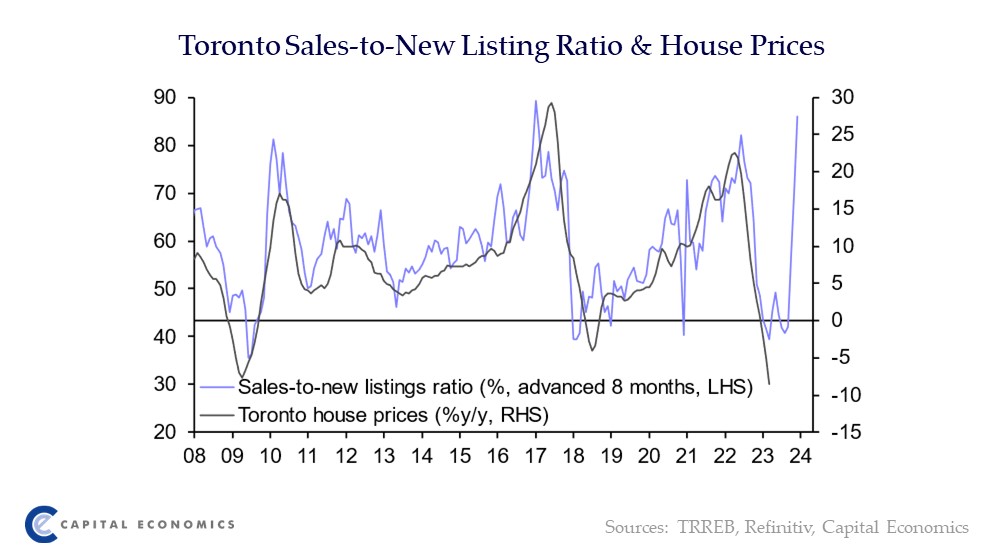
The Toronto home sales-to-new listing ratio, a balance between demand and supply, has surged rapidly above its pandemic peak. This time its about a lack of supply rather than elevated demand, but the direction for prices is clear
Capital Economics Canada tweet media
English
1
1
2
456
Ben Rabidoux
Ben Rabidoux@BenRabidoux·
Toronto new single-family home sales fall 96% y/y in September. New condo sales down 89%. Data per BILD/Altus Group.
English
54
134
649
0
Capital Economics Canada
Capital Economics Canada@CapEconCanada·
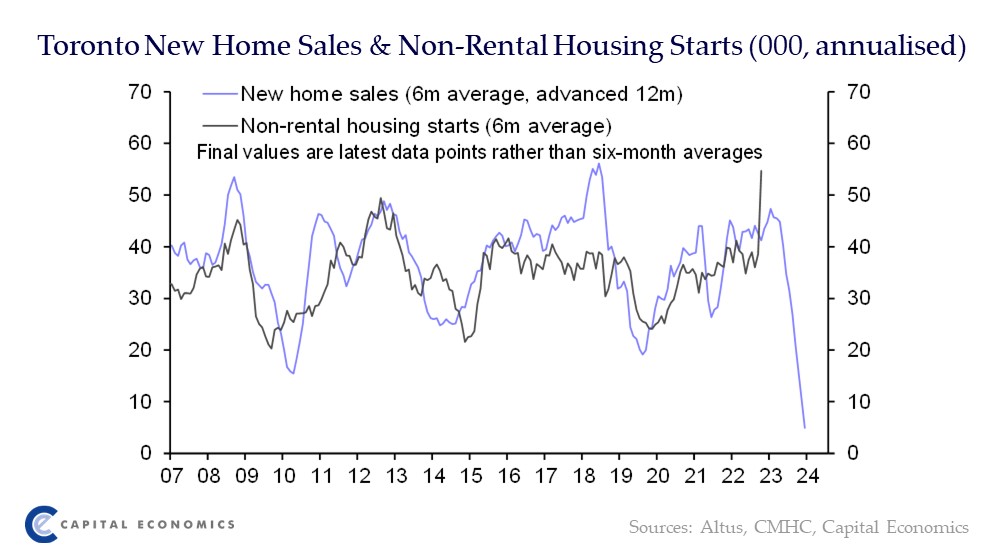
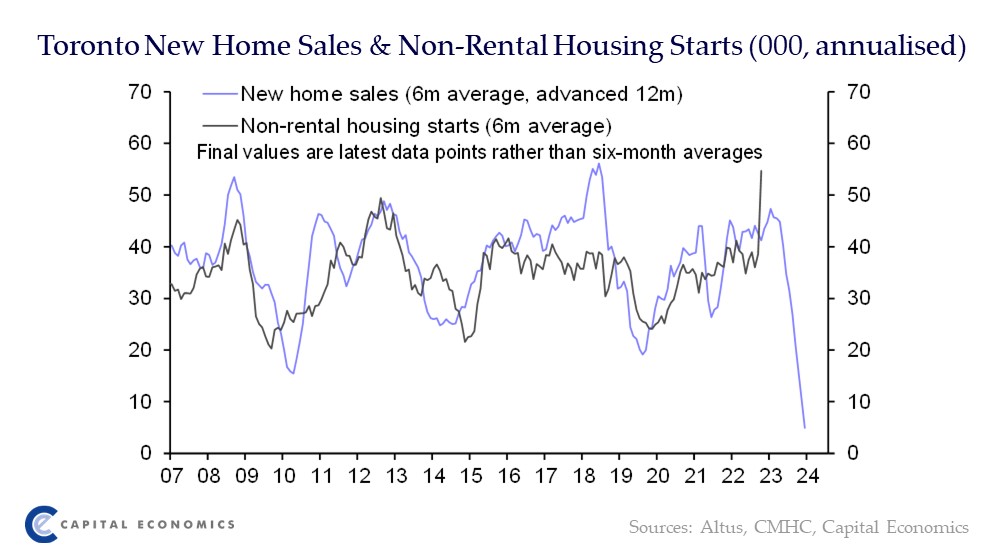
New home sales in Toronto are now weaker than during both the global financial crisis and the pandemic, pointing to a sharp downturn in construction activity in 2023
Capital Economics Canada tweet media
English
1
1
5
0
Capital Economics Canada
Capital Economics Canada@CapEconCanada·
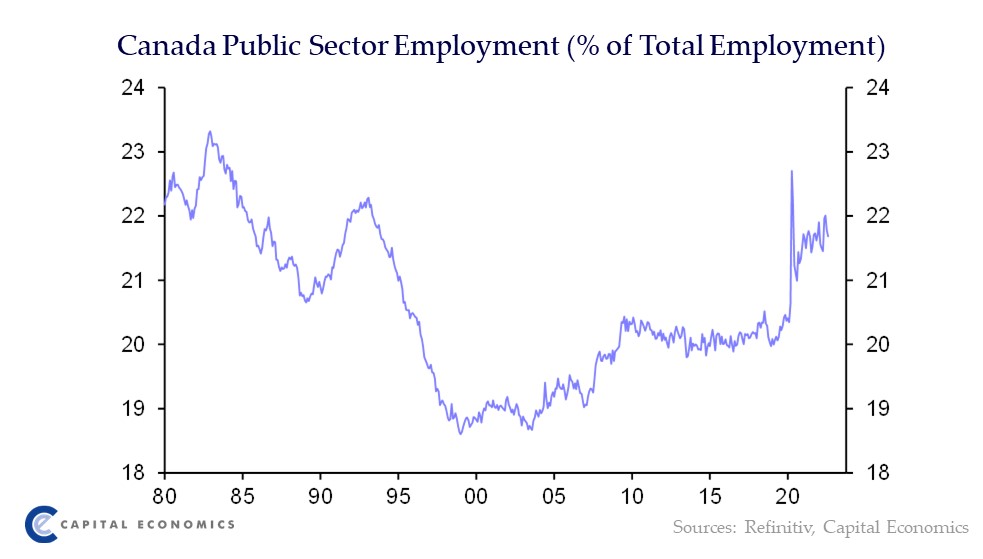
The weakness of employment since June is largely due to a drop in public sector employment, although it still accounts for a far larger share of total employment than before the pandemic
Capital Economics Canada tweet media
English
0
4
4
0
Capital Economics Canada
Capital Economics Canada@CapEconCanada·
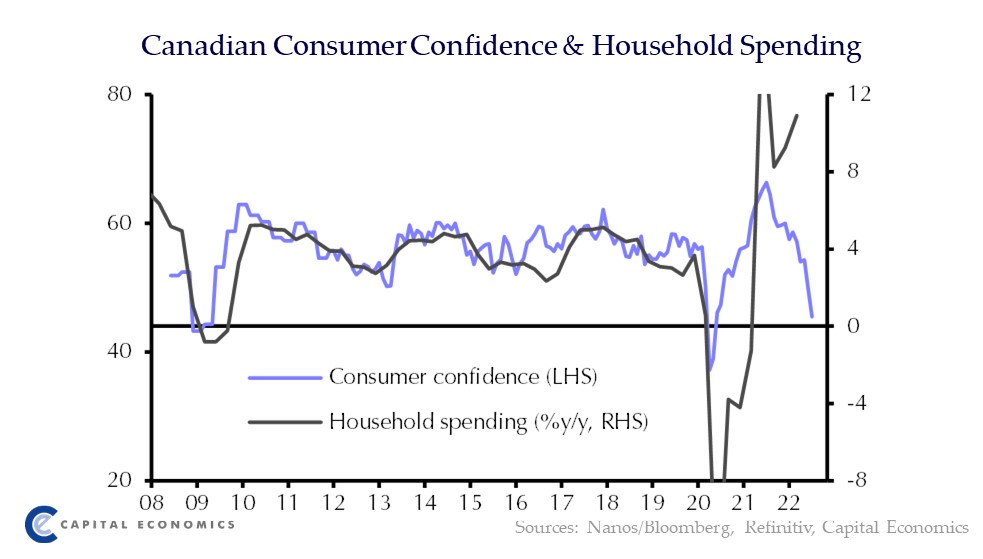
Consumer confidence plunged to crisis-era lows last week and seems likely to drop further following the Bank of Canada's 100 bp hike yesterday
Capital Economics Canada tweet media
English
0
2
6
0
Capital Economics Canada
Capital Economics Canada@CapEconCanada·
@Michaelseanpor1 @RobMcLister This month they change the weight of each item in the CPI basket based on spending patterns in 2021, previously 2020. Gasoline will have a larger weight, so the sharp rise in gasoline prices since April will have a larger upward impact on overall inflation in May and June
English
0
0
1
0
Michaelseanporter
Michaelseanporter@Michaelseanpor1·
@RobMcLister @CapEconCanada The new cpi weights? Have they changed the calculation again or could weights have been used interchangeably with inputs/recent data ?
English
1
0
1
0
Rob McLister
Rob McLister@RobMcLister·
"The new CPI weights outlined this week mean that inflation will peak at more than 8% in June"—@CapEconCanada That's enough to give anyone indigestion.
Rob McLister tweet media
English
15
16
105
0
Capital Economics Canada
Capital Economics Canada@CapEconCanada·
@hank_moody12 Yes mainly that - Canadian consumption 1% higher than pre-pandemic, so down on a per capita basis. US consumption 5% higher than pre-pandemic
English
0
0
0
0
Moody's Ratings
Moody's Ratings@hank_moody12·
@CapEconCanada What are the main deviations? Consumption spending bounced back much better in U.S. relative to Canada?
English
1
0
0
0
Capital Economics Canada
Capital Economics Canada@CapEconCanada·
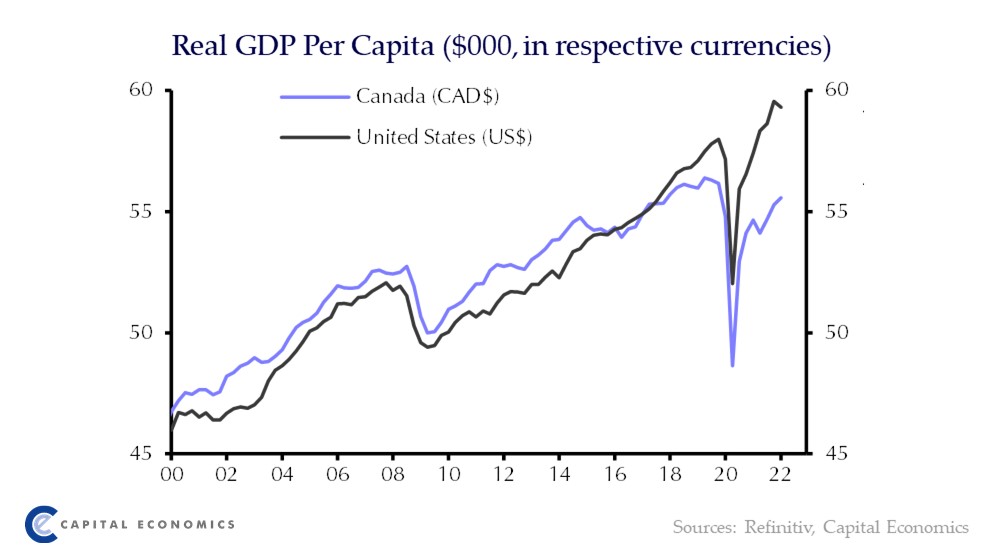
While Canada's labour market recovery has been impressive, GDP per capita is still more than 1% below the pre-pandemic level, in sharp contrast to the US where it is more than 2% higher
Capital Economics Canada tweet media
English
2
2
3
0
Capital Economics Canada
Capital Economics Canada@CapEconCanada·
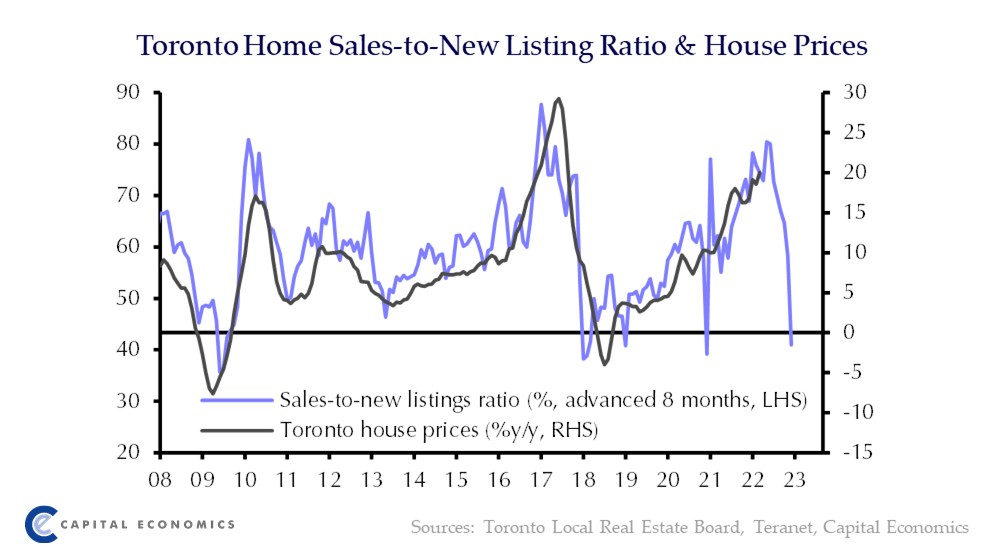
What a difference a doubling of mortgage rates makes - sales-to-new listing ratio in Toronto now pointing to house price declines
Capital Economics Canada tweet media
English
4
12
32
0
Mikal Skuterud
Mikal Skuterud@mikalskuterud·
@CapEconCanada @dima_nomad @StatCan_eng I've very curious about this. Can you share more with me? What *exactly* does "stratified random sample of CFIB members" mean? Stratified how? And "random"? Was response compulsory? What is the underlying population size that the 784 observations were sampled from?
English
1
0
0
0
Mikal Skuterud
Mikal Skuterud@mikalskuterud·
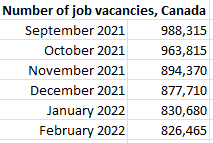
*NEW* Statistics Canada updated their job vacancy data today. For the 5th consecutive month the number of job vacancies in this country DECREASED. #cdnecon
Mikal Skuterud tweet media
English
2
4
10
0
Capital Economics Canada
Capital Economics Canada@CapEconCanada·
@dima_nomad @mikalskuterud Problem with the vacancy data is they are not seasonally adjusted, and hard to do that given gap in collection during pandemic. Vacancies normally lower in the winter, and rebound in CFIB labour shortages in the April survey (out this morning) suggests no real improvement lately
Capital Economics Canada tweet media
English
1
0
0
0
Dima
Dima@dima_nomad·
@mikalskuterud 2021 was unusual as economy was reopening from lockdowns, I would expect numbers to decline as most staff returns to work, but so far it still looks strong
English
1
0
0
0
Capital Economics Canada
Capital Economics Canada@CapEconCanada·
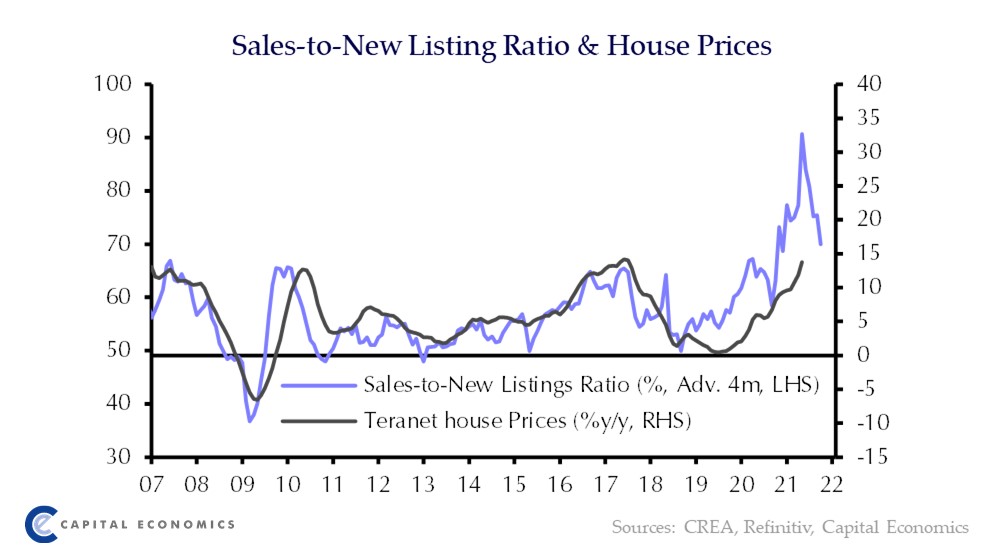
The sales-to-new listing ratio declined again in June, although still points to very strong gains in house prices #cdnecon
Capital Economics Canada tweet media
English
0
2
4
0
Frances Donald
Frances Donald@francesdonald·
The Bank of Canada framework itself is far more hawkish than the Federal Reserves. 1) BoC is single-mandate (inflation) & has done little to disabuse the notion that they are only targeting inflation vs the Fed who is dual mandate & constantly emphasizes the employment side...
English
4
8
49
0
Capital Economics Canada
Capital Economics Canada@CapEconCanada·
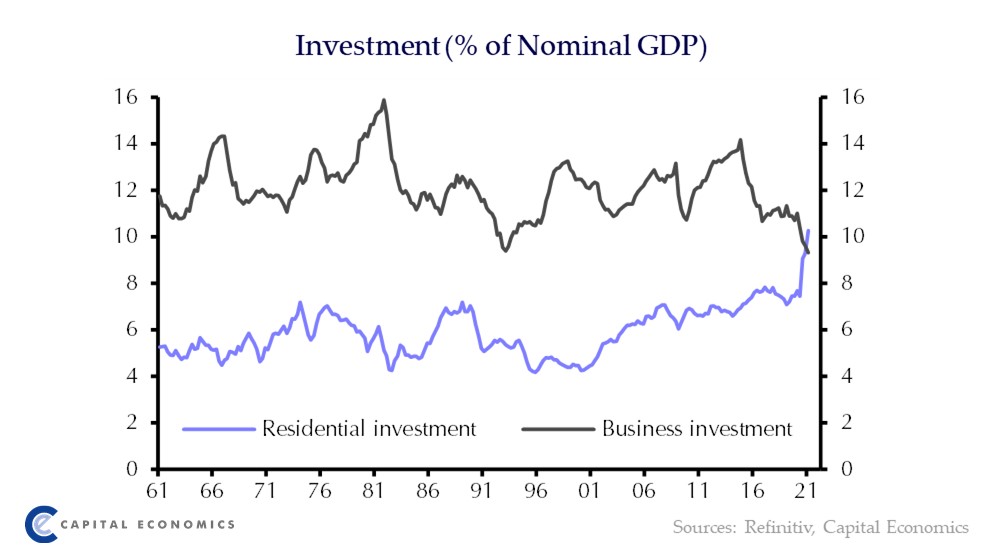
@francesdonald That further rise means residential investment has, for the first time, overtaken business investment as a share of GDP
Capital Economics Canada tweet media
English
1
1
11
0
Frances Donald
Frances Donald@francesdonald·
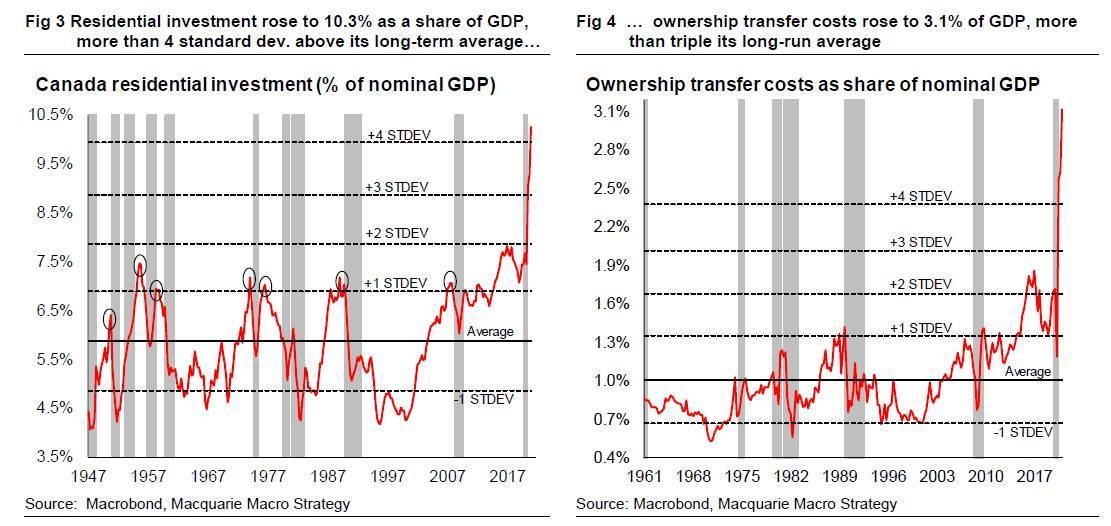
This is why I say we need to evolve our concerns about the Canadian housing affordability crisis to include the damage to corporate competitiveness, long-term growth prospects and the social fabric of a country this levered to one sector. Chart via David Doyle at Macquarie.
Frances Donald tweet media
English
13
50
180
0
Capital Economics Canada
Capital Economics Canada@CapEconCanada·
Residential investment has, for the first time, overtaken business investment as a share of GDP #cdnecon
Capital Economics Canada tweet media
English
6
15
31
0
Capital Economics Canada
Capital Economics Canada@CapEconCanada·
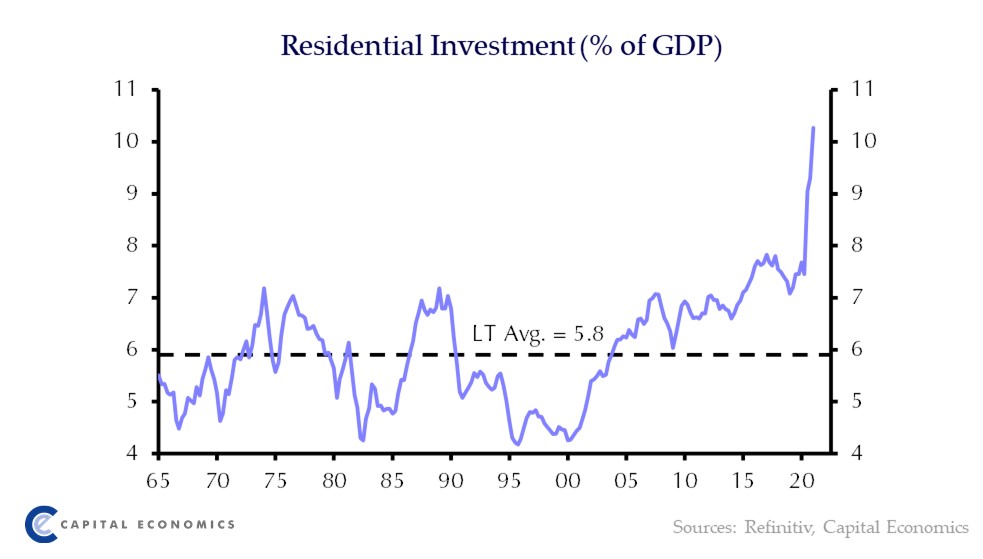
But is the stage already set for the next downturn? The further 43% annualised surge in residential investment means it now accounts for an extraordinarily high 10.3% of nominal GDP, making the economy vulnerable to a future correction (2/2)
Capital Economics Canada tweet media
English
1
1
7
0
Capital Economics Canada
Capital Economics Canada@CapEconCanada·
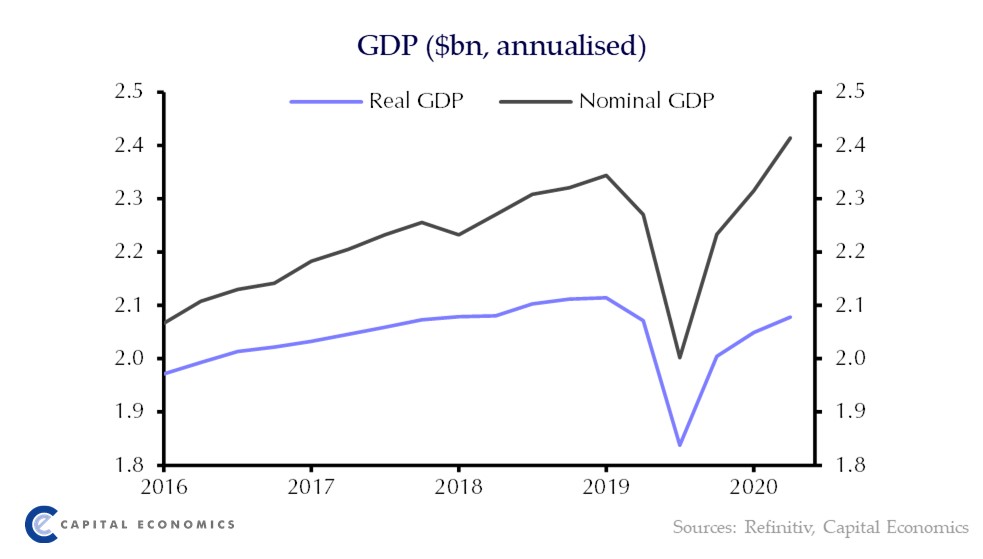
A couple of interesting points to highlight from the Q1 GDP data. First, while real GDP remains 1.7% below its pre-pandemic level, nominal GDP is now 3% higher thanks to strong gains in commodity prices in particular (1/2)
Capital Economics Canada tweet media
English
1
0
5
0
Capital Economics Canada
Capital Economics Canada@CapEconCanada·
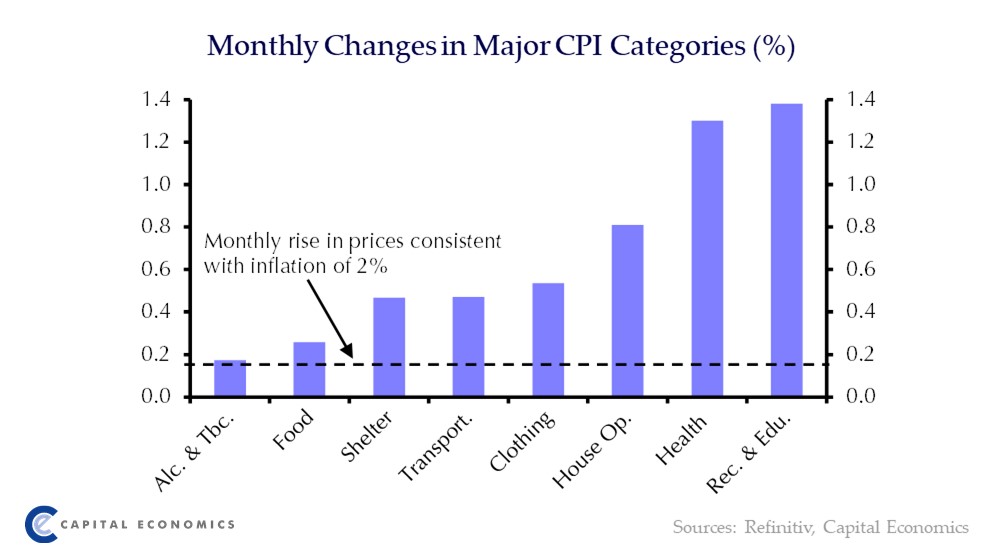
A jump in energy inflation explained most of the rise in headline inflation to 3.4% in April, but inflationary pressures are emerging elsewhere as well. In fact, the m/m% rises in every category in April were consistent with annual inflation of more than 2% #cdnecon
Capital Economics Canada tweet media
English
0
1
1
0