CapandConflict

136 posts

CapandConflict banner
CapandConflict

CapandConflict

@CapandConflict

Documenting the return of Industrial Warfare. Analyzing where Physics collides with Finance. Building Sovereign CNI at Telcontar and Space Solar at Virtus Solis

London, England Katılım Aralık 2025
59 Takip Edilen14 Takipçiler
Sabitlenmiş Tweet
CapandConflict
CapandConflict@CapandConflict·
1/6 The "Paper Blockade" just died in the North Atlantic. 🧵 For 2 years, the West tried to fight the Shadow Fleet with spreadsheets (price caps, insurance bans). Today, the US Coast Guard boarded the Russian-flagged Marinera while a Russian nuclear sub watched. The bluff is over.
CapandConflict tweet media
English
1
0
0
169
CapandConflict
CapandConflict@CapandConflict·
A much needed critiue of tThe Pentagon’s new requirements reform. However, still missing a massive structural blind spot: The Two-to-Production Paradox. We want the resilience of dual-sourcing, but we are Diluting the Demand Signal. By splitting small peacetime orders between two factories, we are hollowing out the economies of scale needed for a 2027 wartime footing. Speed to design is a vanity metric if your procurement strategy actually starves the factories it's trying to save. We need to move past "competition metrics" and toward Advance Market Commitments that guarantee a production floor for the primary precursors. You cannot "innovate" your way out of a sub-scale factory.
Breaking Defense@BreakingDefense

Requirements without factories: Why the Pentagon must reconnect design to production breakingdefense.com/2026/03/requir…

English
0
0
0
5
CapandConflict
CapandConflict@CapandConflict·
This is a definitive 'Industrial Realist' signal. Starting this fall, the world's most advanced airframes will be delivered as airworthy gliders, carrying lead ballast instead of sensors. This isn't some software bug; it's an "Atomic Floor" failure. We redesigned the forward bulkhead for the APG-85, but because we couldn't synchronize the Forge with the assembly line, the legacy APG-81 can't even be 'wedged' in as a stopgap. We are now producing a 'training fleet' because our high-spec precursors didn't clear the bulkhead on schedule. You cannot 'code' your way out of a mismatched mounting point. #IndustrialRealism #F35 #DefenseIndustry #SovereignForge
Michael Marrow@michaeldmarrow

Exclusive: The Pentagon is poised to accept new F-35s without radars due to delays for a new system dubbed the APG-85. If delays drag on, the issue could affect over 100 aircraft. w/@ValerieInsinna and @Diana_Stancy breakingdefense.com/2026/03/exclus…

English
0
0
0
18
CapandConflict
CapandConflict@CapandConflict·
Defensive Tariffs are a Start, Not a Strategy. The UK’s move to throw a 50% "tariff cordon" around its steel industry marks the official end of the free trade era. It is a necessary admission that a nation without a baseline industrial floor is a nation without a spine. But we must look past the headlines. Protecting the volume of domestic steel is the easy part. The harder, indeed the more critical, task is securing the Advanced Atomic Floor. The UK’s strategy currently centers on Electric Arc Furnaces (EAF) and scrap recycling. This is a massive leap for decarbonization and OpEx, but it risks leaving us in a new kind of "specialty" trap. EAFs are excellent for structural steel, but they are not a silver bullet for the high-spec precursors required for the energy transition. If the UK wants to be an industrial leader, and not just a protected museum, the "Steel Strategy" must go further: The GOES Gap: We cannot build a 21st century grid without Grain-Oriented Electrical Steel. If we aren't processing this domestically, we have simply traded a dependency on Chinese bulk steel for a dependency on foreign specialty precursors. The Titanium Ceiling: The same logic applies to aerospace and defense. A tariff on raw steel does nothing if we lack the domestic "sponging" and processing capacity for the high-performance alloys that define modern power. From Protection to Production: A 50% tariff buys us time. It does not buy us capability. The £2.5 billion in funding must be directed toward the "upstream" processing of these specialty materials, not just keeping the lights on at legacy plants. It's critical that the time purchased be used to shore up the floor of our industrial base. Industrial Realism isn't about hiding behind a wall. It is about building a Forge that can manifest the most difficult materials on earth. The cordon is the beginning. The specialized Atomic Floor is the goal.
English
0
0
0
89
Ed Conway
Ed Conway@EdConwaySky·
📽️Globalisation as we know it is dead. That's what Rachel Reeves said earlier this week. But was today the day Britain hammered the final nail into the coffin? My film from Port Talbot on how the UK just raised tariffs at the fastest rate in a generation youtube.com/watch?v=hlNOIK…
YouTube video
YouTube
English
7
24
87
39.9K
CapandConflict
CapandConflict@CapandConflict·
Until we fix the Foundry, the API won't save us. I just released a forensic audit on the "120-week wall" and the physical bottlenecks in our industrial mass. If you're in the DC policy/acquisition world, this is the data you need to see. Read the full audit here: capandconflict.substack.com/p/british-mira…
English
0
0
0
4
CapandConflict
CapandConflict@CapandConflict·
Meanwhile, the GAO reports that NNSA nuclear construction costs have doubled since 2023. This is the "Atrophy Tax." You can't "software-update" a hollowing industrial base. Re-learning how to forge nuclear-grade infrastructure takes years, not weeks. We've optimized for the digital layer while letting the physical foundation crumble. ☢️🏗️ #SovereigntyPremium #NationalSecurity breakingdefense.com/2026/02/costs-…
English
1
0
0
5
CapandConflict
CapandConflict@CapandConflict·
Defense leaders talk about "Interoperability" as the new price of entry. But in DC, we often confuse "Digital Interoperability" with "Industrial Interoperability." We can share data via APIs, but if our VLS canisters or shell propellant specs don't match at the foundry level, the "Battle Web" is a mirage. Standardize the atoms first. 🛡️💻 #DefenseIndustrialBase #JADC2
Breaking Defense@BreakingDefense

Interoperability becomes the price of entry for next-gen warfighting tech. AI, autonomous systems, cyber, and EW converge as industry targets faster battlefield effects. Presented by @BoozAllen. breakingdefense.com/2026/02/intero…

English
1
0
0
29
CapandConflict
CapandConflict@CapandConflict·
The Ambassadors' op-ed is a classic 'Mirage' move. They are pitching 'interoperability' as a solution to a production crisis, but they aren't addressing the Refining Gap or the CAPEX Foundry deficit. @FTusa284 is right -> the panic is real because the US Primes realize they can no longer maintain a 'Sovereign Veto' over allies who are starting to value their own atoms more than American blueprints.
Francis Tusa@FTusa284

Absolute idiots. US Primes obviously starting to panic. More later....

English
0
1
2
37
CapandConflict
CapandConflict@CapandConflict·
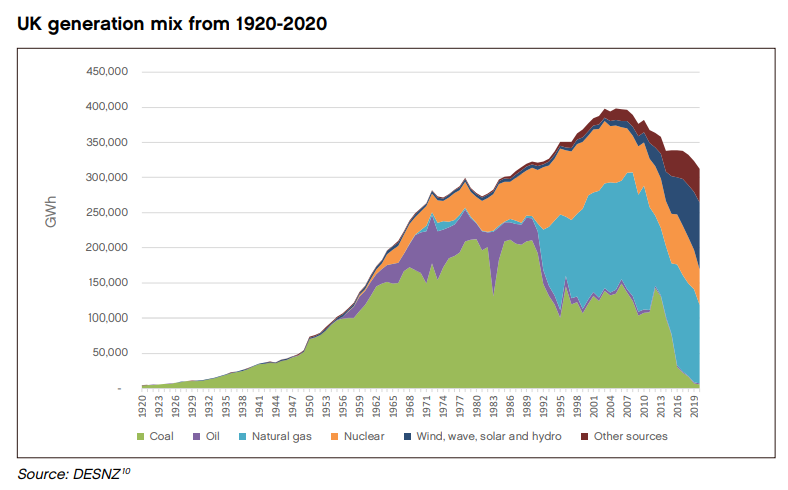
The chart is even more damning when you overlay it with the 'Refining Gap.' We haven't just reduced consumption; we’ve exported our high-intensity manufacturing base. What the 'Energy Austerity' proponents call 'efficiency' is actually demand destruction. By inflating industrial power prices to 90% above the EU average, we’ve turned the UK into a net importer of the very atoms (steel, chemicals, refined alloys) that a sovereign nation requires to actually build anything in the real world. We traded 'Industrial Mass' for a service economy, but you can’t maintain a high-order military-industrial complex on the energy budget of a call center. True energy sovereignty requires the capacity to surge, not a managed decline into industrial irrelevance.
English
1
1
9
992
Robert Colvile
Robert Colvile@rcolvile·
.@CPSThinkTank has a big new paper out today on the energy markets. There's all sorts of stuff in there, but the thing that leapt out at me looking at the charts is that Britain has spent the last 20 years perfecting a form of energy austerity. (1/?)
Robert Colvile tweet media
English
10
66
199
25.5K
CapandConflict retweetledi
CapandConflict
CapandConflict@CapandConflict·
This is precisely why I’m architecting Project Nuada in South Wales -> specifically to solve this. By reprocessing inputs from allied nations (Australia/Canada) and our own domestic waste, we can secure a sovereign primer supply chain in 18 months, not 5 years. The US DoD is waking up to this (DPA Title III), but the UK needs to realize that 'Sovereignty' starts at the molecular level, not just the assembly line. 4/4
English
0
0
0
8
CapandConflict
CapandConflict@CapandConflict·
And there’s the rub. Right now, China controls ~90% of that specific processing capacity. We are effectively relying on our adversary for the 'match' to light our own ammo. 3/4
English
1
0
0
5
CapandConflict
CapandConflict@CapandConflict·
@Tomtugendhat is on target here (sorry). This is well worth the read and I’m in violent agreement with much of it. However, while that '8-Day' figure is terrifying, throwing money at BAE Systems (and other Primes) won't fix it if the raw material supply chain is broken at the root. 1/4
English
1
0
0
21
Katherine Boyle
Katherine Boyle@KTmBoyle·
It’s extremely important for nerds and strivers to be mocked in high school if we want them to accomplish great things. It’s the American way and it works.
Katherine Boyle tweet media
English
83
35
619
281K
CapandConflict retweetledi
Samuel Hughes
Samuel Hughes@SCP_Hughes·
Something strange is going on with the Palace of Westminster renovations. In the nineteenth century, building the Palace cost about £2.5m. Adjusted for inflation, that is equivalent to £385 million today, 1/28th of the lowest possible estimate for the renovations (£11bn). If we adjust for wage increases – i.e. imagine, insanely, no labour-saving construction technology has been invented in the last 170 years – we still come to something like £4 or 5 billion, less than half the lowest possible renovation cost. In real terms, the build costs of a house seem to have roughly doubled since the nineteenth century (because wages have gone up a lot, but some construction labour has been saved through technological improvement). Applying that here would make the renovations at least 14 times more expensive than building the whole Palace. I appreciate that renovation is complex and fiddly, but these still seem like astonishing costs!
Politics UK@PolitlcsUK

🚨 NEW: MPs and peers must vote on two options to restore the Palace of Westminster 1: Fully move-out for 19–24 years (£11-15bn) 2: Phased works over 38–61 years, in which the Lords move out to a conference centre and MPs use their chamber for 2 years from 2041 (£19-39bn)

English
63
83
764
93.4K
CapandConflict
CapandConflict@CapandConflict·
5/6 Takeaway for Industrial Realists: If your strategy relies on a partner who wants to "brick" your design control, you don't have a strategy. You have a dependency.
English
1
0
1
27
CapandConflict
CapandConflict@CapandConflict·
1/6 The €100bn FCAS project just hit the Industrial Firewall. Chancellor Merz admits the joint fighter might be scrapped. Why? Because you can’t build a "Sovereign Artery" on a foundation of industrial distrust. 🧵
CapandConflict tweet media
English
2
0
1
94