Captain George (💙, 🧡) .edge🦭

9.3K posts

Captain George (💙, 🧡) .edge🦭 banner
Captain George (💙, 🧡) .edge🦭

Captain George (💙, 🧡) .edge🦭

@CaptainDef1i

Tier 1 KoL ◈ Research Analyst ◈ Content writer ✍️ ◈ Defi Marketer ◈ DM for Collabs 📥 #IOTAambassador

Malacca, Malaysia Katılım Mayıs 2024
2.1K Takip Edilen4.8K Takipçiler
Sabitlenmiş Tweet
Captain George (💙, 🧡) .edge🦭
1/ Lots of tokens claim "backing," but it's often just promises or locked funds. What drew me to @EverValueCoin $EVA is the real Bitcoin mining happening right now in Paraguay, actual machines humming, producing BTC that flows straight into the Burn Vault daily. #EVA #EverValue
Captain George (💙, 🧡) .edge🦭 tweet media
English
22
37
44
6.3K
Captain George (💙, 🧡) .edge🦭
Have you ever asked an AI a question and gotten an answer that sounded smart but felt a little off? Maybe it missed the real meaning, repeated a common mistake, or just didn't feel quite human. These small moments happen because AI doesn't invent knowledge, it learns everything from the massive amounts of data it's trained on. If that data has gaps, errors, or lacks real-world depth, the AI ends up limited no matter how fancy the technology is. @PerleLabs is focused on strengthening that foundation by connecting real human experts with the data that powers modern AI. Their platform lets specialists from fields like medicine, law, engineering, linguistics, and robotics carefully work on different types of information, text, images, audio clips, medical scans, robot sensor data, and more. This multi-modal approach helps AI understand not just words, but the full context of sights, sounds, and actions. For instance, experts might label exactly where something important appears in a scan, record emotional speech to teach tone and feeling, or identify confusing instructions so AI learns to ask for clarification instead of guessing. They also support RLHF work, where humans guide the model toward responses that feel more helpful, safe, and natural. What makes the process stand out is the care built into every step. A global network of domain experts reviews tasks, often with multiple checks to reach strong agreement on quality. This helps reduce biases, catch data that drifts over time, and handle tricky edge cases that purely automatic methods usually miss. On top of the human input, Perle adds clear organization: they index and curate huge datasets so the most valuable parts stand out clearly before experts refine them. Everything is recorded transparently on the Solana blockchain, creating permanent, auditable records of contributions. This builds trust for both the people doing the work and the AI teams using the final data. The Perle Foundation oversees the ecosystem to keep things focused on long-term openness and fairness, and with the recent Season 1 snapshot now locked, points from real tasks are secured. The upcoming PRL token (with a strong community allocation) is designed to reward quality contributions in a clear way. In everyday terms, this human-centered approach means AI tools that feel more reliable, better medical support, clearer legal insights, safer robotics, and assistants that actually understand nuance instead of approximating it. You can check out their platform at perle.ai or perle.xyz, and see contributor tasks at app.perle.xyz. @PerleLabs What's one time an AI gave you an answer that felt "close but not quite right," and what do you think was missing? #PerleAI #ToPerle participating in @PerleLabs community campaign
Captain George (💙, 🧡) .edge🦭 tweet media
English
0
46
37
226
Captain George (💙, 🧡) .edge🦭
Solayer Pay officially launched the Refer & Earn campaign, running from March 23 9AM PST to April 6 9AM PST (that's about 2 weeks to stack rewards). This is your chance to earn up to $120 in USDC just by inviting friends to join the stablecoin neobank and use the card. How the Rewards Break Down (Simple Tiers) - 1 referral → $5 USDC - 3 referrals → $15 USDC - 5 referrals → $30 USDC - 10+ referrals → $100 USDC - Bonus: First 10 people to hit 10 referrals get an extra $20 USDC Rules are straightforward: - Share your unique referral link (find it in the app after signing up). - Friend signs up, completes KYC, and makes their first deposit of $50+ (USDC or sUSD). - Rewards are non-cumulative (you get paid the highest tier you reach). - All rewards paid out in USDC after the campaign ends (post-April 6). Even Better After Recent Upgrades This campaign comes right after Solayer Pay made things cheaper and smoother: - Deposit fee cut to 0.5% (half of before – so more of your money stays yours). - Card renewal still just $20/year (super accessible). - Hold sUSD (T-bill backed stablecoin) → earn ~4–5% APY automatically via daily rebase. - Spend sUSD anywhere Visa/Apple/Google Pay is accepted → earn yield while paying for real stuff (groceries, travel, online shopping). So when your friends join: - They get a low-fee entry + cashback from the referral. - You earn USDC rewards + ongoing 12.5% fee share from their future deposits (the referral program has a permanent layer too). - Everyone wins because they start spending & earning yield on-chain. Why This Campaign Feels Viral Stablecoin spending + passive yield + real rewards = powerful combo. One good referral chain can turn into serious value fast: You invite → friends invite → network grows → bags fill up. It's literally turning friends into users while you earn while they spend & yield. Ready to Start? 1. Head to app.solayer.org/card 2. Sign up / log in, complete KYC if needed 3. Grab your referral link (usually in settings or dashboard) 4. Share it with friends who want easy crypto spending + yield First invite idea: That friend who's always complaining about bank fees or low savings interest? Perfect target. @solayer_labs
Captain George (💙, 🧡) .edge🦭 tweet media
English
20
14
26
88
Captain George (💙, 🧡) .edge🦭
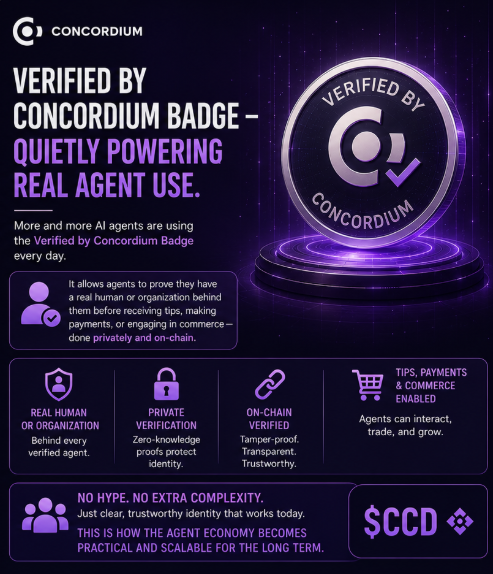
April and May 2026 are shaping up to be big months for everyday @Concordium users. ➺ Bitcoin..com Mobile Wallet Target release: April 2026 With 75 million+ users already on the platform, this integration will let people create Concordium accounts, hold CCD, and make transactions directly inside an app they already know and trust. No need to download anything new. ➺ Ledger Expansion — Target: May 2026 Ledger users (hardware wallet owners) will get full web and mobile support beyond basic storage. This means easier signing of transactions, staking, and using Concordium’s private verification features straight from their secure Ledger device. What this means in practice: For new users: Getting started becomes much simpler. Buy $CCD with fiat inside familiar wallets, verify age or location privately when needed, and pay with stablecoins, without complicated setup or “buy native token first” steps. For existing CCD holders: Your assets become more accessible and usable across devices you already own. Private proofs (like proving you’re over 18) can be done securely and reused, while sponsored fees (Protocol 10) remove the last bit of friction for daily payments. Together, these two integrations open Concordium to tens of millions of users who want crypto that feels normal, secure, private, and easy. The wallet wave is coming. Simpler onboarding, better experience, real usability.
Captain George (💙, 🧡) .edge🦭 tweet media
English
13
19
27
115
Captain George (💙, 🧡) .edge🦭
You lock your front door every night to keep intruders out... yet your deepest AI thoughts, intimate chats about life, work secrets, dreams, fears, sit unlocked on unknown servers. How does that feel? Centralized storage offers no real protection. One breach (like Coruna exploits sold to criminals), and your private digital mind is wide open. Simple fix: treat it like your house. Encrypt your AI memory. Distribute it (split across nodes, no single entry point). Add Proof-of-Context: cryptographic receipts prove every access, who, what, when, allowed or not. You verify it yourself. Verifiable "locks" = real security. Your thoughts stay private, portable, safe across tools. @Supernet_AI is building this sovereignty layer.
Captain George (💙, 🧡) .edge🦭 tweet media
English
14
34
36
90
Captain George (💙, 🧡) .edge🦭
Stablecoins like USDC or USDT are popular because they stay steady in value, but for many people they just sit unused in a wallet. Over time, everyday costs rise while that money earns nothing, slowly losing buying power, like cash tucked away that quietly shrinks. @BlueprintAI changes this with its Smart Savings Account. You deposit your stablecoins once, and an AI agent steps in to handle the rest. It looks across trusted DeFi options on different chains (often low-fee ones like Polygon) and places your funds in safe, reliable spots, usually vaults that provide consistent returns with low risk. The agent keeps working quietly. Every 12 hours it checks the landscape and, if a better safe option appears, it moves your money there automatically (rebalancing). This way your stablecoins stay productive even when rates change, without you needing to monitor prices, switch apps, or time anything yourself. Small costs are considered so the moves stay worthwhile, and gas fees are often covered to prevent surprises. You stay in full control: everything is non-custodial (only you hold the keys), moves are visible on the blockchain for transparency, and there are no forced lockups or hidden fees, you can withdraw anytime. It's designed for regular holders who want a bit more from idle funds without turning crypto into a second job. In beta you can start small (even $10 or $100) to test it, watch the agent run, and see how it feels. If your stablecoins are mostly sitting still right now, this offers a low-effort way to make them more useful. How do you usually handle idle stablecoins, keep them parked, move them manually, or something else? Share below, I'd love to know! #BlueprintAI #Stablecoin
Captain George (💙, 🧡) .edge🦭 tweet media
English
15
25
31
82
Captain George (💙, 🧡) .edge🦭
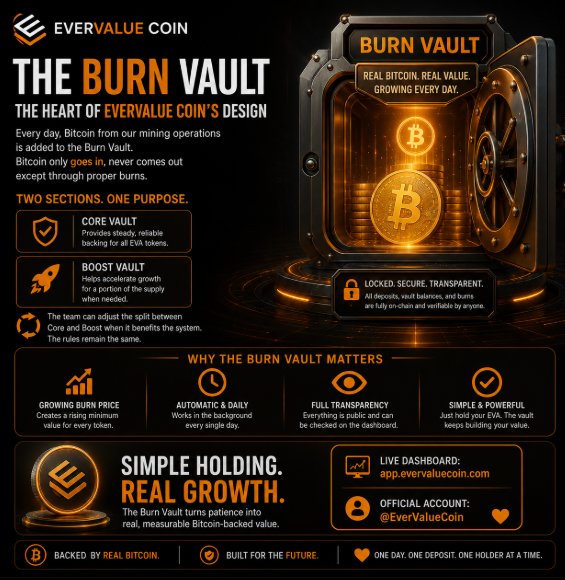
Quick heads-up: 2 days ago (March 21, 2026) was another solid day for @EverValueCoin $EVA, fresh Bitcoin from the Paraguay mining machines arrived in the Burn Vault. Total added: 0.30526662 wBTC. This happens every day, and it's one of the main reasons the value floor for each EVA token slowly goes up over time. Let's break it down simply, no complicated words. The deposit split like this: - Boost part: +0.06105332 wBTC → went to the smaller "Boost" section (backs only about 100,211 EVA tokens). At that moment, Boost's guaranteed price was 37,046 sats per EVA (meaning if someone wants to take out Bitcoin, they get at least that much worth per token in that small group). - Core part: +0.24421330 wBTC → went to the main "Core" section (backs all ~18.76 million EVA tokens out there). Core's guaranteed price was 1,915 sats per EVA (the basic safety net for every token). Why two parts? The main Core keeps things steady for everyone, no big swings. The Boost part is smaller, so the same amount of Bitcoin added makes a bigger difference there, it helps the guaranteed price rise faster in that slice (up to 200x more impact per Bitcoin compared to spreading it everywhere). Over time, this helps the whole token feel stronger. Current numbers (as of March 23): - Total Bitcoin backing (Core + Boost together): around 396.85 wBTC (worth ~$26.68 million USD). - Core: ~359.66 wBTC backing all tokens. - Boost: ~37.20 wBTC backing the small group. - Guaranteed floor price right now: ~37,113 sats per EVA (about $24.95 USD). - Number of EVA tokens out there: ~18.76 million (fixed max 21 million, no more can be made). These small daily adds come from real mining machines running in Paraguay (over 2,400 of them, powered by clean hydro energy). The Bitcoin they make gets turned into wBTC and sent straight to the vault, checkable on the blockchain (Arbiscan) and audited for safety. For holders like us: you just buy and keep EVA in your wallet. No need to do anything extra, no locking or risking. The mining team keeps working, Bitcoin keeps coming in, and the guaranteed minimum value slowly climbs. In up or down markets, this steady flow gives a safety net. See the exact update post (with transaction links): x.com/EverValueCoin/… (March 21). Live numbers always here: app.evervaluecoin.com Does seeing these everyday adds make you feel more relaxed about holding EVA long-term? #EVA #EverValue
Captain George (💙, 🧡) .edge🦭 tweet media
English
32
29
49
3.2K
Captain George (💙, 🧡) .edge🦭
The Quantum Secure Vault is qLABS' new contract-level protection layer (highlighted in the March 20, 2026 Space). It secures high-value assets (treasuries, protocols, large holdings) directly at the smart contract level using post-quantum cryptography (PQC) + zero-knowledge (ZK) flows. Key points in simple terms: ➺ Contract-based: Instead of only wallet-level protection, Vault adds quantum-resistant checks inside the smart contract itself. Transactions or asset movements require PQC-verified authorization. ➺ PQC in action: Uses NIST standards (ML-DSA for signatures, ML-KEM for key exchange) to make sure signatures can't be broken by quantum computers, even retroactively on exposed data. ➺ ZK for privacy & efficiency: Zero-knowledge proofs hide sensitive details (amounts, conditions) while still proving the tx is valid and quantum-safe. This keeps gas costs reasonable and protects user data. ➺ How it works practically: Enable Vault on a contract → pay $qONE fees for setup/verification (bulk/prepay options for high-volume). Normal txs get wrapped in a PQC + ZK envelope. Chain stays the same, no migration. If quantum breaks old sigs later, the Vault's extra layer blocks unauthorized access. ➺ Why now: Timelines are tightening (GRI report: ~50% chance of relevant quantum in 10–15 years). Contract-level prep protects locked funds before HNDL attacks exploit exposed keys. It's incremental defense for serious value, quiet, compatible, and scalable. Full details in the litepaper: register.qonetoken.io/litepaper Have you watched the Space replay? Would contract-level Vault make you feel safer holding in DeFi treasuries? Thoughts? #qLABS #qONE @qlabsofficial
Captain George (💙, 🧡) .edge🦭 tweet media
English
5
38
28
1.1K
Captain George (💙, 🧡) .edge🦭
Your AI chats for weeks (sharing style, projects, quirks) it starts "knowing" you. Yet it still hallucinates: invents details, forgets specifics, fills gaps with generic averages. Frustrating, right? Why? Most tools hit a recall bottleneck, limited or locked context means it can't reliably pull your personal data, so it guesses. The fix: verifiable context. With Proof-of-Context, your memory gets cryptographic receipts, every access provable. Encrypted, portable, auditable. Agents act on your real facts, not hallucinations or internet guesses. No more blind trust; real recall. @Supernet_AI solves this. Ever caught your AI making stuff up about your own history? x.com/Supernet_AI (website: supernet.xyz)
Captain George (💙, 🧡) .edge🦭 tweet media
English
15
25
30
2.1K
Captain George (💙, 🧡) .edge🦭
Protocol 10 (live on @Concordium Mainnet since March 2026) lets merchants sponsor transaction fees, meaning they can cover the tiny network cost (usually €0.01–€0.02) so the customer pays nothing extra. This opens the door for real incentives like a "free first transaction" promotion without the merchant actually losing money long-term. Here's why it works economically for merchants: - Fees are fixed and very low, fiat-pegged, no spikes during busy times. - The sponsor (merchant) only pays for specific transactions they choose to support; e.g., just the customer's first purchase. - Merchants can limit sponsorship to new users, low-value orders, or marketing campaigns (e.g., "First wine bottle fee-free"). - In return, they get higher sales: no "not enough for fees" drop-offs, faster checkouts, more completed carts. - For stablecoin payments (native on Concordium), the customer pays only the product price in USD/EUR/etc. merchant absorbs the negligible $CCD fee as a customer-acquisition cost, similar to paying credit card processing or ad spend. Real example flow: - Customer adds wine to cart → merchant pre-builds the transaction + signs sponsorship commitment. - Customer signs only the payment (stablecoin amount) from their wallet. - Merchant submits everything → chain validates both signatures → fee deducted from merchant's account. - Customer experiences "free" checkout → merchant pays pennies but gains a new buyer. This turns fees from a barrier into a tool. Merchants can onboard crypto users seamlessly, boost conversions, and compete with traditional payments, all while keeping control and low costs. No magic, just smart protocol design making Web3 payments practical. #ConcordiumAmbassador
Captain George (💙, 🧡) .edge🦭 tweet media
English
24
21
37
2.1K
Captain George (💙, 🧡) .edge🦭
Concordium’s 2026 integration pipeline is quietly turning the blockchain into something everyday users can actually use, without the usual headaches of crypto. Key moves happening now and soon: - Bitcoin..com wallet (75M+ users): CCD support is in active development for the mobile app, targeting an April 2026 release. Once live, you can create @Concordium accounts, hold CCD, and send/receive directly in the wallet you already use. No need to download a new app or learn a new system. - Ledger expansion (7.5M+ hardware users): CCD is already in Ledger Live for secure storage and basic txs. The team is now extending full support to web and mobile wallets, targeted for May 2026. This means your Ledger device will let you sign transactions, stake CCD, and use age-verified payments across more devices, all with hardware-level security. - Other recent pieces already live: Transak for easy fiat-to-CCD buys (no exchange needed), Coin98 browser wallet for quick access in 170+ countries, and the Concordium ID app on iOS/Android for private verification. What this means for everyday people: - Easier entry: Buy CCD with fiat in familiar wallets, then use it for payments or holding, no separate onboarding struggles. - Better privacy & security: Prove age or eligibility privately (zero-knowledge style) for shopping, content, or regulated sends, without uploading full IDs repeatedly. - Smoother experience: Combine with sponsored fees (Protocol 10 live now) so merchants/apps can cover tiny costs → you pay in stablecoins without extra steps or holding CCD upfront. - Real utility coming faster: Age-verified stablecoin payments, remittances, or content access become simple in apps millions already have. These aren’t flashy announcements, they’re practical steps that make Concordium feel less like “crypto” and more like normal digital money. As wallets onboard tens of millions more in the next few months, everyday use cases (shopping, sending money abroad, secure holding) get much closer. The pipeline is moving fast. #CooncordiumAmbassador
Captain George (💙, 🧡) .edge🦭 tweet media
English
8
19
20
1.5K
Captain George (💙, 🧡) .edge🦭
You lock your front door every night to protect your home... but your deepest thoughts, those intimate AI chats about life, work secrets, dreams, are left wide open on unknown servers. How does that sit with you? Centralized storage = no real lock. One breach (like Coruna exploits leaking to criminals), and your private digital life is exposed. The fix: treat your AI memory like your house. Encrypt it. Distribute it (no single weak point). Add Proof-of-Context: cryptographic receipts for every access, you verify who touched your thoughts, when, if allowed. Verifiable locks = real protection. Your digital mind stays private & safe, portable across tools. @Supernet_AI is building this sovereignty.
Captain George (💙, 🧡) .edge🦭 tweet media
English
17
18
25
1.4K
Captain George (💙, 🧡) .edge🦭
Developers building in Web3 don't want to start from scratch when quantum threats arrive, they want tools that let them add protection fast and smart. The "Builder Lane" in @qlabsofficial is designed exactly for that: $qONE powers access to SDKs, white-label integrations, and bulk fees so projects can make their dApps quantum-native without big overhauls. Here's how it works in practice: - SDKs and APIs for easy integration: qLABS provides developer kits (SDKs) and APIs to plug quantum-resistant features directly into apps. Think post-quantum signatures (NIST ML-DSA/ML-KEM), zero-knowledge proofs for privacy/efficiency, and wrapped transaction models. Your dApp can add the qONE Security Protocol overlay, wrapping standard txs in an extra quantum-safe layer, while staying on ETH, SOL, Hyperliquid, or other chains. No rewriting smart contracts or changing user flows; just import the tools and go quantum-ready. - Stake gate for protocol access: To use these SDKs or deeper integrations, devs stake $qONE. It's the entry key, unlocks premium access, lets you embed Quantum-Sig wallet features (quantum-safe auth/verification), and opens the door to white-label options. White-label means projects can rebrand and customize the security layer (e.g., your own quantum-protected wallet or service) without building the crypto from zero. Staking aligns incentives: committed builders get scaled or priority access as they integrate. - Bulk fees & prepay for high-volume scaling: For apps with lots of transactions (DEXes, lending protocols, gaming, or enterprise tools), pay in $qONE for bulk verification capacity. Instead of per-tx fees adding up, prepay or batch for efficiency, covers quantum-safe checks at scale without surprises. This keeps costs predictable and supports growth: more users/transactions = more $qONE needed for verifications, tying token demand to real builder adoption. Why this matters for builders? Chain upgrades are slow and risky, consensus delays, potential forks, compatibility headaches. The Builder Lane lets you add protection at the app level now: incremental, no migration, no disruption. As quantum acceleration signals ramp up (e.g., recent 256-qubit deployments), your dApp stays ahead without waiting. It's one token serving multiple roles: retail tx protection, treasury bulk access, and now builder tools. As Phases 2/3 roll out (IronCAP integration, ZK proofs, expanded toolkit), this lane grows, more SDK features, more white-label flexibility, more ways to build quantum-resilient Web3.
Captain George (💙, 🧡) .edge🦭 tweet media
English
10
23
23
2.5K
Captain George (💙, 🧡) .edge🦭
The stablecoin neobank team announced: - Deposit fee slashed from 1% → 0.5% (huge for smaller amounts, more of your USDC/sUSD stays yours). - Referral program: Share your link → when friends deposit, you earn 12.5% of their fee, they get 12.5% back as cashback. - Card still $20/year renewal (affordable entry to global spending). Video tease: "Spend stablecoins irl and earn when your friends deposit... You share the link, we share the bag" This isn't a small tweak, it's making on-chain money even more viral and practical. Why This Matters Right Now Most people hold stablecoins (USDC, sUSD) but rarely spend them IRL, fees, friction, or "it's just for holding" mindset. @solayer_labs and @Solayer_Pay fixes that: - Deposit sUSD (T-bill backed, ~4–5% auto-yield via daily rebase). - Get the card → spend anywhere Visa/Apple/Google Pay works (stores, online, travel, ATMs). - Earn yield passively while spending—no separate staking. - Now with 0.5% deposit fee + referral cashback loop → onboarding friends becomes rewarding for everyone. Example: You deposit $1000 sUSD → pay $5 fee (down from $10). Invite a friend who deposits $1000 → you pocket ~$1.25, they get $1.25 back. Repeat with community → network effects kick in fast. Ties Into the Bigger Solayer Vision This upgrade fits perfectly with InfiniSVM's real-time edge: - Sub-second settlements (<400ms finality) = instant card funding/transfers. - Tiny overall fees (InfiniSVM scales without spikes) + yield on holdings = crypto that earns while it circulates. - Connects to ecosystem: Borrow from @0xspout (T+0 0% equity loans), trade on DoxX (lightspeed swaps live on Devnet), then spend proceeds via card, all seamless. It's turning stablecoins from "digital dollars sitting idle" into active, earning, everyday money, no banks, no borders, fully on-chain. How to Jump In 1. Grab/upgrade your card: solayer.org/product/solaye… or app.solayer.org/card 2. Deposit sUSD/USDC (now cheaper). 3. Share your referral link → grow your bag + help friends earn. 4. Tap away, first real-world spend feels magical. With Mainnet Alpha humming (300K+ TPS peaks, RPC live), Solayer Pay is proving hardware-accelerated SVM isn't just for devs, it's delivering real utility to users. Congrats to recent KuCoin winners already tapping with loaded cards.
Captain George (💙, 🧡) .edge🦭 tweet media
English
6
21
18
1.4K
Captain George (💙, 🧡) .edge🦭
Prepping for the EVA Creator Challenge: What to Expect Starting March 23 Classes kick off in just 2 days (March 23 at 20:30 São Paulo time / 23:30 UTC on YouTube), if you're into learning real crypto mechanics and turning that knowledge into content for rewards, this EVA Creator Challenge is a no-brainer opportunity. As an ambassador, I've seen how education like this levels up creators, and I'm excited to see more people join in. Here's what you can expect: - 4 free live classes: Dive deep into Bitcoin mining, mining infrastructure (like Paraguay ops), smart contracts, fixed supply tokenomics, DeFi/on-chain systems, and how EverValue actually works as a real-world example. No fluff, these use EVA's ecosystem to explain concepts in practice. - After classes → creation & competition: Apply what you learn by making content (threads, videos, posts, etc.). Compete for a share of $8,500 in EVA prizes based on quality, impact, and creativity. - Mentorship & support: Expect guidance along the way, weekly tasks, feedback, and community energy to help you produce strong work. This isn't just prizes; it's structured growth. You walk away understanding Bitcoin-backed DeFi better, build your content skills, and potentially earn EVA while contributing to the ecosystem. Tips for participants (from my ambassador experience): - Content ideas: Start with simple explainers (e.g., "How Daily Mining Deposits Raise EVA's Floor" or "Burn Vault Boost in Action"), then go deeper (threads on Paraguay ops, tokenomics comparisons, or real BTC backing transparency). Use visuals, dashboard screenshots, mining doc clips, Arbiscan links. - Tie to ambassador work: If you're already creating about EVA (like threads on mining visits or liquidity), this challenge amplifies it, turn class learnings into polished pieces that educate new users and drive engagement. Quality over quantity wins prizes. - Pro tips: Register now to get class links/updates (join Telegram too for reminders). Prep by reviewing basics on evervaluecoin.com (Burn Vault, mining, audits). Engage in replies, ask questions during lives for better understanding. Classes are open to anyone, free, no barriers. Whether you're new to content or experienced (like many ambassadors), it's a chance to learn, create, and compete while growing with a transparent, Bitcoin-backed project. Register here: t.co/c2uRwIetYy Rules: t.co/KwbRBlFSOO Join Telegram for links: Check @EverValueCoin bio Let's build and win together! #EVA #CreatorChallenge #EverValue
Captain George (💙, 🧡) .edge🦭 tweet media
English
31
31
44
2.2K
Captain George (💙, 🧡) .edge🦭
Huge congrats to the KuCoin Futures × Solayer Pay winners (announced March 13)! The trading comp delivered free Solayer Pay cards loaded with $10 USDC each, winners should’ve received DMs. If you joined, check your inbox. This giveaway shows Solayer Pay moving from concept to real adoption, rewarding early users who jump in. The Card – Simplified & Ready for Everyday Use Post-March update: - $20/year renewal (affordable & predictable) - Existing users drop to $20 on renewal; lifetime holders keep benefits forever - One-time purchases phasing out → subscription model for sustainability Onboarding is quick: 1. Visit app.solayer.org/card 2. Connect Solayer wallet 3. Apply/claim (many eligible via community, Genesis, or campaigns) 4. Deposit USDC/sUSD 5. Activate → add to Apple Pay / Google Pay instantly Spend anywhere Visa works: stores, online, travel, ATMs worldwide. Up to 60% off hotels/travel perks, near-instant settlements (<400ms), tiny fees via InfiniSVM speed. Yield While Spending – The Real Edge Hold sUSD (T-bill backed stablecoin) → earn ~4–5% APY automatically (daily rebase grows your balance). Spend sUSD with the card → passive yield on money you’re using for coffee, groceries, flights, or bills. It’s a debit card + high-yield savings account in one. Why the Card Is Only the Beginning Solayer Pay isn’t just spending, it’s the gateway to a full on-chain neobank: - Seamless wallet integrations (like Atomic) for tracking yields/staking/card activity - Real-time transfers to fund the card instantly - Future features: budgeting, rewards dashboard, exclusive perks - Connects to ecosystem wins: borrow from @0xspout (T+0 0% APR equity loans), trade on fast DEXs, then spend proceeds, all on-chain Borderless, non-custodial, no bank middlemen. Crypto becomes everyday money that earns while it works. Winners: Your first tap is ready, show us what you buy! Everyone else: Start at app.solayer.org/card What’s your first Solayer Pay spend? Coffee? Travel? Let me know below! @solayer_labs
Captain George (💙, 🧡) .edge🦭 tweet media
English
11
15
20
2.1K
Captain George (💙, 🧡) .edge🦭
In crypto, the biggest quantum vulnerability isn't always the future break of encryption, it's the keys that are already out there. On chains like Ethereum and Solana, standard signatures (ECDSA) often expose your public key every time you send funds. Once broadcast, that key is permanent and public forever in the blockchain ledger. Advisor Aaron Moore (qLABS, with DARPA/NSA/Hedera background) highlighted this in a recent clip from the Ada Jonuse × Aaron Moore stream (Feb 2026 replay): quantum computers don't just attack future signatures, they can target existing ones. If a capable quantum machine runs Shor's algorithm on an exposed public key, it derives the private key retroactively. No new transaction needed; just math on data that's been harvested and stored (HNDL style). The clip notes: quantum could "copy digital signatures used across crypto and the internet," and the shift won't be gradual, RSA falls first, then dominoes. For everyday holders: - Reused addresses or P2PK-style scripts (even in older BTC/ETH txs) leak public keys directly. - Modern wallets mitigate reuse, but any past send exposes the key for that tx. - DeFi pools, stablecoin transfers, NFT mints, most leave traceable signatures. Billions in value sit on vulnerable proofs of ownership. The real weak point: blockchain immutability works both ways. What protects history also preserves attack surfaces. Waiting for chain-level fixes (new sig schemes via hard forks) means years of consensus delays, plus retro risks remain if old data was collected. Quantum-Sig flips this without full migration. It uses a dual-key approach: - Keep your normal ECDSA signature for compatibility (chain sees standard tx). - Add a second, quantum-resistant signature (NIST ML-DSA lattice-based) via the qONE Security Protocol overlay. - The protocol wraps the tx in this extra layer, verifies both, paid via small $qONE fees. - No exposed quantum-vulnerable key dominates; the post-quantum one blocks derivation attacks. - Your address, keys, UX, and chain stay the same, no bridging, no reissuing assets. This protects retroactively: even if public keys were exposed years ago, the added quantum-safe check breaks the decryption path for harvested data. It's incremental defense, enable once in Quantum-Sig wallet, and future txs get shielded without disrupting past ones. qLABS builds this as the practical fix: layered protection today while chains evolve slowly. No waiting for perfect upgrades; just add the extra lock now. Litepaper covers the dual-sig mechanics: register.qonetoken.io/litepaper Have you checked if your wallets have exposed keys from old txs? Does the dual-signature idea change how you view quantum prep? Thoughts welcome. #qLABS #qONE @qlabsofficial
Captain George (💙, 🧡) .edge🦭 tweet media
English
29
14
33
3.1K
Captain George (💙, 🧡) .edge🦭
AI agents are getting insanely smart, always-on in Cursor, chaining GitHub → Slack → Notion → Datadog, auto-fixing bugs, notifying teams, running workflows 24/7. But without shared, verifiable memory that's truly yours, they reset every switch or limit hit. They stay strangers who forget your style, history, ongoing projects. No real personalization, just temporary helpers. The fix: portable context you own + Proof-of-Context. Encrypted, decentralized, with cryptographic receipts for every access, you verify who/what/when. Agents finally "remember" you across tools, feel like constant partners, not forgetful acquaintances. No blind trust, no lock-in. @Supernet_AI is building this verifiable layer. How much do you lose when your agents "forget" your context? #AIAgents
Captain George (💙, 🧡) .edge🦭 tweet media
English
11
19
18
1.7K
Captain George (💙, 🧡) .edge🦭
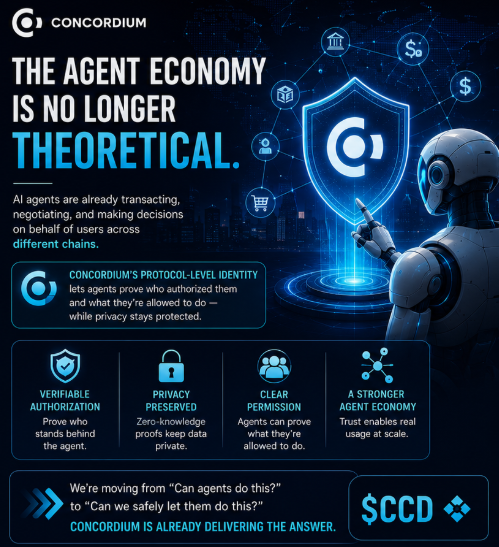
In most blockchains, paying with crypto always feels clunky: you need to hold the right token just to cover the tiny fee, even for a $10 purchase. That one extra step (“buy some native coin first”) kills the experience and scares away normal people. Protocol 10 (live on @Concordium Mainnet since March 2026) changes exactly that. Now the person sending the payment doesn’t have to pay the fee. A sponsor (usually the merchant, app, or platform) can cover it for you. How it works in practice: - You pay a merchant in stablecoins (USD, EUR, etc.) - The merchant automatically pays the small network fee on your behalf - You never need to hold or buy CCD just to shop It’s like when your bank or Apple Pay covers tiny processing costs, invisible to you. Result: payments start feeling like normal online shopping: - One click → done - No wallet top-up surprises - No “not enough gas” errors at checkout At the same time, you keep full control: - Your money stays in your wallet (self-custody) - No one sees your full transaction history unless you choose to prove something specific (age, location, etc.) - Concordium’s built-in identity layer uses math to verify facts privately, no oversharing This combo, sponsored fees + privacy-preserving proofs, finally bridges Web2 ease and Web3 freedom. Merchants get higher sales (less drop-off), users get smoother experience, and everything stays decentralized and compliant. Protocol 10 isn’t flashy hype. It’s the quiet upgrade that makes everyday crypto payments actually usable.
Captain George (💙, 🧡) .edge🦭 tweet media
English
17
12
20
2.1K
Captain George (💙, 🧡) .edge🦭
Many people hold stablecoins like USDC or USDT because they're safe and steady, but they often just sit in a wallet doing nothing. Over time, inflation slowly reduces what that money can buy, so it's like having cash under the mattress that loses value quietly. @BlueprintAI built something called the Smart Savings Account to change that. You deposit your stablecoins, and an AI agent takes over from there. It scans trusted DeFi options across chains (like Polygon for low fees) and places your funds in safe earning spots, things like vaults that offer steady returns without high risk. The agent doesn't stop after the first move. It checks every 12 hours and rebalances if a better, still-safe option appears. This keeps your money working consistently, even as rates shift, without you having to watch markets or make manual trades. Fees are kept in mind so frequent checks don't eat into gains, and gas is often sponsored to avoid surprises. Everything stays transparent: you see every allocation and move on-chain, and it's non-custodial, you always control your keys and funds. No lockups or hidden charges, so you can pull out anytime. In practice, it's for everyday holders who want their idle stablecoins to earn a bit more without turning into a full-time job. Start small (even $10 works in beta), watch it run, and let the agent handle the optimization. If your stablecoins are mostly sitting untouched right now, this could be a simple way to make them more useful. What's your go-to way to handle idle stables, hold, manual moves, or something else? Curious to hear. Beta access: beta.tryblueprint.xyz Join the conversation: Discord discord.com/invite/TRFgwSV… | Telegram t.me/blueprintAIx #BlueprintAI #Stablecoin
Captain George (💙, 🧡) .edge🦭 tweet media
English
11
15
24
1.7K
Captain George (💙, 🧡) .edge🦭
Your AI memory, chats, projects, personal thoughts, sits centralized on one company's servers. One hack, one exploit (like Coruna tools leaking to criminals), one outage... and it's all gone or exposed forever. Single point of failure. Total loss feels inevitable. We've seen it: Pegasus, Hacking Team, now Coruna. Centralized data + vulnerabilities = breach waiting to happen. The forever fix: decentralized memory. Own it, encrypt it, distribute it (split across nodes, no central target). Add Proof-of-Context for verifiable receipts, every access provable. No blind trust. Downtime? Your context survives. Hack elsewhere? Yours stays safe. Switch tools? No wipeout. @Supernet_AI is making this real: sovereign, portable, resilient AI memory. Ever worry your AI chats could vanish in one breach? What's at stake for you?
Captain George (💙, 🧡) .edge🦭 tweet media
English
10
14
22
2.1K