Cardinal Institute
11.3K posts

Cardinal Institute
@CardinalWV
West Virginia’s premier free-market policy research organization. Developing solutions that promote liberty, opportunity, and prosperity for all Mountaineers.


Medical debt remains one of the most common and devastating financial challenges facing patients in the United States. For individuals navigating serious illnesses such as cancer, the financial strain of treatment can follow them long after they leave the hospital. A new analysis from the National Consumers League sheds light on an important dimension of this issue: how hospitals participating in the federal 340B drug pricing program approach medical debt collection. The issue brief examines hospital billing and collection policies across more than 2,500 hospitals nationwide, comparing those that participate in the 340B program with those that do not. The findings raise important questions about how hospital financial policies intersect with the experience of patients already navigating complex medical care. Read more: hubs.ly/Q046Rv590

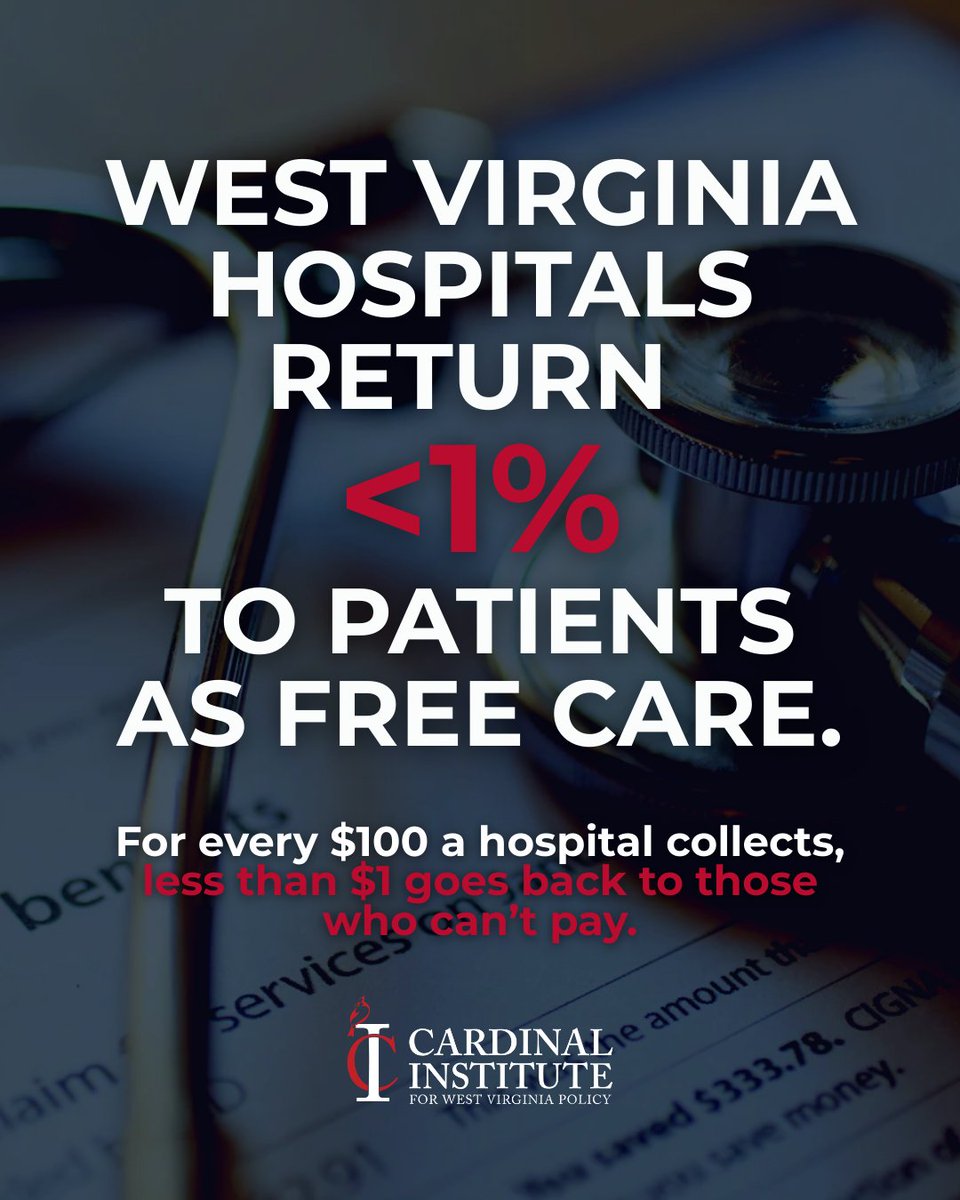
Charity care is supposed to protect patients from medical debt. In West Virginia, it averages less than 1% of hospital expenses. If the social contract is financial protection, West Virginia hospitals aren't holding up their end.


West Virginia just took a major step toward helping more Mountaineers find pathways to work and self-sufficiency. Our state has one of the lowest labor force participation rates in the nation, nearly 8 points below the national average. @wvgovernor's WorkFIRST initiative takes a direct aim at that problem. The new taskforce will examine how to better align job training, employment services, and assistance programs around a single, clear goal: getting more Mountaineers back to work. This is the right instinct. Our Dignity Project research shows West Virginians across the board—including those who have used public assistance—overwhelmingly support reforms that modernize safety net programs and make work the centerpiece of the system. Nearly 3 in 4 West Virginia voters agree that non-disabled adults should be required to work or participate in job training as a condition of receiving assistance. Assistance programs should be a bridge to self-sufficiency—not a destination. A smarter, more connected system means fewer barriers between a person and a job, not a wider on-ramp to dependency. We look forward to supporting the WorkFIRST Taskforce and helping to build a system that works for all Mountaineers.

West Virginia just took a major step toward helping more Mountaineers find pathways to work and self-sufficiency. Our state has one of the lowest labor force participation rates in the nation, nearly 8 points below the national average. @wvgovernor's WorkFIRST initiative takes a direct aim at that problem. The new taskforce will examine how to better align job training, employment services, and assistance programs around a single, clear goal: getting more Mountaineers back to work. This is the right instinct. Our Dignity Project research shows West Virginians across the board—including those who have used public assistance—overwhelmingly support reforms that modernize safety net programs and make work the centerpiece of the system. Nearly 3 in 4 West Virginia voters agree that non-disabled adults should be required to work or participate in job training as a condition of receiving assistance. Assistance programs should be a bridge to self-sufficiency—not a destination. A smarter, more connected system means fewer barriers between a person and a job, not a wider on-ramp to dependency. We look forward to supporting the WorkFIRST Taskforce and helping to build a system that works for all Mountaineers.