

Carole
776 posts

Carole
@Carolexbt
Full time Clipper ✂️ // Crypto // Web3
Onchain Katılım Ekim 2025
55 Takip Edilen65 Takipçiler

Thought it was just another game night…
Then the whole lobby turned into pure chaos 🔥
Otherside Metaverse Game Night hits different.
FT: @OthersideMeta
English

🤖 AI agents are becoming the new interface layer for digital commerce.
But for them to work at scale, the infrastructure behind payments, automation, and user interaction has to evolve first.
That’s where UQUID is positioning itself within the TRON ecosystem.
As discussed by Tran Hung, the focus is no longer just digital payments.
It’s about building AI-powered commerce experiences that reduce friction between users, marketplaces, and blockchain infrastructure.
And ticketing is becoming one of the most practical use cases.
🎟️ WHY TICKETING IS A PERFECT AI + WEB3 USE CASE
Traditional ticketing systems still suffer from major inefficiencies:
→ fragmented payment flows
→ fake or duplicated tickets
→ poor customer support
→ manual booking processes
→ high transaction friction across borders
Most systems are still static.
AI changes that completely.
⚙️ HOW AI-POWERED TICKETING ACTUALLY WORKS
Instead of users navigating complex interfaces manually, AI agents can increasingly handle the interaction layer themselves.
In practice, this means:
🧠 Understanding user intent in natural language
📍 Recommending routes, events, or ticket options
💳 Selecting optimized payment methods
⚡ Automating checkout and confirmation flows
🔄 Managing refunds, updates, and schedule changes dynamically
The experience becomes conversational rather than transactional.
🔗 WHERE BLOCKCHAIN INFRASTRUCTURE ENTERS
AI improves the interface.
Blockchain improves the backend trust layer.
Using networks like TRON, systems can enable:
⚡ Fast payment settlement
💰 Low transaction costs
🔒 Transparent ticket ownership records
🌍 Borderless digital payments
🔁 Automated verification and redemption
This creates a more seamless flow between AI interaction and real transaction execution.
🚀 WHAT UQUID IS REALLY BUILDING
The bigger picture isn’t just “AI ticket booking.”
It’s the gradual shift toward:
👉 autonomous commerce infrastructure
Where AI systems can:
• assist users directly
• coordinate payments automatically
• verify transactions on-chain
• personalize marketplace interactions in real time
Ticketing is simply one entry point into a much broader AI-commerce ecosystem.
🌐 WHY THIS MATTERS
As AI agents become more integrated into consumer applications, platforms that combine:
→ AI interfaces
→ blockchain settlement
→ low-cost payments
→ automated digital fulfillment
will likely define the next generation of online commerce experiences.
And within TRON’s ecosystem, UQUID is positioning itself at that intersection.
🔍 FINAL TAKEAWAY
AI changes how users interact.
Blockchain changes how systems settle trust.
Combine both, and digital commerce becomes:
✔ more automated
✔ more intelligent
✔ more accessible globally
✔ and far less dependent on manual workflows
The future of Web3 commerce may not look like traditional apps at all.
It may look more like AI agents coordinating transactions seamlessly in the background.
@justinsuntron @trondao #TRONEcoStar

English

Good morning CT
The message behind $ANIMA highlights a shift in how we think about AI interaction.
What we usually call “AI” is often just fast pattern matching across massive datasets, optimized for response rather than continuity of intent.
The difference emerges in persistence.
@TheARCTERMINAL introduces ANIMA as a system that does not only respond, but maintains structure around the user’s context over time.
Not just reacting to prompts, but aligning with ongoing goals, preferences, and direction.
It reframes interaction from isolated queries into a continuous environment where context is preserved rather than reset.
This points toward a different direction for AI systems: less about generating answers, more about sustaining alignment between user intent and system behavior across time.

English

As the digital economy evolves, one thing is becoming increasingly clear: the future belongs to intelligent ecosystems that combine AI, seamless payments, and decentralized infrastructure. That future is already being built and TRON is continuing to lead the charge.
From empowering digital ownership to enabling faster, scalable, and cost-efficient transactions,@trondao continues advancing the infrastructure needed for the next generation of AI agents, Web3 applications, and borderless digital commerce.
One of the strongest examples of this innovation in action is UQUID.
In a recent discussion, Tran Hung shared how @uquidcard is building AI-powered ticketing experiences designed to completely transform how users interact with online marketplaces and digital payment systems.
This is more than just technology.
It’s about creating experiences that are smarter, faster, safer, and more accessible for millions of users worldwide.
AI is no longer a futuristic concept it is becoming the foundation of digital interaction. By integrating intelligent automation with blockchain-powered payments, UQUID is helping users navigate marketplaces with greater convenience, personalization, and efficiency than ever before.
Imagine a world where:
• AI agents help users instantly discover the best ticketing and marketplace options
• Transactions happen seamlessly with secure blockchain infrastructure
• Digital payments become frictionless across borders
• Users gain more control, transparency, and speed in every online interaction
That is the direction the industry is moving toward and TRON together with UQUID is helping accelerate this transformation.
The combination of AI and blockchain is opening entirely new possibilities for businesses, creators, merchants, and consumers alike. It represents a shift from traditional systems into a smarter digital economy powered by innovation and decentralization.
What makes this movement powerful is not only the technology itself, but the vision behind it:
building tools that simplify lives while expanding global access to digital finance and commerce.
As adoption of AI-driven services continues to rise, platforms that can offer scalability, low transaction costs, and seamless user experiences will define the next era of the internet. TRON’s robust infrastructure positions it as a key player in supporting this evolution.
Meanwhile, UQUID continues pushing boundaries by integrating AI into real-world marketplace experiences proving that Web3 utility is no longer theoretical, but practical and impactful.
This is the kind of innovation that inspires builders, entrepreneurs, developers, and communities across the globe.
The future is being shaped right now by projects willing to innovate boldly, move strategically, and build solutions that truly matter.
AI-powered commerce.
Decentralized payments.
Smarter user experiences.
Borderless digital ecosystems.
This is not just the next chapter of technology
this is the beginning of a new digital era.
And #TRON together with UQUID are helping lead the way.
@justinsuntron @trondao #TRONEcoStar
English

Honestly, I think there’s a deeper shift happening in how expertise gets packaged. Right now, using advanced systems often requires direct human expertise at every step.
You guys need specialists to configure workflows, interpret outputs, and connect fragmented tools together.
>> But with @quipnetwork, specialized algorithms become reusable network resources.
>> And with @TheARCTERMINAL, agents can start operationalizing those resources automatically.
So, expertise gradually moves from isolated individuals into programmable coordination layers.
That doesn’t replace human insight but actually amplifies it.
Because once good processes become composable, the entire ecosystem can build on top of them instead of reinventing them each time!

rudolphhh \\ 🧙♂️,🧙♂️@rudolphhh2000
Another interesting dynamic here is how both systems treat coordination as an active process instead of a static one. Traditional infrastructure often assumes fixed relationships with fixed providers, fixed workflows, and fixed execution paths. But real world demand doesn’t behave like that because conditions change constantly. @quipnetwork allows compute demand to move dynamically depending on pricing, availability, and subnet specialization. @TheARCTERMINAL agents can respond to those changing conditions in real time by rerouting tasks, comparing outcomes, adapting execution strategies. So the system behaves less like a rigid pipeline and more like a living network continuously optimizing itself. That flexibility is probably going to matter more and more as compute ecosystems become increasingly heterogeneous!
English

Gm Quippers 🌤️
Most infrastructure projects talk a lot about scalability and security.
Very few actually build systems that feel practical for long term usage.
That’s one reason @quipnetwork keeps catching my attention.
The direction feels more focused on building usable infrastructure instead of chasing short term narratives around performance metrics.
The combination of:
→ decentralized compute
→ post quantum security
→ scalable network design
→ community powered infrastructure
shows a project thinking more about long term ecosystem utility than temporary hype cycles.
In the long run, strong infrastructure usually matters more than loud marketing.

English
@muhitonx @StrikeRobot_ai This sound like a game changer for efficiency 🔥
English

I looked into how @StrikeRobot_ai handles training for their humanoid robots.
They are integrating a cool new tool from Microsoft called TRELLIS into their system.
This is a big help for their SR Platform v2. Usually, making 3D models of machinery or dangerous factory parts takes a long time.
With TRELLIS, they can instantly turn regular images or text descriptions into highly detailed 3D assets.
It uses a 4-billion parameter image to-3D model to speed everything up.

English
English

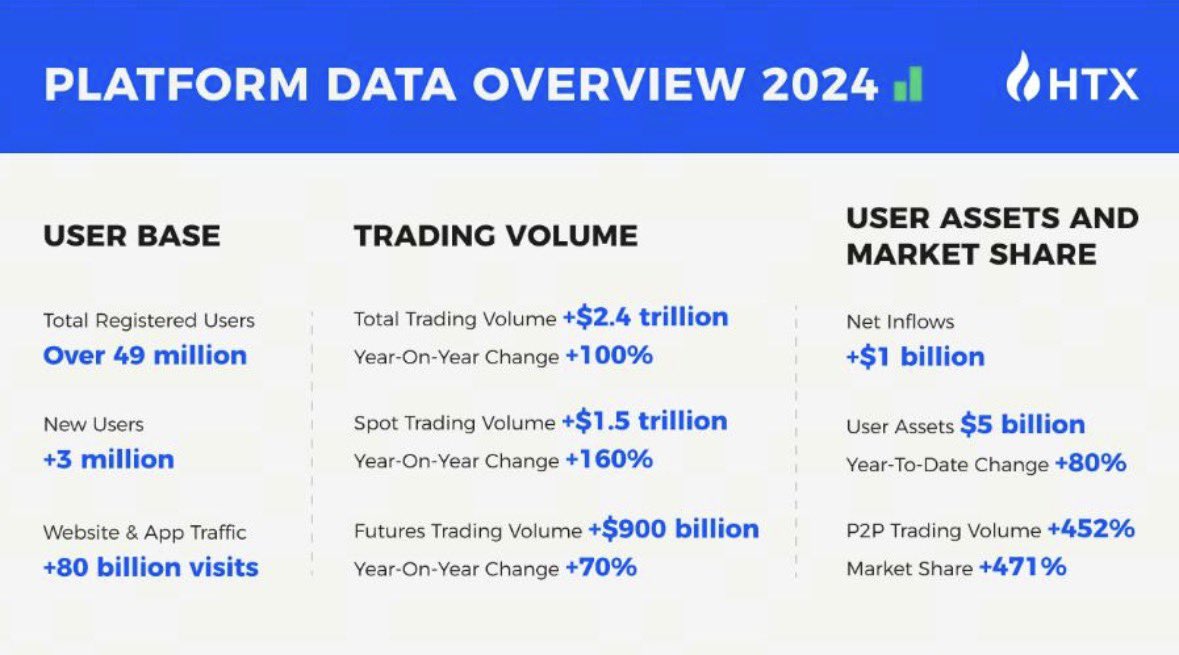
HTX Showing Strong Market Activity Despite Short-Term Pullback 🚀📊
$HTX is currently trading around $0.00000196, and although the market has seen a slight 24-hour decline of 0.49%, the bigger picture remains positive and full of potential.
The recent chart movement reflects a market that is actively consolidating while maintaining strong investor interest and healthy trading activity.
What stands out the most is HTX’s consistent long-term performance.
Over the last 30 days, $HTX has gained approximately 9.51%, while the 90-day growth sits above 14%, showing that buyers continue to accumulate even during periods of market uncertainty.
The Year-to-Date performance nearing 20% growth is another sign that market confidence around HTX is gradually strengthening.
The trading volume also plays a major role in this momentum. Strong and active volume indicates that traders are still heavily engaged with HTX, which helps maintain liquidity and market stability.
In crypto, volume is often considered the heartbeat of a project and $HTX continues to show signs of life and strength.
Every price movement on the chart reflects active participation from both short-term traders and long-term investors watching the market closely.
Current price action suggests that $HTX may be entering an accumulation phase.
The chart shows repeated rebounds around support levels, meaning buyers are stepping in whenever the price dips.
This kind of behavior is commonly seen before stronger market moves begin.
While short-term volatility remains part of the crypto market, $HTX is showing resilience by holding key levels and maintaining positive long-term momentum.
Why HTX Is Still Attracting Attention 👀
Strong and active daily trading volume
Positive long-term growth trend
Increasing market participation
Stable support zones despite volatility
Growing confidence from traders and investors
The crypto market moves fast, but projects with strong community activity, consistent trading volume, and stable price behavior often remain ahead in the long run.
HTX continues to prove that even during minor corrections, the market still sees value and opportunity within the project.
As traders continue monitoring the next breakout levels, HTX remains one of the tokens attracting attention for its steady growth pattern and active market structure.
If buying pressure and volume continue increasing, the next phase for HTX could become even more interesting in the coming weeks.
$HTX is not just surviving the market it is building momentum step by step.
@justinsuntron @HTX_Global @HTX_Molly @Ceee333_ #HTXNOVAPLUS

English

Gn Good night CT
What stands out to me about @KoloHub is how the project is building around actual usability instead of pure market hype.
The direction already looks solid:
> Wallet infrastructure
> Seamless swaps
> Card-based spending
> Bank transfer integration
> Cashback incentives
> Community campaigns rewarding authentic reach
A lot of crypto projects focus only on token attention, but platforms that combine real utility with sustainable user growth usually have stronger long-term potential.
Definitely one of the more interesting names in the crypto payments space right now.

English

Superior Terminal 2.0 is now in OPEN BETA
Paste your ideas into Terminal.
It turns the setup into strategy logic, backtests it, compares configs, and prepares it for live deployment.
From market scan to execution, everything now runs inside one loop.
Watch it run👇🏼
English
@BossMon_02 @XOOBNetwork Projects like XOOB all grow together instead of competing for visibility.
English

That makes every connection feel more valuable and more strategic. @XOOBNetwork is turning simple introductions into a real earning opportunity for people deeply connected in Web3. Instead of just networking for visibility you can now benefit directly from the growth you help create.
The 50% platform fee share is a strong incentive because it rewards people for bringing quality projects into the ecosystem. If you already know teams building in crypto this creates a new lane where your network can become a consistent source of income. It is a smart way to activate communities and encourage real ecosystem expansion.
What stands out is how focused @XOOBNetwork is on creator driven growth instead of generic marketing. Projects are not just buying impressions they are tapping into real communities and authentic engagement. That kind of exposure tends to build stronger narratives and better long term traction.
This also highlights how important distribution has become in Web3. Building a product is one thing but getting attention and users is where the real battle happens. Platforms like @XOOBNetwork are creating systems where creators connectors and projects all grow together instead of competing for visibility.
The bigger picture is that Web3 is evolving into an economy powered by relationships and influence. The people who know how to connect builders with attention are becoming just as important as the builders themselves. @XOOBNetwork is giving those people a direct role in shaping growth while rewarding them for being early and active.

English

Good Night, Everyone.
gARC!
With ChatGPT and most other AI tools you see the same pattern.
they are fast accurate even impressive but they do not really hold you.
Every conversation starts from zero.
Context resets. Intent gets lost.
What stands out in @TheARCTERMINAL is exactly that gap.
ANIMA is not just answering prompts it gradually becomes a layer that keeps your context alive and evolves with how you think.
That shift sounds small but it completely changes the experience.

English

Most people still see campaigns as one‑time events.
@3look_io treats them differently:
Ongoing creator activity
Consistent reward cycles
Løøkz tracking real contribution
That shift matters.
Because the strongest projects aren’t built in one post
they’re built through repeated, quality content.
30K creators doing that on @3look_io is a different level of distribution.

English

𝗛𝗼𝘄 𝗧𝗥𝗢𝗡 𝗶𝘀 𝗢𝗽𝘁𝗶𝗺𝗶𝘇𝗶𝗻𝗴 𝗗𝗲𝗙𝗶 𝗘𝘅𝗲𝗰𝘂𝘁𝗶𝗼𝗻 𝗮𝘁 𝘁𝗵𝗲 𝗜𝗻𝗳𝗿𝗮𝘀𝘁𝗿𝘂𝗰𝘁𝘂𝗿𝗲 𝗟𝗮𝘆𝗲𝗿
Most people measure DeFi efficiency through yield.
But over time, execution cost matters just as much.
Because even the best strategies lose efficiency when transaction overhead continuously drains capital.
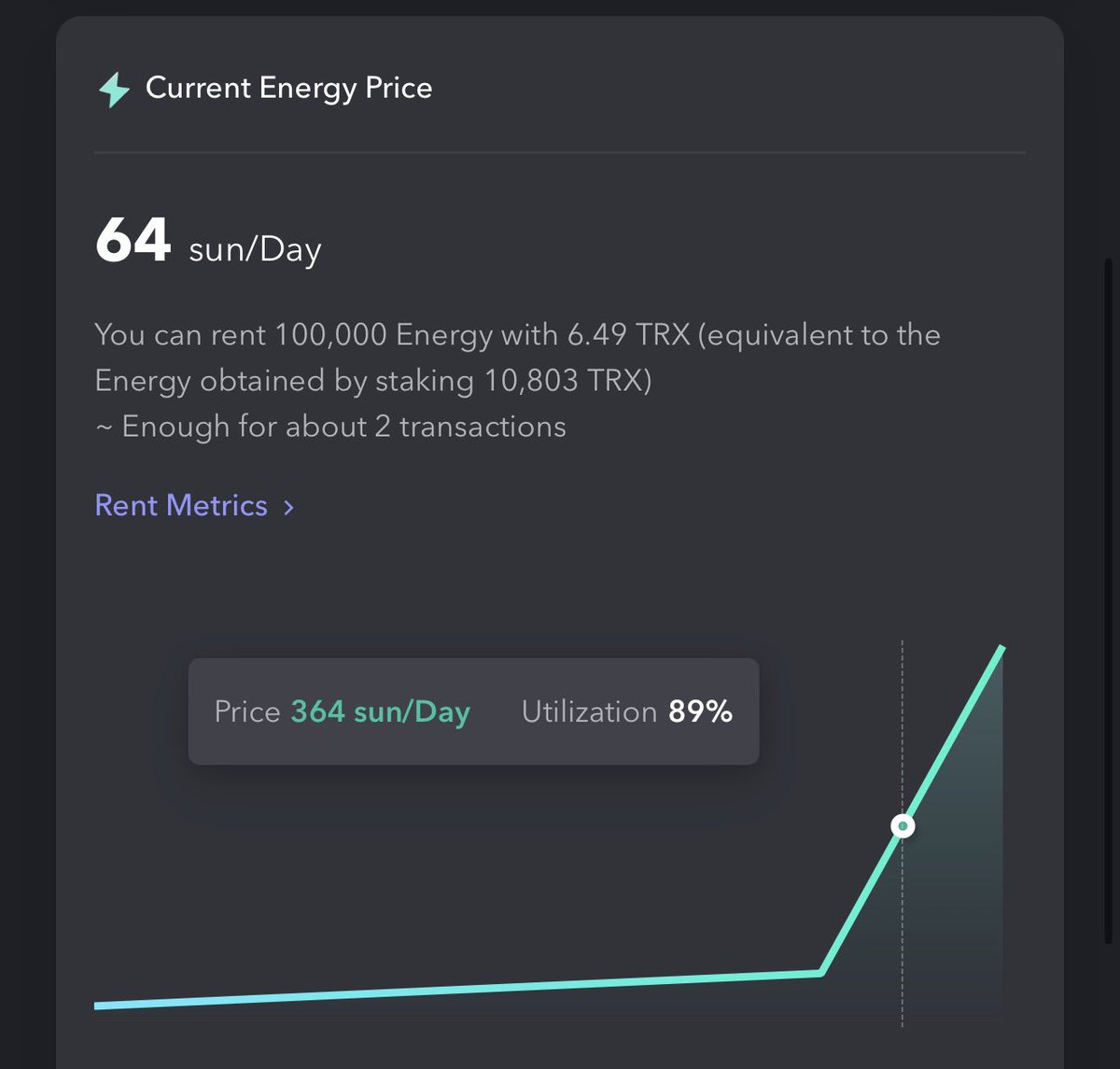
That’s why the latest Energy update from @DeFi_JUST is more important than it initially appears.
Base Energy rate reduced:
📉 15% → 8%
This is not just a pricing adjustment.
It is infrastructure optimization for the TRON ecosystem.
1/ 𝗘𝗻𝗲𝗿𝗴𝘆 𝗮𝘀 𝘁𝗵𝗲 𝗘𝘅𝗲𝗰𝘂𝘁𝗶𝗼𝗻 𝗟𝗮𝘆𝗲𝗿
Every smart contract interaction on TRON depends on Energy.
That includes:
→ swaps
→ lending
→ borrowing
→ staking
→ liquidity management
→ portfolio rebalancing
When execution resources become cheaper, DeFi becomes structurally more efficient.
And in scalable systems, efficiency compounds.
2/ 𝗟𝗼𝘄𝗲𝗿 𝗙𝗿𝗶𝗰𝘁𝗶𝗼𝗻 𝗠𝗲𝗮𝗻𝘀 𝗕𝗲𝘁𝘁𝗲𝗿 𝗖𝗮𝗽𝗶𝘁𝗮𝗹 𝗨𝘁𝗶𝗹𝗶𝘇𝗮𝘁𝗶𝗼𝗻
Reducing the base Energy rate from:
15% → 8%
directly lowers operational overhead across TRON DeFi.
This enables users to:
→ execute more transactions efficiently
→ preserve more working capital
→ reduce unnecessary TRX burn
→ interact with protocols more actively
For high-frequency users and active DeFi participants, these savings become meaningful at scale.
3/ 𝗘𝗻𝗲𝗿𝗴𝘆 𝗥𝗲𝗻𝘁𝗮𝗹 𝗮𝘀 𝗗𝗲𝗙𝗶 𝗜𝗻𝗳𝗿𝗮𝘀𝘁𝗿𝘂𝗰𝘁𝘂𝗿𝗲
The larger shift is architectural.
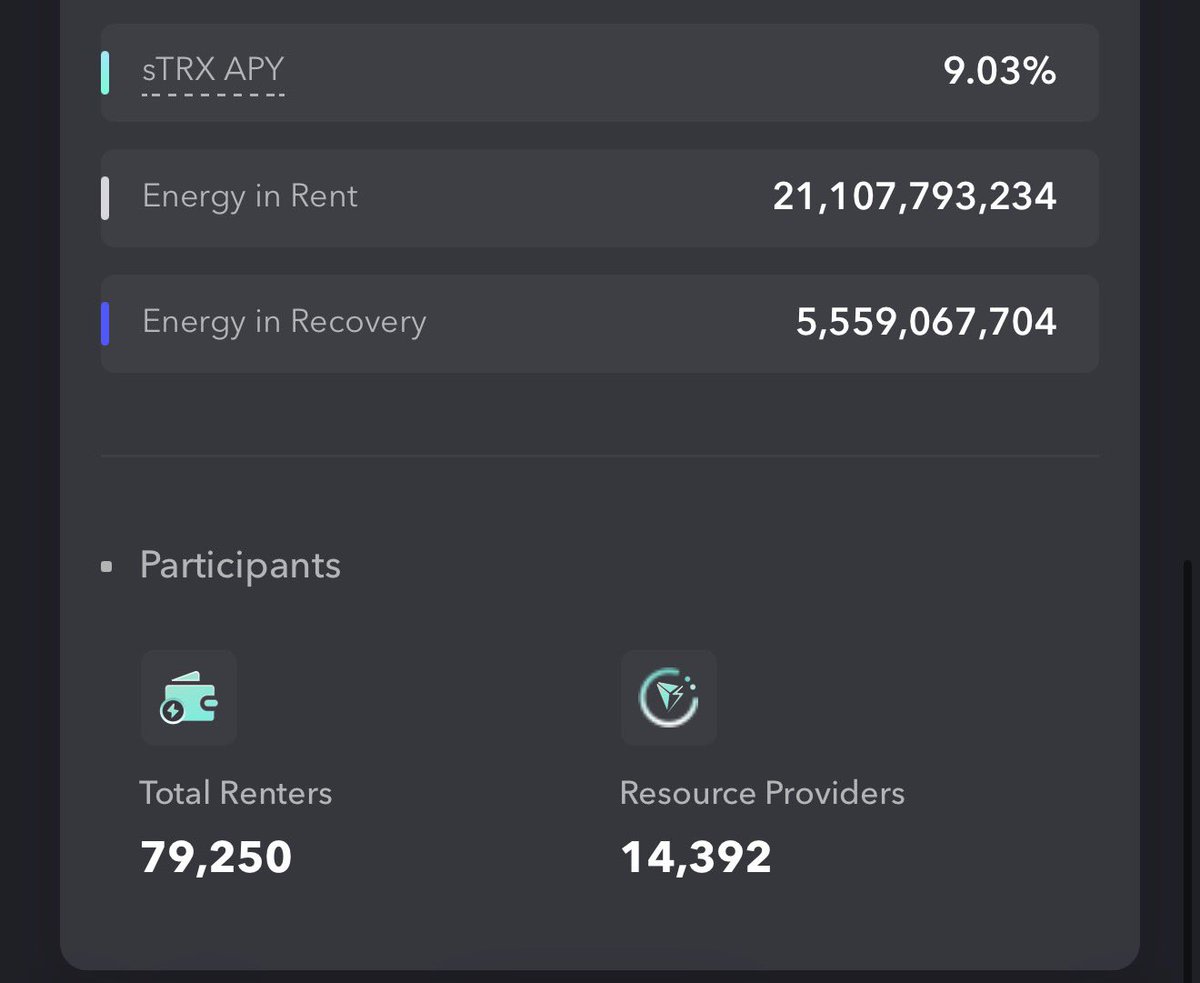
Energy Rental is evolving into a native infrastructure layer for TRON.
Instead of:
→ freezing large amounts of TRX
→ permanently burning execution costs
users can access Energy dynamically through JustLend DAO.
This improves liquidity flexibility while optimizing capital deployment across the network.
Infrastructure is no longer only about throughput.
It is about execution efficiency.
4/ 𝗪𝗵𝘆 𝗘𝗳𝗳𝗶𝗰𝗶𝗲𝗻𝗰𝘆 𝗕𝗲𝗰𝗼𝗺𝗲𝘀 𝗮 𝗖𝗼𝗺𝗽𝗲𝘁𝗶𝘁𝗶𝘃𝗲 𝗔𝗱𝘃𝗮𝗻𝘁𝗮𝗴𝗲
In mature DeFi ecosystems, performance is not defined only by APY.
It depends on:
→ transaction efficiency
→ operational cost
→ liquidity accessibility
→ execution scalability
The lower the friction layer becomes, the easier it is for users and protocols to scale sustainably.
This is where infrastructure improvements quietly reshape ecosystem growth.
5/ 𝗧𝗥𝗢𝗡’𝘀 𝗡𝗲𝘅𝘁 𝗣𝗵𝗮𝘀𝗲 𝗶𝘀 𝗢𝗽𝘁𝗶𝗺𝗶𝘇𝗮𝘁𝗶𝗼𝗻
TRON has already established strengths in:
→ fast settlement
→ low fees
→ scalable throughput
But long-term adoption depends on more than speed.
It depends on how seamless participation becomes.
Energy optimization reduces the invisible friction users experience every day on-chain.
And the best infrastructure often feels invisible.
Users stop thinking about execution mechanics and focus entirely on:
→ strategy
→ liquidity
→ capital movement
→ participation
That is when DeFi begins to operate at scale.
✨ 𝗙𝗶𝗻𝗮𝗹 𝗣𝗿𝗶𝗻𝗰𝗶𝗽𝗹𝗲
Yield attracts users.
Efficiency retains them.
And ecosystems that minimize execution friction are the ones most likely to sustain long-term on-chain activity.
Lower cost.
Better capital efficiency.
Smarter execution.
That is how scalable DeFi infrastructure gets built on TRON.
🔋 Check pricing:
app.justlend.org/energy?lang=en…
@DeFi_JUST @justinsuntron
#TRONEcoStar
English
Carole retweetledi