Damian Domke

203 posts

Damian Domke

Damian Domke

@Cathedralulus

Historian and Latinist. Writing my PhD thesis on Orthodoxy Theory in Early Modern Reformed Protestantism using Basel and Amandus Polanus as an example.

Katılım Aralık 2025
120 Takip Edilen38 Takipçiler
Damian Domke
Damian Domke@Cathedralulus·
@WesleyLHuff Muratorian Fragment actually shows the opposite: even the NT canon wasn’t settled around 170. That makes claims about a fixed OT consensus at the same time methodologically tricky.
English
0
0
3
352
Wes Huff
Wes Huff@WesleyLHuff·
Today’s #manuscriptmonday is the Crosby-Schøyen Codex which contains a letter of Melito of Sardis, a Christian author in the 2nd century. Melito wrote out a list of Old Testament books he considered scripture that aligns quite closely with the Protestant Old Testament. Melito’s list from around 170 AD included all Old Testament books except possibly Esther, whereas the standard Protestant Old Testament contains thirty-nine books. Since Melito excluded Esther, his collection would have contained approximately thirty-eight books—only one fewer than the Protestant canon. Along with the lack of Esther Melito inverted the order of Numbers and Leviticus compared to traditional Jewish arrangement, suggesting he may have reorganized material based on his own theological priorities. Despite these variations, Melito’s fundamental agreement with the Protestant canon on which books belong to Scripture demonstrates remarkable early Christian consensus. A Jerusalem list from the same period (c. 170) included all thirty-nine Old Testament books, suggesting that by the late 2nd century, the core content of the Protestant Old Testament was already widely recognized as authoritative, even if questions about Esther and organizational schemes remained unsettled.
English
104
154
1.4K
161.5K
Damian Domke
Damian Domke@Cathedralulus·
@Vicar1973 This is just a tiny part of the history of the Crusades.
English
1
0
1
64
Pastor Rich Lusk
Pastor Rich Lusk@Vicar1973·
Remember, the Crusades were fought to rescue *Christians* in the Middle East from ungodly oppressors. Maybe it's time for another Crusade. Everyone is so wrapped up in what Israel and Hamas are doing - meanwhile the plight of Middle Eastern Christians is largely ignored and they suffer greatly. Who will care for Christians in the region? Who looks out for their interests as their population declines?
English
21
13
164
3.3K
Damian Domke
Damian Domke@Cathedralulus·
@PatAbendroth Do you never get tired of it? You are condemning a huge part of your own tradition.
English
2
0
8
281
Patrick Abendroth
Patrick Abendroth@PatAbendroth·
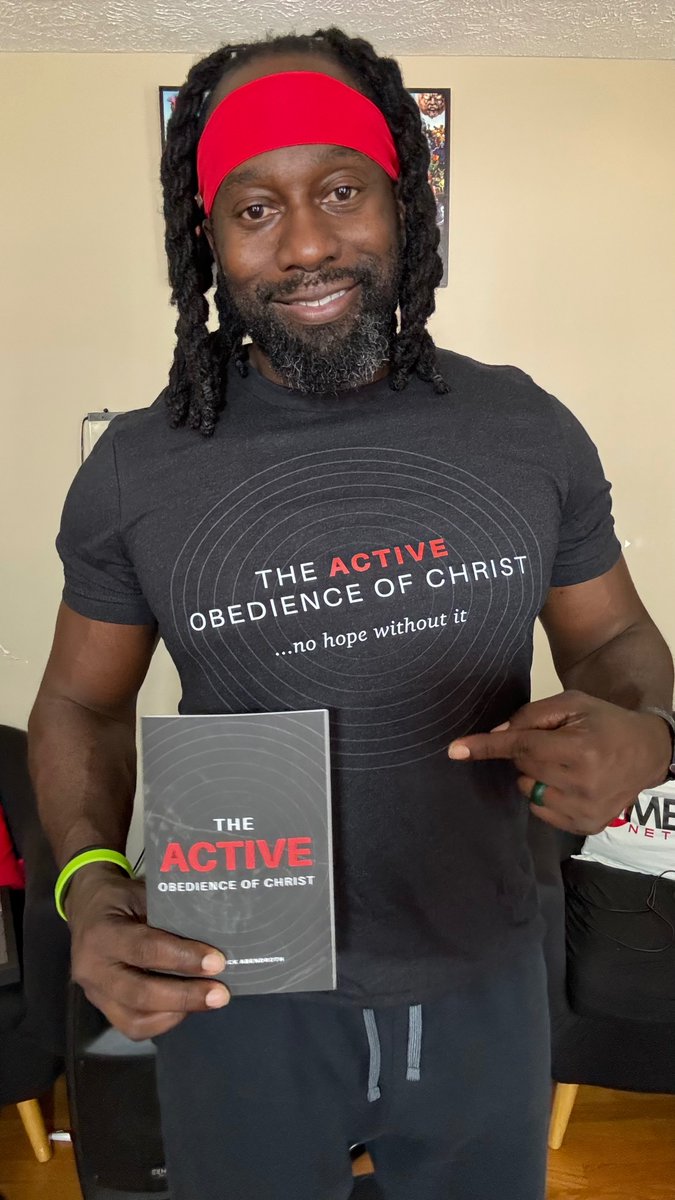
Opponents of the active obedience of Christ are purposefully or inadvertently opponents of the gospel. No hope without it!
Patrick Abendroth tweet media
English
11
2
74
5.8K
Rblv73
Rblv73@Rblv73·
Is @WesleyLHuff more closely aligned with Mormonism? Increasingly making cases that the Church Christ established in 33AD underwent a “blackout “ for 1,500 years. “This was defended as scripture vigorously by Catholic apologists following Trent". Historical records clearly show defenses of the deuterocanonical books as scripture predating Trent by over 1,000 yearsaffirmed in councils like Rome (382 CE), Hippo (393 CE), and Carthage (397 CE), and defended by figures like Augustine. The "following Trent" phrasing implies a post-1546 origin for such defenses, which is inaccurate. Judge for yourself.
English
47
13
166
10.7K
Tony Reinke
Tony Reinke@TonyReinke·
Bullinger still speaks.
Tony Reinke tweet media
English
2
0
12
750
Patrick Abendroth
Patrick Abendroth@PatAbendroth·
"Regardless of the name, early modern Reformed theologians agreed regarding the existence of the covenant of works" Fesko, Adam and the Covenant of Works
English
1
2
19
1.4K
Matt Marino
Matt Marino@RefClassicalist·
Calvin on the active obedience of Christ. When it is asked then how Christ, by abolishing sin, removed the enmity between God and us, and purchased a righteousness which made him favourable and kind to us, it may be answered generally, that he accomplished this by the whole course of his obedience. This is proved by the testimony of Paul, “As by one man’s disobedience many were made sinners, so by the obedience of one shall many be made righteous,” (Rom. 5:19). And indeed he elsewhere extends the ground of pardon which exempts from the curse of the law to the whole life of Christ, “When the fulness of the time was come, God sent forth his Son, made of a woman, made under the law, to redeem them that were under the law,” (Gal. 4:4, 5). Thus even at his baptism he declared that a part of righteousness was fulfilled by his yielding obedience to the command of the Father. In short, from the moment when he assumed the form of a servant, he began, in order to redeem us, to pay the price of deliverance. Institutes, II.16.5
English
3
0
10
932
Damian Domke
Damian Domke@Cathedralulus·
@mattjhedges11 stressing negotiation, contingency, and internal diversity rather than straightforward Curial control, also in the debates on justification.
English
0
0
2
32
Damian Domke
Damian Domke@Cathedralulus·
@mattjhedges11 Interesting, and Rückert is still worth reading for how sharply he captures the tensions around Trent, the role of the legates (del Monte etc.), and the imperial context. Modern scholarship (Jedin, O’Malley, Firpo) has nuanced this picture, though,
English
1
0
2
70
Matt Hedges
Matt Hedges@mattjhedges11·
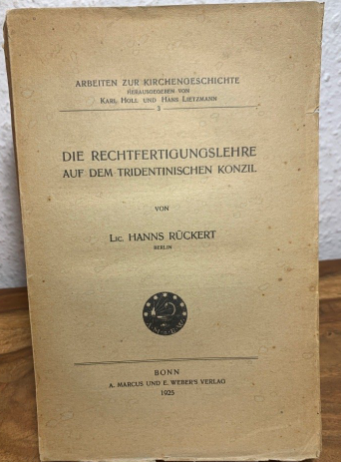
This is a very interesting 1920s monograph which I recently ran through AI so I could read it. It argues that the Council of Trent was controlled and manipulated throughout by the Roman Curia, and deliberately went against the wishes of the Holy Roman Empire at the time. It also records instances in which the Papal legates (such as Cardinal del Monte, who would later become pope himself) obstinately opposed the rest of the council, and tried to dissolve the synod altogether or constantly relocate it to Italy so that it would be under further papal control.
Matt Hedges tweet media
English
2
0
10
416
Matey
Matey@MateyYanakiev·
@dgh5391 Doesn’t Philippians 3:8–9 explicitly deny that the righteousness imputed comes from obedience to the Law, but is rather a separate righteousness from God?
English
3
0
5
214
Duff
Duff@dgh5391·
"The righteousness by which we are justified and stand righteous before God, is not our own righteousness, but the righteousness of Christ, Phil. 3:8,9; 2 Cor. 5:21, not the righteousness of Christ as God the second Person in Trinity, but as Mediator, God-man." —Edward Leigh
Duff@dgh5391

The exegesis of Philippians 3:8-9 demonstrates the doctrine of the active obedience of Christ being imputed to all believers in justification. The ST doctrine is derived from exegesis (see also, 2LCF 11:1).

English
3
1
12
2.7K
Damian Domke
Damian Domke@Cathedralulus·
@dgh5391 , is not in us, and will never be in us; otherwise, we too would have felt the pains that he obediently endured. For according to Romans 5, the same is understood: we are justified by his blood, as well as by the death of the Son and by the obedience of the One." Co. Phil.,p. 43.
English
0
0
6
32
Damian Domke
Damian Domke@Cathedralulus·
@dgh5391 Olevianus on that passage: "So what is the righteousness of God? It is perfect obedience, which was not accomplished by us in our flesh, but was offered in the flesh and soul of the Son of God, even unto death, even unto death on the cross. This thing (I say) has never been in us
English
1
0
6
74
Duff
Duff@dgh5391·
The exegesis of Philippians 3:8-9 demonstrates the doctrine of the active obedience of Christ being imputed to all believers in justification. The ST doctrine is derived from exegesis (see also, 2LCF 11:1).
Jesse Randolph@jesserandolph_

Why the supposed need for a “systematic category” to replace IAOC? Why not instead rely upon the contents of what God has actually revealed in His perfect and sufficient Word? Exegesis informs, drives, and shapes any sound systematic theology. Not the other way around.

English
10
0
13
4.4K
Damian Domke
Damian Domke@Cathedralulus·
@PatAbendroth Does the gospel now only consist in the remission of sins? I thought that's not enough? I am confused.
English
0
0
1
29
Patrick Abendroth
Patrick Abendroth@PatAbendroth·
Thankful for the clarity of Trent...even though they officially damn the gospel.
Patrick Abendroth tweet media
English
3
1
23
1.2K
Lucius Cæcilius
Lucius Cæcilius@F_Lactantius·
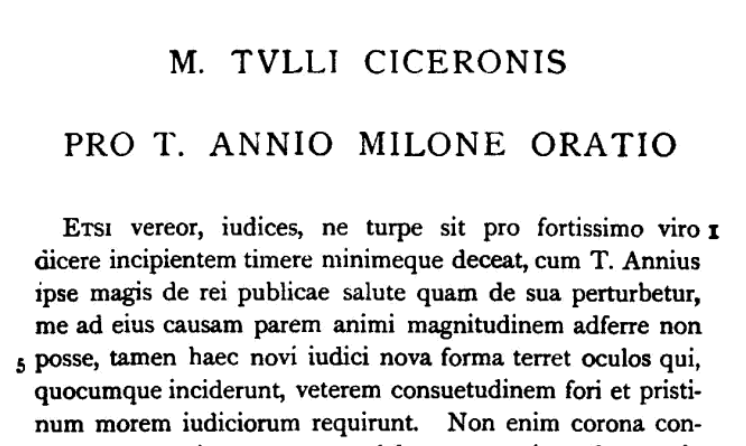
Pleased to be producing a new translation of the Pro Milone, to be published later this year. (Etsi vereor ne hoc vulgando nomen recludam meum!)
Lucius Cæcilius tweet media
English
1
0
6
138
Damian Domke
Damian Domke@Cathedralulus·
@DrInquisitivus Good point. One mistake in the 6-forms-of-unityism is that they think Westminster and 3FU are almost identical. And then you read back Westminster into 3FU. Which is a mistake. Two different but related Reformed traditions.
English
0
0
2
34
Doctor Inquisitivus
Doctor Inquisitivus@DrInquisitivus·
Dordt is compatible with HU (see the British divines, Bremen, etc.), and Westminster is disputed. What do you do, then, when 3FU and the Westminster standards are not equally extensive in what they (arguably) rule out? Or would you dispute the Dordt point?
English
1
0
5
205
Damian Domke
Damian Domke@Cathedralulus·
@SteveCooleySr @jesserandolph_ Ursinus, Olevianus, Gataker, Piscator, Vines, Twisse, Polanus (until 1597), Pareus, Martin Bucer (although he predates the concept). Calvin is ambigous. And many more.
English
0
0
0
20
Steve Cooley
Steve Cooley@SteveCooleySr·
@jesserandolph_ Who are some of the great theologians who held your view on the non-imputation of Christ’s righteousness to believers? Or, will I have to wait for the footnotes? Maybe just a couple of your faves?
English
1
0
0
71
Jesse Randolph
Jesse Randolph@jesserandolph_·
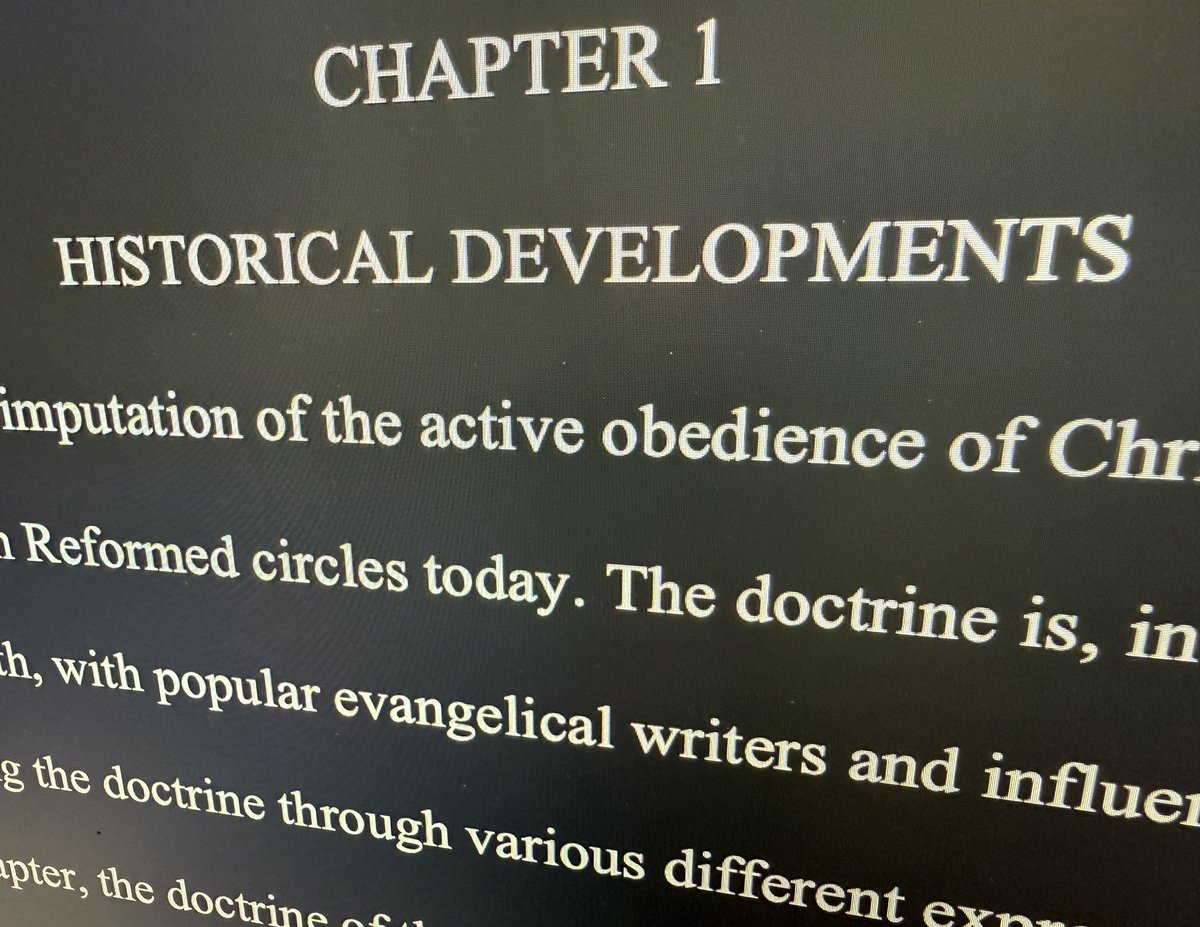
This week has been simultaneously joyous and laborious, as I’ve simultaneously worn the hats of both the shepherd and the scholar. It’s been a week of digging through arcane resources and proofreading footnotes, but also a week of wading through a variety of local church matters. A blessed week, and an exhausting week, and by God’s good grace, Chapter 1 of the Thesis (currently clocking in at 39 pages, with 114 footnotes) is done! Praise the Lord, and thank you for your prayers! On to Chapter 2 next week! 📖🤓
Jesse Randolph tweet media
English
2
0
11
612
Damian Domke
Damian Domke@Cathedralulus·
I started reading the Syriac Church Fathers and realise I chose the wrong subject of study. They are so fascinating.
English
1
0
3
96
Damian Domke retweetledi
Alastair Roberts
Alastair Roberts@zugzwanged·
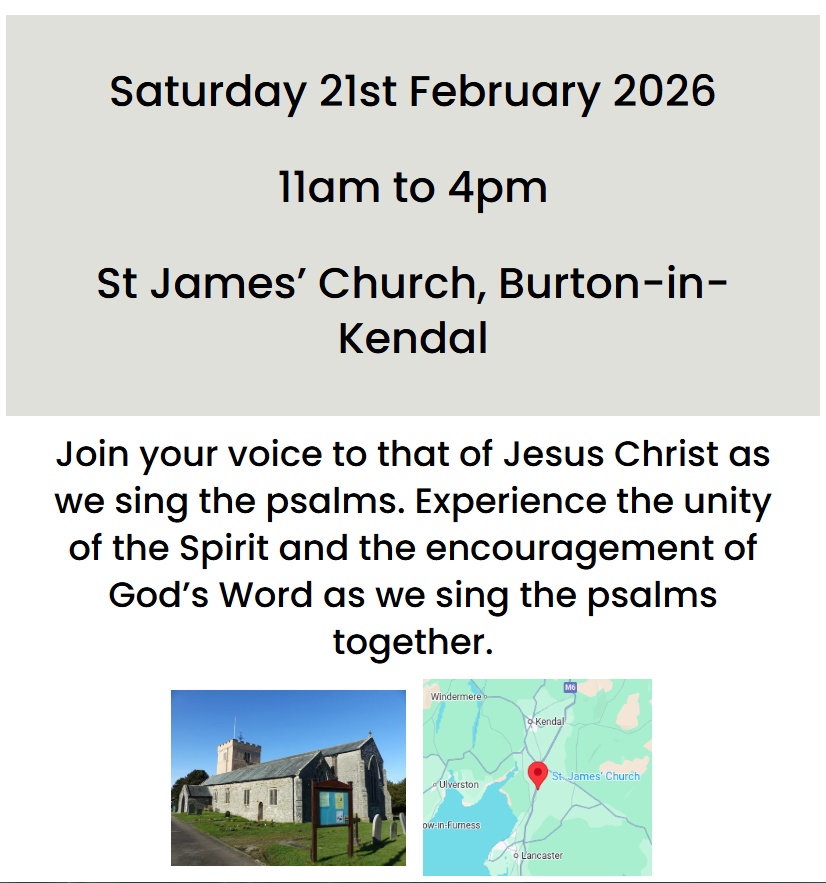
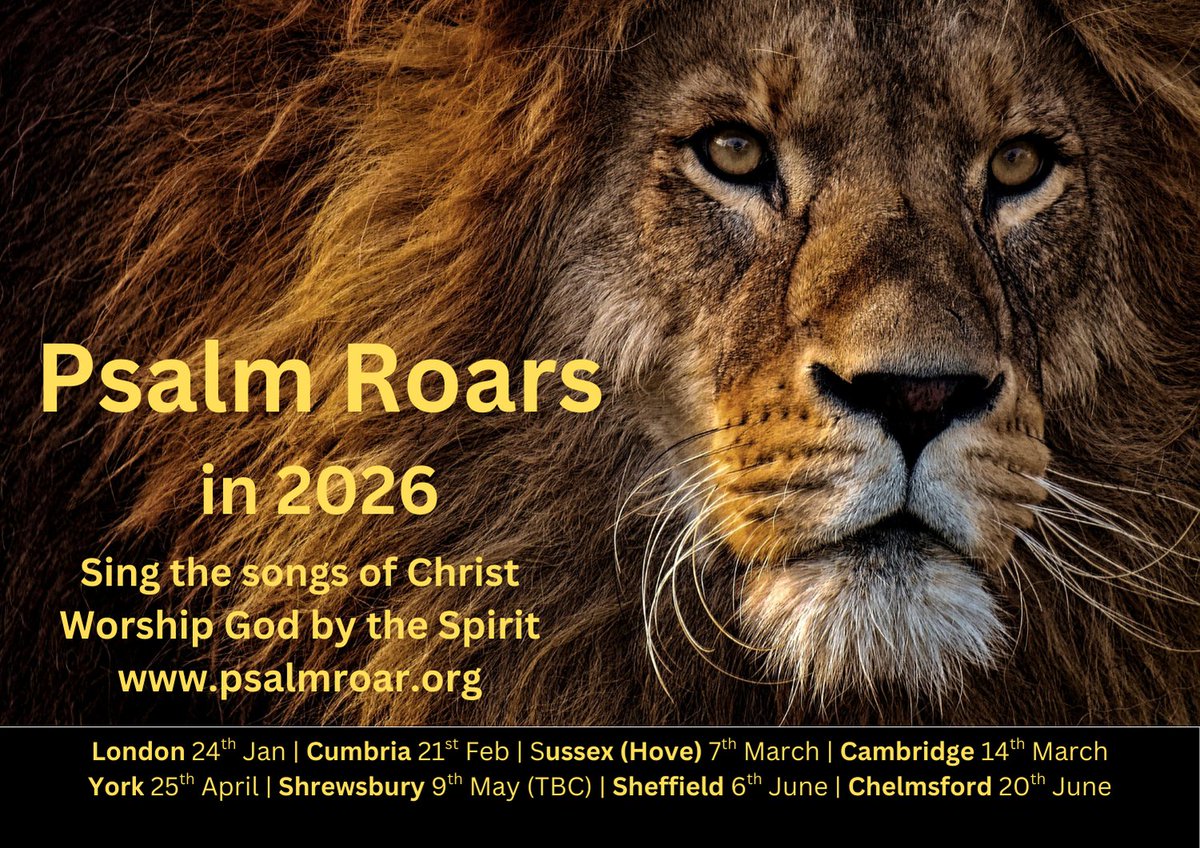
Anyone else planning to attend the Cumbria Psalm Roar, 21st February? I would love to see some of you there!
Alastair Roberts tweet mediaAlastair Roberts tweet media
English
2
4
6
2K