
Catherine
60.8K posts


Catherine
@Catheronius
Perpetual talker, stressed out wine drinker, in-car singer & lifelong bookworm. Critical thinking and good manners always. God-free zone! (Not a work account!)
North West, England Katılım Temmuz 2009
1K Takip Edilen1.1K Takipçiler
Catherine retweetledi



Behold the beautiful African Fish Eagle
Known for its striking white head, dark body, and powerful yellow beak, this iconic bird of prey is found near lakes and rivers across sub-Saharan Africa. It mainly hunts fish and is famous for its loud, distinctive call.


English

Catherine retweetledi

In 1858, a young doctor named John Langdon Down accepted a job that no ambitious physician wanted.
He was being sent to run the Royal Earlswood Asylum in Surrey — a place where people with intellectual disabilities were warehoused rather than cared for. The floors were filthy. The staff was brutal. Physical punishment was routine. The residents were dressed in rags, fed poorly, and treated as problems to be contained rather than people to be known.
Down was 30 years old. He could have managed the place from a distance, filed his reports, and moved on to a more prestigious posting.
Instead, he walked the wards every day. He learned his patients' names. And he saw something that apparently no one else had bothered to look for — people.
His first acts weren't medical. He fired abusive staff. He banned physical punishment entirely. He ordered proper food, clean clothes, and fresh air. Then he told his colleagues something that would have sounded almost absurd in 1858: that a doctor's primary duty was to be a friend to their patient, and that their happiness mattered as much as their health.
After years of careful, meticulous observation, Down published a landmark paper in 1866 describing a specific pattern of physical and developmental characteristics he had identified in some of his patients. His original terminology reflected the racial theories of his era and was later rightfully abandoned. But his clinical observations were so precise and so thorough that nearly a century later, the medical community honored him by naming the condition he had described. We know it today as Down syndrome.
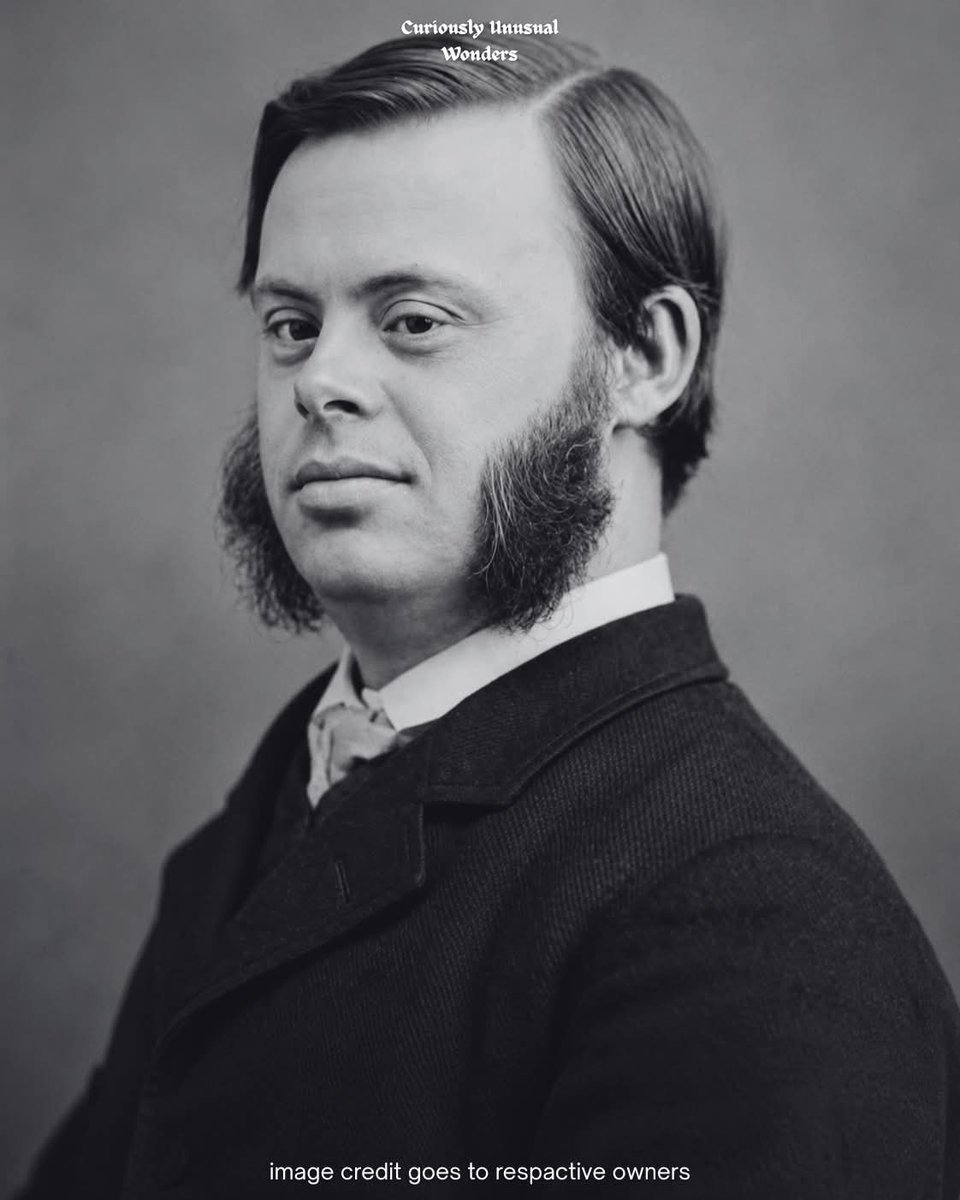
He also began photographing his patients — not as clinical specimens, but as individuals. He dressed them in their finest clothes. He gave them dignity in a frame. In an age when such people were deliberately hidden from society, that simple act of portraiture was quietly radical.
By 1868, Down had grown frustrated with the asylum's governors. When they refused to fund an exhibition of artwork created by the residents, he made a decision that would define the rest of his life. He resigned.
He and his wife Mary purchased a large home in Teddington and turned it into something the world had never quite seen before. They called it Normansfield — and it was not a hospital. It was a home.
Residents grew food in gardens Down planted himself. They learned trades. They were taught to read and write whenever possible. They were given structure, fresh air, and the revolutionary expectation that they were capable of growth.
Then, in 1879, Down built something that still stops people when they first hear about it.
A theater.
A full, proper theater — with a stage, real seating, and proper acoustics — on the grounds of a care facility for people society had written off as uneducable.
Why? Because Down believed that art, music, and performance weren't luxuries. They were necessities. They were part of what it meant to be human — and his patients, he insisted, were fully human.
Every week, residents took that stage. They performed plays. They sang. They stood in the spotlight and received applause.
For many of them, it was the first time anyone had ever clapped for them.
Normansfield flourished for over a century. Families who had been told their children had no future began seeing something they had nearly stopped believing in — progress, joy, and a life worth living. By 1876, the community was home to around 160 residents.
When Down died in 1896, his sons carried the work forward. Normansfield remained a home until 1997.
Today, the site houses the Langdon Down Museum of Learning Disability and serves as headquarters for the Down's Syndrome Association in the United Kingdom.
The theater he built in 1879 still stands. Beautifully restored. Still hosting performances more than 140 years later.
John Langdon Down advanced medical knowledge — but that may not have been his greatest contribution. What he really did was challenge a foundational assumption of his age: that some lives were worth less than others.
He proved, through daily practice and stubborn conviction, that every person has something to offer — and that the right environment, offered with patience and genuine respect, can reveal it.
The world he was born into locked its most vulnerable people away in darkness.
The world he left behind had, in some small but permanent way, begun to let the light in.
English
Catherine retweetledi

🇬🇧 Most British schoolchildren are taught about Magna Carta.
They are taught it was sealed in twelve fifteen at Runnymede.
They are taught it is the foundation of English liberty.
They are taught it is one of the most important documents in human history.
They are not taught what came next.
They are not taught about the eighty years between twelve fifteen and twelve ninety-five when ordinary Englishmen forced three successive kings to write down, for the first time in any kingdom in medieval Europe, what English law was, what English liberty was, and how an English king must govern.
They are not taught about the Charter of the Forest, which restored the right to graze, gather firewood, and live on common land, and which remained in force for seven hundred and fifty-four years.
They are not taught about the Provisions of Oxford in twelve fifty-eight, often called England's first written constitution, which placed the king under a council of fifteen and required Parliament to meet three times a year.
They are not taught about the Provisions of Westminster in twelve fifty-nine, which subjected the barons themselves to the same law they had forced upon the king.
They are not taught about Simon de Montfort, an earl born in France who died for England, who summoned the first Parliament in English history to include ordinary commoners alongside the great lords.
They are not taught about the Statute of Marlborough in twelve sixty-seven, which is the oldest piece of statute law in the United Kingdom still in force today. ⚖️
Seven hundred and fifty-nine years old.
If you've ever taken a debt to court in England, you've used it. 🏠 If you've ever rented a home, you've been protected by it. 👑 If a creditor can't lawfully drag your possessions into the street to settle what you owe, that's because of a law signed seven hundred and fifty-nine years ago.
They are not taught about the Model Parliament of twelve ninety-five, summoned by Edward the First, which became the shape of every English Parliament since.
Eighty years. Three successive kings. The first written constitution in any kingdom in medieval Europe.
It was not given to them. It was not handed down from God or king or Pope.
✍️ It was written. By Englishmen. For England.
🇬🇧 The British write their own history. They always have.
This one needed more than a thread. The full story is in our video, watch it below 👇
Help us remember who we are. Help us remember every British achievement. 👇🙏
👉 proudofus.co.uk/support 👈
Be part of us. ☝️🇬🇧
Be Proud Of Us. 🙏🇬🇧
English

My husband bought two KitKats one day.
One was for him and one was for me.
I ate mine immediately because that is what happens when you give me chocolate and expect patience.
He put his in the fridge and then left the next day for a two-week work trip.
That KitKat sat in the fridge the entire time he was gone. Every time I opened the refrigerator, it was there staring at me. I held out for several days because I am a supportive wife and I respect personal property.
But sometime during week two, my self-control gave up.
I ate it.
I fully intended to replace it before he got home, but of course I forgot. So when he returned from his trip, he opened the fridge, looked around for two seconds, and.........
English


@4thOfJuly365 If we were in the UK, this would smell of Insette hair mousse, Anais Anais perfume and Malibu!
English

If this picture was a scratch-n-sniff sticker, what do you think it would smell like?

English
If I believed in heaven, it would be my grandma. She was such a very sweet and special person ♥️. If I could find a second person it would be my husband’s father, who died shortly before I met my husband. My father in law was only 42 when he passed away very suddenly, and I really wish I’d got to know him.
English

@MbarkCherguia She has thicker legs than most models, that’s all. A lot of women have this body shape, she’s not fat! A beautiful looking woman, most of us wouldn’t be able to compete!
English

Catherine retweetledi

Catherine retweetledi

Catherine retweetledi


@PaulMarcoe Nuclear war, piranhas, spontaneous human combustion!
English

4 things I think most GenX was afraid of.
Acid Rain
Quick sand
Bermuda Triangle
Amnesia
What else?
English
Catherine retweetledi
What we can accomplish when we work together will inspire generations.

English
I am blown away by the achievements of the Artemis crew and the team that made this mission happen. Human beings have evolved and grown through pushing boundaries and seeking out frontiers to cross. Without that spirit of adventure, where would we be? These are today’s pioneers, explorers and innovators. Incredible ♥️
English
Catherine retweetledi

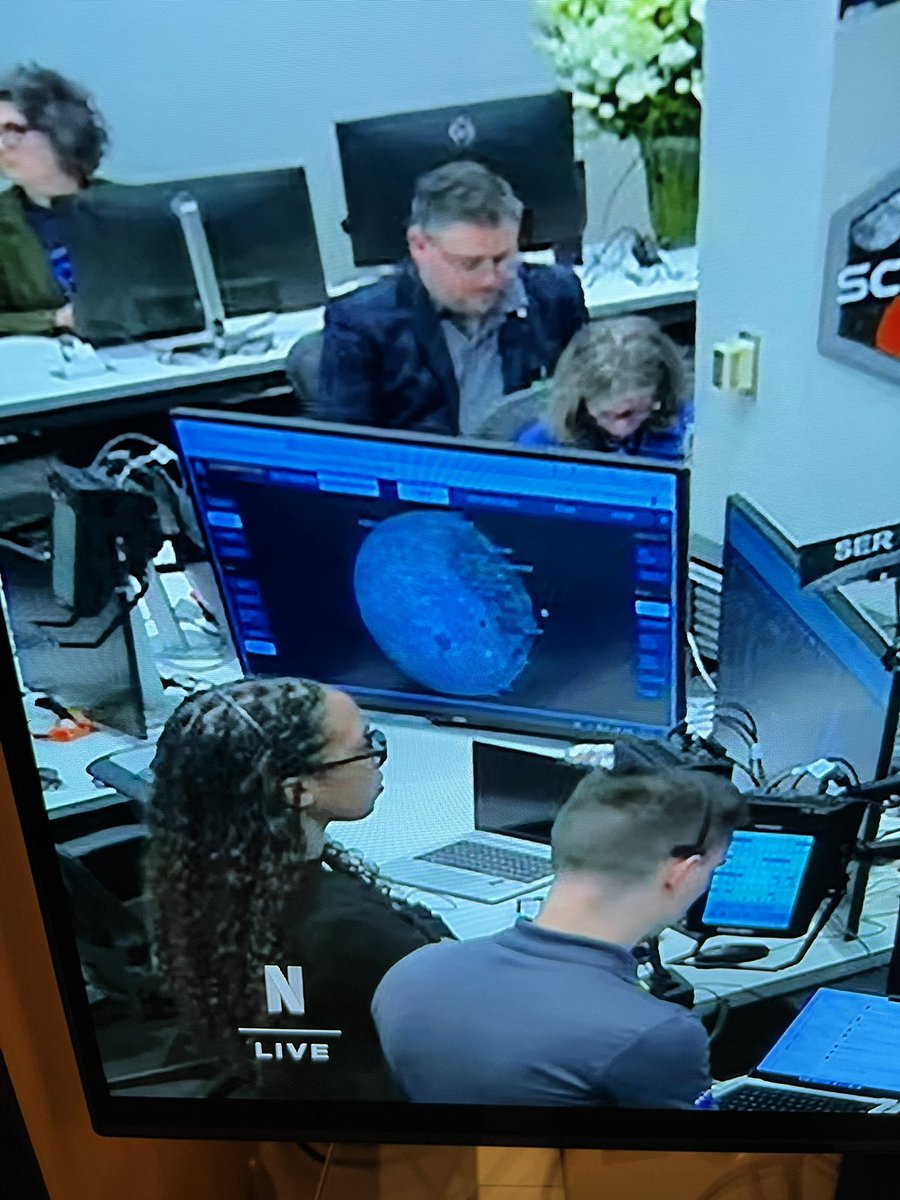
Congratulations to the crew of #ArtemisII on going beyond where no human has gone before! 👏🏻👏🏻👏🏻👏🏻
English