Chag Lowry

766 posts

Chag Lowry banner
Chag Lowry

Chag Lowry

@ChagLowry

Indigenous comic book creator

Katılım Ocak 2021
305 Takip Edilen195 Takipçiler
Sabitlenmiş Tweet
Chag Lowry
Chag Lowry@ChagLowry·
A place where my stories come from...
Chag Lowry tweet media
English
1
1
19
0
Chag Lowry retweetledi
Star Wars Holocron
Star Wars Holocron@sw_holocron·
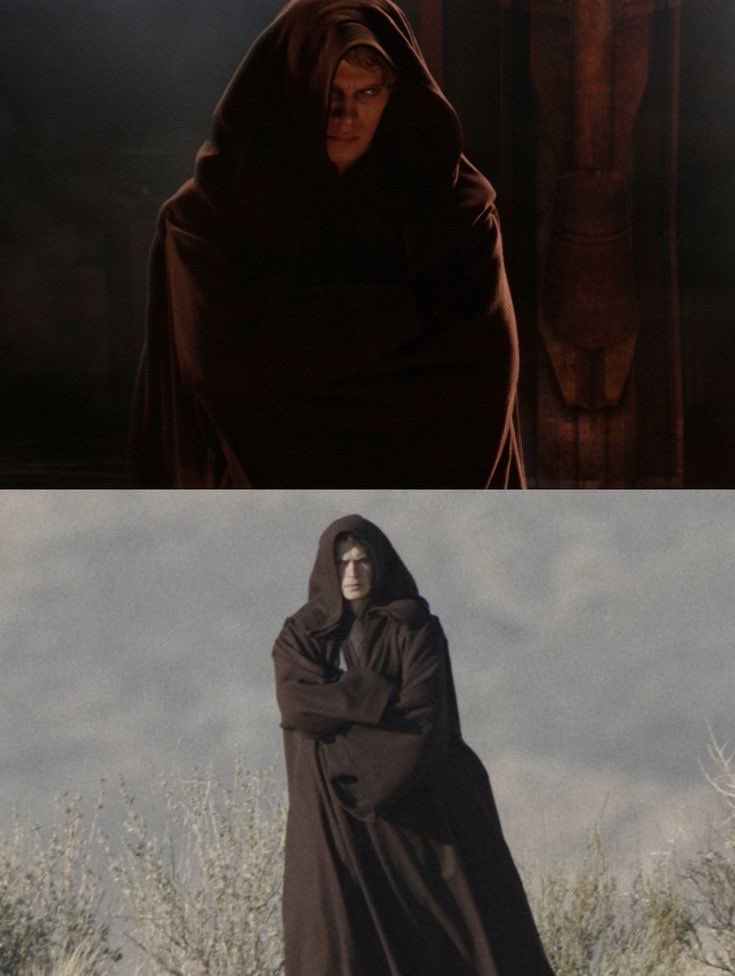
some things never change
Star Wars Holocron tweet media
English
3
74
882
17.5K
Chag Lowry
Chag Lowry@ChagLowry·
@WWIImuseum My great uncle Loenard Lowry was an officer in the Red Arrow during the war.
English
0
0
0
14
National WWII Museum
National WWII Museum@WWIImuseum·
One of the 32nd Infantry Division's key engagements in the Pacific theater was along the Villa Verde Trail in 1945. Over 119 days, the "Red Arrow Division" earned 28 Silver Stars, 20 Distinguished Service Crosses, and four Medals of Honor. Read more here: bit.ly/41RfxXQ
National WWII Museum tweet media
English
1
5
21
1.3K
Chag Lowry retweetledi
Archaeo - Histories
Archaeo - Histories@archeohistories·
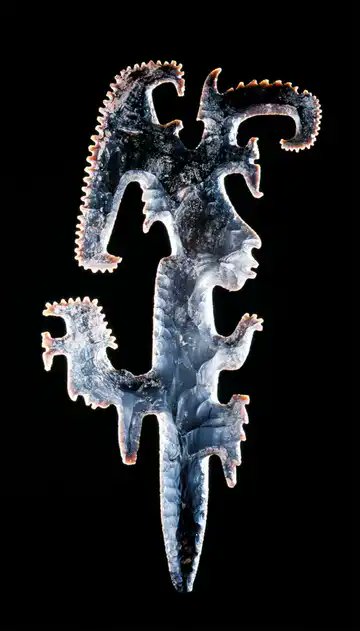
An Obsidian Axe (600-900 AD), perhaps represents an ajaw. In Palenque, such objects were deposited in the foundations of buildings or placed in tombs. An eccentric flint, an elite chipped artifact of an often irregular ('eccentric') shape produced by the Classic Maya civilization of ancient  Mesoamerica. Although generally referred to as "flints", they were typically fashioned from chert, chalcedony and  obsidian.religion Eccentric flints are among finest lithic artifacts produced by ancient Maya. They were very technically challenging to produce, requiring considerable skill on the part of the artisan. Large obsidian eccentrics can measure over 30cm in length. Their actual form varies considerably but they generally depict human, animal and geometric forms associated with Maya religion. Most examples of eccentric flints have been recovered from caches  interred under Maya monuments and buildings. Thus, a cache under the altar of Copan's stela M, at foot of Hieroglyphic Stairway, rendered three identical eccentric flints, each shaped like a human figure extending into a tang and evincing six human head outgrowths. Nine eccentric flints with human figures found in an early Copan Temple room (Temple 16, Rosalila phase), and originally wrapped in a deep blue cloth, show similar tangs. The presence of these tangs suggests that the examples concerned may originally have been set into a shaft or handle, possibly as head of a sceptre or as blade of an axe. Some flint eccentrics were unsuitable for wearing or carrying and they may have been sculpted specifically to be buried as an offering. Eccentric flints show a great variety of forms, such as crescents, crosses, snakes, and scorpions. The largest and most elaborate ones display multiple human heads, with minor heads sometimes branching off from larger ones. Human face is youthful and crafted as a simple outline with emphasis on sloping forehead and the lips. An element more or less resembling a smoking torch, and symbolizing lightning, is often set in the forehead. For this reason, these human faces are commonly regarded as transformations of the lightning deity, god K (K'awiil). More specifically, they appear to represent the Tonsured Maize God as a lightning deity, perhaps in a protective role. Eccentric flints representing the lightning deity himself are also found, though with less frequency, while some eccentric flints combine both human and God K faces. Most famous eccentric flint is perhaps one interpreted by Linda Schele and her co-authors as a 'crocodile canoe' transporting anthropomorphic soul of the dead as its 'passenger'. As a background to eccentric flints showing deities associated with lightning, it is noteworthy that among the traditional Maya and in Mesoamerica generally, obsidian is considered "fossilized lightning", sometimes believed to have split off from the lightning deities' axes.  The lightning deity warrants agricultural fertility. As to the 'lightnings' with a human aspect, certain powerful individuals are believed to possess lightning energies and to have the lightning bolt for a transformation. Eccentric flints were first categorised by western archaeologists in Belize in the first half of 20th Century, when they were identified as ceremonial in nature. Objects are generally found in the eastern portion of the central Maya area, in Petén Department of Guatemala and in neighbouring Belize, with few in west and Yucatán Peninsula. Very few have been recovered from the Guatemalan Highlands and it is unlikely they were ever manufactured there. Small obsidian eccentrics have been found at great metropolis of  Teotihuacan in Valley of Mexico. MET Museum #archaeohistories
Archaeo - Histories tweet media
English
4
49
207
13.7K
Chag Lowry retweetledi
Governor Gavin Newsom
Governor Gavin Newsom@CAgovernor·
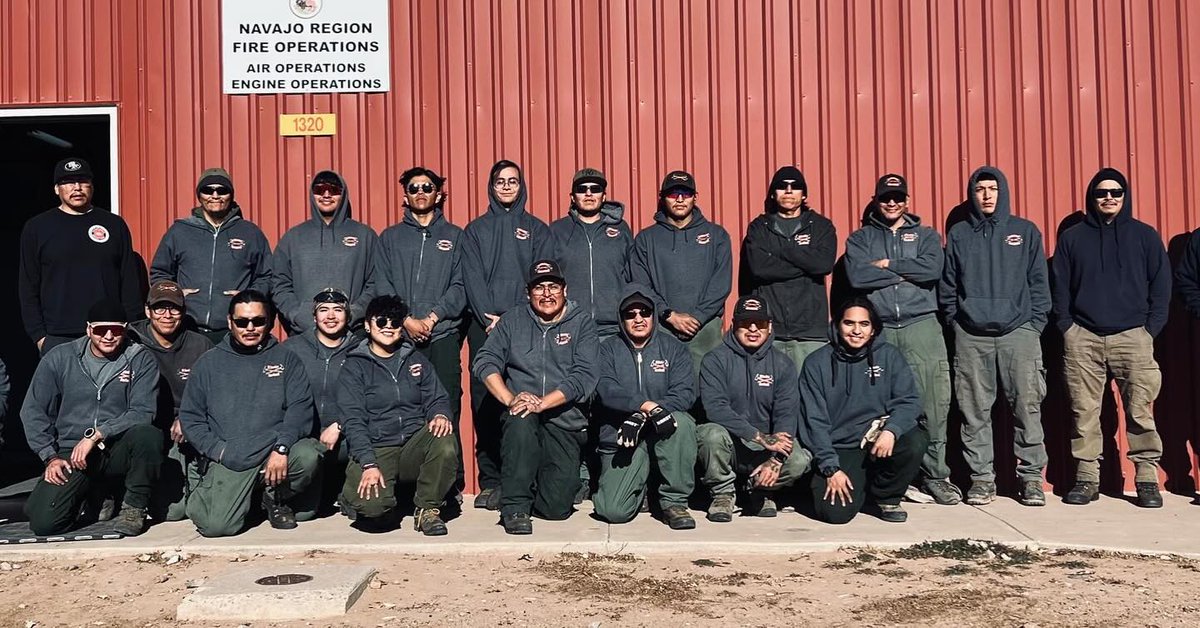
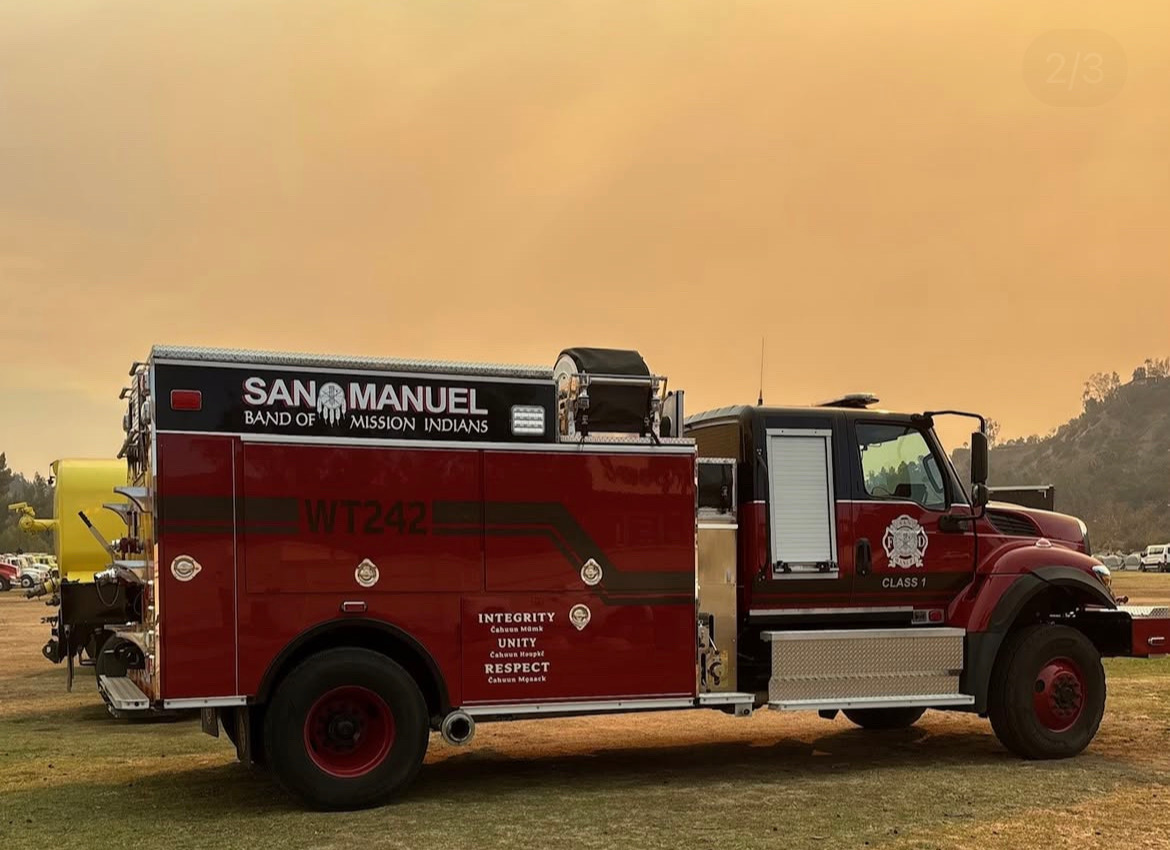
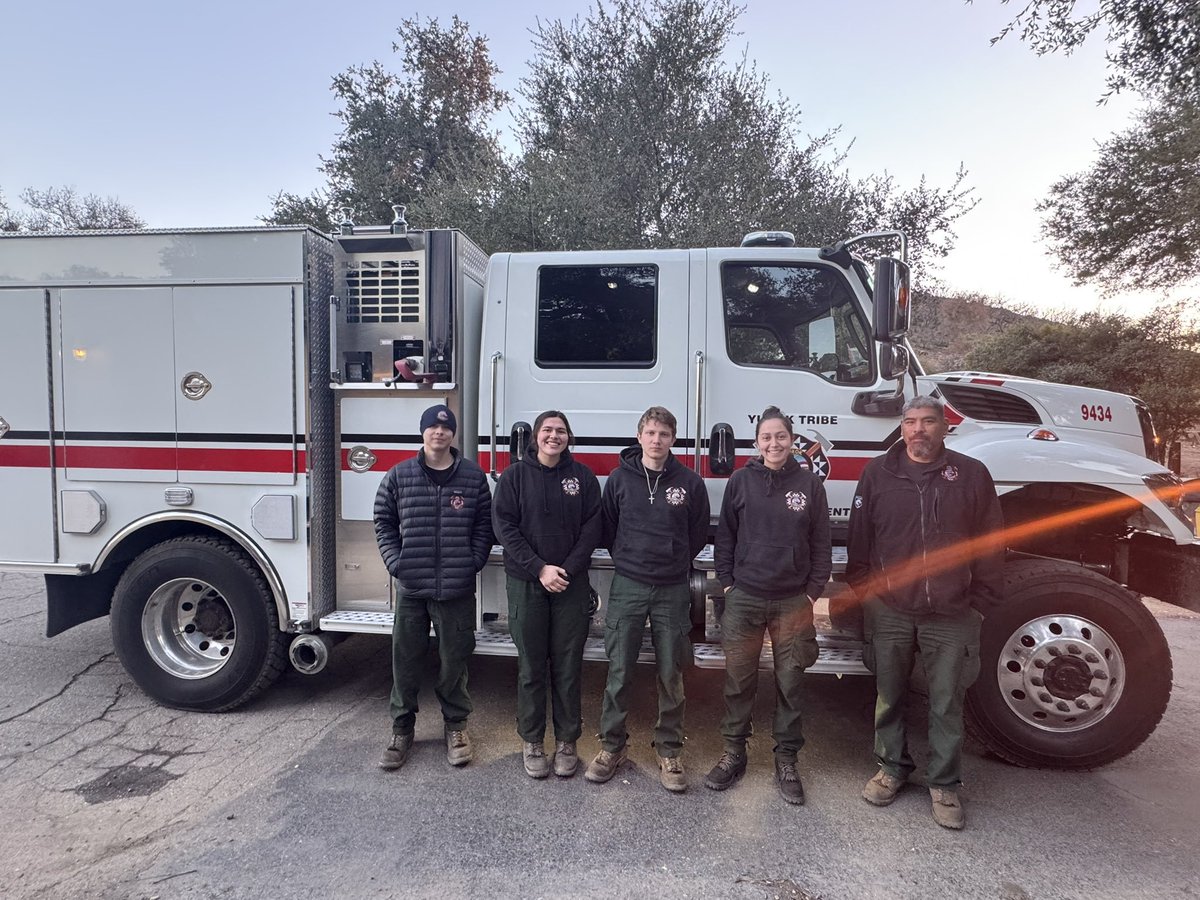
California is immensely grateful to the many tribes from across the state and around the country who are part of the combined effort battling the wildfires in Southern California. Emergency officials are working jointly with tribal partners throughout the ongoing mobilization.
Governor Gavin Newsom tweet mediaGovernor Gavin Newsom tweet mediaGovernor Gavin Newsom tweet mediaGovernor Gavin Newsom tweet media
Los Angeles, CA 🇺🇸 English
309
534
2.4K
48.2K
Chag Lowry retweetledi
PBS News
PBS News@NewsHour·
President Joe Biden signed a proclamation to establish two new national monuments in California, in part to honor two tribes on Tuesday. to.pbs.org/40fEbk8
English
2
18
67
7.4K
Classic G.I. Joe 🇺🇸
Classic G.I. Joe 🇺🇸@ClassicGIJoe·
How many of the Joes pictured here did you have - as a kid, and now?
Classic G.I. Joe 🇺🇸 tweet media
English
170
20
606
19.8K
Chag Lowry retweetledi
Archaeo - Histories
Archaeo - Histories@archeohistories·
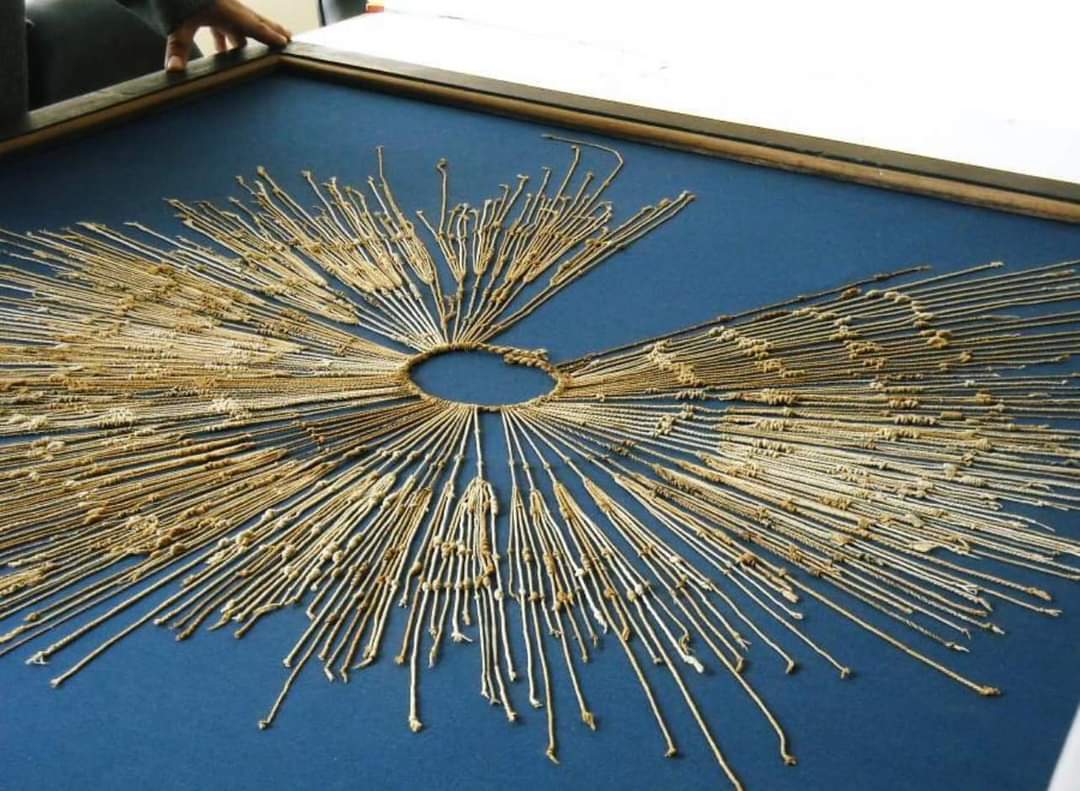
The Inca Quipu, sometimes spelled “khipu,” was a unique and sophisticated system of record-keeping and communication used by the Inca civilization in pre-Columbian South America. It consisted of intricately knotted cords made from llama or alpaca wool, with various colors and knot types used to convey different types of information. While the exact decipherment of the Quipu remains a subject of ongoing research, it is believed that they encoded not only numerical data but also textual and even narrative information. This complex system of knots and cords played a crucial role in managing the vast Inca Empire, allowing for efficient communication across long distances and aiding in the administration of resources, taxes, and other aspects of governance. #archaeohistories
Archaeo - Histories tweet media
English
0
31
134
16K
Chag Lowry retweetledi
Archaeo - Histories
Archaeo - Histories@archeohistories·
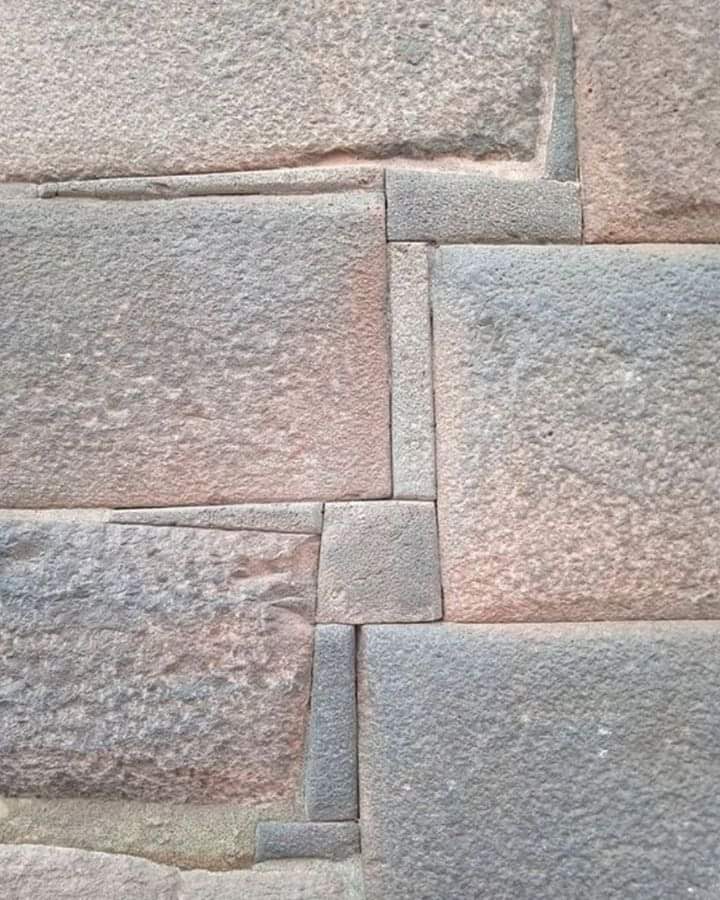
Inca stone walls have long fascinated archaeologists and visitors alike. Made of irregularly shaped stones that interlock so seamlessly that even a razor blade can't be inserted between them, these walls have puzzled researchers for centuries. How did a culture that lacked iron tools build such impressive and intricate walls? What construction methods did the Inca use? A new explanation has emerged that challenges long-held beliefs. According to this hypothesis, Inca used a reddish glittery mud, composed mainly of quartz and feldspar, to perfect their stone masonry. This mud allowed the builders to create perfectly jointed stones of different shapes and sizes. The high quartz and feldspar content in the stone structures of Peru supports this theory. The mystery of the Inca stone walls may finally be unraveled, revealing a fascinating story of ancient engineering and innovation. In a relatively short time span, perhaps 150 years, Incas were able to develop complex architectural knowledge and skills that allowed them to construct perfect, enduring, magnificent buildings, temples, waterworks, and even entire cities and their enormous network of roads of thousands of miles, Qapac Ñan. Of course, their construction skills did not arise suddenly. Pre-Inca civilizations had been developing their own styles and methods of architecture and design for thousands of years before the advent of the Incas in 14th-15th Centuries CE. With the multiple skills of ancient architects and labor of thousands of workers and artisans, earlier Andean civilizations such as Moche of Peru’s North Coast, Wari of the central Andes, Tiahuanaco of Lake Titicaca and others built splendid temples and cities; one renowned example is the Moche’s huge city of Chan Chan. Later, conquering Inca’s gathered and refined all this knowledge, taking it to its highest expression in Cusco, with its splendid Coricancha or Temple of the Sun, its fine Inca palaces, huge perfect stone walls. At the nearby waterworks of Tipón, how Incas understood hydraulics so well to be able to move so much precious water along stone canals is one of the enduring mysteries. Among the most impressive is the grandeur of Sacsayhuaman, grand Inca architectural complex situated on the mountain above Cusco’s downtown. Sacsayhuamanis often imagined as a fortress, but it was more likely a principal Inca ceremonial center where most important festivities, such as Inti Raymi, winter solstice Sun Celebration, took place in June (and still does today). The walls or ramparts are built of stones so enormous that they defy imagination. How these monoliths were transported many kilometers to the site (without use of wheels or heavy equipment) and fitted together remains a mystery. Some of the stones are over 15ft tall and weigh many tons. Inca architecture is also characterized by its perfection. How were such large stone blocks made and transported? How is it they fit so perfectly together? For example, the large curved wall outside of the Coricancha keeps one gazing in wonder at its perfection. Downtown, Hatunrumiyoc Street, with its massive wall and famous 12-angled stone, is another sight that can’t be missed. In Sacred Valley, the complex of temples and terraces at Pisac, high above on a ridge top, features some of finest Inca architecture, along with breathtaking views. Ollantaytambo, one of last living Inca towns, is filled with flawless stone walls, and its large fortress and waterworks are very impressive. At certain places, you feel like you’ve just stepped back in time. And then there is Machu Picchu. The large, complex ancient Inca city, an official Ancient Wonder of the World, is filled with terraces, temples, roads, and remained hidden until its “discovery” by the outside world in 1912. How so much intricate architectural beauty, created in such a gorgeous setting, stayed hidden from the “civilized” world for so long is a mystery in itself. #archaeohistories
Archaeo - Histories tweet media
English
17
159
863
40K
Chag Lowry retweetledi
Star Wars Holocron
Star Wars Holocron@sw_holocron·
On this day 4 years ago, it was announced that Hayden Christensen would return to Star Wars as Darth Vader in Obi-Wan Kenobi. This was labeled as “The Rematch of the Century.”
English
22
45
578
82.6K
Chag Lowry retweetledi
PBS News
PBS News@NewsHour·
Years after COVID-19 disrupted American schools, nearly every state is still struggling with attendance. But attendance has been worse for Native American students — a disparity that existed before the pandemic and has since grown, according to data collected by The Associated Press. to.pbs.org/3CZNgWs
English
16
22
38
5.5K
Chag Lowry retweetledi
Katie Halper
Katie Halper@kthalps·
The indifference towards, acceptance, and even celebration of what is currently being done to the people of Gaza is what Holocaust education was supposed to prevent.
English
214
4K
13.2K
581K
Chag Lowry retweetledi
Sen. Bernie Sanders
Sen. Bernie Sanders@SenSanders·
Today, with colleagues, I introduced legislation to block arms sales to Israel. Sending more weapons to Netanyahu's extremist government is immoral & illegal: U.S. weapons are responsible for far too many civilian casualties in Gaza. We must end our complicity in this atrocity.
Sen. Bernie Sanders tweet mediaSen. Bernie Sanders tweet mediaSen. Bernie Sanders tweet media
English
3.7K
14.3K
62.3K
4.4M
Chag Lowry retweetledi
🇯🇲 Black Alchemist 💫 🪬
Never saw the media mention or even show the Black firefighters who lost their lives that day! #9/11 #23years 🕊️💔✊🏾
🇯🇲 Black Alchemist 💫 🪬 tweet media
English
690
13.7K
45.6K
6.3M
Chag Lowry retweetledi
PBS News
PBS News@NewsHour·
"If the Democratic Party had a family talk about the cognitive abilities of Joe Biden, then it's long past time that the Republican Party confront the same thing about Donald Trump because something's going on there," Kimberly Atkins Stohr says. to.pbs.org/3Zgm66x
English
91
394
1.2K
48.2K
Chag Lowry retweetledi
Archaeo - Histories
Archaeo - Histories@archeohistories·
Cueva de las Manos - The Cave of the Hands : An important site of prehistoric art situated in province of Santa Cruz in southern Argentina, Cueva de las Manos ("Cave of the Hands") is a rock shelter, or series of rock shelters, which is famous for (named after) its collages of  hand stencils and other handprints, which have been carbon-dated (from remains of bone-made pipes used to spray paint) to about 7300 BC. Actually, the handprints are not located in the cave, but just outside, on various rock shelves and the rock faces flanking the cave entrance. Shelter is quite small, measuring a mere 24m in depth, and between 10m and 2m in height. In addition to handprints, there is a quantity of cave painting - mainly hunting scenes and geometric  abstract signs, which is believed to have been created during approximate period 7300 BC - 700 CE, a period that post-dates  Paleolithic culture and spans Mesolithic and Neolithic eras, as well as Bronze and Iron Ages. Along with the cave art at Caverna da Pedra Pintada (Brazil) (9250 BC) and at Toquepala Caves (Peru) (9500 BC), Cueva de las Manos is considered to be one of most important prehistoric sites used by late Stone Age hunter-gatherer groups in South America, and to exemplify pictographs and other rock art from the period. In 1991 the shelter was designated a World Heritage Site by UNESCO. Cueva de las Manos lies in valley of Pinturas River, first discovered by a monk in 1941, cave was further explored by researcher Rex Gonzalez in 1949, although it wasn't until late 1960s that archeologists began to study site in detail. One researcher whose contribution was mentioned by UNESCO was Carlos J. Gradin. Human occupation of Cueva de las Manos has been radiocarbon dated to 7300 BC. Its first inhabitants were nomadic hunter-gatherers whose main prey was the guanaco. Their parietal art - classified as Stylistic Group A - consists predominantly of hunting scenes, although digital markings and hand stencils are also seen. Thus, oldest art at Cueva de las Manos dates back to the era of Mesolithic art in 8th Millennium BC. Two thousand years later, about 5,000 BC, a second style of Stone Age art emerged - classified as Stylistic Group B - dominated by hand stencils, with few if any hunting scenes. This style remained unchanged until the era of Neolithic art, about 1330 BC, when paintings became more stylized with the appearance of anthropomorphic and zoomorphic figures. A third and final cultural phase at Cueva de las Manos - known as Stylistic Group C - started about 500 CE. This is noted for its abstract geometric imagery executed in deep plum or black, along with minimalist stylized depictions of animals and humans, painted in bright red pigments. This dating differs from Aboriginal Rock Art in Australia, where stencilled images of hands are one of the earliest forms of Kimberley Rock Art, dating to the period 25,000-18,000 BC. Only after about 18,000 BC, do hunting scenes appear; example, Bradshaw Rock Paintings (15,500 BC). As stated, nearly all positive handprints and negative hand stencils at site are located on rock panels outside the cave. Most of the hands are silhouetted using red pigment (hematite or red ochre), although some of handprints are done in charcoal and manganese. Other colours present, like white and yellow, were derived from kaolin and natrojarosite. Majority of prints are left hands, and consistent in size with those of young teenagers, raising possibility that they may have been made as part of an initiation ceremony. In addition to its handprints,  Cueva de las Manos contains a wide variety of other parietal art, featuring hunting scenes with dynamic images of bolas-wielding humans as well as guanacos, rheas, felines and other animals - abstract signs with zigzag patterns, red dots and other geometric shapes, plus a range of stylized representations of humans and animals. #archaeohistories
ArchaeoHistories@histories_arch

The Hands at the Cuevas de las Manos, Argentina. Cueva de las Manos (Cave of Hands) is a cave named for the hundreds of paintings of hands stenciled on the rock walls. The art was created in several waves between 7300 BC and 700 AD, during the Archaic period of pre-Columbian South America. In ancient times, people accessed the Pinturas Canyon through ravines in the east and west, typically from higher elevations around 600-700m above sea level. When the site was occupied, Pinturas and Deseado Rivers drained into Atlantic Ocean and provided water for herds of guanacos, making the area attractive to Paleoindians. Projectile points, a bola stone fragment, side-scrapers, and fire pits have been found alongside the remains of guanaco, puma, fox, birds, and other small animals. The presence of obsidian near the cave which is not natural to the region implies a broad-ranging network of trade between peoples of the cave area and distant tribal groups. The earliest rock art at the site was created around 7300 BC. The site was last inhabited around 700 AD, with final cave dwellers possibly being ancestors of the Tehuelche tribes. The age of the paintings was calculated from the remains of bone pipes used for spraying the paint on the wall of the cave to create the artwork, radiocarbon dating of the artwork and stratigraphic dating. #archaeohistories

English
0
21
86
20.8K
Chag Lowry retweetledi
@naimagram on threads
Levar Burton on reminding people that he's quietly one of the realest 🥷🏾's breathing
English
604
17.7K
79.1K
4.7M