chainyoda

30.4K posts

chainyoda

chainyoda

@chainyoda

AI, Stablecoins & Tokenization. 10 years in tradfi x crypto. ED @eigenfoundation, coach @hadronfc. supervisor @walletconnect foundation

Katılım Şubat 2010
6.4K Takip Edilen43.7K Takipçiler
chainyoda retweetledi

Wu Blockchain
Wu Blockchain@WuBlockchain·
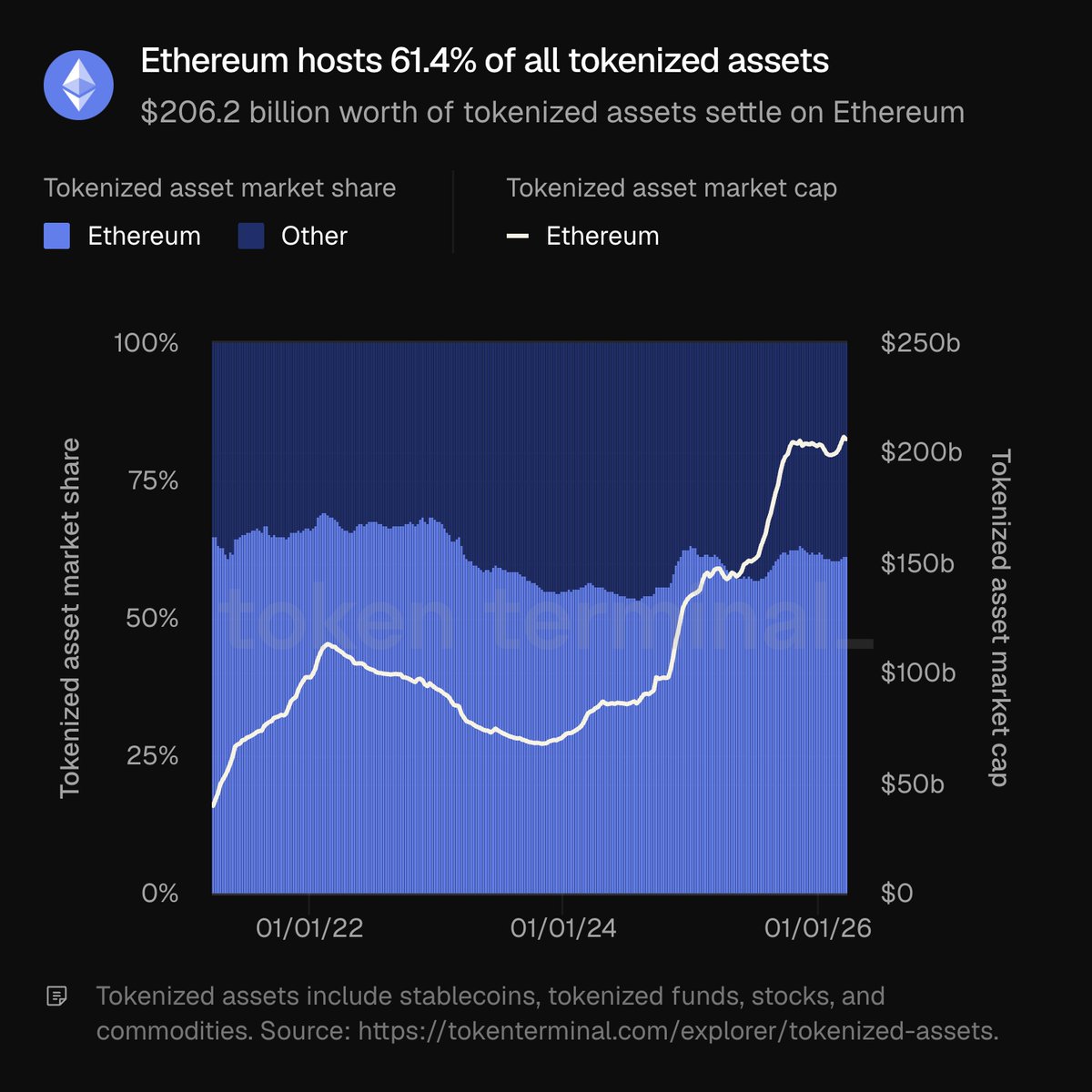
According to data from Token Terminal, Ethereum now hosts an impressive 61.4% of all tokenized assets, with a staggering $206.2 billion worth of tokenized assets settled on the Ethereum network. Compared to the same period last year, the market value of tokenized assets on Ethereum has seen a remarkable increase of over 40%. x.com/tokenterminal/…
Wu Blockchain tweet media
English
9
6
24
4.1K
chainyoda
chainyoda@chainyoda·
Due to market conditions ETHCC is now called Ethereum Canton Conference
English
11
4
46
2.1K
frederick
frederick@spcpza·
Out of the box both will perform the same if you only need a cron slave, but if you like to tinker with things, it’s always nice to have a persistent memory so you don’t have to remind the agent all the time of what you’re going to do. Openclaw is like a 1y old baby, Hermes 3y old. Still stupid out of the box, but there’s hope haha
English
2
0
4
498
frederick
frederick@spcpza·
Hermes is so so so much better than openclaw. The persistent memory lets me do things openclaw couldn’t do. Thanks @NousResearch!!
English
23
5
152
13.3K
chainyoda
chainyoda@chainyoda·
400 stonks in S&P 500 look like altcoins
English
6
0
8
430
chainyoda retweetledi
The Bitcoin Historian
The Bitcoin Historian@pete_rizzo_·
U.S. SENATOR ALSOBROOKS JUST TOLD A ROOM FULL OF BANKERS THEY MUST COMPROMISE AND PASS #BITCOIN AND CRYPTO MARKET STRUCTURE “LET’S NOT LET PERFECT BE THE ENEMY OF GOOD” YOU MIGHT "WALK AWAY UNHAPPY" IT'S TIME FOR CLARITY 🔥
English
37
50
326
20.9K
chainyoda retweetledi
Olsen
Olsen@olsenbdnr·
@rameshsrivats This rhetoric of ai replacing junior engineers is bullshit and oversaid. If anything, ai will replace complacent senior engineers with grindy junior engineers. I said it
English
1
0
8
2.2K
chainyoda
chainyoda@chainyoda·
There’s already 14 types of JEPA? AI research is approaching ZK folding scheme levels
chainyoda tweet media
English
2
1
6
428
chainyoda
chainyoda@chainyoda·
You have one weekend total to hype your agentic thingy and get acquired by a top lab
English
0
0
5
354
Barchart
Barchart@Barchart·
If you invested $10,000 in $SNAP exactly 5 years ago, you would have $792 today 🚨🚨 Not too bad 🫡
Barchart tweet media
English
71
59
687
47.7K
chainyoda retweetledi
ALEX | ZK
ALEX | ZK@gluk64·
Canton founders claim ZK proofs are too risky for institutional finance. They have been making this argument to buyers and regulators, publicly and behind closed doors. It deserves a public answer. Let's see if the argument holds — and if Canton's infrastructure passes its own test. The argument Their case, stated fairly: ZKPs are complex. Bugs are inevitable in any sufficiently complex system. If a flaw exists in a proof system, it could go undetected because the underlying data is private. If it goes undetected, it spreads throughout the system. This creates systemic risk. Therefore, ZKPs cannot be used for critical financial infrastructure. This is a real concern. Let's take it seriously and follow the logic. The flaw in the logic Strip away the ZKP-specific language, here's the story: Technology X can have implementation flaws. Technology X serves a mission-critical function. If it fails, the consequences are catastrophic. Therefore, Technology X can never be used. Read it again. There is a hidden assumption doing all the work: that Technology X is your only line of defense. If this logic held, we would not have aviation. Fly-by-wire, engine controllers, autopilot — every one of these systems has bugs, is mission-critical, and can fail catastrophically. Nuclear reactor control systems, robotic surgery, radiation therapy dosing, implantable cardiac devices, and many other systems all run on software that can fail catastrophically. But they are somehow still in use. How? Redundancy and containment The foundation for these mission-critical systems is the explicit assumption in their architectures that every component will eventually fail. They all rely on two things: redundancy and containment. Redundancy = multiple independent systems, each capable of catching a failure in the others. Containment = when failure occurs, limit the blast radius so it cannot become systemic. This is the only question that matters for any mission-critical system: does your architecture have more than one line of defense? Canton's architecture Let's apply this test to Canton. Canton's privacy and integrity model relies on a single mechanism: trusted operators segregating data between participants. There is no cryptographic verification layer and no independent check. If a few keys of the operators in a validation domain are compromised, manipulated state propagates silently inside opaque chains of UTXOs with nothing watching. This is a real systemic risk, accelerated by the rise of AI-assisted cyberattacks. By Canton's own logic — a single point of failure with catastrophic consequences — this is the architecture that should concern regulators. Prividium's architecture Now look at how Prividium is built. Redundancy. Prividium has three independent lines of defense. First, institutional partners operate Prividium nodes within their own security environments, the same infrastructure banks already trust and regulate. Second, zero-knowledge proofs provide cryptographic integrity verification as an independent layer on top, verifying operational security rather than replacing it. Third, as ZK proof systems standardize, multiple independent provers can verify the same computation. A flaw in one implementation gets caught by another. Containment. Each Prividium instance is an individual chain operated by an individual institution. When institutions interact across chains, Prividium's interop layer implements inter-chain accounting mechanisms that are independently enforced by the participating institutions, asset issuers, or on-chain. Even an attacker who compromises a single institution's internal IT infrastructure and simultaneously finds a ZKP bug could only affect that one Prividium instance. The damage cannot propagate to the broader network. The net balance: Canton has a single mechanism, no fallback, silent failure propagation across the network. Prividium has layered defenses, independent verification, blast radius contained by design. Importance of open standards Multiple lines of defense only matter if each line is itself strong. What makes a technology strong? The depth of adversarial testing it has survived. Shaul points to a compiler bug example in his post, and it actually illustrates this well. ZKsync embraced full EVM equivalence over a year ago. This was shaped precisely by the understanding that the more you deviate from an open standard, the larger your attack surface becomes. And Ethereum is not battle-tested in some polite, academic sense. For over a decade, its smart contract infrastructure has been completely open to scrutiny by the most sophisticated adversarial actors in the world, with hundreds of billions of dollars at stake. Vulnerabilities and exploits fed directly back into the ecosystem: new audit standards, formal verification tools, compiler safeguards, and hardened design patterns. The EVM that exists today is the product of a decade of continuous adversarial stress testing at a scale no other smart contract platform has experienced. Canton went the opposite direction. DAML is a proprietary smart contract language with a closed ecosystem and a fraction of the developer and security community. Every growing pain that Ethereum went through over the last ten years still lies ahead for DAML, except DAML will face them with orders of magnitude fewer eyes watching. Every maturity concern Canton raises about ZKPs applies to their own technology stack with far less mitigation available. The safest technology is the one that has survived the longest under the harshest conditions. For smart contract infrastructure, that is Ethereum. It's not close. So to answer the question directly: everyone agrees bugs exist. The question is whether your architecture has redundancy to catch them and containment to limit the damage when they slip through. Cryptographic verification provides both. Trust in operators provides neither.
English
91
116
725
193.3K
chainyoda retweetledi
Wu Blockchain
Wu Blockchain@WuBlockchain·
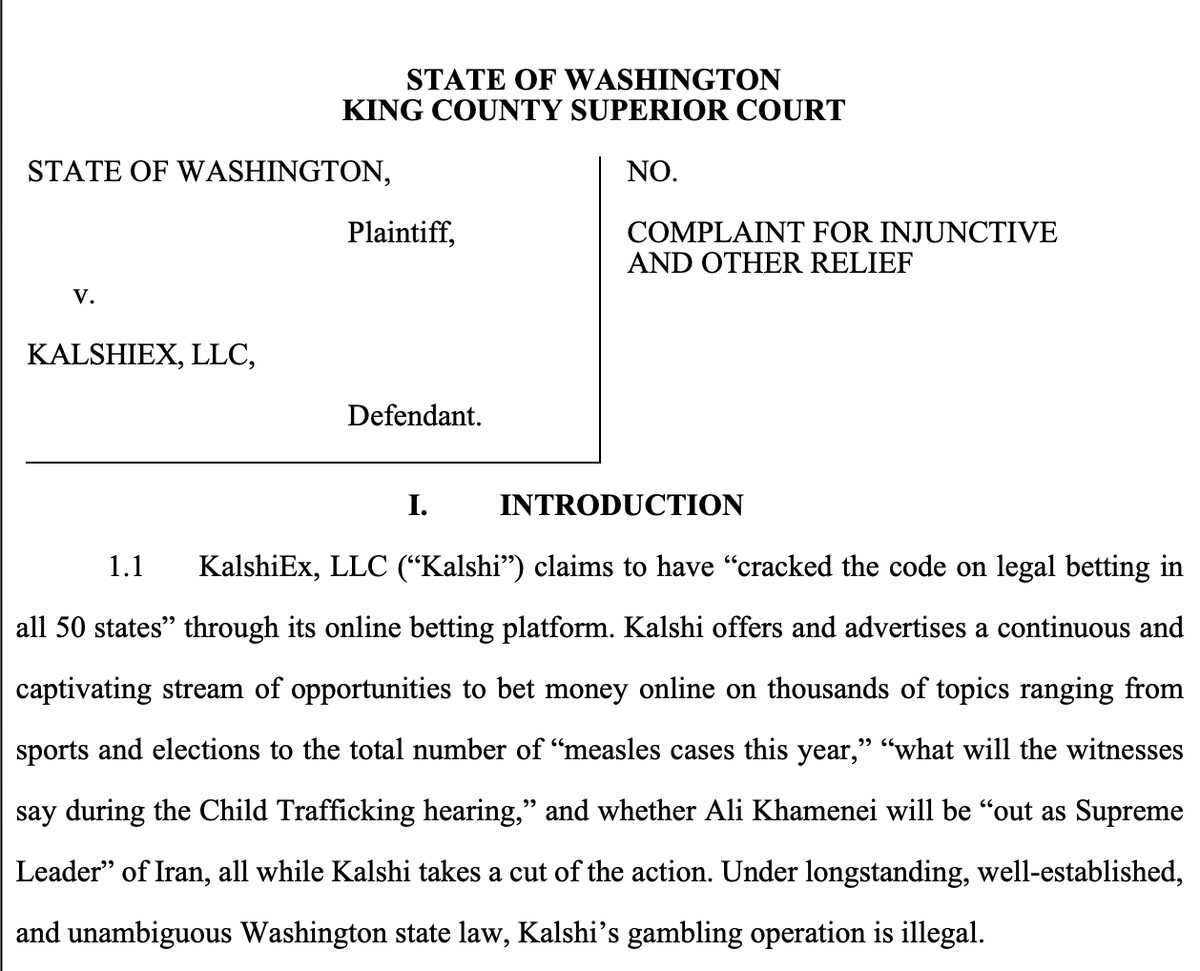
Kalshi Faces Multi-State Lawsuits as Prediction Markets Labeled ‘Disguised Gambling’ Washington state has sued prediction market platform Kalshi, alleging it offers gambling products under the guise of “prediction markets” in violation of state law. Earlier, Nevada secured a temporary restraining order requiring Kalshi to halt sports, election, and entertainment contracts, alongside similar restrictions on Coinbase. Kalshi maintains its products are federally regulated derivatives, and the dispute could ultimately reach the U.S. Supreme Court.
Wu Blockchain tweet media
English
12
6
38
8.8K
chainyoda
chainyoda@chainyoda·
Meanwhile in my DMs
chainyoda tweet media
English
3
0
17
1.3K
chainyoda retweetledi
Chuk
Chuk@chuk_xyz·
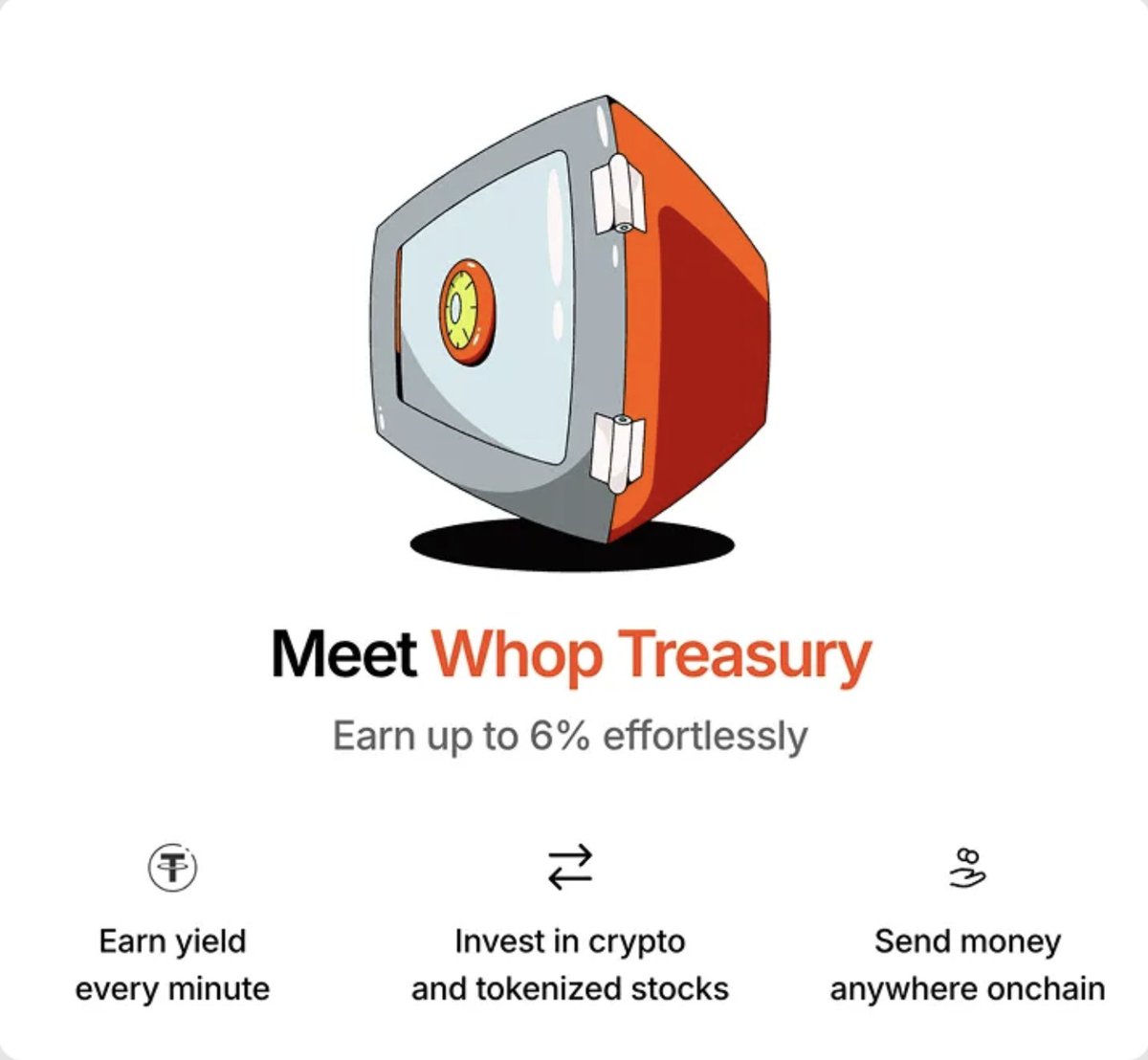
Whop shipped 6% yield to 21M users. Most of them have no idea it's DeFi. If you haven't heard of @whop, they're like Shopify, Patreon, and Udemy rolled into one for the internet generation. 21M users, $3B+ in payouts, growing 255% year over year. Their new Treasury product enables balances to earn up to 6% on @aave through @veda_labs via an integrated self-custodial wallet on @Plasma. The user just sees a number going up every second in their Whop dashboard, with zero crypto friction. Classic DeFi mullet. While congress debates whether stablecoins should be allowed to pay yield, Whop shipped yield through lending markets, sidestepping the debate entirely. Everything is a bank. Any platform with float can offer yield as a feature. This is the same threat to deposits that banks have been lobbying against, except this one is less in their control. Users are on Whop because that's where they earn. Now they can grow their balances there too. It's only a matter of time before Whop enables spend (cards) and credit (they can already see your revenue). This is the consumer equivalent of merchant banking, and banks will need to step up the utility of their offerings in order to compete.
Chuk tweet media
English
11
14
147
44.9K
chainyoda retweetledi