Chef Robotics

298 posts

Chef Robotics banner
Chef Robotics

Chef Robotics

@ChefRobotics

Empowering humans to do what humans do best. We're hiring: https://t.co/Nk06QAGCQo

San Francisco, CA Katılım Mayıs 2018
1 Takip Edilen1.1K Takipçiler
Chef Robotics
Chef Robotics@ChefRobotics·
The ROI question, answered! 𝗥𝗢𝗜 𝘄𝗶𝘁𝗵 𝗖𝗵𝗲𝗳 𝗿𝗼𝗯𝗼𝘁𝘀 𝗰𝗼𝗺𝗲𝘀 𝗳𝗿𝗼𝗺 𝗳𝗼𝘂𝗿 𝗽𝗹𝗮𝗰𝗲𝘀: → 𝗟𝗮𝗯𝗼𝗿: A workstation costs far more than the wage on the paycheck. With turnover exceeding 150% in the food industry, manufacturers pay recruiting, onboarding, and training costs repeatedly. Chef replaces them with a single, predictable RaaS fee. → 𝗚𝗶𝘃𝗲𝗮𝘄𝗮𝘆: Line workers portion food with a slight positive bias, and those extra grams add up fast across millions of trays. Manufacturers using Chef robots have seen up to 88% less giveaway. → 𝗧𝗵𝗿𝗼𝘂𝗴𝗵𝗽𝘂𝘁: With robot-to-robot communication, multiple Chef robots coordinate deposits on the same conveyor. Customers have reported 2-3x increases in output and up to a 60% boost in labor productivity. → 𝗜𝗱𝗹𝗲 𝗹𝗶𝗻𝗲𝘀: A production line needs a full crew to run. When manufacturers can't staff a line, it sits idle along with the revenue it could generate. Chef robots fill those gaps and let idled lines return to production. → 𝗦𝗮𝗳𝗲𝘁𝘆: Chef robots take on repetitive work in 32°F cold rooms, operate safely alongside workers per ISO/TS 15066:2016, and reduce contamination risk—only Chef utensils and pans touch the food. Because Chef follows a robotics-as-a-service (RaaS) model, there's no upfront capital investment. Manufacturers pay a flat annual fee, deploy in days or weeks, and get the latest AI features as ChefOS (our AI platform) improves. Read the full ROI breakdown on our blog: chefrobotics.ai/post/what-is-t… #foodmanufacturing #foodautomation #mealassembly #foodrobotics
Chef Robotics tweet media
English
0
1
1
168
Chef Robotics
Chef Robotics@ChefRobotics·
We wrote a blog about how robotics works today. The field has changed so much over the past few years, to the point where robots are no longer built solely by writing code. They're increasingly trained with data. In this blog, we break down how modern robotics has evolved: • Robotics 0.0: Mechatronic automation • Robotics 1.0: Programmed motion • Robotics 2.0: Learned heuristics • Robotics 3.0: Hybrid AI • Robotics 4.0: End-to-end learning We also explore how robots learn from demonstrations, why real-world data matters more than simulation for food manipulation, what diffusion policies, imitation learning, and leader-follower teleoperation are (and why they matter), and the rise of vision-language-action (VLA) models and robotics foundation models. Whether you're an engineer, researcher, or simply curious about physical AI, we hope this serves as a useful overview of where robotics used to be, where it's now, and where it's headed. Read the blog: chefrobotics.ai/post/how-robot… #robotics #physicalai #vlas
Chef Robotics tweet media
English
0
0
3
181
Chef Robotics
Chef Robotics@ChefRobotics·
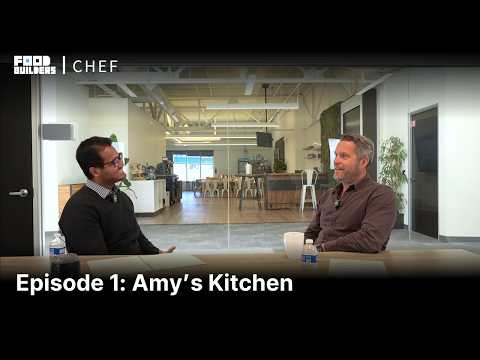
We're excited to launch Food Builders, a new podcast hosted by Chef's Founder and CEO, @RajatBhageria! Food manufacturing is one of the world's largest industries, but the people building it rarely get the attention they deserve. That's why, in this podcast series, Rajat sits down with founders and leaders across the food industry to hear how they built their businesses, the challenges they're facing today, and what they're excited about for the future of an industry we all depend on. Our first guest is Paul Schiefer, CEO of @AmysKitchen. Paul shares the story behind Amy's, his own journey from joining the company to becoming CEO, and lessons learned from more than two decades at one of the country's leading producers of organic vegetarian meals. Beyond the inspiring stories of Amy's growth over the past 40 years and Paul's own career path, this conversation covers: • Leadership, retention, and company culture • Automation and AI in food manufacturing • How to build a durable business • Daily routines, mentorship, and advice We hope you'll join us as we learn from the people who shape the future of this industry! 🎙️ Watch or listen to the full episode on YouTube: youtu.be/6gIQ5Pt0cOo or Spotify: open.spotify.com/episode/6voV7Z… #foodmanufacturing #entrepreneurship #podcast
YouTube video
YouTube
English
0
0
1
151
Chef Robotics
Chef Robotics@ChefRobotics·
The secret to a better physical AI model isn't a bigger model. It's the right data. We've been building a physical AI system that assembles a burger in under a minute. Earlier this year, it hit a 75% success rate. We got it to 91.3% by adding just 56 successful burger assembly runs back into the training data. That's 4.5% more data than we started with. No new architecture, no bigger model, no extra demonstration hours. 𝗪𝗵𝘆 𝟰.𝟱% 𝗺𝗼𝗿𝗲 𝗱𝗮𝘁𝗮 𝗶𝗺𝗽𝗿𝗼𝘃𝗲𝗱 𝘀𝘂𝗰𝗰𝗲𝘀 𝗿𝗮𝘁𝗲 𝗯𝘆 𝟭𝟲-𝗽𝗼𝗶𝗻𝘁 We trained our physical AI model on human demonstrations, but our system runs on different hardware—different lighting, ingredients stacked differently, and joint configurations it has never seen before. The moment it hit something unfamiliar, small errors started to compound. The 56 runs we added were recorded by our system under the exact conditions it operates in, covering the specific situations it had been struggling with, in a way that human demonstrations never quite did. 𝗧𝗵𝗲 𝗱𝗮𝘁𝗮 𝗳𝗹𝘆𝘄𝗵𝗲𝗲𝗹 Every successful run our system completes becomes training data for the next version of our physical AI model. The more the system runs, the better the data and the model get. This 16-point jump in our system's success rate came from a single iteration, and our data flywheel is built to keep running. Read more about how we built this: chefrobotics.ai/post/building-… #physicalAI #foodautomation #foodmanufacturing #robotics
Chef Robotics tweet media
English
0
0
0
143
Chef Robotics
Chef Robotics@ChefRobotics·
The latest debate in robotics focuses on vision-language action models (VLAs) vs. world models as the foundation for physical AI. We think it's an important topic, but also one that's often framed as an either/or choice. VLAs learn a policy that maps observations directly to actions. If we give an AI model camera images and a task, it predicts what the robot should do next. This is the direction taken by models such as NVIDIA's GR00T, Physical Intelligence's π models, and OpenVLA. World models learn to predict how the physical world evolves. Rather than directly producing actions, they build an internal model of physics that can be used for planning, simulation, and reasoning. Chef's research team uses VLAs because they're currently the most practical approach for learning food manipulation tasks from demonstrations. We've written about how we adapted VLAs for real-time food assembly, including techniques for addressing latency in production environments: chefrobotics.ai/post/latency-a… That said, we think world models are becoming increasingly important, especially in food robotics. Food is fundamentally a physics problem. Rice behaves differently depending on how it was cooked. Mashed potatoes change consistency as they cool down. Shredded chicken, oatmeal, and pasta deform differently under the same manipulation. A model that develops an understanding of these dynamics has the potential to make much better decisions than one that only imitates demonstrations. The challenge, of course, is that today's world models still struggle with physical accuracy. Small errors can have devastating consequences, especially for manipulation tasks where millimeters matter. At the end of the day, it's unlikely that either VLAs or world models will win this debate and dominate the entire industry. The most capable physical AI systems will likely incorporate both: learned policies for fast control and increasingly accurate predictive models of the physical world. It's an exciting time for robotics, and we're glad to see these discussions unfold. Big thanks to Rocket Drew from @theinformation for including us! Read the full article here: theinformation.com/newsletters/ai…
Chef Robotics tweet media
English
0
0
0
224
Chef Robotics
Chef Robotics@ChefRobotics·
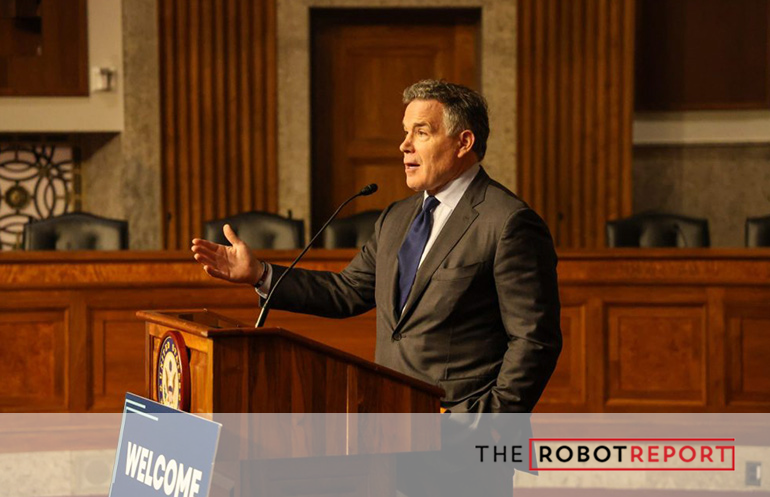
We're grateful to be a part of the @robotforamerica industry coalition and excited to see recent bipartisan momentum behind a proposed National Commission on Robotics. As AI continues to reshape industries, it's encouraging to see increased attention on robotics and physical AI as well. At Chef Robotics, we've seen firsthand how much learning happens when robots operate in real production environments. Every day, our robots handle the variability and complexity of food production, generating data and insights that help advance the capabilities of physical AI. As the robotics industry continues to evolve, conversations around deployment, workforce development, data, and manufacturing capacity will become increasingly important. Read the full article by Eugene Demaitre from @therobotreport: therobotreport.com/effort-establi… #robotics #physicalai #policy
Chef Robotics tweet media
English
0
0
0
105
Chef Robotics
Chef Robotics@ChefRobotics·
Chef's AI-enabled robots deposit food into bowls thousands of times per hour. The quality of each deposit depends heavily on one variable: gripper opening speed. Too fast, and food might spill outside the tray. Too slow, and the deposit is incomplete before the tray moves past our robot on the conveyor. The right gripper opening speed also varies by ingredient. Pneumatic grippers don't behave consistently enough to rely on fixed commands—pressure varies, hardware wears, and the same command produces different results across robots and over time. 𝗛𝗼𝘄 𝘄𝗲 𝘀𝗼𝗹𝘃𝗲𝗱 𝗶𝘁 We built a layered system that combines AI with engineering first principles to measure what the gripper actually does and automatically correct for it: → A flowmeter to make gripper behavior observable → Regression to build a learned prior from characterization data → A neural network to detect when the gripper movement ends → Online adaptive control that updates a per-gripper correction after every movement In the graphic below, the top plot shows the flow signal as the gripper opens and closes. The bottom plot shows the neural network's confidence—it hits 99% almost exactly at the true stop time. Read more in our latest engineering blog: chefrobotics.ai/post/closing-t… #physicalai #foodrobotics #robotics #aiandrobotics
Chef Robotics tweet media
English
0
0
1
147
Chef Robotics
Chef Robotics@ChefRobotics·
Portion consistency is one of the hardest problems in food assembly automation. When a meal calls for 50 g of mac and cheese, every single meal needs to hit that target. 𝗛𝗼𝘄 𝗖𝗵𝗲𝗳 𝗿𝗼𝗯𝗼𝘁𝘀 𝗲𝘀𝘁𝗶𝗺𝗮𝘁𝗲 𝗽𝗶𝗰𝗸 𝗱𝗲𝗽𝘁𝗵 𝘁𝗼𝗱𝗮𝘆 Chef robots use a geometric model called VPD (volumetric pick depth) to estimate how deep a utensil should scoop to achieve the target weight. A feedback loop corrects the estimate, pick by pick, based on the actual measured weight. This system works well in production and delivers better-than-human consistency for most ingredients. 𝗪𝗵𝗮𝘁 𝘄𝗲 𝗲𝘅𝗽𝗹𝗼𝗿𝗲𝗱 Geometric models work by making simplifying assumptions about how food behaves. We wanted to explore what a model could do if it learned ingredient behavior directly from data instead. That's why our research team is developing CLUTCH—a neural network that ingests a point cloud of the ingredient surface and a target weight and learns to predict pick depth directly from real pick data. 𝗥𝗲𝘀𝗲𝗮𝗿𝗰𝗵 𝗿𝗲𝘀𝘂𝗹𝘁𝘀 In testing across a wide range of target weights: → We reduced pick depth standard deviation from 3.741 mm to 1.985 mm → We've seen 80.27% of picks being accurate within 2 mm (vs. 32.94% previously) Read more on our engineering blog: chefrobotics.ai/post/clutch-de… #physicalai #foodrobotics #machinelearning #aiandrobotics
Chef Robotics tweet media
English
0
0
0
135
Chef Robotics
Chef Robotics@ChefRobotics·
We’re thrilled to announce Nicolas De Keijser as Chef’s VP of Sales! Nicolas brings close to two decades of robotics Sales experience from ABB and, more recently, Boston Dynamics, where he built and led an international commercial team that brought warehouse robots to market across the globe. At Chef, Nicolas will lead our growing Sales team and help expand the commercial deployment of our food assembly robots in manufacturing facilities across North America and Europe. Welcome to the team, Nicolas! #robotics #physicalai #foodmanufacturing
Chef Robotics tweet media
English
0
0
1
127
Chef Robotics
Chef Robotics@ChefRobotics·
When Paul Hepfer, CEO of Project Open Hand, was looking for ways to address limited volunteer availability following the COVID-19 pandemic, he didn't necessarily expect robots to be part of the solution. Fast-forward 18 months, and two Chef robots are helping assemble medically tailored meals for the nonprofit in the heart of San Francisco's Tenderloin District. Watch Project Open Hand's full story - one that began 40 years ago and will continue to make an impact for decades to come: chefrobotics.ai/case-studies/p… #robotics #physicalai #nonprofit
English
0
1
3
232
Chef Robotics
Chef Robotics@ChefRobotics·
Recently, our robots completed 100 million production servings 🚀 The Chef team celebrated this milestone with a scavenger hunt (pictured below), table tennis, and a karaoke afterparty, videos of which shall remain safely under wraps. Meanwhile, our robots quietly made another 17 million servings at customer sites. Next stop: 1 billion 🤖
Chef Robotics tweet media
English
0
0
1
90
Chef Robotics
Chef Robotics@ChefRobotics·
Breakfast tray assembly is one of the most manual steps in institutional food production and one of the most difficult to automate. Chef robots handle the full breakfast tray assembly: scooping oatmeal and grits by weight, piece-picking sausage patties and hash browns, and dropping in sauce packets—all in a single pass at production speed. From K-12 school nutrition programs and hospital food service to airline catering and correctional facilities, breakfast lines run with quick changeover windows, early shift start times, multiple SKUs, and tight compliance requirements, making manual assembly difficult to sustain at scale. Chef's physical AI models are built for exactly this environment. Read more on our blog: chefrobotics.ai/post/how-chefs… #foodmanufacturing #foodautomation #breakfastproduction #institutionalfoodservice
Chef Robotics tweet media
English
1
1
2
143
Chef Robotics
Chef Robotics@ChefRobotics·
We hosted @foxglove CEO @adrianmacneil at our office last week to discuss food as a market for robotics companies, why food manipulation is such a complex engineering problem, and how we've built the largest dataset of in-production deformable material training data. Also, check out our preview of what the Chef R&D team is working on so that our robots can soon expand beyond the food manufacturing floor and serve other use cases across the food service industry, ghost kitchens, and fast-casual restaurants. #robotics #physicalai #trainingdata
Adrian Macneil — 🤖/acc@adrianmacneil

"It's not just for beans, you have to do this for trillions of ingredients, zero-shot. It's a way harder problem than meets the eye." My interview with @RajatBhageria, founder and CEO of @ChefRobotics is live! Chef is tackling one of the hardest categories in robotics: food production. It’s messy, variable, physical, operationally intense, and full of edge cases. Exactly the kind of environment where the best robotics teams build the data flywheel that makes robot data actionable to improve autonomy and scale. I really enjoyed this discussion - thinking about starting a series of in-person founder interviews like this. Let me know in the comments if you enjoyed it, and who should I speak to next?

English
0
0
2
225
Chef Robotics
Chef Robotics@ChefRobotics·
Visit us at IDDBA 2026 today and tomorrow! Our live robot demo showcases how physical AI automates food assembly for over a dozen manufacturers across North America. The Skittles are just an example 🍬 Meet Nicolas De Keijser, Nick Yang, Aditi Jain, and Shaolin Kataria at booth 4961. #iddba #foodautomation #foodmanufacturing
English
0
0
0
177
Chef Robotics
Chef Robotics@ChefRobotics·
We're heading to IDDBA 2026 in Orlando next week! 🎉 Food manufacturing is changing fast, and we'd love to show you what's possible with physical AI on the production line. Stop by booth 4961 between June 7–9. Whether you want to see a live Chef robot demo, talk automation, or just say hi—we'll be there. See you in Orlando! 👋 #iddba #foodautomation #foodmanufacturing
Chef Robotics tweet media
English
1
0
0
105
Chef Robotics
Chef Robotics@ChefRobotics·
Will physical AI be general-purpose or specialized? We think it's both. There's a major debate in robotics right now about whether generalist models and humanoids will outperform verticalized solutions. Our view is that the industry is converging toward a different outcome: 🧠 Intelligence will become increasingly shared 🤖 Embodiments will remain highly specialized Why? Because industrial customers don't buy versatility. They buy ROI. A food manufacturer doesn't need a robot that can fold laundry. They need a robot that can portion food accurately, operate in 32°F cold rooms, survive daily washdowns with caustic chemicals, and run reliably at production scale. The same logic applies across construction, logistics, agriculture, manufacturing, and healthcare. Different industries have different environments, economics, and performance requirements. One embodiment won't fit them all. In our latest blog, we make the case that the future of physical AI will consist of shared intelligence layers combined with verticalized embodiments, proprietary data, and domain expertise. Or put differently: the future may look a lot more like 𝘞𝘈𝘓𝘓-𝘌 than 𝘐, 𝘙𝘰𝘣𝘰𝘵. Read the full post: chefrobotics.ai/post/the-case-… #PhysicalAI #Robotics #AI
English
0
1
3
123
Chef Robotics
Chef Robotics@ChefRobotics·
We’re excited to welcome Steve Van Der Hoeven to Chef as a Senior Staff Software Engineer! Steve brings over two decades of software engineering experience from companies like Google and Optimizely. He most recently worked at Zeromatter, where he built a CI/CD and validation platform for robotics stacks. At Chef, Steve will help our growing team of robotics and software engineers bring robots into real production environments across over a dozen customer sites. If this sounds interesting to you, see our open roles at chefrobotics.ai/careers! #robotics #ai #hiring
Chef Robotics tweet media
English
0
1
1
522
Chef Robotics
Chef Robotics@ChefRobotics·
When a robot on a food production line deposits an ingredient into a tray, it doesn't act alone. The conveyor has to stop, every robot on the line has to finish its deposit, and only then does the line move again. That coordination happens dozens of times a minute, every shift. Chef has a device that manages this entire sequence. And until recently, the only way to test whether that logic was working correctly was to run it on a live production line with physical hardware present. We had two ways to test a stop-and-go conveyor without hardware. Neither covered the full loop. So we built a hardware abstraction layer within the runner and an in-process PLC model to simulate the customer controller. The complete indexing stack now runs on a developer laptop with zero hardware in the loop. Read more on our engineering blog: chefrobotics.ai/post/testing-c… #physicalai #robotics #foodrobotics
English
1
2
7
755
Chef Robotics
Chef Robotics@ChefRobotics·
Last week, we were making burgers. This week, we’re scooping burrito bowls! Our latest engineering blog explores how we taught Chef’s Food Foundation Model (FFM) to manipulate loose, deformable foods like rice, beans, lettuce, cheese, and chicken using the same underlying physical AI architecture. Scooping sounds simple, but it introduces entirely new robotics challenges: • Portioning loose ingredients precisely • Preventing spills and cross-contamination • Handling food that behaves differently with every scoop Instead of rebuilding the system for a new meal, we trained the same model on new demonstration data and taught our robot to use ordinary kitchen utensils with a robot-friendly handle. After about 25 hours of demonstrations, our robot can assemble a burrito bowl in under 2 minutes. This is what general-purpose physical AI for food looks like. Read the full blog: chefrobotics.ai/post/building-… #physicalai #robotics #food
English
3
5
37
4.2K
Chef Robotics
Chef Robotics@ChefRobotics·
The best stories are often the unexpected ones. Robots preparing medically tailored meals in San Francisco’s Tenderloin is one of them. We’re proud to collaborate with @ProjectOpenHand to help assemble medically tailored meals for seniors and community members living with chronic illnesses. For over 40 years, the nonprofit has built its mission around the idea that food is medicine, recognizing the critical role nutrition plays in managing chronic illness. But since the COVID-19 pandemic, the organization has faced ongoing volunteer shortages. That’s where our robots come in. Today, two Chef robots work alongside volunteers in the Project Open Hand kitchen, helping assemble meals and freeing up volunteers to focus on other, less repetitive tasks. This is just one example of how new technologies can support mission-driven organizations and help them operate more efficiently. Watch the full video and read Project Open Hand’s story: chefrobotics.ai/case-studies/p… Big thanks to @BooneAshworth and @WIRED for covering the story: wired.com/story/these-ro…) #robotics #physicalai #nonprofit
English
0
0
1
237