Chih Cheng Liang

1.1K posts

Chih Cheng Liang

Chih Cheng Liang

@ChihChengLiang

Independent researcher

Katılım Mayıs 2013
1.5K Takip Edilen3K Takipçiler
Chih Cheng Liang
Chih Cheng Liang@ChihChengLiang·
@JhengShao Maybe see the eigenvalue from the perspective of principle components and dimension reduction? Ask "what portfolio of inputs that explains the output most"
English
1
0
1
16
曾嘉俊 Zeng Jiajun
曾嘉俊 Zeng Jiajun@zengjiajun_eth·
The worst thing about milady is how many EF people change their pfp to it after v changed his. And now EF institutionalized this aesthetic and the language internally. Chinese community used to called Vitalik “v god”, it seems the culture is worse in EF. One OG warned me this years ago and I never take it seriously. What harm can a silly pfp do.
ً@lightclients

> they are hard core open source 99% of the miladys i have seen have never shipped a real open source project in their life. we dont need this LARP culture for cypherpunk values

English
13
2
67
10.3K
Chih Cheng Liang
Chih Cheng Liang@ChihChengLiang·
@ralexstokes Theorem proving languages like lean could be a good fit here. It used to be too laborious to write to justify the sec benefits. We now have cheap hallucinations, not just from a maintainer's own agent, but also from external contributors'. The barrier servers also a filter.
English
0
0
2
115
stokes
stokes@ralexstokes·
what do we think about agent-native programming languages? codex/claude have some intriguing ideas but the risk is of course the models just get better and so it’s unnecessary steelman is LangSec philosophy applied to agent harnesses
English
5
0
8
1.7K
alexkuzmin.eth 💙💛
alexkuzmin.eth 💙💛@alxkzmn·
The current gridlock in Taiwanese legislature, partially caused by the opposition swapping a "2/3rds majority" for "10 out of 15" while only 8 seats of the constitutional court are occupied looks like an intentionally introduced bug. Wen formal verification for laws in meatspace?
English
1
1
4
411
Chih Cheng Liang retweetledi
Puja Ohlhaver
Puja Ohlhaver@pujaohlhaver·
I write this with concern: crypto is congratulating itself for gaining legitimacy—integrating with TradFi and celebrating a sense of arrival—precisely as its conceptual blind spots are widening. There is euphoria in the air, but also a lack of humility and historical knowledge about how financial systems were designed, what problems regulation actually solved, and whether crypto is quietly recreating those same failures under new guises that are harder to detect. The framing offered by @dannyryan—and amplified by @hasu—is one example of this conceptual slippage: treating counterparty risk as if it were a decentralization story. Let’s be clear: decentralization has nothing to do with counterparty risk. In TradFi, you can have zero decentralization and still substantially mitigate counterparty risk; that is the entire point of clearinghouses and CCPs. Conversely, even in (sort of) technically “decentralized” systems— at the ledger layer—you can still have massive counterparty risk at the economic and governance layer (e.g., borrowers defaulting in lending protocols, stablecoins failing to honor redemptions, AMMs becoming insolvent under stress, oracle failures that cascade into mass liquidations, and governance multisigs or token whales looting). Counterparty risk is the risk your economic partner can’t perform their obligation. Blockchains may mitigate operational settlement risk, but they do not eliminate economic risk, which is the core of counterparty risk. Confusing the two is like confusing plumbing with creditworthiness: just because the pipes are (sort of) distributed doesn’t mean the borrower can pay you back. A blockchain might have helped with transparency of CDS exposures in 2008, but it could not have stopped the real cause: widespread default on physical mortgages and the collapse of real-world collateral. In fact, DeFi can make counterparty risk *worse.* Even if on-chain positions are transparent, you cannot verify beneficial ownership—especially in environments with shadow positions, synthetic exposure, or secondary-market trading among anonymous accounts. Entire clusters of wallets may be: - controlled by the same entity, - coordinating as a collusive group, or - economically entangled in ways no smart contract can see. On-chain transparency does not reveal who ultimately stands behind an account, what liabilities they have off-chain, or how interconnected their positions are. This is the classical condition of hidden counterparty exposure. Crypto has already been hell-bent on making stablecoins and other instruments freely tradeable among anonymous accounts in deep secondary markets. But this amplifies the problem: we have no idea whether these “independent” counterparties are financially linked, risk-correlated, or part of the same economic actor. And no—systems like “Proof of Personhood” do not solve this. Beneficial ownership is an economic relationship: you can verify that two accounts correspond to two human beings and still have no insight into whether they share a balance sheet, a fund, a creditor, or a coordinating syndicate off-chain. (As I show in Compressed to 0: The Silent Strings of Proof of Personhood, this problem arises even for systems built expressly for identity verification) [1]. Why am I so worried? DeFi is in danger of recreating the opacity of shadow banking while convincing itself it has solved risk and accountability. Now, is there a future where capital-D Decentralization—true decentralization beyond control of the pipes to the information that flows through them—could mitigate some of these risks? Where we can have better risk management (including counterparty risk), and even reimagining systems of credit for greater breadth and depth? Yes. But that is not the direction crypto is heading. What we see instead is an industry recreating the power structures of TradFi on a new substrate, swapping one set of intermediaries and winners for another, with less oversight and fewer guardrails. The uncomfortable truth is this: much of what crypto has built so far could increase systemic fragility in financial markets. And in many cases, it is empowering actors far less scrupulous than the regulated incumbents the industry loves to vilify. Did Larry Fink list “Trump Coin”—an emolument and open auction on national security? No. Did Brian Armstrong and most crypto exchanges? Yes. Moreover, the real promise of crypto isn’t to recreate TradFi institutions, but to build better ones—institutions that actually internalize externalities and model information the way it is generated in the real world: not as isolated, atomistic transactions, but as social, coalitional, and position-dependent signals within a social network. MEV is a clear example of the problem. It sits precisely at the intersection of information, incentives, and market design—yet the emerging market structure around it is, by all appearances, a thin replay of TradFi. It assumes atomized participants and treats transactions as independent events (the Walrasian myth). That blindness structurally advantages whoever has more resources, bandwidth, or latency, generating superlinear extractive *rents* for precisely the actors a genuinely decentralized design is meant to constrain. A better design would treat transactions as signals emergent from social networks and communication, not as isolated atomic events. That means thinking about attention and influence at the level of coalitions—fluid, overlapping groups characterized by partial commitments within social networks. [2] THAT’s the space in which real decentralization becomes possible: when the system can register how people actually coordinate, how information propagates, and how groups form and adapt. Without this, small informational or control edges accumulate and compound superlinearly, producing extraction-driven oligopolies far more entrenched—and far less accountable—than the ones crypto claims to transcend. As far as I can see, crypto isn’t moving towards this design space. And it remains an open question whether the ecosystem has the conceptual depth or the crisis-forged practical experience needed to reach it: the kind of experience you only gain by working inside real financial systems when they fail at scale and confronting the human toll and socialized losses that follow. [1] papers.ssrn.com/sol3/papers.cf… [2] papers.ssrn.com/sol3/papers.cf…
Hasu⚡️🤖@hasufl

Decentralization clicks for institutions and tradfi people when reframed as counterparty risk. - Good point made by (I think) @dannyryan at devconnect

English
22
23
130
55.5K
Chih Cheng Liang
Chih Cheng Liang@ChihChengLiang·
@cryptodavidw "(rent control is the) most efficient technique presently known to destroy a city—except for bombing." But it is a political reality. I was reading Triumph of the City and then found this atlantic good read on the topic. theatlantic.com/economy/archiv…
English
1
0
0
104
David Wong
David Wong@cryptodavidw·
I didn't know much about the "freeze the rent" approach of Mamdani in NYC. So reading a bit more about it now... I admit coming from France I find it insane that people are accepting the status quo here: you are forced into 1-year leases and then your rent can double the price (or more). Also broker fees are insane in NYC. To rent my place I had to pay 15% of my annual rent to a person hired by the landlord that I met for 15min at the place so that they would let me tour it. Anyway... Mamdani's freezing the rent approach is to have a 0% increase over the next four years for the 2 million rent-stabilized units of New York. Mind you I also moved here from SF where loads of low-income workers were living in parking lots, renting land to park their trailers, what a scam. So I believe it's important, if you want all sorts of people living in the city, and working all kinds of jobs, to be able to afford living here as well. Anyway... these 2 million rent-stabilized units are mostly OLD buildings, pre-1974 buildings to be exact, and they can still be converted to market-rate units (but it seems hard). So looks like ALL new constructions, for the last 50 years, has not been marked as rent-stabilized. Furthermore, rent-stabilized means rent can still go up, but it is capped. This is to avoid abusive landlords. This is actually a good thing. One would hope that figures like (minimum) wages also follow a periodic correction due to inflation, but they don't, so why allow yearly increase of rents? I think this is where rent freezing comes in. It decreases the continuous increase of rent that we were all so used to (in the US), to let tenants breathe. Not everything is about money.
English
5
0
16
1.9K
Chih Cheng Liang retweetledi
Anton Cheng
Anton Cheng@antonttc·
1/3) Vitalik's post on low-risk DeFi marks an important shift for the community—focusing on sustainable protocols in DeFi. But I think there's a clearer proxy than categorizing by use case: trustlessness is a good framework for identifying truly low-risk protocols. mirror.xyz/emodev.eth/oqa…
English
62
10
130
11.9K
kamensec
kamensec@kamensec·
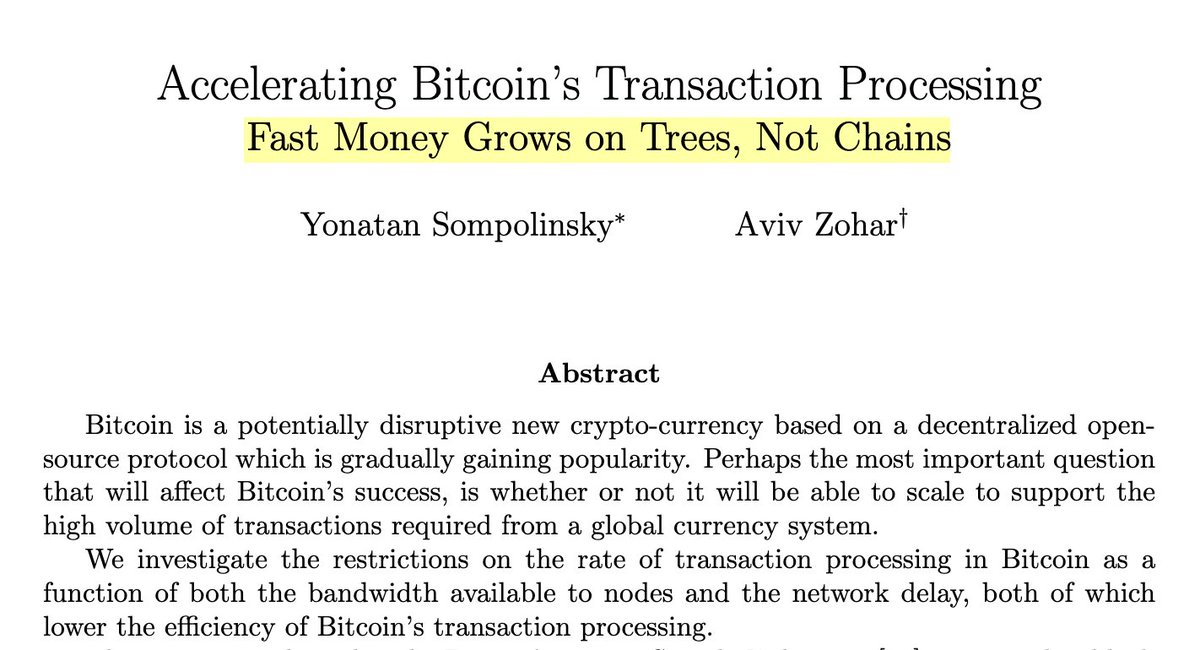
People say money doesn’t grow on trees… clearly they’ve never seen a Merkle tree.
English
5
5
52
2.5K
Chih Cheng Liang
Chih Cheng Liang@ChihChengLiang·
@0xjei I'm with you on this one. The level of demand for user's research is crazy. If we have to audit drinking water with that level of knowledge we'd call life miserable.
English
1
0
2
45
Giacomo
Giacomo@0xjei·
I am tired of the do your own research concept. At what level can a person be defined as an expert? At what level can we define understanding?
English
2
0
2
169
Chih Cheng Liang retweetledi
Seyed Mahdi Hosseini
Seyed Mahdi Hosseini@SeyedMH98·
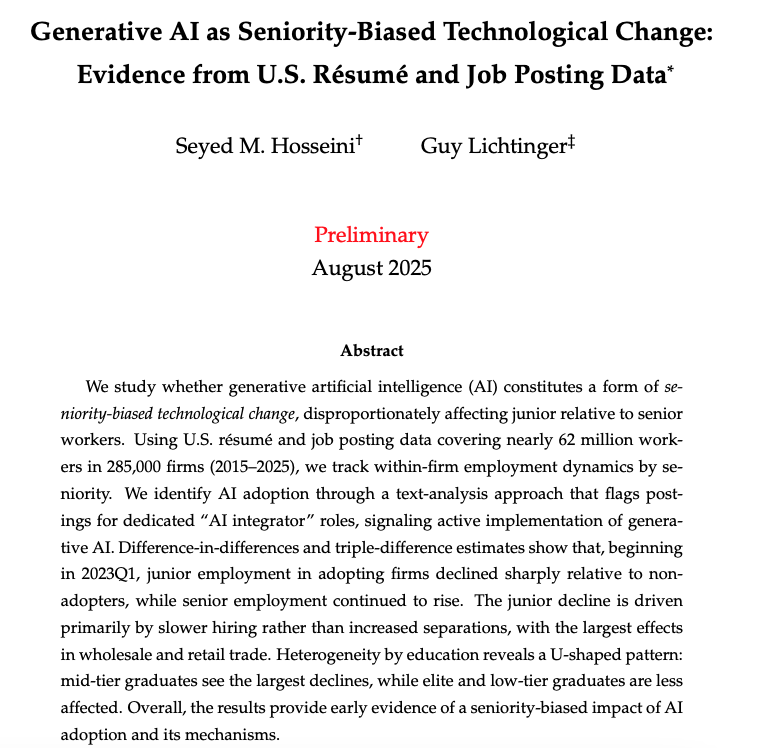
🚨1/9 In a new WP, @LichtingerGuy and I use detailed LinkedIn résumé + job-posting data on ~285k U.S. firms (2015–2025) to study a debated question: how does generative AI adoption affect entry-level employment?
Seyed Mahdi Hosseini tweet media
English
22
162
647
560.1K
Georgios Konstantopoulos
Georgios Konstantopoulos@gakonst·
Who are the best thinkers on the future of work in a post-AI / some form of advanced robotics world?
English
47
18
95
33.6K
Vlad Zamfir
Vlad Zamfir@VladZamfir·
the sanctions i like don't work well enough the sanctions i dislike work all too well tho
English
19
0
29
2.3K
Vlad Zamfir
Vlad Zamfir@VladZamfir·
everyone knows the saying “war is peace”, but don’t want you to know “peace is war”
English
7
2
21
2.1K
Chih Cheng Liang retweetledi
0xtim.eth (90 seconds to crypto)
yes, @changwu_tw is the kind of person who makes you believe in crypto again. chief scientist at @imTokenOfficial, early @ethereum researcher, a conduit for the rollup solution, & quiet host to 🇹🇼 taiwan's web3 scene. we talked wallets, fragmentation, & building for those not here yet. 👇
English
0
1
11
529