China Science

15.2K posts

China Science banner
China Science

China Science

@ChinaScience

Timely updates info on advanced technology and scientific progress in China. Run by @PDChina, the largest newspaper group in China

Beijing, China Katılım Ağustos 2019
10 Takip Edilen2M Takipçiler
China Science
China Science@ChinaScience·
China's second domestically built large cruise ship, Adora Flora City, was undocked in Shanghai on Friday, moving a step closer to trial voyages and final delivery as the country expands its push into the cruise tourism market. The ship will speed up interior installations and systems commissioning, according to Adora Cruises, operator of the cruise liner. The vessel is scheduled for delivery by the end of this year and will launch international routes from the Nansha International Cruise Home Port in Guangzhou, capital of south China's Guangdong Province.
China Science tweet mediaChina Science tweet mediaChina Science tweet media
English
0
0
0
163
China Science
China Science@ChinaScience·
China on Wednesday put into operation the world’s largest single production line for electronic-grade glass fiber in east China’s Jiangsu Province. With an annual output of 100,000 tonnes of electronic-grade glass fiber, the production line can also produce 390 million meters of electronic glass cloth a year, accounting for approximately 9% of the global market. The products coming out of the facility are destined for new energy vehicles, photovoltaics and the low-altitude economy, and are expected to boost China’s self-sufficiency in high-end electronic base materials.
China Science tweet mediaChina Science tweet media
English
1
9
46
1.8K
China Science
China Science@ChinaScience·
The 20 kN main engine for China-developed Liqing-4 upper-stage propulsion system has recently passed qualification testing at operational limits, with a total of 18 ignitions and a cumulative running duration of 480 seconds. The system features high thrust, low cost, and long-term in-orbit operational capability. It is designed to support the Lijian-2 commercial carrier rocket for low- and high-orbit satellite launch missions and deep-space exploration.
China Science tweet media
English
2
5
40
1.8K
China Science
China Science@ChinaScience·
Chinese archaeologists have uncovered Western Zhou Dynasty (1046BC-771BC) remains at the Jiangliu site in northwest China's Shaanxi Province, revealing burial customs that embody the ancient Chinese philosophy of "stopping war is true valor." A total of 13 Western Zhou tombs have been excavated so far at the site located on a loess plateau south of the lower Jinghe River. Some tombs contain small broken bronze weapons such as knives and dagger-axes, a practice linked to the burial of destroyed weapons, which reflected the idea that "stopping war is valor" and the transformation of practical weapons into grave goods at the individual level. The broken weapons were deliberately damaged before burial to symbolize peace for the deceased in the afterlife, according to Shaanxi Academy of Archaeology.
China Science tweet media
English
0
4
33
1.4K
China Science
China Science@ChinaScience·
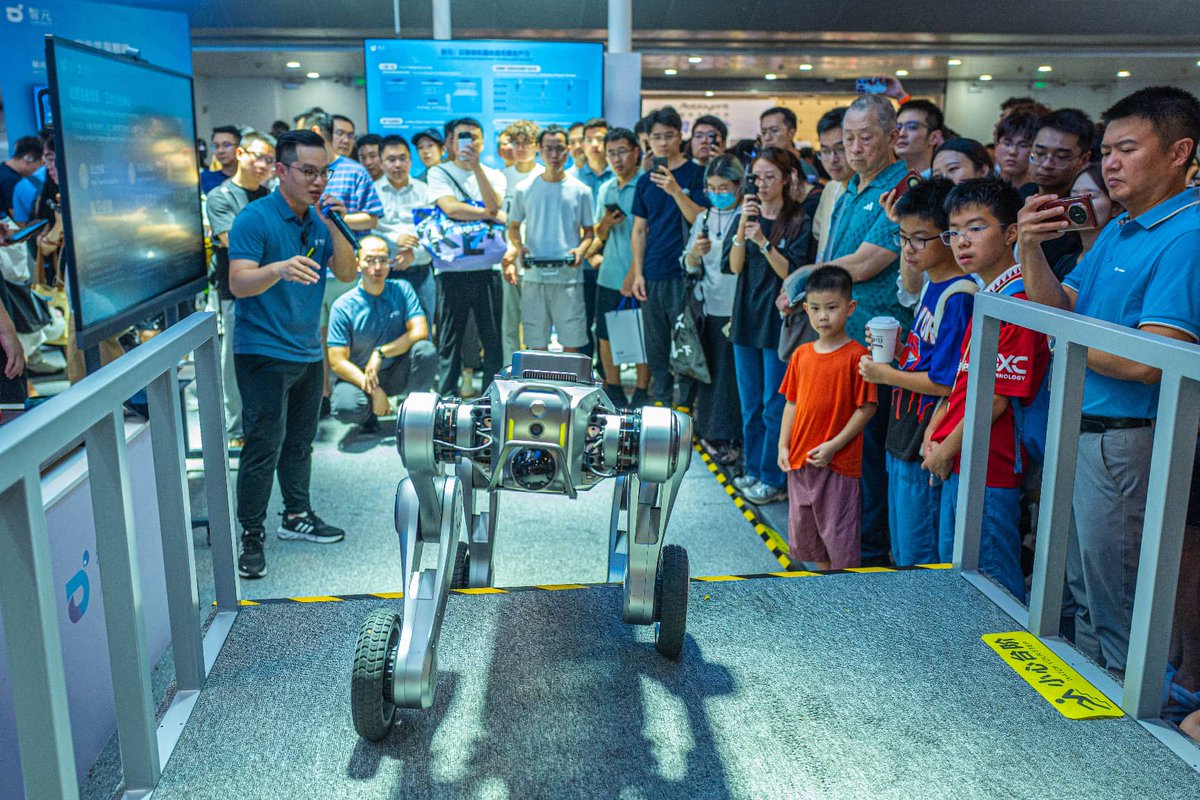
Check out this robot “school” in Zhengzhou, central China’s Henan Province, where humanoid robots are put through their paces like diligent students. Here, they practice everyday skills — from pouring water and neatly storing shoes to grasping and passing objects.
English
3
8
36
1.9K
China Science
China Science@ChinaScience·
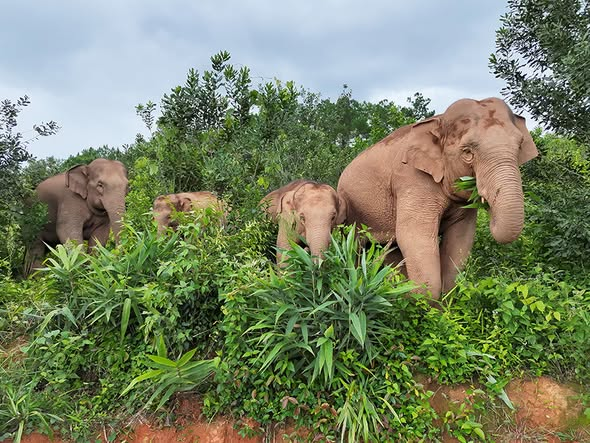
China's forest and grass coverage rate has exceeded 56% thanks to its greening efforts, according to a report released recently by the National Greening Commission. China's afforestation areas surpassed 3.56 million hectares in 2025, the report said, adding that the country had also restored nearly 4.93 million hectares of degraded grassland last year.
China Science tweet mediaChina Science tweet mediaChina Science tweet mediaChina Science tweet media
English
2
17
72
2.3K
China Science
China Science@ChinaScience·
A China-led international research team has identified four potential landing sites for China’s first crewed lunar landing, targeted by 2030, in the Rimae Bode region at the mare–highlands boundary of the moon. Using orbital data, the team conducted a detailed assessment and found that these sites could provide diverse geological samples, offering valuable insights into the region’s geological evolution, as well as improving understanding of the lunar mantle composition and volcanic processes. The study was published in the journal Nature Astronomy.
China Science tweet mediaChina Science tweet media
English
5
40
210
8.2K
China Science
China Science@ChinaScience·
A Chinese research team has developed a novel magnetic fluid material and proposed a liquid-based technical system for left atrial appendage occlusion of the heart, marking a transition of left atrial appendage occlusion technology from "solid adaptation" to a new stage of "complete fluidic sealing." This new occlusion technology integrates magnetic particles and in-situ curable carrier fluids into a new controllable robotic form: magnetofluids, which are deformable robots that can be remotely guided by external magnetic fields, flow into complex and narrow spaces, and adaptively fill irregular cavities after entering the body. Published in @Nature, the study addresses the core challenges in left atrial appendage thrombus therapy for the first time, and provides a safer and longer-lasting stroke prevention strategy for patients with atrial fibrillation, reducing the risk of secondary surgery and medical costs.
China Science tweet mediaChina Science tweet media
English
2
11
68
2.6K
China Science
China Science@ChinaScience·
A total of 796 generative artificial intelligence (AI) services had been filed with the Cyberspace Administration of China (CAC) as of Feb 28, according to the Chinese internet regulator on Tuesday.
China Science tweet mediaChina Science tweet mediaChina Science tweet mediaChina Science tweet media
English
0
5
38
2K
China Science
China Science@ChinaScience·
Chinese researchers have discovered a new microbial herbicide that can control weeds without polluting the environment while also supporting crop growth, offering a potential alternative to conventional chemical herbicides, according to a study published in the journal Crop Protection. Using morphological and molecular biological analyses, the research team isolated a previously unknown species of fungus from the rhizosphere – the soil region surrounding plant roots – of alfalfa, one of the world's most important legume forage crops. The newly identified microorganism, named the MXBP304 strain, can precisely target weed seeds without affecting the germination of alfalfa seeds or interfering with the growth of young seedlings. It also leaves the soil's ecological structure intact, allowing weed control to be achieved with what scientists describe as "zero pollution."
China Science tweet mediaChina Science tweet media
English
2
28
141
6.6K
China Science
China Science@ChinaScience·
In a first, a Chinese lab has successfully demonstrated remote, intelligent control of ground-based robots using OpenClaw and computing power from orbit. In the trial, the operator gave voice commands. OpenClaw received the commands and sent them to China's orbiting satellites. Large language models already running on the satellites used space-based computing power to process the commands. The results were then sent back to Earth, where OpenClaw read them to control ground robot movements. This task not only validates the feasibility of space computing for powering silicon-based intelligent agents, but also demonstrates that space computing may provide high-performance AI capabilities for these agents when ground networks prove unreliable.
China Science tweet mediaChina Science tweet media
English
7
27
119
5.7K
China Science
China Science@ChinaScience·
How many colors can canola flowers have? At Jiangxi Agricultural University in east China's Jiangxi Province, researchers have cultivated five new shades this year, expanding the spectrum of colored canola flowers to 80.
China Science tweet media
English
2
5
19
1.4K
China Science
China Science@ChinaScience·
Chinese scientists have created hexagonal diamond (HD) from highly oriented pyrolytic graphite (HOPG) compressed along the c-axis at elevated temperatures, with the millimeter-sized, phase-pure HD exhibiting slightly higher hardness than cubic diamond and high thermal stability, resolving the long-standing controversy on the existence of HD and paving the way for the future study of HD in advanced technological applications. The result was published in the journal @Nature.
China Science tweet media
English
7
30
141
6.7K
China Science
China Science@ChinaScience·
The 2026 Zhongguancun Forum, to be held in Beijing from March 25 to 29, will spotlight the theme of "Full Integration Between Technological and Industrial Innovation," an official with the Ministry of Science and Technology said on Wednesday. More than 1,000 guests from over 100 countries and regions are expected to participate in the forum, which features more than one hundred events, focusing on frontier fields such as 6G, brain-computer interfaces, and cell and gene therapy.
China Science tweet media
English
5
10
39
4.5K
China Science
China Science@ChinaScience·
Chinese archaeologists have uncovered a stone spindle whorl workshop dating back some 6,000 years at the Doushan site, the earliest prehistoric city site along the lower reaches of the Yangtze River, located in the city of Wuxi in east China's Jiangsu Province. The discovery, including more than 300 stone spindle whorls and a large number of unfinished stone blanks, revealed a full production line ranging from local quarrying to finished tools, demonstrating the craftsmanship of ancestors during the Majiabang culture period and suggesting the possibility of primitive trade existing 6,000 years ago.
China Science tweet mediaChina Science tweet mediaChina Science tweet media
English
3
26
132
7.4K
China Science
China Science@ChinaScience·
Fresh stories from the fields: Why does watermelon stay sweet all year round? At the Liguo Shunxin Supermarket in Jiaxiang County, East China's Shandong Province, rows of round, plump watermelons stand out on the shelves. Around noon, customers stream in continuously, with some picking up whole watermelons while others ask store staff to cut them open and sell them by weight. China is the world's largest producer and consumer of watermelons, with annual output remaining stable at around 60 million tons. According to statistics from the Food and Agriculture Organization of the United Nations, this accounts for roughly 60 percent of global production. Following the sweet story behind China's seemingly effortless "watermelon freedom," reporters explored how the fruit is supplied steadily throughout the year. Strong demand, reliable quality At the Liguo Shunxin Supermarket, "Mibao" watermelons grown in Southwest China's Yunnan Province sell for more than 4.99 yuan ($0.72) per jin (500 grams). "Even though the price is higher than in summer, sales remain strong," said supermarket manager Zhang Hongtao, pointing to a staff member restocking the display. Over the past half month, the store has maintained daily watermelon sales of more than 160 jin with weekend sales exceeding 240 jin. Zhang Hongtao has observed that during the off-season, customers usually buy smaller quantities at a time, but they purchase watermelons frequently and show strong willingness to buy them. Ms Zhang, who was selecting a watermelon, is one such regular customer. "Watermelons are juicy and sweet without being overwhelming. Both the elderly and children in my family love them," she said with a smile. "It was still cold recently, but sitting at home with the heater on and eating watermelon feels just as refreshing as having a cold drink in summer." The steady demand during the off-season is not only driven by consumers' taste preferences and emotional appeal, but also by reliable product quality. To ensure optimal flavor, the supermarket stores watermelons in refrigerated display cabinets, where they can remain in good condition for seven to ten days. "Some customers worry that the watermelons might not be ripe enough during this period, so we also offer a service where they can cut one open to check before purchasing," Zhang Hongtao said. At the Hushan Fruit and Vegetable Wholesale Market in Jiaxiang Street, Jiaxiang County, Shandong, 10 tons of watermelons freshly shipped from a production base in South China's Hainan Province were being unloaded. Li Jianguo, who has been in the watermelon wholesale business for more than a decade, explained that during spring and summer, the market mainly sells locally grown varieties such as "Tianwang" and "Jingxin." When temperatures drop, supply relies largely on southern production areas. These varieties typically have thicker rinds for transportation, accumulate sufficient sugar, and maintain stable flavor, Li said. The strong off-season market is also reflected in price trends. "Watermelon supply and prices show clear seasonal patterns," said Zhao Junye, a researcher at the Agricultural Information Institute of the Chinese Academy of Agricultural Sciences (CAAS). After October each year, watermelon supply begins to decline and prices gradually rise. In the first quarter, the national average wholesale price generally exceeded 3 yuan per jin. After April, supply increases significantly and prices fall rapidly. By the third quarter, when northern production regions harvest in large volumes, prices usually reach their lowest levels of the year, Zhao said. Sufficient supply across seasons Hainan island, with abundant heat and sunlight, is one of China's major winter production bases for fruits and vegetables. At the Beishanyang planting base in Haitang district of Sanya, Hainan Province, the watermelon harvest has already been completed. "With good varieties and good packaging, sales are also strong," said Zhang Wei, head of the base and deputy general manager of Hainan State Farms Shenquan Group Co, noting that the base grows seedless Qilin watermelons with bright red flesh, crisp texture and rich sweetness, with their sugar content reaching 14 degrees, making them highly popular in the market. To deliver this cross-season sweetness to consumers far away, careful work goes into packaging at the fields. Workers carefully select watermelons and pack them into specially designed corrugated cartons. Each box holds four watermelons weighing between 10 and 12 jin each, separated by thick cardboard partitions. According to Zhang Wei, watermelons shipped to other regions of China currently only require moderate insulation during transport and do not need cold-chain logistics. Watermelons grown at the base are mainly supplied to supermarkets in Shandong, Beijing and northeastern China. The market price of about 4 yuan per jin is higher than the previous range of 2.8 to 3.5 yuan per jin in past years. Zhang Wei said the base expanded its planting area to 500 mu (33.33 hectares) last year, with yields of about 5,000 jin per mu. "The melons were already fully booked before they were harvested," he said. To accommodate watermelons' preference for warmth and sunlight while protecting them from excessive rain, the base has built greenhouses that shield the crops from wind and rain while maintaining stable temperature and heat. Drip irrigation systems and monitoring equipment have also been introduced to create an optimal microclimate for watermelon growth. So what is the secret behind year-round watermelon supply? Xu Yong, a researcher at the Beijing Vegetable Research Center of the Beijing Academy of Agriculture and Forestry Sciences, explained that China's vast territory provides diverse geographical and climatic advantages. Combined with the development of suitable varieties and the widespread application of technologies such as integrated water and fertilizer management and green pest control, suitable environments for watermelon growth can be found in different regions across different seasons, according to Xu. Currently, China's watermelon production is concentrated in five major regions. The Yangtze River Basin and the Huang-Huai-Hai region account for more than 69 percent of total output, while South China, Northwest China and Northeast China play supporting roles. In terms of year-round supply, South China provides winter production, the Yangtze River Basin and Huang-Huai-Hai region enable early spring harvests, the northwest region extends the harvest season later into the year, and open-field cultivation in the northeast and northwest regions ensures summer and autumn supply. Molecular breeding yields diverse watermelons In Yanjiacun village of Yaojia Town, Zhongmu County in Central China's Henan Province, farmer Ma Xiuhong manages 2 mu of greenhouse land. In addition to conventional varieties, she reserves half a mu to grow "rainbow watermelons." These days, she has been busy transplanting newly cultivated seedlings into the soil. The "rainbow watermelon" she refers to is a new specialty variety developed in recent years by the Zhengzhou Fruit Research Institute of the CAAS. When cut open, the melon reveals red and yellow dual-colored flesh arranged like a rainbow. It is also highly sweet, crisp in texture, and rich in beta-carotene. "This variety was developed by crossing a high-sugar red-flesh watermelon with a crisp yellow-flesh watermelon and selecting superior offspring," explained Zhao Shengjie, an associate researcher at the Zhengzhou institute. To meet consumers' increasingly personalized preferences, China's watermelon breeding has continuously followed market trends. Xu said watermelon varieties in China are now highly diverse. In terms of maturity, they include early, mid-early and late-maturing types. In size, they range from large and medium to small watermelons. In flesh color, they include red, yellow, orange and multicolored varieties, Xu said. "Jingmei 2K," a variety bred by Xu's team with an average weight of about 4 jin per fruit, has become China's most widely planted small watermelon variety and better fits current consumer demand. Behind this diversity lies the "China sweetness" brought by the nation's scientific breeding. China's watermelon breeding technology ranks among the world's leading groups, with domestic varieties accounting for more than 98 percent of the market. High quality has become the standard in the domestic market. As early as 2012, Xu's team completed the world's first watermelon genome map, opening the "black box" of watermelon genetics. The research identified multiple genes resistant to diseases such as fusarium wilt, anthracnose and powdery mildew, and also clarified the genetic functions related to fruit sugar content, size and shape. "In recent years, we have adopted advanced molecular breeding methods," Xu said. "By combining desirable genes through molecular markers, we have greatly improved breeding efficiency, precision and target orientation, shortening the breeding cycle from seven to ten years to just three to four years." Looking ahead, what direction will watermelon breeding take? Xu explained that production still faces challenges such as increasingly frequent extreme weather and the emergence of new plant diseases. At the same time, consumers are demanding higher standards in both flesh color and fruit quality. As a result, further exploration of genes for disease resistance, environmental tolerance and superior quality is still needed. This will continue to improve watermelon resilience and quality while expanding the range of varieties. "In particular, high-quality medium and small watermelons with diverse flesh colors are likely to become a highlight of future watermelon varieties," Xu said. (By Yu Jingxian and Dong Zeyang, People’s Daily)
China Science tweet media
English
0
2
32
1.8K
China Science
China Science@ChinaScience·
A China-developed humanoid tennis robot has gone viral after newly released footage showcased its swift, agile movements on the court. Reportedly the world’s first fully autonomous humanoid tennis robot, it can rapidly adjust its footwork and positioning, coordinate upper- and lower-body movements to execute swings, and return shots with precision to designated targets. It is also capable of sustaining multi-shot rallies with players of varying skill levels, demonstrating advanced real-time perception, control, and decision-making, according to its Beijing-based developer.
GIF
GIF
English
1
5
42
2.5K
China Science
China Science@ChinaScience·
Chinese researchers have achieved a medical breakthrough by using endoderm stem cell-derived islet-like tissues (E-islet) to restore pancreatic islet function in patients with diabetes, potentially offering a new therapeutic option for millions worldwide. The new procedure reconstructed islet-like tissue using stem cells, or an endodermal branch, bypassing the prolonged differentiation process needed for traditional pluripotent stem cells, reducing cultivation time from 40 days to just 14 days and minimizing the risk of tumor formation. The research team has successfully treated three patients with type 1 diabetes using the new method, including a 30-year-old woman with an 18-year history of diabetes, a 45-year-old man with fulminant type 1 diabetes, and a 15-year-old girl -- the first ever juvenile case to receive such therapy. The study result was published in The Lancet Diabetes & Endocrinology.
China Science tweet mediaChina Science tweet mediaChina Science tweet mediaChina Science tweet media
English
3
42
148
6.1K
China Science
China Science@ChinaScience·
A joint China-Japan team has successfully measured chaotic magnetic turbulence on a very small scale — less than a single parsec (about 3.3 light-years) — in space for the first time, revealing new details about how cosmic rays travel through the Milky Way. The team studied a halo of high-energy light surrounding Geminga, a dead star -- known as a pulsar -- located about 800 light-years from Earth, using a massive detector array at Yangbajing in southwest China's Xizang. They achieved this by observing gamma rays with energies exceeding 100 tera-electron volts (TeV) -- far more powerful than anything produced by human-made particle accelerators. Published in the journal Science Advances, the study opens new doors for understanding cosmic-ray propagation and magnetic-field dynamics in the universe, and is expected to have far-reaching implications for future multi-messenger and high-energy gamma-ray studies.
China Science tweet media
English
1
8
43
2.9K
China Science
China Science@ChinaScience·
Beijing E-Town recently launched a smart elderly care robotics station, the first of its kind in the world, where robots are being introduced into real service settings to assist with the aging population. The four-story facility, covering about 1,100 square meters, has so far deployed more than 40 types of robots across areas including dining, recreation, healthcare and rehabilitation.
China Science tweet mediaChina Science tweet mediaChina Science tweet mediaChina Science tweet media
English
1
14
63
3.3K