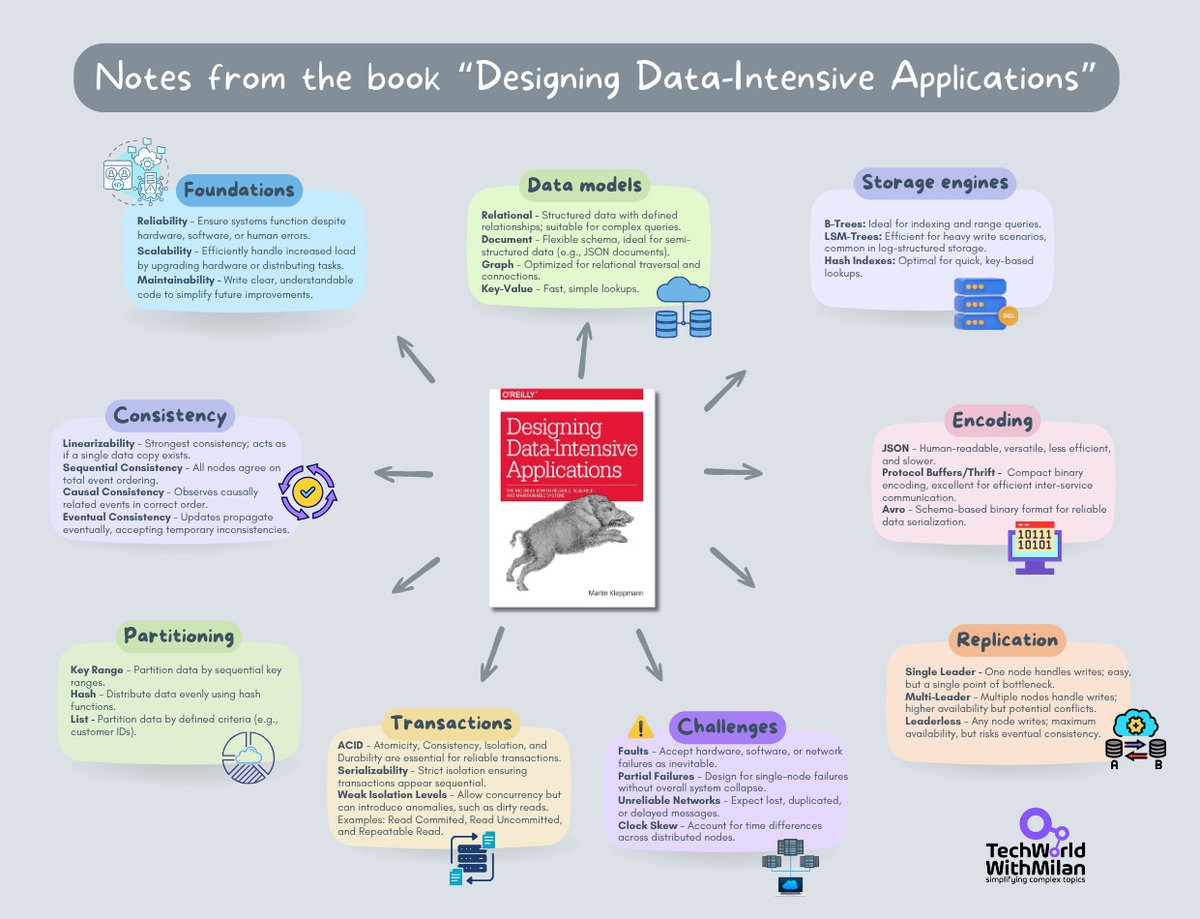
𝗪𝗵𝘆 𝘆𝗼𝘂 𝗺𝘂𝘀𝘁 𝗿𝗲𝗮𝗱 "𝗗𝗲𝘀𝗶𝗴𝗻𝗶𝗻𝗴 𝗗𝗮𝘁𝗮-𝗜𝗻𝘁𝗲𝗻𝘀𝗶𝘃𝗲 𝗔𝗽𝗽𝗹𝗶𝗰𝗮𝘁𝗶𝗼𝗻𝘀" 𝗯𝗼𝗼𝗸
I read it twice, and here's what people who didn't read it are missing.
After two decades in software, I thought I had a solid understanding of distributed systems. Then DDIA rewired how I feel about data.
The book doesn't just explain technologies; it explains why they exist.
Why does Cassandra use LSM-trees while PostgreSQL uses B-trees? DDIA shows you: LSM-trees optimize for write-heavy workloads through sequential writes, while B-trees optimize for reads through in-place updates.
Simple trade-off, huge implications.
Why does MongoDB default to single-leader replication instead of multi-master? Because write conflicts in multi-leader setups are brutal to resolve.
The complexity rarely justifies the benefits.
The real value isn't learning what these systems do. It's about learning how to reason about trade-offs: consistency vs. availability, latency vs. throughput, and simplicity vs. performance.
Every architecture decision becomes clearer when you understand the fundamentals.
Who should read it:
🔹 Mid-career engineers designing systems
🔹 Anyone preparing for systems design interviews
🔹 Architects who want to move beyond cargo-cult engineering
Who might struggle:
🔸 New developers (assumes distributed systems background)
🔸 Anyone looking for quick tutorials (it's pure concepts)
DDIA isn't light reading; it's 500 pages of dense material.
But it's the difference between copying patterns and understanding principles.
I wrote a complete breakdown covering what I loved, what I didn't, and the key takeaways that changed how I design systems.
👉 Read the complete analysis here: newsletter.techworld-with-milan.com/p/what-i-learn…
Have you read DDIA? What was your biggest insight?
#softwareengineering#programming#systemdesign
@therosieum Agree, it’s very common. I think it often develops in corporate culture, and then follows the person into other pursuits. Once adopted, seems uncommon for someone to break it.
Samsung’s giant new Texas fab will be dedicated to making Tesla’s next-generation AI6 chip. The strategic importance of this is hard to overstate.
Samsung currently makes AI4.
TSMC will make AI5, which just finished design, initially in Taiwan and then Arizona.
@howdoibuildthis@thiccyth0t Glad you liked it! I am still working on shifting from indexing highly just on the mean outcome ($ev) of events, to also giving proper consideration to the median outcome, case by case
@mathsppblog@s_gruppetta you guys are all-stars. I found reading Rodrigo’s “little book of itertools” followed by Stephen’s “the itertools series (with Yteria)” articles to be a super effective (and complementary) learning path. Thx!
@treyhunner I find writing lots of asserts w/ LBYL to often require too much up front effort to justify what it serves. Only thing I like about this style is that they are silent when they work, at least. I prefer to just use try/except everywhere with EAFP.
Today's article has a duck calling out…
It discusses a bit of duck typing, and talks about callables
Let me know what you think. It's more of a thought experiment than full-fledged code today
link in replies, as usual
Writing data to production is a contract!
The contract states:
1. I’ve tested this data set for quality bugs in an automated way.
This doesn’t mean bad data will miss production every time. But it does mean a large majority of quality errors will be stopped before reaching production.
2. I’ve validated the approach, metrics and dimensions with downstream consumers.
Publishing high-quality data that nobody had say in defining is almost as bad as publishing bad data. Include your customers in these conversations. Don’t publish non-useful data to production!
When pattern do you prefer? Write-audit-publish or signal table?
#dataengineering
@driscollis@pawjast So when a library is “built on top of” another library, it is importing some pieces of, but not the entirety of, the parent library?
Do you want to know what I ate while in Rome on holiday?
No? I thought so.
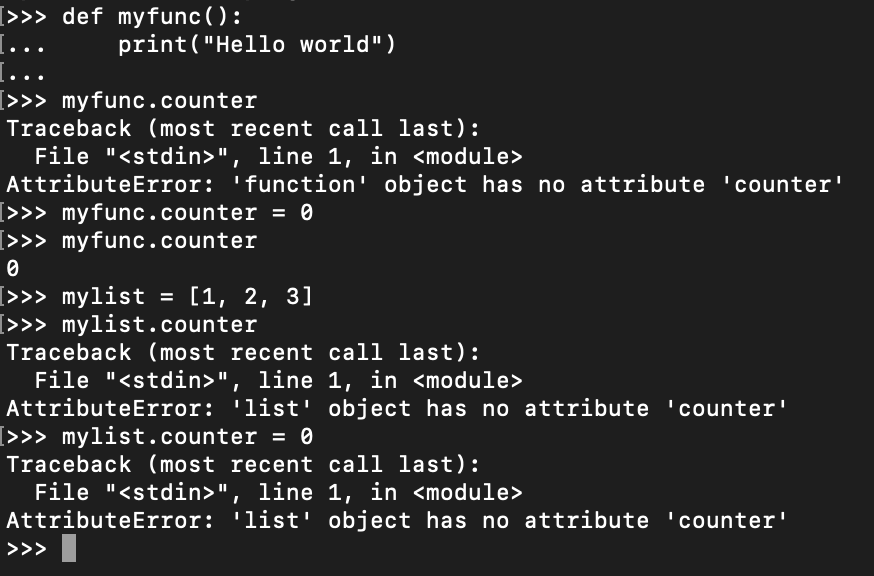
Instead, do you want to see some quirks that are a result of functions being objects? ("Everything is an object in Python"–how often have you heard that?!)
Here's a video highlighting some of these…
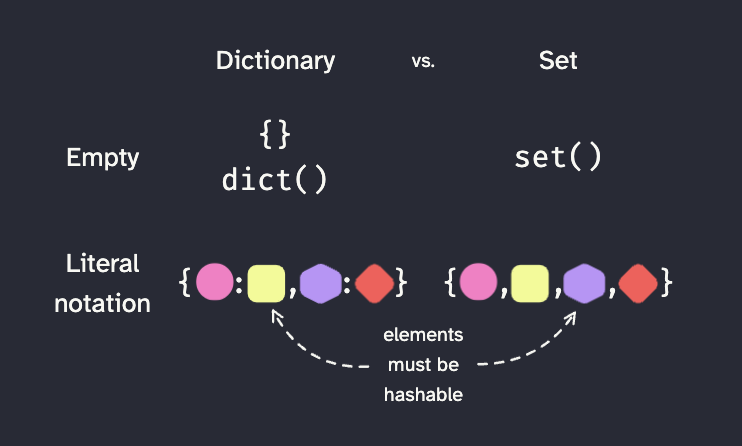
@mathsppblog@dannyreigns015 This is how a dict ensures uniqueness per key and a set ensures uniqueness per item? Nice…I presume it is less efficient to compare the dictkeys and set items in their original formats without converting them into ints via using hash?
@dannyreigns015 Under the hood, an object is hashable if you can call the built-in `hash` on it.
`hash` is a built-in that takes an object and converts it to an integer that is “almost unique”.
It's used to implement efficient dicts and sets.
en.wikipedia.org/wiki/Hash_func…