Michael Churchill

6.7K posts

Michael Churchill

Michael Churchill

@ChurchillMic

Fusion energy computational research engineer/physicist, head of digital engineering @PPPLab #fusion #AI

Princeton, NJ Katılım Mart 2013
2.3K Takip Edilen754 Takipçiler
Cosmos Archive
Cosmos Archive@cosmosarcive·
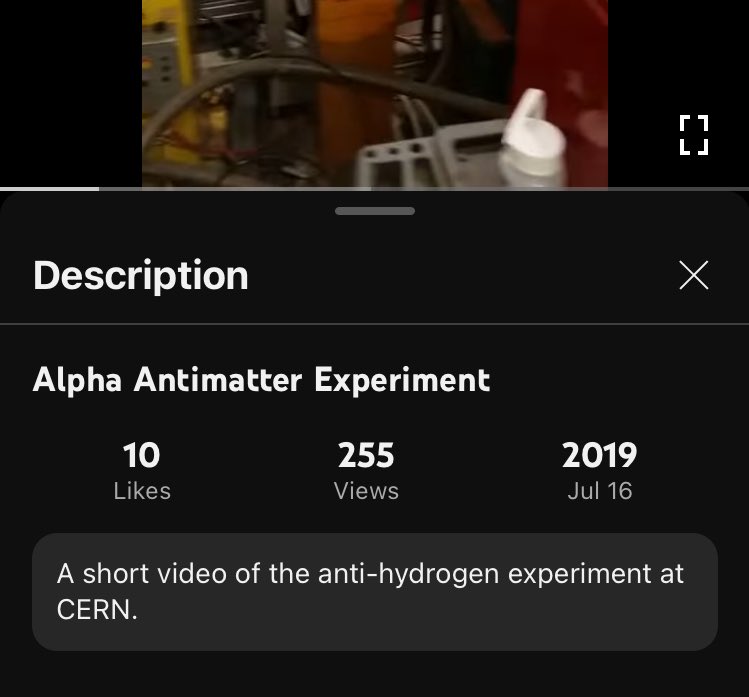
@ChurchillMic Look at the YouTube user’s channel and other videos he works there, he has setups and calibrations of anti matter at CERN…there’s no clear evidence it’s not CERN unless he’s got another stellarator on the side
Cosmos Archive tweet media
English
1
0
0
208
Cosmos Archive
Cosmos Archive@cosmosarcive·
Real plasma in a stellarator filmed at CERN: Non-axisymmetric coils sculpt a quasi-symmetric magnetic field, confining 10⁸ K ions in stable helical orbits; no tokamak disruptions, just pure 3D topology taming chaos.
English
10
59
462
37.9K
Michael Churchill retweetledi
Meir Yossef Levi
Meir Yossef Levi@MeirYossef_Levi·
Why does contrastive learning produce Gaussian representations? My colleague - Roy Betser shows it’s not accidental, just geometry + probability. A simple perspective on InfoNCE from our #ICLR2026 oral presentation. Worth a read: 👉 @rbetser93/why-contrastive-learning-naturally-produces-gaussian-representations-bc4058a8d46c" target="_blank" rel="nofollow noopener">medium.com/@rbetser93/why…
English
2
37
234
29.6K
Michael Churchill retweetledi
Patrick C Toulme
Patrick C Toulme@PatrickToulme·
Frontier pretraining infrastructure is already open source, and I don't think most people realize it. I keep seeing teams spend months duplicating the same work — FSDP sharding, kernel fusion, collective overlap, MoE routing — all from scratch on PyTorch + NVIDIA. I ran a GPT-OSS MoE training job on MaxText (Google's open source JAX + XLA framework) for under $10 and traced the full compilation pipeline. The amount of work the compiler does automatically is staggering. New post: patricktoulme.substack.com/p/frontier-pre…
English
6
23
327
20.9K
Michael Churchill
Michael Churchill@ChurchillMic·
@curiouswavefn Keplers laws of planetary motion also. That one is an interesting story as you see the evolution to a true mechanistic model in Newton, later Einstein, etc.
English
0
0
1
113
Ash Jogalekar
Ash Jogalekar@curiouswavefn·
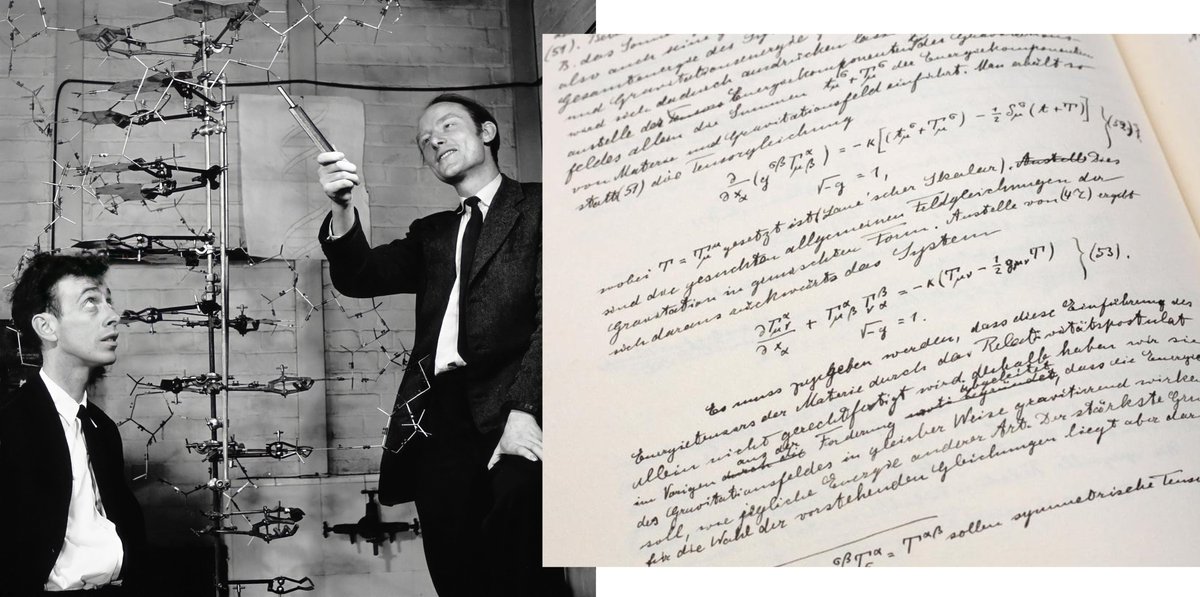
In this post I want to put forth a provocative claim: Some of the greatest scientific discoveries in the history of humanity were made largely by fitting data to a model and abstracting a general set of laws or a theory from it. There is a good chance that AI can, sooner or later, make epochal discoveries using similar data analysis. Excitingly, I think there are ways in which we could potentially validate the idea, even if retrospectively to begin with. Three of the greatest scientific discoveries in history were essentially data fitting exercises: 1. Watson and Crick fit a few critical pieces of data to build a DNA model. 2. Planck fit data from blackbody radiation to an equation that had to include the quantum hypothesis. 3. Darwin fit an enormous amount of evolutionary data to derive the mechanism of natural selection for evolution. Our tantalizing challenge now is: can AI recapitulate these seminal discoveries and progress to making similar ones in the future? medchemash.substack.com/p/can-ai-reall…
Ash Jogalekar tweet media
English
15
12
59
5.4K
Corey Ganim
Corey Ganim@coreyganim·
Best breakdown of Karpathy's "second brain" system I've seen. My co-founder turned it into an actual step-by-step build. The 80/20: 1. Three folders: raw/ (dump everything), wiki/ (AI organizes it), outputs/ (AI answers your questions) 2. One schema file (CLAUDE.md) that tells the AI how to organize your knowledge. Copy the template in the article. 3. Don't organize anything by hand. Drop raw files in, tell the AI "compile the wiki." Walk away. 4. Ask questions against your own knowledge base. Save the answers back. Every question makes the next one better. 5. Monthly health check: have the AI flag contradictions, missing sources, and gaps. 6. Skip Obsidian. A folder of .md files and a good schema beats 47 plugins every time. He includes a free skill that scaffolds the whole system in 60 seconds.
Nick Spisak@NickSpisak_

x.com/i/article/2040…

English
66
300
3.2K
541.7K
François Chollet
François Chollet@fchollet·
Science went from the initial observation of radioactivity to a working atom bomb over 47 years via only about 9 distinct key experiments -- extremely few data points -- and symbolic models concise enough they would fit on a single page. This is what extreme generalization looks like, and it powered entirely by symbolic compression. Turn a handful of data points (deliberately collected) into a tractable plan to completely reshape reality, by reverse-engineering the causal symbolic rules behind the data.
English
60
107
1.4K
97.4K
Stephan Hoyer
Stephan Hoyer@shoyer·
Dear Codex, when I tell you to run a massive parameter sweep & model exploration overnight, you should not report “done for the night” after 30 minutes when you self-report that it’s only 2/3 done!
English
26
4
375
33.2K
Michael Churchill retweetledi
Andrej Karpathy
Andrej Karpathy@karpathy·
Wow, this tweet went very viral! I wanted share a possibly slightly improved version of the tweet in an "idea file". The idea of the idea file is that in this era of LLM agents, there is less of a point/need of sharing the specific code/app, you just share the idea, then the other person's agent customizes & builds it for your specific needs. So here's the idea in a gist format: gist.github.com/karpathy/442a6… You can give this to your agent and it can build you your own LLM wiki and guide you on how to use it etc. It's intentionally kept a little bit abstract/vague because there are so many directions to take this in. And ofc, people can adjust the idea or contribute their own in the Discussion which is cool.
Andrej Karpathy@karpathy

LLM Knowledge Bases Something I'm finding very useful recently: using LLMs to build personal knowledge bases for various topics of research interest. In this way, a large fraction of my recent token throughput is going less into manipulating code, and more into manipulating knowledge (stored as markdown and images). The latest LLMs are quite good at it. So: Data ingest: I index source documents (articles, papers, repos, datasets, images, etc.) into a raw/ directory, then I use an LLM to incrementally "compile" a wiki, which is just a collection of .md files in a directory structure. The wiki includes summaries of all the data in raw/, backlinks, and then it categorizes data into concepts, writes articles for them, and links them all. To convert web articles into .md files I like to use the Obsidian Web Clipper extension, and then I also use a hotkey to download all the related images to local so that my LLM can easily reference them. IDE: I use Obsidian as the IDE "frontend" where I can view the raw data, the the compiled wiki, and the derived visualizations. Important to note that the LLM writes and maintains all of the data of the wiki, I rarely touch it directly. I've played with a few Obsidian plugins to render and view data in other ways (e.g. Marp for slides). Q&A: Where things get interesting is that once your wiki is big enough (e.g. mine on some recent research is ~100 articles and ~400K words), you can ask your LLM agent all kinds of complex questions against the wiki, and it will go off, research the answers, etc. I thought I had to reach for fancy RAG, but the LLM has been pretty good about auto-maintaining index files and brief summaries of all the documents and it reads all the important related data fairly easily at this ~small scale. Output: Instead of getting answers in text/terminal, I like to have it render markdown files for me, or slide shows (Marp format), or matplotlib images, all of which I then view again in Obsidian. You can imagine many other visual output formats depending on the query. Often, I end up "filing" the outputs back into the wiki to enhance it for further queries. So my own explorations and queries always "add up" in the knowledge base. Linting: I've run some LLM "health checks" over the wiki to e.g. find inconsistent data, impute missing data (with web searchers), find interesting connections for new article candidates, etc., to incrementally clean up the wiki and enhance its overall data integrity. The LLMs are quite good at suggesting further questions to ask and look into. Extra tools: I find myself developing additional tools to process the data, e.g. I vibe coded a small and naive search engine over the wiki, which I both use directly (in a web ui), but more often I want to hand it off to an LLM via CLI as a tool for larger queries. Further explorations: As the repo grows, the natural desire is to also think about synthetic data generation + finetuning to have your LLM "know" the data in its weights instead of just context windows. TLDR: raw data from a given number of sources is collected, then compiled by an LLM into a .md wiki, then operated on by various CLIs by the LLM to do Q&A and to incrementally enhance the wiki, and all of it viewable in Obsidian. You rarely ever write or edit the wiki manually, it's the domain of the LLM. I think there is room here for an incredible new product instead of a hacky collection of scripts.

English
906
2.5K
24.8K
5.9M
Jon Church
Jon Church@jonchurch·
@ChurchillMic @simonw @thsottiaux Hm? Codex is already in the mobile app. What app are you requesting it be added to? You have to use it once on the web first for it to show up in mobile I believe
Jon Church tweet media
English
2
0
0
21
Simon Willison
Simon Willison@simonw·
@thsottiaux Make Codex for web a whole lot more powerful, it's a more convenient form factor for off-peak usage since I can control it from my phone
English
5
0
154
6.4K
Michael Churchill retweetledi
Sander Dieleman
Sander Dieleman@sedielem·
"Diffusability" is all about the spectrum. arxiv.org/abs/2603.14645 If you enjoyed my blog post about diffusion as spectral autoregression, and are wondering how this relates to latent diffusion, give this paper a read!
Sander Dieleman tweet media
English
7
70
458
21.3K
davinci
davinci@leothecurious·
@ChurchillMic considering dreams as basic data augmentation in the same sense as ML (transformations to induce more robust representations) is kind of a stretch imo
English
3
0
0
35
davinci
davinci@leothecurious·
how much data augmentation does a human really need when learning?
English
6
0
12
1.6K
Michael Churchill retweetledi
Arya Hezarkhani
Arya Hezarkhani@_i_am_arya·
Today, we're announcing Heaviside, our foundation model for electromagnetism. Trained on tens of millions of designs and over 20 years of proprietary simulation data, Heaviside predicts electromagnetic behavior from geometry in 13ms, which is 800,000x faster than a commercial solver. Heaviside is not a language model, and it’s not a surrogate model. Heaviside marks a new class of foundation model for physics which understands the fundamental relationships between materials, the geometries and the electromagnetic fields they generate. We’re releasing a research preview of Heaviside in Atlas RF Studio, an interactive agentic sandbox where you describe the EM behavior you want and the model generates the physical structure that produces it. @arenaphysica , we believe the implications of this class of model extend well beyond RF, as the frontier of exquisite hardware is electromagnetically-governed: wireless communication, radar, power delivery, high-speed computing, and the interconnects inside every chip on earth. In the months ahead, we’re excited to scale up Heaviside to broader frequency ranges, design spaces, and to support silicon-level designs, and deploy it with our closest partners and collaborators in service of their biggest design challenges. If you’ve read our thesis, this is just Step 2 in our pursuit of electromagnetic superintelligence. Read the full announcement and try Atlas RF Studio…tell us what you think: arenaphysica.com/publications/r…
English
147
488
3.9K
682.3K
Michael Churchill retweetledi
Sadao Tokuyama
Sadao Tokuyama@tokufxug·
LLMが遂にテキストを脱皮し「現実世界」の3D空間をガチで理解し始めた。 SpatialLMは3D点群にLLMの推論力を適用し、壁やドアの構造、空間の繋がりを解釈して構造化データを出力する。 言語モデルを空間知能へ拡張するブレイクスルー。コードも論文もオープンに公開。
日本語
36
397
3.1K
222.5K