
Rik

185 posts

Rik banner
Rik

Rik

@CircleOfComp

Investor

Katılım Kasım 2024
321 Takip Edilen34 Takipçiler
Rik
Rik@CircleOfComp·
@firstadopter This os not a long term thesis for Nvidia. Makes no difference over the long chalk and theres no way the smartest companies on the planet are just going to keep paying nvidia 70% margins without pursuing alternatives
English
1
0
0
1.7K
Rik
Rik@CircleOfComp·
@TheWiseIC Problem is with uber is pricing power and margins. Yes it might be able to deploy ads, but im equally skeptical of the Akman ube as a global untouchable platform thesis. Likely to remain a very difficult business.
English
0
0
0
73
The Wise Investor 🧠
The Wise Investor 🧠@TheWiseIC·
I think the “ $UBER is an app ” thesis has to be one of the most retarded statements one can make. Second to “ ChatGPT will bankrupt $GOOG ”. I look forward to fading the market and making tons of money again. Let’s see. 🤝
English
5
0
11
1.6K
Rik
Rik@CircleOfComp·
Meta is not remotely close tot he competative position of Google, and that gap will only widen. Theres questions over how much further it can push without degradation of UX. it has very little new optionality in different markets vs Google. I could go on.
English
0
0
0
17
Rik
Rik@CircleOfComp·
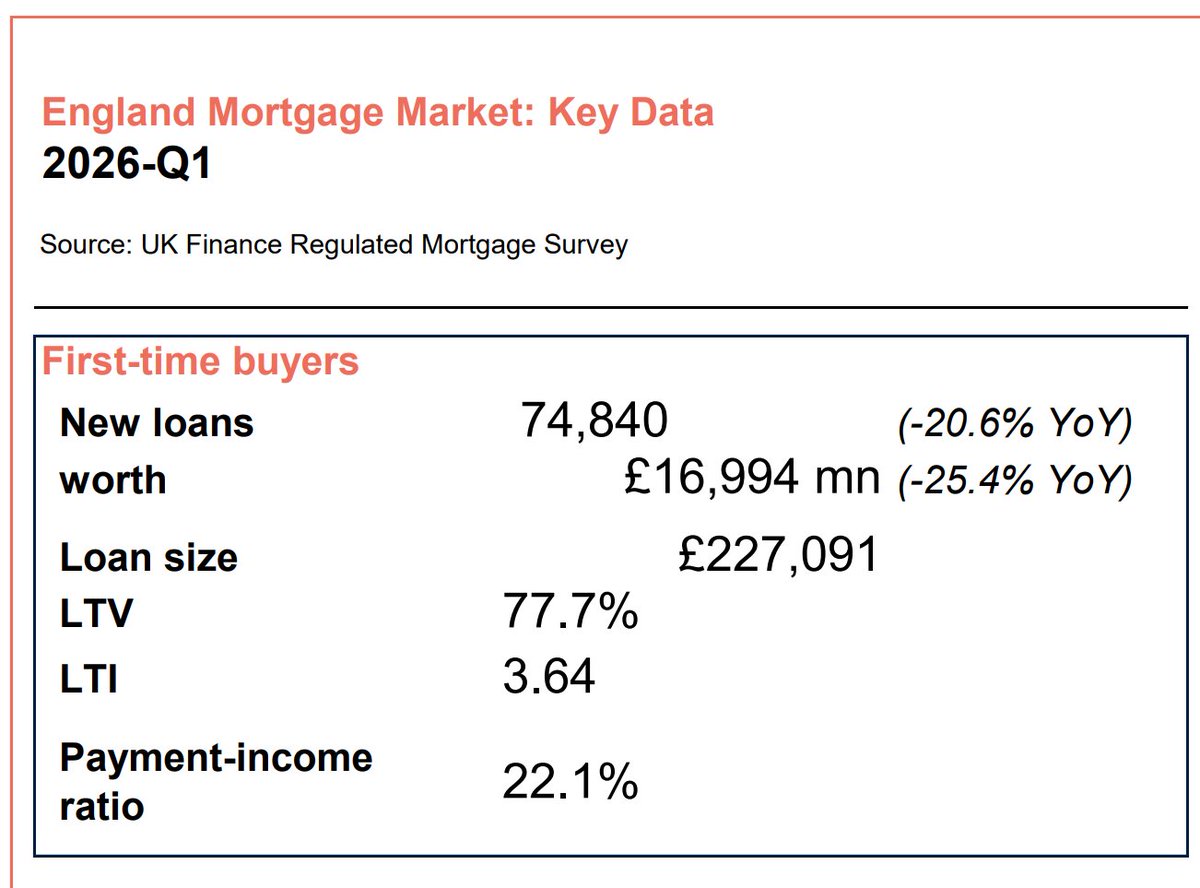
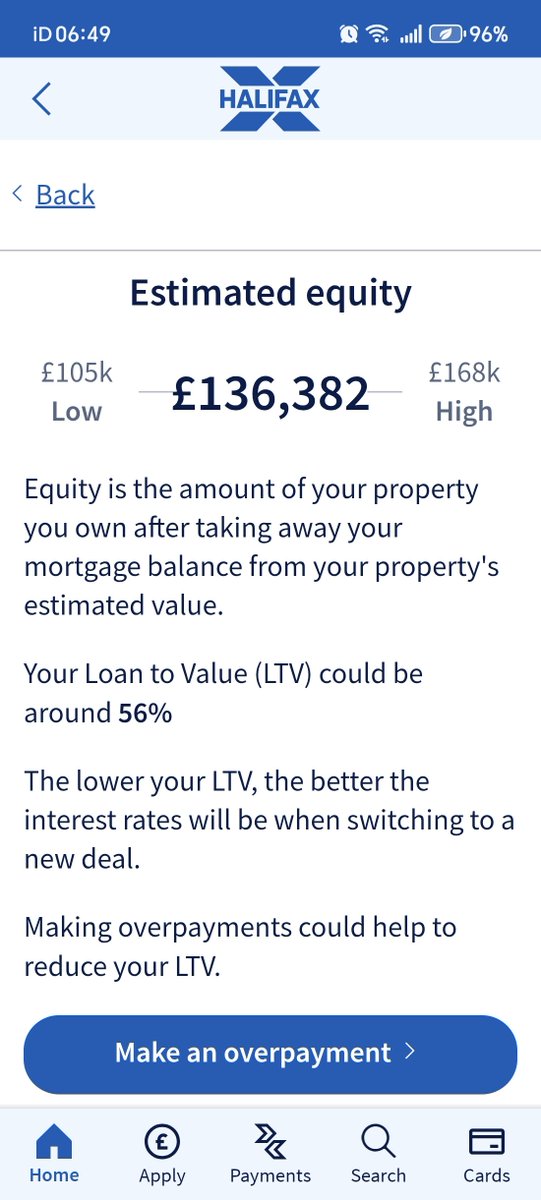
@JohnPretty2o2o @mikerecine This is wrong. It was simply collapsing interest rates. The average peice wont even double over the next 15 years. That game is well and truly over.
English
0
0
1
71
John Pretty
John Pretty@JohnPretty2o2o·
This has NOTHING TO DO WITH YOUR GRANDPARENTS! The reason for high house prices is twofold: 1) Bank deregulation circa 2000 leading to the excessive availability of cheap credit. 2) Mass inward migration - enabled in order to artificially keep demand (and therefore prices) high. Blame the politicians not the pensioners!!!
English
5
5
47
1.2K
Rik
Rik@CircleOfComp·
For someone calling themselves AI investor, youd think they would have actually researched the economics of the business. TPUs give Google a low cost producer advantage, that gives them multiple flywheels going forward in terms of new compute. They offer Nvidia chips too.
The AI Investor@The_AI_Investor

Google is a great company, but: In models, Gemini is behind Claude and GPT. In compute, TPUs are behind NVIDIA GPUs. Google Search growing 19% year over year was actually quite impressive. Are people still using search that much? Does Google deserve a premium over companies like MSFT and NVDA?

English
0
0
1
52
Rik
Rik@CircleOfComp·
@kevinxu @OptionsSurgery Absolute nonsense 😂. youd have to be financially illiterate not to be able to retire on 10 million. At any age.
English
1
0
9
493
Kevin Xu
Kevin Xu@kevinxu·
@OptionsSurgery realistic projections of what life will cost in the future and 60+ years of life to live
English
26
1
22
22.5K
Rik
Rik@CircleOfComp·
@BenBajarin @TheKanter Andy why does it matter? What counts is deliverable compute for the application its required for. You dont need bleeding edge for everything. The economics have to work first and formost.
English
0
0
0
12
Ben Bajarin
Ben Bajarin@BenBajarin·
@TheKanter We know they won't compete on performance at least in a fair accellerator to accellerator fight.
English
1
0
0
522
Rik
Rik@CircleOfComp·
@Steve_Yegge @demishassabis Complete mis-read. Google is in the steongest AI position globally, and anyone thinking that has come about by chance cannot be taken seriously. Ai is orders of magnitude bigger than the developer market, and Google gets paid on Anthropic too. Complete nonsense.
English
0
0
2
868
Steve Yegge
Steve Yegge@Steve_Yegge·
I'm not trying to misrepresent anyone, and perhaps my Googler friends are misinformed. But I strongly suspect that by my own notions of what constitutes advanced AI adoption--and indeed, what most of the industry would expect from Google right now--you are not doing great. At Anthropic, which is basically the bar at this point, everyone is burning, I'd guess, 10M to 15M tokens a day. If Google can convince me that half their engineers are burning 4M tokens a day, then I'd be happy to post a retraction with an apology.
English
119
7
366
195.4K
Steve Yegge
Steve Yegge@Steve_Yegge·
I was chatting with my buddy at Google, who's been a tech director there for about 20 years, about their AI adoption. Craziest convo I've had all year. The TL;DR is that Google engineering appears to have the same AI adoption footprint as John Deere, the tractor company. Most of the industry has the same internal adoption curve: 20% agentic power users, 20% outright refusers, 60% still using Cursor or equivalent chat tool. It turns out Google has this curve too. But why is Google so... average? How is it that a handful of companies are taking off like a spaceship, and the rest, including Google, are mired in inaction? My buddy's observation was key here: There has been an industry-wide hiring freeze for 18+ months, during which time nobody has been moving jobs. So there are no clued-in people coming in from the outside to tell Google how far behind they are, how utterly mediocre they have become as an eng org. He says the problem is that they can't use Claude Code because it's the enemy, and Gemini has never been good enough to capture people's workflows like Claude has, so basically agentic coding just never really took off inside Google. They're all just plodding along, completely oblivious to what's happening out there right now. Not only is Google not able to do anything about it, they don't seem to be aware of the problem at all. I'm having major flashbacks to fifty years ago as a kid at the La Brea Tar Pits, asking, "why can't they just climb out?" My Google friend and I had this conversation over a month ago. I didn't share it because I wanted to look around a bit, and see if it's really as bad as all that. I've been talking to people from dozens of companies since then. And yeah. It's as bad as all that. Google is about average. Some companies at the bottom have near-zero AI adoption and can't even get budget for AI. They may have moats and high walls, but the horde is coming for them all the same. And then there are a few companies I've met recently who are *amazingly* leaned in to AI adoption. One category-leader company just cancelled IntelliJ for a thousand engineers. That's an incredibly bold move, one of many they're making towards agentic adoption. In my opinion, that company is setting themselves up for a _huge_ W. As for the rest, well, it's the Great Siloing. Everyone's flying blind. With nobody moving companies, no company knows where they stand on the AI adoption curve. Nobody knows how they're doing compared to everyone else. Half of them just check a box: "We enabled {Copilot/Cursor} for everyone!" Cue smug celebrations. They think this is like getting SOC2 compliance, just a thing they turn on and now it's "solved." And they don't realize that they've done effectively nothing at all. All because of a hiring freeze.
English
536
471
5.4K
2.8M
Rik
Rik@CircleOfComp·
@AJavaras2381 @wil_da_beast630 Anyone claiming that if both played each other over their prime say 10 years, that Jack wouldnt have been smoked by Tiger is kidding themselves.
English
0
0
0
13
Alex Javaras
Alex Javaras@AJavaras2381·
@wil_da_beast630 Any person who knows golf, truly knows that Tiger was the best, even if he didn't win the most majors. Injuries alone cost him finishing with 25 majors. He was at 14 at only 32 years old. I'm sick of the jack has more majors therefore he's better talk. He never had injuries
English
3
0
5
1.8K
Wilfred Reilly
Wilfred Reilly@wil_da_beast630·
Flip the top two. The Tiger never caught The Bear.
Wilfred Reilly tweet media
English
572
39
1.6K
420.7K
Rik
Rik@CircleOfComp·
@aakashgupta @Gautam__Baid The edge, if it exists, is that they built a habit loop for a specific user type before Google noticed the segment mattered. Google is turning into the greatest company thats every been built. Thats just a fact
English
0
0
0
5
Rik
Rik@CircleOfComp·
@aakashgupta @Gautam__Baid The Gemini 5.7% to 21.5% figure is actually the counterargument to what your saying, not evidence for it. That growth happened because of vertical integration The 250 person startup’s edge is not multi-model routing, that’s copyable in a quarter.
English
1
0
0
18
Aakash Gupta
Aakash Gupta@aakashgupta·
Google had every advantage. They own the models. They own the search infrastructure. They own the enterprise relationships through Workspace. They own Chrome. They own Android. Gemini went from 5.7% to 21.5% market share in twelve months. And a 250-person startup still built the product Google can't. The reason is structural. Perplexity routes queries to Claude, GPT-5.4, Grok, and Gemini based on which model performs best for each specific task. Google will never do this. Routing a user's query to Claude means admitting Claude is better at that task than Gemini. Every query sent to a competitor's model is a data point against the thesis that justified billions in Gemini R&D. Google's AI strategy is vertical integration. Build the model, embed it in Search, embed it in Workspace, embed it in Android, and capture the entire value chain. That strategy took Gemini from obscurity to 21.5% market share in a year. It also made it structurally impossible to build a multi-model orchestration product. Microsoft has the same problem with Copilot. They invested $13 billion in OpenAI. Copilot runs on GPT. Suggesting that Claude handles reasoning better than GPT would undermine the largest AI investment in corporate history. Copilot sits at 1.2% market share despite being embedded in every Windows machine and every Office installation on Earth. The tweet's Stripe analogy lands here too. Banks could have built Stripe. They had the payment infrastructure, the regulatory licenses, the customer relationships. They couldn't, because Stripe's value proposition required connecting to every bank simultaneously. A single bank building Stripe would mean admitting their competitors' rails were equally valid. Google could have built Perplexity in 2023 with 50 engineers. The technology wasn't hard. The organizational incentive was impossible. That's why 250 employees and $200M in ARR can sit inside a market where Google is spending tens of billions annually. The gap between them will close on raw capability every quarter. It will never close on architecture, because closing it would require Google to become model-agnostic, and becoming model-agnostic would mean dismantling the reason Gemini exists.
Aakash Gupta@aakashgupta

Perplexity is a $20 billion company that built zero AI models. Their product sits on top of 19 models made by other companies. Claude for reasoning. Gemini for research. GPT-5.4 for long context. Grok for lightweight tasks. Nano Banana for images. Veo 3.1 for video. You write one prompt. Computer picks the best model combo for the job, spawns sub-agents in parallel, and runs the whole thing in a cloud sandbox while your laptop is closed. 400+ app connectors. Gmail, GitHub, Snowflake, Salesforce, Ahrefs, Shopify. Read and write access. One prompt can scrape your competitors, pull live financials from FactSet, query your data warehouse in plain English, and push a finished report to Google Slides. No API keys. No terminal. The enterprise usage data tells you where this is heading. In January 2025, 90% of enterprise tasks on Perplexity ran on two models. By December, no single model held more than 25% of usage. A new frontier model launched every 17.5 days in 2025. Each one brought different strengths. The era of picking one model is ending. Perplexity built none of the intelligence. They built the routing layer that makes the intelligence usable. Stripe didn't build the banks. Google didn't build the websites. The value is in making complexity disappear. Four of the Mag Seven already use Perplexity's search API in production. Every model provider is now building orchestration in-house. The question is whether the routing layer stays independent or gets absorbed. I wrote the complete guide to using Computer without wasting credits. 6 use cases, the prompt spec that controls cost, honest limitations. aibyaakash.com/p/perplexity-c…

English
24
46
364
138.1K
Rik
Rik@CircleOfComp·
@heynavtoor Claude and Gemini got the correct answer immediately.
English
0
0
1
510
Nav Toor
Nav Toor@heynavtoor·
🚨SHOCKING: Apple just proved that AI models cannot do math. Not advanced math. Grade school math. The kind a 10-year-old solves. And the way they proved it is devastating. Apple researchers took the most popular math benchmark in AI — GSM8K, a set of grade-school math problems — and made one change. They swapped the numbers. Same problem. Same logic. Same steps. Different numbers. Every model's performance dropped. Every single one. 25 state-of-the-art models tested. But that wasn't the real experiment. The real experiment broke everything. They added one sentence to a math problem. One sentence that is completely irrelevant to the answer. It has nothing to do with the math. A human would read it and ignore it instantly. Here's the actual example from the paper: "Oliver picks 44 kiwis on Friday. Then he picks 58 kiwis on Saturday. On Sunday, he picks double the number of kiwis he did on Friday, but five of them were a bit smaller than average. How many kiwis does Oliver have?" The correct answer is 190. The size of the kiwis has nothing to do with the count. A 10-year-old would ignore "five of them were a bit smaller" because it's obviously irrelevant. It doesn't change how many kiwis there are. But o1-mini, OpenAI's reasoning model, subtracted 5. It got 185. Llama did the same thing. Subtracted 5. Got 185. They didn't reason through the problem. They saw the number 5, saw a sentence that sounded like it mattered, and blindly turned it into a subtraction. The models do not understand what subtraction means. They see a pattern that looks like subtraction and apply it. That is all. Apple tested this across all models. They call the dataset "GSM-NoOp" — as in, the added clause is a no-operation. It does nothing. It changes nothing. The results are catastrophic. Phi-3-mini dropped over 65%. More than half of its "math ability" vanished from one irrelevant sentence. GPT-4o dropped from 94.9% to 63.1%. o1-mini dropped from 94.5% to 66.0%. o1-preview, OpenAI's most advanced reasoning model at the time, dropped from 92.7% to 77.4%. Even giving the models 8 examples of the exact same question beforehand, with the correct solution shown each time, barely helped. The models still fell for the irrelevant clause. This means it's not a prompting problem. It's not a context problem. It's structural. The Apple researchers also found that models convert words into math operations without understanding what those words mean. They see the word "discount" and multiply. They see a number near the word "smaller" and subtract. Regardless of whether it makes any sense. The paper's exact words: "current LLMs are not capable of genuine logical reasoning; instead, they attempt to replicate the reasoning steps observed in their training data." And: "LLMs likely perform a form of probabilistic pattern-matching and searching to find closest seen data during training without proper understanding of concepts." They also tested what happens when you increase the number of steps in a problem. Performance didn't just decrease. The rate of decrease accelerated. Adding two extra clauses to a problem dropped Gemma2-9b from 84.4% to 41.8%. Phi-3.5-mini from 87.6% to 44.8%. The more thinking required, the more the models collapse. A real reasoner would slow down and work through it. These models don't slow down. They pattern-match. And when the pattern becomes complex enough, they crash. This paper was published at ICLR 2025, one of the most prestigious AI conferences in the world. You are using AI to help you make financial decisions. To check legal documents. To solve problems at work. To help your children with homework. And Apple just proved that the AI is not thinking about any of it. It is pattern matching. And the moment something unexpected shows up in your question, it breaks. It does not tell you it broke. It just quietly gives you the wrong answer with full confidence.
Nav Toor tweet media
English
859
2.9K
11.5K
2.1M
Rik
Rik@CircleOfComp·
@halvorviv @WealthyReadings I dont use leverage. If the market offeres it up for half its value in 3 years, i buy more. Its not that complicated when your not trying to guess the market.
English
0
0
0
11
Rik
Rik@CircleOfComp·
@halvorviv @WealthyReadings Well i just treat it like a savings account. Goes up over time moves around a bit. Whatver. But the first point would be if the thesis breaks. Something changes. Or if the price got materially above fundamentals. My situation is not set up to ever being a forced seller.
English
1
0
0
21
Rik
Rik@CircleOfComp·
@halvorviv @WealthyReadings No it isnt. I dont care wbat the market quites me on it. Let it chop me 50% 3 years from now, and we will watch google hoover up shares. Ill just keep buying. The business provides the return not the market.
English
1
0
0
40
Halvor V.
Halvor V.@halvorviv·
@CircleOfComp @WealthyReadings Any position in the market is a play to guess the market, even long term. Changing the timeframe doesn’t change the fact that you have to sell it trough a market at some point
English
1
0
0
166
Rik
Rik@CircleOfComp·
@halvorviv @WealthyReadings It was obvious 12 months ago. It was part of why i bought google at the time. The market priced microsoft as if it had the strongest moat and google weakest. It was wrong. It took months and months for the market to work it out and it was obvious. Open ai didnt even have a ..
English
1
0
0
21