

CIVILNET
63.2K posts
CIVILNET
@CivilNetTV
A new brand of journalism about Armenia & the Caucasus. Լրատվության նոր տեսակ` ոչ միայն ԻՆՉ, այլ նաև ԻՆՉՈՒ: Telegram: https://t.co/fiF2xllHDQ
Armenia Katılım Temmuz 2009
1.3K Takip Edilen35.9K Takipçiler
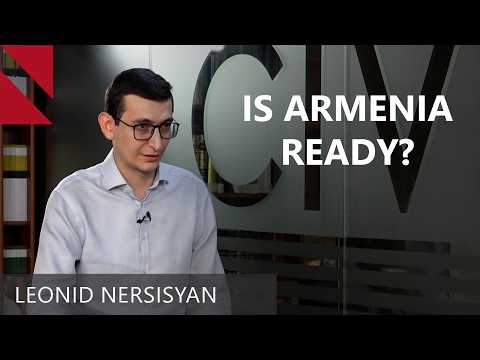
INTERVIEW: @LeonidNersisyan discusses Armenia's changing defense procurement strategy, whether its military is becoming a credible deterrent against Azerbaijan, and the reforms still needed to keep pace with the changing nature of modern warfare.
youtube.com/watch?v=Z8qreo…
YouTube
English
Turkey has expanded its customs infrastructure to allow Armenia's official country code, 077, to be used across road, rail and sea freight, marking another technical step toward facilitating trade between the two countries, according to Istanbul-based Armenian newspaper Agos.
The move broadens an arrangement first introduced on Jan. 1, 2023, when Turkey enabled direct customs procedures for air cargo shipments involving Armenia. Under a recent instruction issued by the Turkish Ministry of Trade's General Directorate of Customs, the system has now been updated to cover road, maritime and railway transportation as well.
As a result, customs declarations for imports, exports and transit shipments involving Armenia through third countries can now directly use Armenia's official customs code, 077. The updated system also allows "Armenia/Turkey" to be specified as the final destination or country of origin for goods bound for Armenia.
The changes are technical rather than political, but they simplify customs procedures and expand the infrastructure needed for future trade between Armenia and Turkey should bilateral commerce increase.
English
Iran has proposed a new framework to increase natural gas exports to Armenia as the two countries move to expand cooperation in energy, transportation, and infrastructure.
The proposal was presented during a meeting in Tehran between Iran’s Minister of Petroleum Mohsen Paknejad and Armenia’s Minister of Territorial Administration and Infrastructure Davit Khudatyan, who visited Iran over the weekend.
The two sides agreed to establish a joint specialized working group that will study new areas of energy cooperation in order to develop joint initiatives. Paknejad said the group should begin work as soon as possible so that concrete results can be assessed during future negotiations.
According to Iran’s petroleum minister, the proposed commercial framework would expand the volume of natural gas supplied to Armenia.
Khudatyan’s discussions in Tehran also focused on transportation and infrastructure projects, including progress on the Kajaran–Agarak road project, which connects southern Armenia to the Iranian border and includes a 4.5-mile-long tunnel designed to reduce travel times and improve transportation links between the two countries.
The sides further addressed a proposal to build a second bridge over the Araks River, which separates Armenia and Iran. Officials said the project would increase transportation capacity, facilitate greater cargo movement, and support economic cooperation.
Iranian gas remains constrained despite expansion plans
Iran and Armenia have been connected by the Iran-Armenia gas pipeline since 2007. The pipeline was built to diversify Armenia's gas supplies, but its role has remained limited. It is operated by Gazprom Armenia, the Russian-controlled monopoly that owns and manages Armenia's gas transmission and distribution network. Most Iranian gas enters Armenia under the long-standing "gas-for-electricity" swap arrangement, whereby Armenia generates electricity using Iranian gas and exports power back to Iran.
Although Iranian officials have now proposed increasing gas exports, any significant expansion would face technical and contractual constraints. Iranian gas currently accounts for only about 13% of Armenia's imports, with volumes largely limited by the capacity of the Iran-Armenia pipeline.
Energy economist Astghine Pasoyan told CivilNet that the pipeline's restricted diameter reflected political pressure during its construction to prevent Iranian gas from playing a larger role in Armenia's market. She also noted that Armenia's long-term gas supply contract with Russia links preferential pricing to minimum purchase volumes, meaning a substantial reduction in Russian imports could trigger higher prices.
Pasoyan added that while Iran holds some of the world's largest natural gas reserves, inefficiencies in its domestic gas sector and rising internal demand limit its export potential.
English
#DailyArmenia
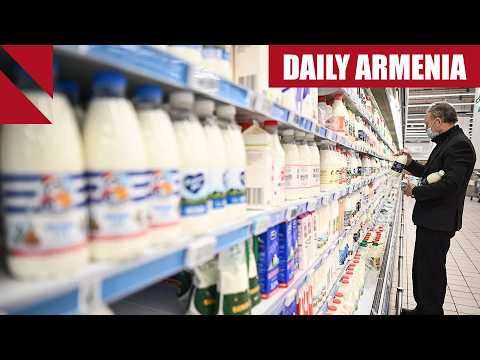
Russia has expanded restrictions on Armenian dairy exports, the latest in a series of trade measures that have hit Armenian businesses.
youtube.com/watch?v=SE0oDi…
YouTube
English
#BusinessWeekArmenia
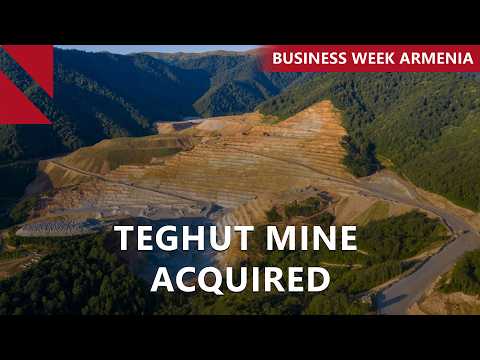
A U.S. company linked to businessman Konstantin Sokolov acquired Armenia’s Teghut mine from Russia’s VTB bank. Sokolov is also involved in U.S.-backed efforts to develop a new transit route across the South Caucasus.
youtube.com/watch?v=Yh-58X…
YouTube
English
#DailyArmenia
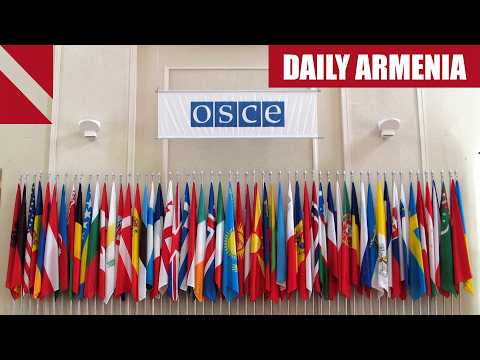
📍Human rights groups condemn the OSCE secretary general over remarks appearing to support efforts to remove Catholicos Karekin II.
📍A court imposes a travel ban & bail on MP-elect Narek Karapetyan after prosecutors file criminal charges.
youtube.com/watch?v=GvCx6x…
YouTube
English
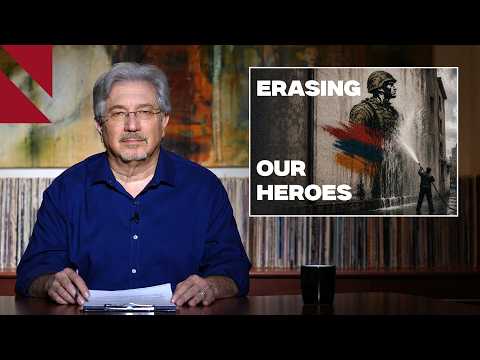
INSIGHTS: Host @molon_labe97 analyzes the reshuffle within the ruling party, examines new revealing remarks by Ilham Aliyev, and decries the removal of street art honoring Armenia’s fallen soldiers, calling it part of a war on memory and nationhood.
youtube.com/watch?v=lOeO-f…
YouTube
English
#DailyArmenia
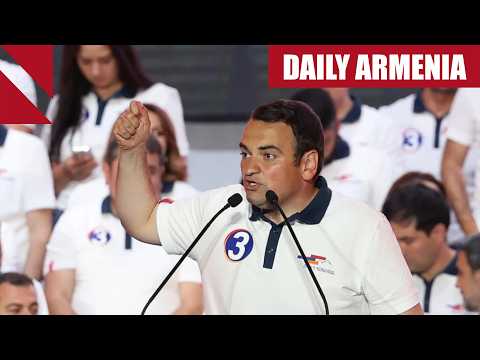
📍Strong Armenia leader Narek Karapetyan lost his parliamentary immunity as officials pursue a criminal case against him.
📍A case has been filed with the European Court of Human Rights over Ruben Vardanyan’s conviction in Azerbaijan.
youtube.com/watch?v=ODQvP4…
YouTube
English
Human rights lawyer Siranush Sahakyan said she has filed an application with the European Court of Human Rights (ECHR) on behalf of the former Nagorno-Karabakh state minister and philanthropist Ruben Vardanyan, alleging multiple violations of the European Convention on Human Rights during his prosecution and imprisonment in Azerbaijan.
In a statement published on Vardanyan's Facebook page, Sahakyan said she submitted the application on July 19 and would represent Vardanyan before the Strasbourg-based court.
"The application details violations of eight articles of the Convention for the Protection of Human Rights and Fundamental Freedoms, supported by comprehensive legal and factual arguments," Sahakyan said.
According to the lawyer, the case challenges both the conduct of Vardanyan's trial and the legal basis of his conviction.
The Baku Military Court sentenced Vardanyan to 20 years in prison on Feb. 17 after finding him guilty on 41 counts under 21 articles of Azerbaijan's Criminal Code.
Sahakyan argued that the judgment failed to establish Vardanyan's individual criminal responsibility with evidence.
"Vardanyan's individual guilt was not substantiated by facts or evidence in the verdict," she said.
Instead, she said, the court concluded that the administration of the Nagorno-Karabakh Republic constituted a "criminal community" that had operated since 1988, and ruled that Vardanyan joined it in December 2020, despite living in Moscow at the time.
According to Sahakyan, the verdict characterized Vardanyan's appointment to a civilian government position in Nagorno-Karabakh as a violent seizure of power, treated his commercial and charitable activities as illegal entrepreneurship and financing of terrorism, and considered his entry into the region via the Lachin Corridor an illegal crossing of Azerbaijan's border.
Sahakyan said Vardanyan chose not to appeal the conviction in Azerbaijan because he considered the proceedings politically motivated and domestic legal remedies ineffective.
"It is impossible to protect one's rights within a system that inherently denies the right to a fair trial," she said. "In these circumstances, he chose to seek justice through international legal mechanisms."
Vardanyan, a Russian-Armenian businessman who renounced his Russian citizenship before moving to Nagorno-Karabakh in 2022, served briefly as the region's state minister. He was detained by Azerbaijani authorities in September 2023 after Azerbaijan regained full control of the territory following a military offensive that prompted the exodus of its entire ethnic Armenian population.
Azerbaijan accuses Vardanyan of terrorism, financing armed groups and other serious crimes. He rejected the charges as politically motivated.
Vardanyan is one of 19 Armenian detainees currently held in Azerbaijan, including former political leaders and military officials from Nagorno-Karabakh. International human rights organizations and Vardanyan's legal team have repeatedly raised concerns over their detention conditions and the fairness of the trials.

English
#DailyArmenia
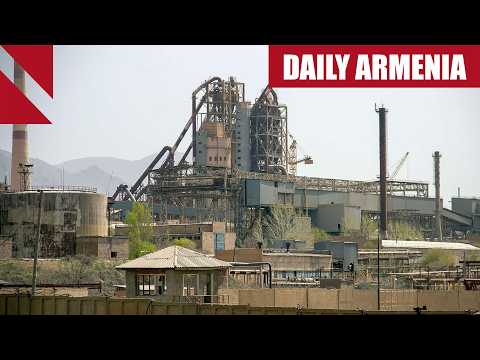
📍The Armenian government takes control of Ararat Cement as authorities pursue asset forfeiture proceedings against businessman Gagik Tsarukyan.
📍Armenian lawyers criticize a proposal to ban website where lawyers can rate judges.
youtube.com/watch?v=yM6Ds1…
YouTube
English
#DailyArmenia
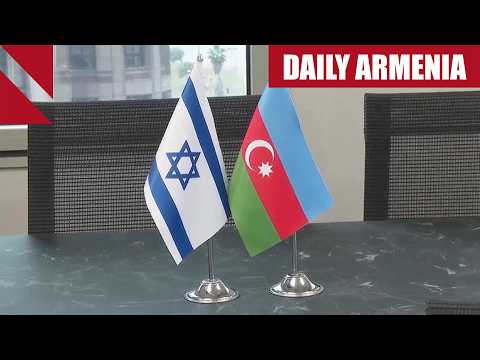
📍New reporting indicates Azerbaijan successfully pressured Israel to cut Armenian Genocide recognition after direct intervention with Netanyahu.
📍UN experts question Armenia’s use of terrorism charges against Abp. Bagrat Galstanyan.
youtube.com/watch?v=xghsFJ…
YouTube
English
Armenia will appoint a state manager for AraratCement, one of the country's largest cement producers owned by jailed opposition businessman Gagik Tsarukyan, later this month after a court placed the company under temporary state management as part of an illicit asset forfeiture case.
Economy Minister Gevorg Papoyan said on Tuesday that the Anti-Corruption Court had transferred management of the company to the Ministry of Economy, which will appoint a manager in July to oversee its operations.
Papoyan urged employees to continue working normally, saying those who perform their duties conscientiously would retain their jobs. He said the government's priority is to ensure the uninterrupted operation of the plant.
The Anti-Corruption Court last week ordered AraratCement to be placed under state management after prosecutors argued that control of the company should be transferred to the state while courts consider a broader civil lawsuit seeking the confiscation of assets allegedly acquired through illicit means.
Also read: Court places Tsarukyan's cement company under state management.
The forfeiture case was filed in October 2023 against Tsarukyan and related parties. Prosecutors are seeking the confiscation of AraratCement shares, stakes in dozens of companies, 75 real estate properties, 42 vehicles and 105.9 billion drams (about USD 286 mn) in assets they allege were obtained illegally.
The latest development follows Tsarukyan's arrest on July 6 on fraud and money laundering charges, after police conducted searches at businesses linked to him and his family. He has denied wrongdoing, while his lawyers say the charges are politically motivated.
Tsarukyan, one of Armenia's wealthiest businessmen and the leader of the opposition Prosperous Armenia party, returned to frontline politics ahead of the June parliamentary election. His party narrowly failed to enter parliament after falling below the four percent threshold required for representation.
The takeover of AraratCement marks the second time under Prime Minister Nikol Pashinyan's government that the state has assumed temporary control of a major privately owned strategic asset during legal proceedings involving a prominent opposition figure. Last year, parliament approved legislation allowing the government to take temporary control of Electric Networks of Armenia, the country's sole electricity distributor, after its owner, Samvel Karapetyan, was arrested.
Karapetyan has since entered politics and is the de facto leader of Strong Armenia, the largest opposition faction in parliament, although he does not personally hold a parliamentary seat.


English