Clare Stawski

1.1K posts

Clare Stawski banner
Clare Stawski

Clare Stawski

@ClareStawski

Senior lecturer at the University of the Sunshine Coast researching how animals cope physiologically with changes in their environment.

Sunshine Coast, Queensland Katılım Mart 2015
491 Takip Edilen471 Takipçiler
Clare Stawski
Clare Stawski@ClareStawski·
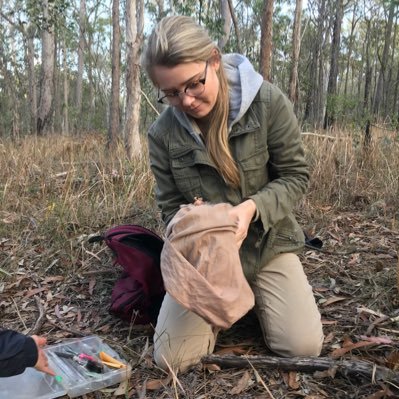
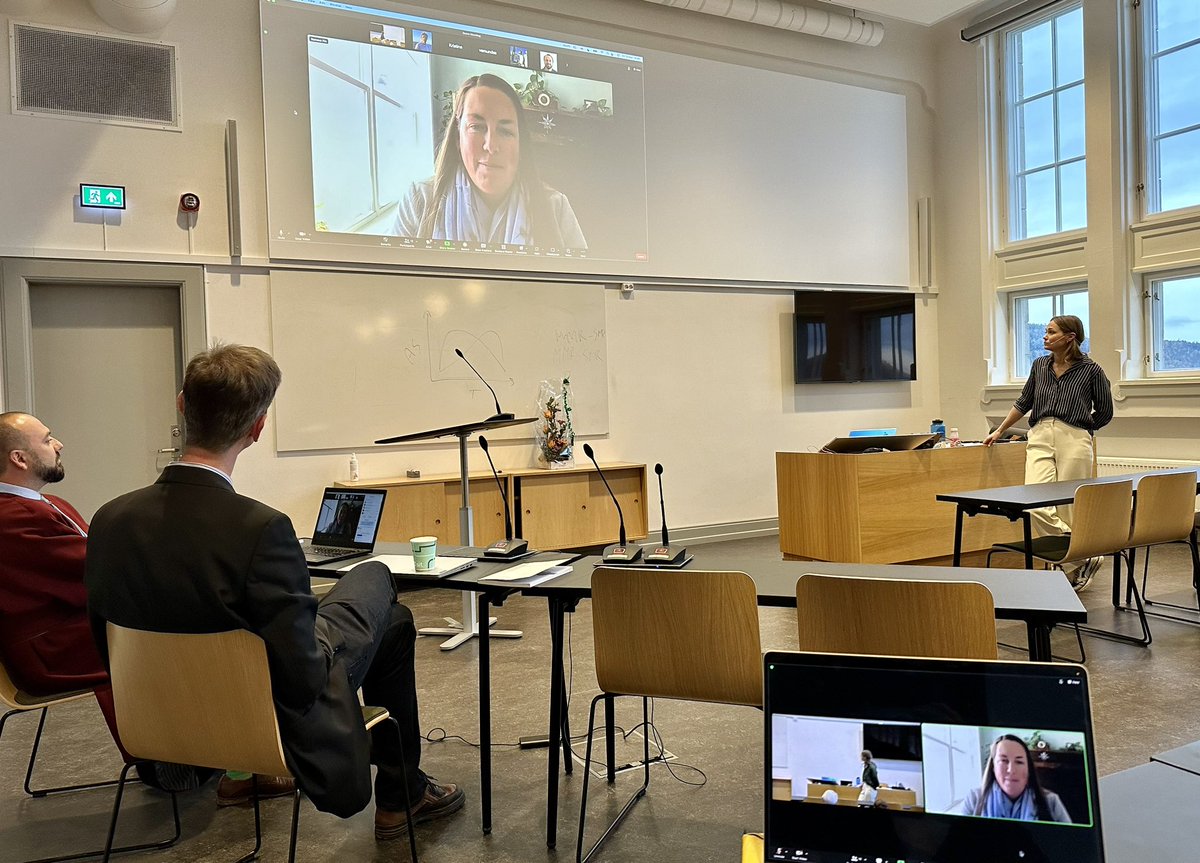
Our @usceduau bat team made the news! Watch the clip below to learn more about our research investigating the impact of urbanisation on bats led by @stressedoutbats 🦇
7NEWS Sunshine Coast@7NewsSC

UniSc researchers are trying to find a solution for tiny bats facing their own housing crisis. Weighing less than a tablespoon of butter they're vital for our eco-system but habitat loss is putting them at risk. 7NEWS.com.au @emilysteinhardt #7NEWS

Sunshine Coast, Queensland 🇦🇺 English
1
1
10
610
Clare Stawski
Clare Stawski@ClareStawski·
If you want to know more about how bats at high latitudes manage their energy read this excellent study by @ras_rune 🦇
Rune Sørås@ras_rune

Happy to see that the interview @J_Exp_Biol had with me has been published alongside our article on energy consumption in Northern bats. Thanks to @MariAasFjelldal, C. Bech, J. van der Kooij, K. Eldegard and @ClareStawski for the collaboration! doi.org/10.1242/jeb.24…

Sunshine Coast, Queensland 🇦🇺 English
0
5
10
850
Clare Stawski retweetledi

Peter Dynes
Peter Dynes@PGDynes·
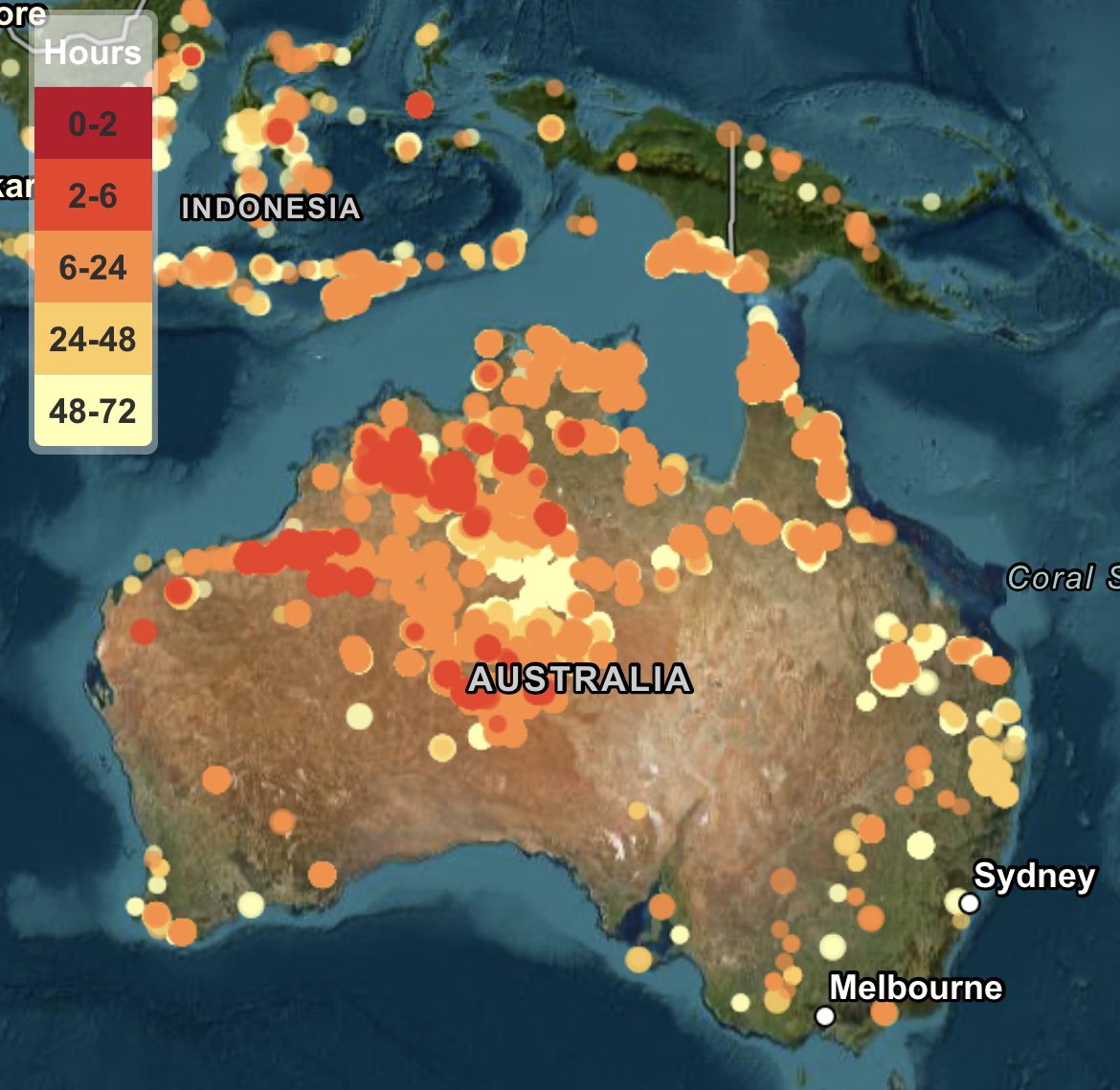
The scale of fires in NW Australia is hard to fathom. An area bigger than Western Europe has been on fire at some point over the last 6 weeks. Global heating plus El Niño is certainly starting to kick in. What will be left by the end of summer?
Peter Dynes tweet media
English
118
894
1.5K
216.9K
Clare Stawski retweetledi
Prof. Euan Ritchie (@euanritchie.bsky.social)
"The extent of country burnt has not been seen in more than a decade, with close to 80 percent of the NT expected to burn by March 2024." > 13 million hectares burnt so far! For perspective, the 'Black Summer' 2019-20 fires burnt 10.3 million hectares abc.net.au/news/rural/202…
English
15
129
230
11.1K
Clare Stawski retweetledi
University College Dublin
University College Dublin@ucddublin·
🦇🧬 How climate change could cause havoc to the extraordinary lifespans of bats 👩‍🔬 The extraordinary lifespans of bats could be under threat from rising global temperatures, according to new research. A study by researchers from University College Dublin and University of Bristol found that the hibernation cycle of a group of wild greater horseshoe bats affected by fluctuations in the weather had affected the molecular mechanism thought to give bat species their long lives. Telomeres are pieces of DNA that act as a protective structure at the end of chromosomes. Each time a cell divides, they shorten. And it is this shortening that is associated with aging and aging-related diseases. Data from the new study showed that bats who more frequently arose from hibernating due to warmer conditions during the 2019/2020 hibernation period had significantly shorter telomeres compared to those recorded in previous, colder, winters. 🗣️ UCD Professor Emma Teeling: “We were surprised and then worried at this finding, given that the predicted rise in global temperatures could limit the beneficial effects of hibernation in our wild bats.” The lead author of study Dr Megan Power, from UCD School of Biology and Environmental Science, worked with a population of wild greater horseshoe bats (Rhinolophus ferrumequinum) in the UK, which have been monitored since 1959 by Dr Roger Ransome, who now holds the record for the longest mammal field study by an individual. Carrying out the very first longitudinal study of telomeres in hibernating bats, she tracked over 200 individuals across three winters to determine the beneficial effects of hibernation on telomeres. Her work showed hibernation acts like a form of rejuvenation, where the telomeres extend rather than shortening during the hibernation season. This is most likely due to the expression of the enzyme telomerase which allows telomeric DNA to replicate itself in bats without causing harm. In other mammals, including humans, the enzyme usually drives cancer when switched on in non-egg and sperm cells. University of Bristol Professor Gareth Jones: “It is fascinating that telomeres can extend in length, and it will be interesting to further investigate the potential role of telomerase in this process." Hibernation is different from sleeping, as the latter does not involve the same large drop in body temperature and metabolism. Dr Power said the study highlights the serious potential consequences that changing climatic conditions could have for the long-lived temperate of bats. “We found that climate plays a huge role, showing how susceptible our native mammals can be to fluctuations in weather, with worrying implications given our forecasted climate changes. Species with long-life spans and a slow reproductive rate, like bats, are particularly vulnerable to environmental change. Therefore, it is important for us to understand how bats are affected by and cope with rapid climate change.” This research was funded by an IRC PhD scholarship to Dr Power and an IRC Laureate and SFI Future Frontiers award to Professor Teeling, and was made possible by the ongoing collaboration between The Gareth Jones Lab and UCD Bat Lab. --- ✌️ @MeganPower101 | @EmmaTeeling1 | @BatLabUCD | @JonesLabBris | @UCDSBES | @ucdscience | @BristolUni | @BristolBioSci | @IrishResearch | @OdysysLab | @scienceirel | @UCD_Research ucd.ie/newsandopinion…
University College Dublin tweet media
English
3
30
56
27K
Clare Stawski retweetledi
batstothefuture
batstothefuture@batstothefuture·
🦇How will the #ClimateCrisis affect European conservation for #bats?🦇 What about bat distribution, behaviour and survival? How is this going to affect our ecosystems? And what must we do about it? All you NEED TO KNOW is in our comprehensive review! climbats.eu/wp-content/upl…
batstothefuture tweet media
English
0
6
9
2.2K
Clare Stawski retweetledi
George Madani
George Madani@Uncle_Maddog·
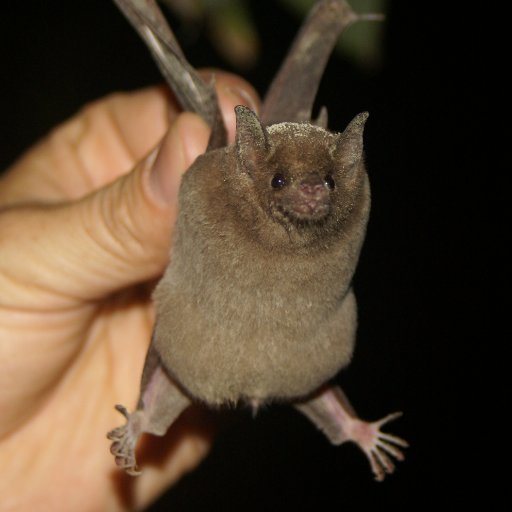
Hi viz Gargoyle. Also known as a Pilbara Leaf-nosed Bat.
English
1
33
159
5.7K