Revolutionizing Tax Management for Digital Commerce
@cr2943/revolutionizing-tax-management-for-digital-commerce-0d9d69b7569d" target="_blank" rel="nofollow noopener">medium.com/@cr2943/revolu…
Organizations which design systems are constrained to produce designs which are copies of the communication structures of these organizations.
— Melvin E. Conway, How Do Committees Invent?
"It's so simple: you spend less than you earn. Invest shrewdly. Avoid toxic people and toxic activities. Try to keep learning all your life. And do a lot of deferred gratification. If you do all those things, you are almost certain to succeed." - Charlie Munger
The courage to start.
The discipline to focus.
The confidence to figure it out.
The patience to know progress is not always visible.
The persistence to keep going, even on the bad days.
That's the formula.
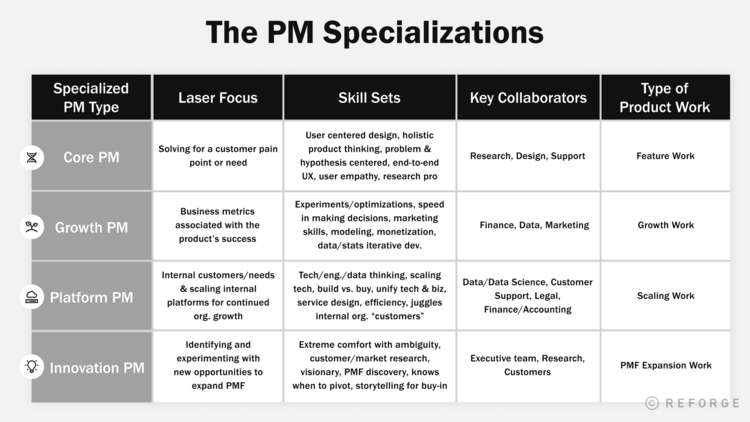
Growth teams don’t build net new products or features. Instead, they work on creating distribution strategies that help acquire, activate, engage, and monetize customers on the existing product value.
lennysnewsletter.com/p/how-to-hire-…
10 Mental Models that will level up your Thinking:
1. First Principle Thinking - Rethink the problem from the ground up.
Separate the underlying facts from assumptions made based on them.
2. Second-Order Thinking - Instead of thinking about the immediate consequences, think about the second-level consequences.
3. Inversion - Look at the problem at hand from the endpoint instead of the starting point.
Don't ask: "What do I need to do?"
Ask: "What must I avoid?"
4. Opportunity Costs - Think about the costs that arise because you decide in favor of one option and thus against every other option.
5. Randomness - Keep in mind that there aren't always cause-effect relationships.
Lots of stuff is random.
6. Leverage - “Give me a lever long enough and I shall move the world.” - Archimedes
7. Margin of Safety - Assume that your assumptions can be wrong and plan with a safety margin.
8. Occam's Razor - Always choose the less complex explanation/option.
"Never multiply unnecessarily."
9. Law of Diminishing Returns - Up to a certain point, additional units offer more value.
But there's a turning point where additional units offer less and less value and costs rise.
10. Niches - Specializing is an effective way to success. Use it and choose a niche where you become an expert.
What Mental Model helps you the most?
Q: Should startups always raise as much money as possible?
In the clip below, Marc Andreessen shares a framework that Benchmark co-founder Andy Rachleff taught him called "The Onion Theory of Risk".
You can think of a day 1 startup as having every conceivable kind of risk: founding team risk, product risk, technical risk, market acceptance risk, revenue risk, cost of sales risk, viral growth risk, etc.
A startup is basically just a long list of risks, and as Marc explains:
"The way I think about running a startup is the way I think about raising money. It's a process of peeling away layers of risk as you go."
You raise seed money to peel away the first two or three risks (e.g. founding team risk, product risk, initial launch risk).
You raise the Series A round to peel away the next layer of risks (e.g. recruiting risk, customer risk, revenue risk, cost of sales risk)
And so on.
Basically, you're peeling away risk as you're achieving milestones. And as you achieve milestones, you're both: making progress on your business and justifying raising more capital.
So in terms of fundraising, you should be calibrating the amount money you're raising to the risks you need to pull out of your business for you to raise your next round.
For example, if you're raising your Series A round, the best way to do that is to say to investors: "I raised a seed round then achieved ____ milestones and eliminated ____ risks. Now I'm going to raise $X for the Series A to achieve ____ milestones and eliminate ____ risks. This will get the company to ____ state for the Series B round. "
This seems fairly obvious, but as Marc points out, it's a much more systematic way of going about things versus just raising as much money as possible, renting fancy offices, and hiring as many people as you can to grow as fast as you can.
The more money you raise, the more you dilute your ownership stake in your business so it pays to be thoughtful.
Raise the capital you will need to achieve the milestones and eliminate the risks required for your next financing round. It also probably makes sense to give yourself some margin as safety because things never go exactly as planned in startup land.