D.J. Rasmussen

71 posts

D.J. Rasmussen banner
D.J. Rasmussen

D.J. Rasmussen

@ClimateQuant

Tweets about natural hazards, climate change impacts, data science, and risk + resilience policy. PhD @PrincetonSPIA @Princeton

San Diego Katılım Şubat 2016
201 Takip Edilen198 Takipçiler
Dr. Robert Rohde
Dr. Robert Rohde@RARohde·
@KHayhoe A chart like this, with its suggestion towards increased variability, is the kind of thing that can keep climate scientists up at night. Complex & unexpected shifts in dynamics can be deeply troubling, if they give rise to extreme events beyond what anyone anticipated. 28/28
Dr. Robert Rohde tweet media
English
6
22
122
5.3K
Dr. Robert Rohde
Dr. Robert Rohde@RARohde·
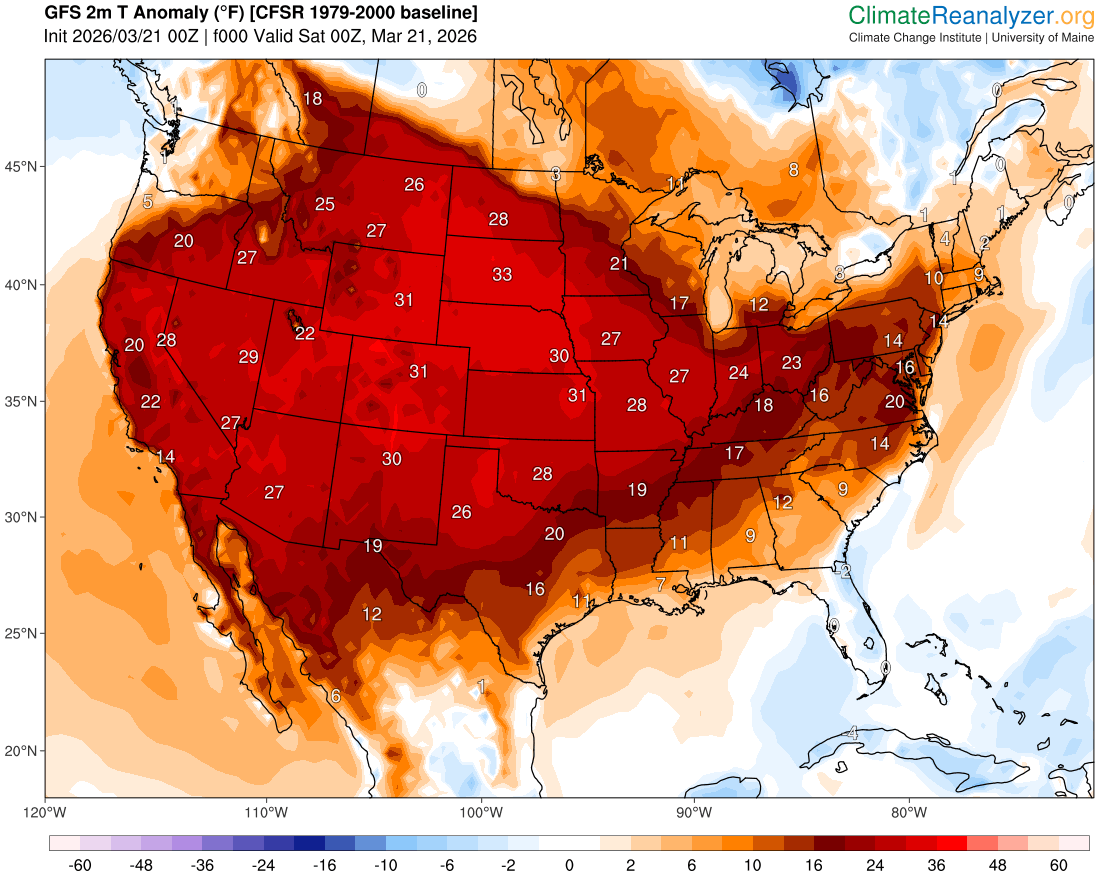
We need to talk a bit about how utterly absurd the March heatwave was in the USA. This heatwave would have been impossible without a boost from climate change, but even with climate change it remains a deeply unlikely event. A thread looking at some of the numbers. 🧵
Dr. Robert Rohde tweet media
English
98
608
1.8K
148.8K
D.J. Rasmussen
D.J. Rasmussen@ClimateQuant·
@ryankatzrosene I accounts for some aspects of inflation via the CPI, which measures out-of-pocket prices paid by consumers. This leaves out important factors like building labor and materials as well as the market value of structures.
English
0
0
1
27
Prof. Ryan Katz-Rosene
Prof. Ryan Katz-Rosene@ryankatzrosene·
The total number and frequency of US Billion Dollar Disasters is interesting to track, but I agree with critics and detractors that it's a deeply fraught metric that doesn't necessarily tell us much about changing climatological patterns, the risks associated with extreme weather, and societal resilience... It *does* account for inflation, but it does NOT account for rising exposure from growth in assets and population. By the same token, even when we normalize for the latter, we may not be getting much information of use about changing climate risks to society, because we have no qualitative expression of how people are experiencing these disasters.
Prof. Ryan Katz-Rosene tweet mediaProf. Ryan Katz-Rosene tweet media
English
4
4
22
853
D.J. Rasmussen
D.J. Rasmussen@ClimateQuant·
@RogerPielkeJr I am waiting for someone to write one big paper comparing near-term CMIP projections with ERA5 trends to show discrepancies across many variables. The models just don't align at local scales in many places. This hugely impacts their utility as biz and insurance decision tools.
English
0
0
2
75
The Honest Broker
The Honest Broker@RogerPielkeJr·
👀 "Further, the projected [incoming surface shortwave radiation] trends in CMIP6 models may be overly responsive to aerosol concentrations rather than changes in continental cloudiness. Alternatively, if the discrepancy is due to natural variability, then the models may be underestimating the low-frequency variability in continental cloudiness and the resulting [incoming surface shortwave radiation]. agupubs.onlinelibrary.wiley.com/doi/10.1029/20…
English
4
4
18
11.2K
D.J. Rasmussen
D.J. Rasmussen@ClimateQuant·
@kareem_carr Makes sense. The recent uptick in Springer Nature's Discover "xyz" journal requests I get asking for reviews makes me wonder if publishers will take advantage of the increased volume
English
0
0
1
21
Dr Kareem Carr
Dr Kareem Carr@kareem_carr·
@ClimateQuant I see that as the first order effect, people will produce more. But the second order effect will have to stronger filters. So maybe back to the status quo in terms of number of papers, or papers get devalued as a metric of productivity.
English
1
0
1
135
Dr Kareem Carr
Dr Kareem Carr@kareem_carr·
I'm tired of takes about how AI will change science that come from people who either don't care about how science works, or are just extrapolating wildly based on vibes. Would love to hear how some of you are thinking about AI and science in the comments.
English
19
1
50
6.6K
D.J. Rasmussen
D.J. Rasmussen@ClimateQuant·
@RyanMaue Boggles my mind how earthquake scores don't appear on these sites despite the much greater risk
English
0
0
0
35
Ryan Maue
Ryan Maue@RyanMaue·
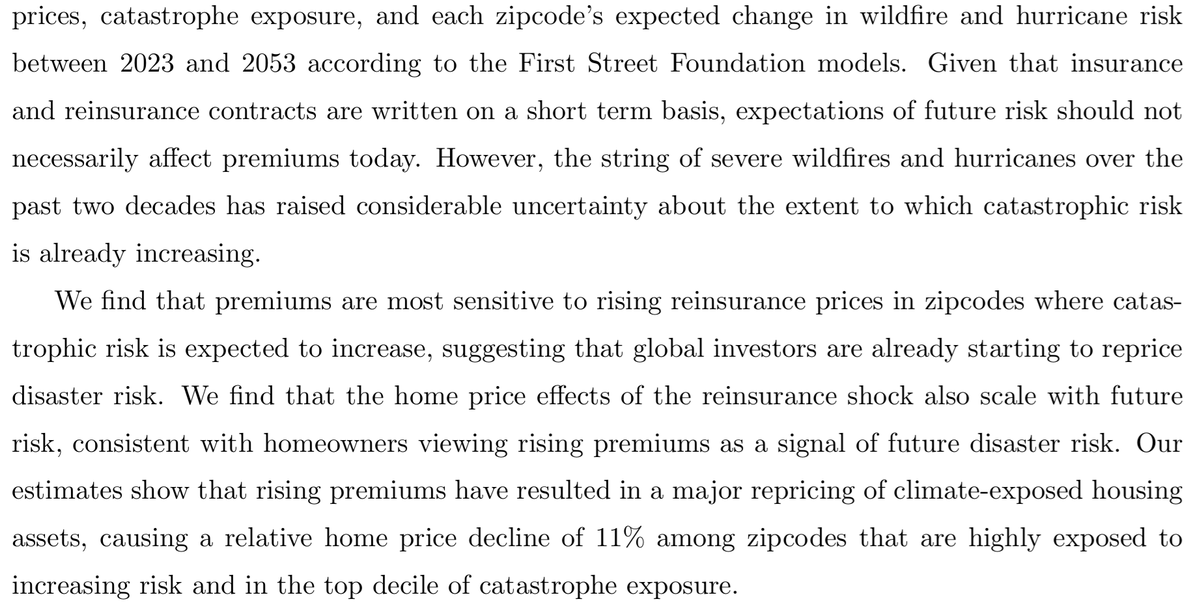
Housing "climate scores" were based upon various UN IPCC climate scenario model output ... maybe you've heard of them? RCP 8.5 ... or the "worst case scenario" was the most popular, and is still used today for many expensive financial decisions, like getting a mortgage or home insurance.
Ryan Maue@RyanMaue

There's an expensive difference between "climate change" and climate risk to properties. Washington Post misleadingly attributes all climate risk (flooding, fires, storms, etc.) to climate change mixing the terms willy-nilly. Who benefits from this form of misinformation?
English
1
2
22
10.5K
D.J. Rasmussen
D.J. Rasmussen@ClimateQuant·
@RyanMaue A few unlucky years and the cost of capital/labor has increased dramatically since '20. The NBER paper does not isolate any local climate change signal. As long as people keep buying policies at these prices, reinsurers will keep charging them.
English
0
0
3
43
Ryan Maue
Ryan Maue@RyanMaue·
What actually happened that jacked up "home insurance" rates dramatically in the past few years? Climate intelligence companies popped up -- and used proprietary climate modeling output (juiced by RCP 8.5) -- to show enormous future extreme weather trends -- down to the "zip code" level and media hyped (advertised) e.g. Zillow "climate risks" We went from "observed weather" to "decades in the future climate scenarios" driving the cost of short-term reinsurance capital. (what?) Many competing conflicts of interest across the industry but in the end, the consumer is being hurt. Is this normal market activity -- or something else? NBER Working Paper (mortgage escrow data - includes home insurance costs) nber.org/papers/w32579
Ryan Maue tweet media
English
3
9
37
6K
Ryan Maue
Ryan Maue@RyanMaue·
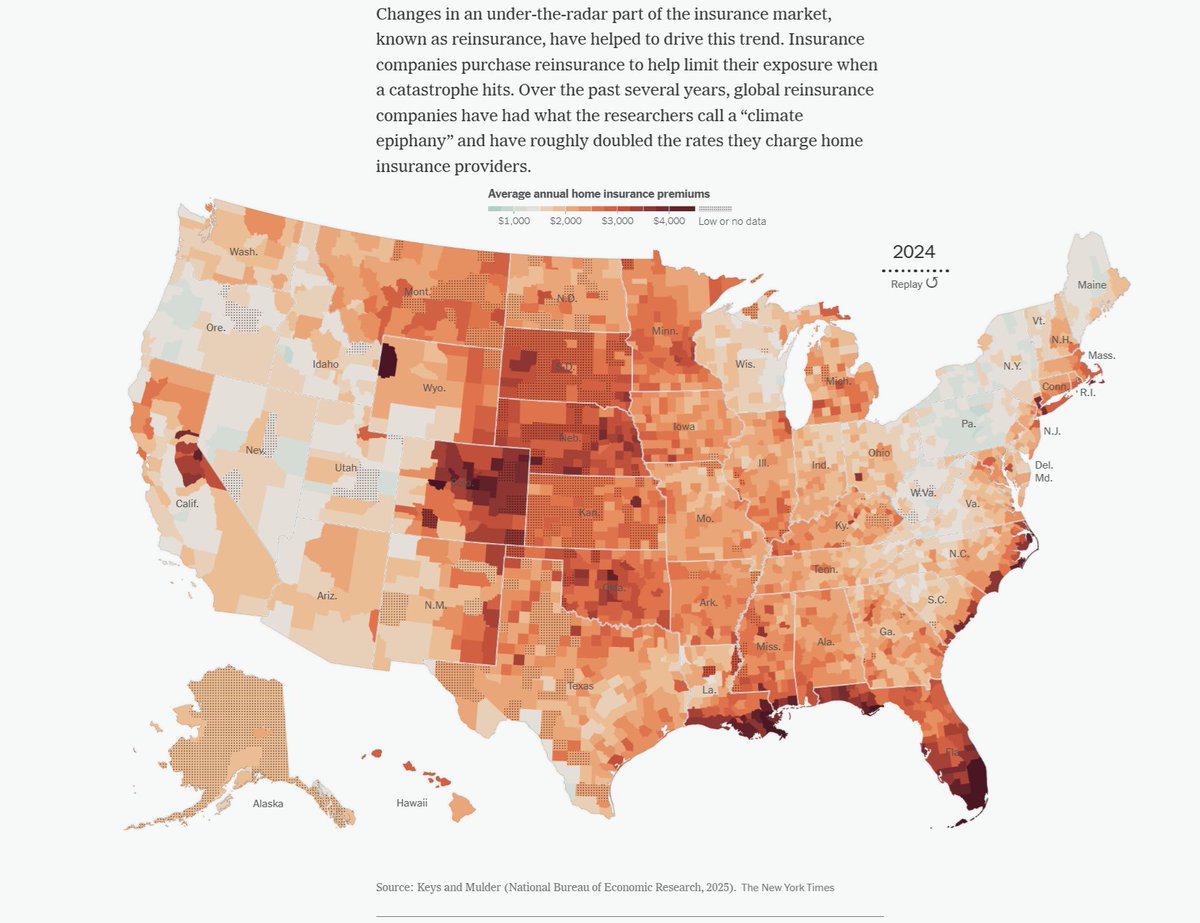
Climate epiphany (?) "Over the past several years, global reinsurance companies have had what the researchers call a “climate epiphany” and have roughly doubled the rates they charge home insurance providers." BUT higher cost of capital NOT based upon climate change as observed damage increases on order of 0% to 1%. nytimes.com/interactive/20…
Ryan Maue tweet media
English
4
15
59
25.9K
D.J. Rasmussen
D.J. Rasmussen@ClimateQuant·
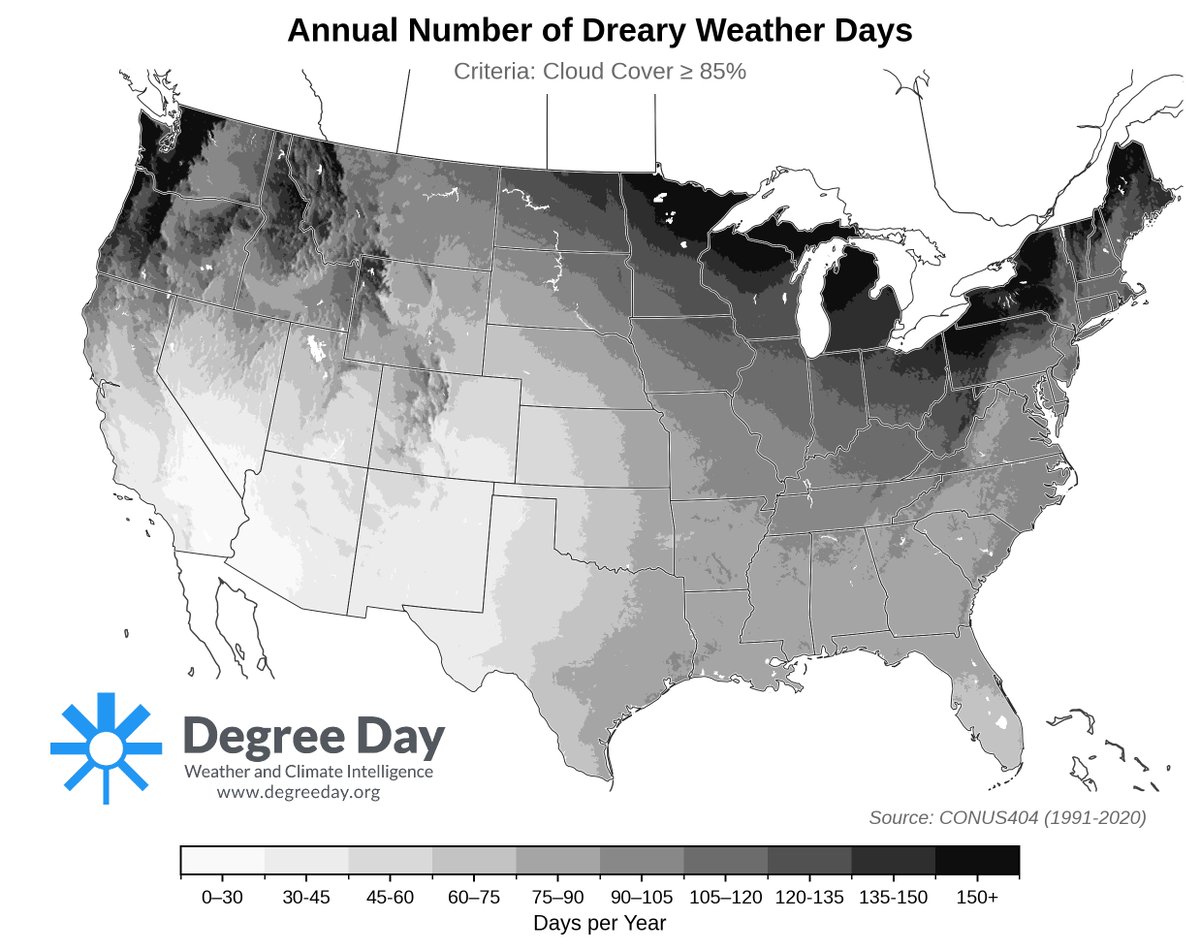
The Geography of Gloom ☁️☁️
D.J. Rasmussen tweet media
English
0
0
0
48
D.J. Rasmussen
D.J. Rasmussen@ClimateQuant·
New online Wildfire Mitigation Plan Database from PNNL. Over 400 wildfire mitigation plans from 170 utilities across 19 U.S. states. Useful to understand, compare, and improve strategies for managing wildfire risks to power infrastructure. pnnl.gov/publications/p…
English
0
0
0
41
D.J. Rasmussen retweetledi
The New York Times
The New York Times@nytimes·
Scientists have made a white paint that can make surfaces as much as eight degrees Fahrenheit cooler than air temperatures at midday, and up to 19 degrees cooler at night, reducing inside temperatures and cutting air-conditioning needs by as much as 40%. nyti.ms/44mDs1l
The New York Times tweet media
English
441
2.5K
15K
4.3M
D.J. Rasmussen retweetledi
Jeff Masters
Jeff Masters@DrJeffMasters·
After 100s of hours of research (including reading 8 books on sea level rise), I feel like I have a good grasp of the accelerating U.S. flood risk from climate change. Part 1 of my 3-part series is up; part 2 is Friday; Part 3 (the best one!) is Monday. yaleclimateconnections.org/2023/07/how-fa…
English
206
212
602
127.7K
D.J. Rasmussen retweetledi
Princeton University
Princeton University@Princeton·
A new method by #PrincetonU researchers to calculate increases in flood probabilities worldwide demonstrates the urgency of quickly implementing coastal defense measures to mitigate the impact of climate-related sea-level rise. bit.ly/3NO8nMV
English
2
7
12
4.3K
D.J. Rasmussen
D.J. Rasmussen@ClimateQuant·
@TC_Chakraborty I think the dream is multi-model ensembles of local urban heat stress at daily/hourly scales needed for impacts/extremes. It sounds like this may be possible using one of the approaches that isolates the urban component. Not perfect but it's a start
English
0
0
0
0
D.J. Rasmussen
D.J. Rasmussen@ClimateQuant·
@TC_Chakraborty Yeah, just read some of your work on air T vs surf T. Very interesting! Have you come across any paper(s) that projects future urban heat stress well? Or does this remain elusive?
English
0
0
0
0
D.J. Rasmussen
D.J. Rasmussen@ClimateQuant·
@KellyHereid Firms may be learning they need more expertise. McKinsey recently hired a big name climate scientist (Jean-Francois Lamarque). Perhaps others will follow...
English
0
0
1
0
D.J. Rasmussen
D.J. Rasmussen@ClimateQuant·
@TC_Chakraborty Firms may be learning they need more expertise. McK recently hired some big name senior climate scientists, (e.g. Jean-Francois Lamarque). Perhaps others will follow
English
0
0
1
0
D.J. Rasmussen
D.J. Rasmussen@ClimateQuant·
@TC_Chakraborty Not surprised. I see humidity treated poorly all the time with heat stress assessments (e.g., constant RH with warming). I believe the recent First Street Foundation heat work makes this assumption too.
English
0
0
1
0