Clinical & Rehabilitation Services at HSU

719 posts

Clinical & Rehabilitation Services at HSU banner
Clinical & Rehabilitation Services at HSU

Clinical & Rehabilitation Services at HSU

@ClinicsHSU

Clinical & #Rehabilitation Services @HealthSciUni. Expert #MDT - helping people return to everyday life faster: https://t.co/BqHAF7Rb2R

Health Sciences University Katılım Mart 2023
1.3K Takip Edilen1.1K Takipçiler
Clinical & Rehabilitation Services at HSU
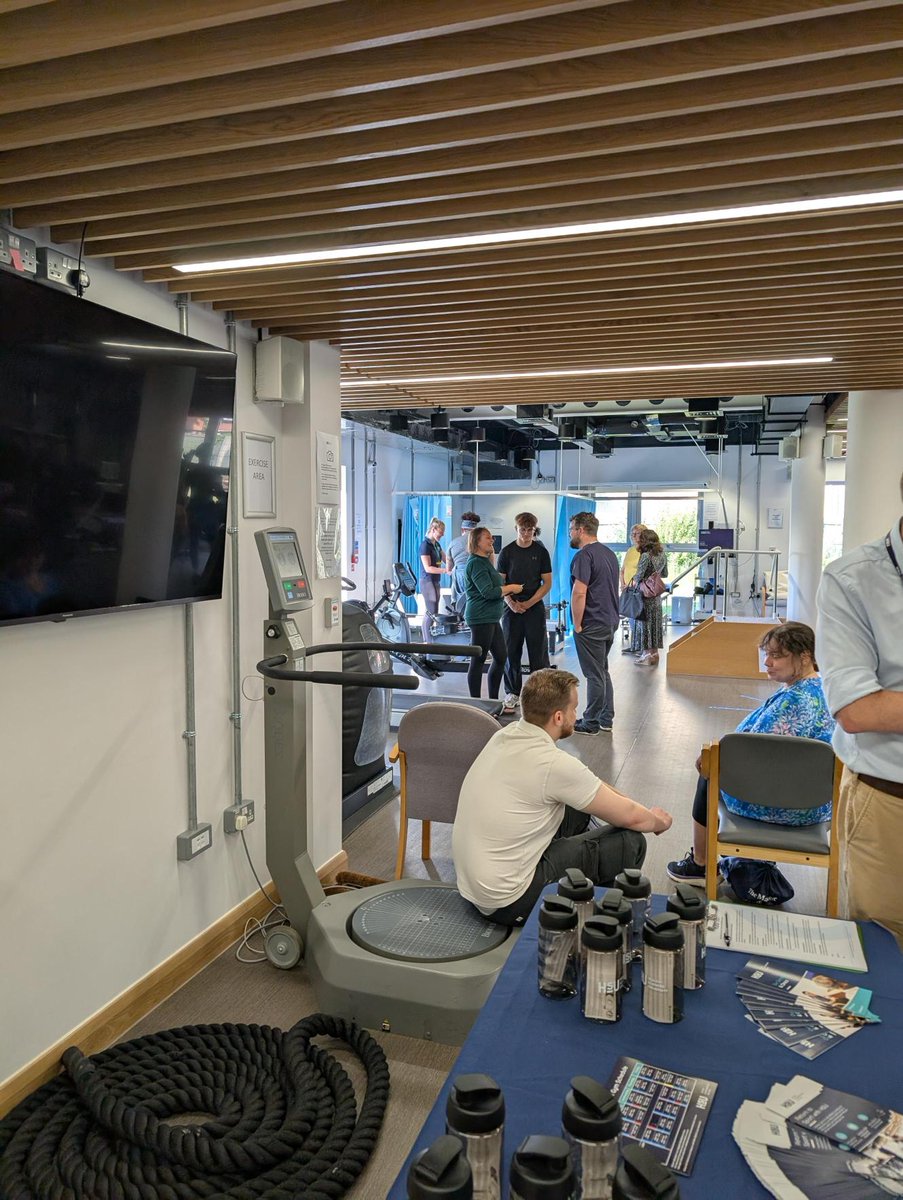
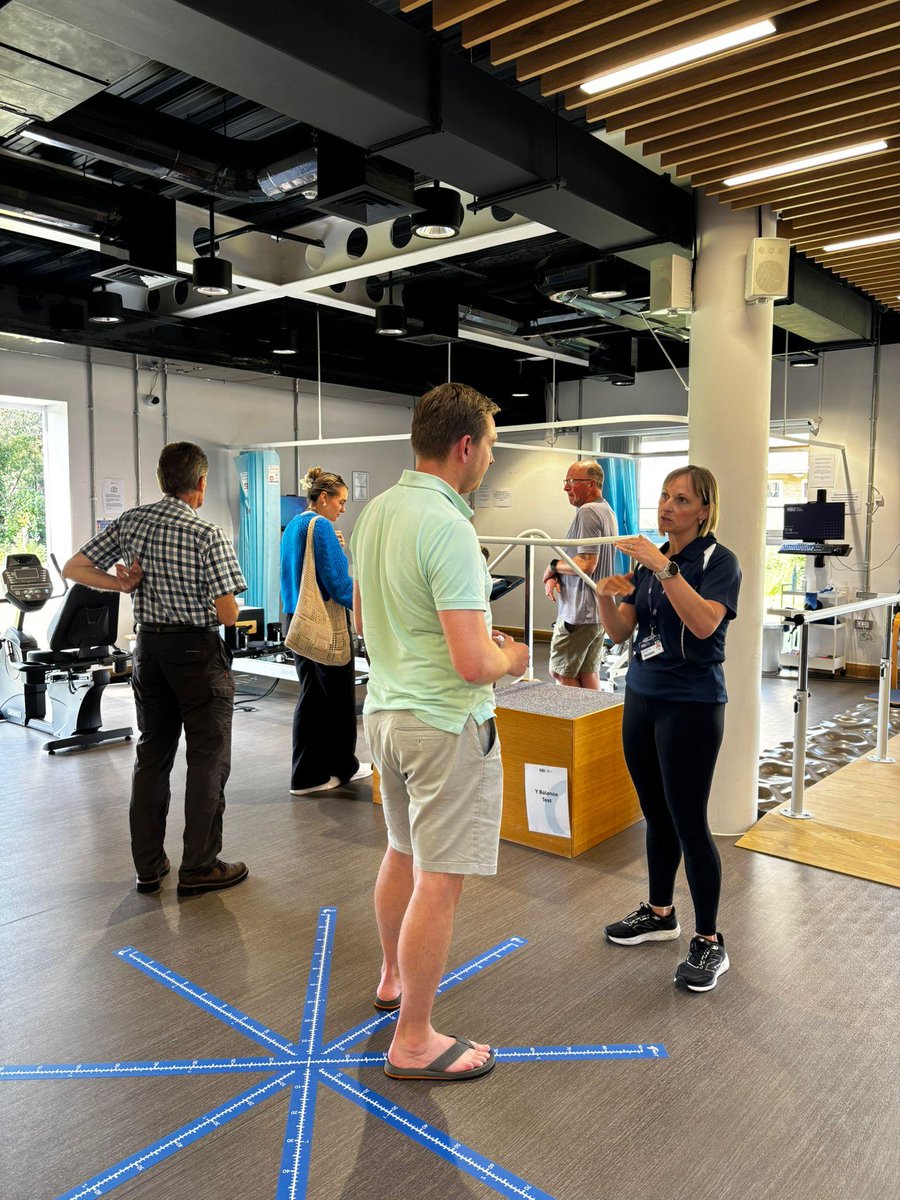
A big thank you to everyone who joined us for our #Rehab & #Recovery Open Evening last night. It was great to meet lots of new faces! We met lots of people who were looking to find out more about rehabbing sports injuries, managing pain, and working on their strength, conditioning, and performance. We also met members of local sports clubs who came to find out more about our Return to Sport offer. 🏅🥎🥍 Participants had the opportunity to have clinical conversations with our #physiotherapists, #chiropractors, sports #rehabilitators, and imaging team – all in our brilliant Integrated Rehabilitation Centre.🏠 #Rehabilitation #Rehab #Recovery #SportsInjury #Injury #HSU #HealthSciences #OpenEvening #Bournemouth #Boscombe
Clinical & Rehabilitation Services at HSU tweet mediaClinical & Rehabilitation Services at HSU tweet mediaClinical & Rehabilitation Services at HSU tweet mediaClinical & Rehabilitation Services at HSU tweet media
English
0
2
4
1K
Clinical & Rehabilitation Services at HSU
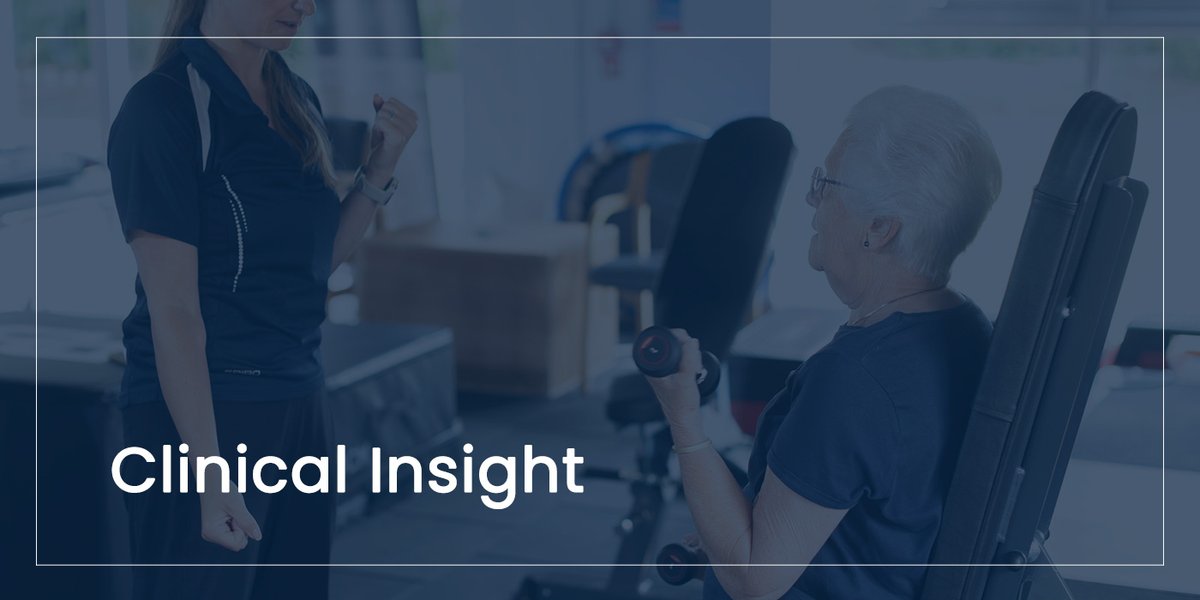
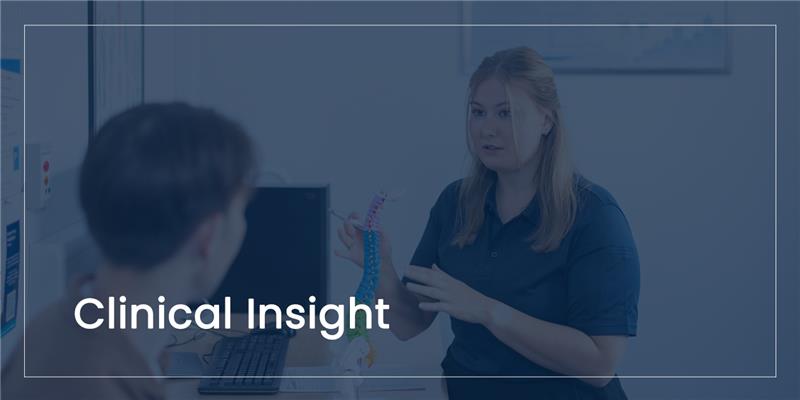
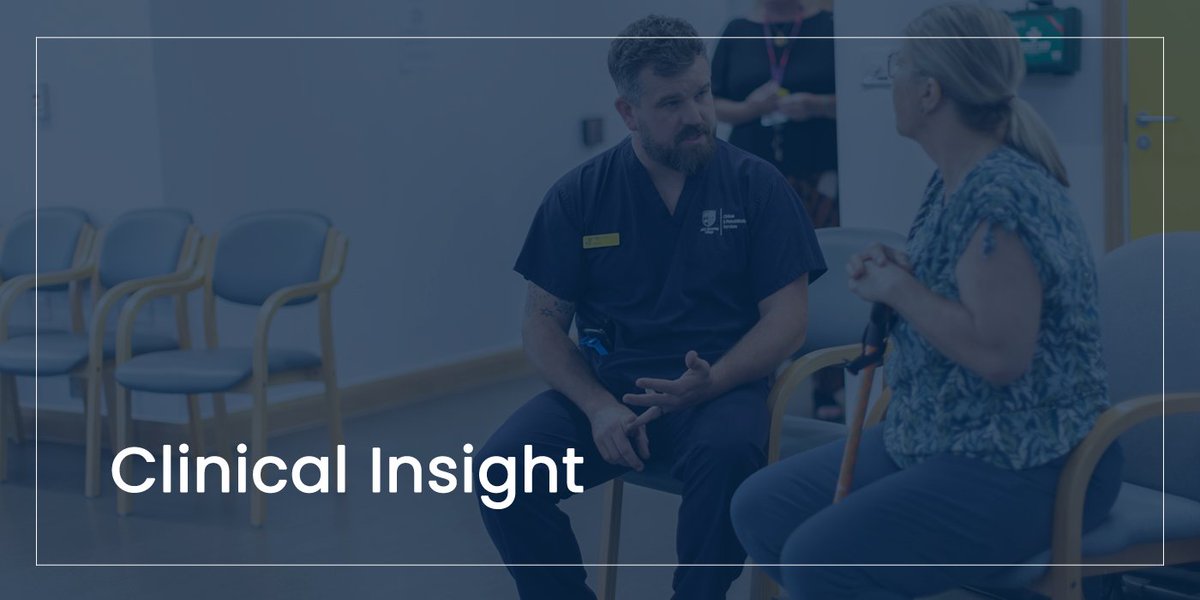
💡Clinical Insight: Community, Function and the Narrative: Learning from other Professions around Rehabilitation In this month’s #ClinicalInsight, we think about the concept of musculoskeletal (#MSK) practice and rehabilitation within the NHS 10-year Plan, particularly shifting to community-based care. So what does community-based MSK #rehabilitation potentially look like? Firstly, it’s not in a hospital setting and as we move forward in MSK rehabilitation, we must challenge some of the models that we utilise in those environments. When we consider physical rehabilitation as clinicians, two strong partners must be inter-twined: function and behavioural change approaches. Functional Assessment Let’s open with function: it’s a commonly used term but as MSK clinicians do we really understand the functional limitation of our patients? If we did, we might engage with the problems differently. How individuals manage and cope within the home, at work and socially can be improved by exercise, but also by modifications to the environment, the home, and at work. For MSK conditions are we good at this, and in a hospital environment, how do we assess this? Commonly, MSK practice fails to engage the complexities of a functional assessment that is needed to really understand and then ultimately support limitation. Other parts of the profession and our rehabilitation partners may do this better. Occupational Therapists offer a far greater “real world “assessment in and around what matters to the patient, and as a profession MSK practice could learn much by looking at how assessments in a social, cognitive and occupational perspective are carried out, modifications made, and goals set. Broadening Our Goal-Setting Approach Goal setting is such a skill and similar to understanding a functional limitation, could be achieved with more success with a change in perspective in what is important, as we learn how to establish that with our patients. This is also supported by moving the physical elements of assessment looking at specifics to a broader model, with a greater drive to build a relationship that allows for a freedom of the patient to express what matters them, but also their families, friends and work in how they will successfully interact in those contexts. It could be argued these conversations lack that openness and depth as we focus on pain and individual muscle, joint and tissue dysfunction. Of course, this approach is not for all, and tissue-based approaches are great for a cohort, and this falls within the final component of how we reason to a conclusion. The linking of a narrative reasoning approach to a deductive one if needed, is a skill that hinges on communicating verbally and non-verbally and being able to generate a different environment for expression. MSK practice can hinge on pain and movement, performance and power, but sometimes miss the subtleties of functional success and contextually driven protocols that are meaningful. To do this, the MSK clinician will need to be far more creative, and be able to provide non-protocol models, as every rehab patient has that individuality to their lives that needs exploring and applying a creative solution to recovery. So, in conclusion, the environment we work in, the environment we create for the relationship with our patients and the context of how we assess, are hallmarks of better MSK rehabilitation, and as we couple that with a more goal-set, functional model of supportive approaches, our patients can focus on what matters to them. You can read more Clinical Insight articles on our website here: clinics.hsu.ac.uk/category/clini…
Clinical & Rehabilitation Services at HSU tweet media
English
0
2
4
465
Clinical & Rehabilitation Services at HSU
🎯 What to expect: 🩻 Free trials and check-ups with our AlterG Anti-Gravity Systems treadmill, ultrasound scanning, strength testing, and more. 💡 Practical advice from our team on recovery, mobility, and getting back to sport safely. 🏋️ Explore our unique rehab gym – unlike anything else in the local area. 🎁 Exclusive offers available on the night. Booking is essential – spaces are limited! eventbrite.co.uk/e/return-to-sp…
Clinical & Rehabilitation Services at HSU tweet media
English
0
0
0
83
Clinical & Rehabilitation Services at HSU
This event is designed for athletes and active people who want to move well, recover properly, and get the most out of their training. If you love sport or staying active but are dealing with an injury, managing pain, or just want to understand your body better – this one is for you!
Clinical & Rehabilitation Services at HSU tweet media
English
1
0
0
82
Clinical & Rehabilitation Services at HSU
#ClinicalInsight: Reflecting on ARMA; ICB Approach to Musculoskeletal Services report In this issue of Clinical Insight, we reflect on the recently published @WeAreARMA (Arthritis and Musculoskeletal Alliance) report, which outlines the approaches of Integrated Care Boards (ICBs) to Musculoskeletal (#MSK) services. 42 ICBs responded to a freedom of information request from ARMA: 12 stated they did not have a MSK lead and 14 could not provide prioritisation for MSK. So, what does this mean? Is MSK not seen as important? MSK pain and disability is one of the leading causes of disability and inability to work; not having this as a priority would seem to conflict with the evidence. Is it because although MSK is complex, the vast majority of conditions are non-emergency, and as such although not well, people ultimately live with their long-term condition? With this being so, creating a long-term blueprint for change is not going to yield quick results. Compared to reducing a waiting list for imaging, investment is not as clear cut. Increase scanners and staff, and you deliver quicker access to scans, but the whole issue of treatment access then rears its head. Ultimately, investing in a model that is simple to assess and measure potentially draws the attention of those having to make the decisions. Need for a Preventative MSK Management Model We know that there is a huge need to drive a more preventative model in MSK management. This includes improving metabolic health, increasing activity, improving health literacy and access to well-being, and integrating physical and emotional health in a joined-up model. This approach will only come to fruition over generations, and not in any immediacy. Does this feel too large a challenge? Changing pathways, and reducing waiting lists, will not drive the inherent changes that really will affect change long term; although they will potentially lead to a positive shift in key performance indicators. This does not create an effective societal outcome. The engagement of leadership is a key focus for the recommendations. A lead is not going to generate change solely with this responsibility and accountability; they will need authority and the funds to make the changes needed. Without this, these roles will be empty of the capacity to drive cultural transformation around health care and behaviours that are the only ways to see /experience sustainability. If a new MSK lead is put in place, they can only work with what they have. If they are not afforded the authority as part of the priorities, then this leads to the same outcomes that we have already witnessed. Conclusion In summary, this report highlights vital gaps in the MSK provision in terms of leadership and priorities, but the key to leadership creating the changes needed is something that potentially needs something radical, progressive and different. Otherwise, we remain at risk of highlighting what we already know, but not addressing what we struggle to change. Reference: arma.uk.net/wp-content/upl… We hope this is of interest - @PhysioMACP & @LaurafinucaneB.
Clinical & Rehabilitation Services at HSU tweet media
English
0
3
6
1.9K
Clinical & Rehabilitation Services at HSU retweetledi
Neil Langridge
Neil Langridge@neiljlangridge·
The “so what, why and how” simple reasoning to help students -
Clinical & Rehabilitation Services at HSU@ClinicsHSU

Developing students’ thinking around #MSK #rehab planning: the “So what, why and how” approach Our latest #ClinicalInsight provides a short reflection from a team member who has been asked to help first year #physiotherapy students in how they can create management plans through the patient story and examination. We include: ➡️ Establishing ‘so what’ ➡️ Linking the why ➡️ How to know if relevant? ➡️ Key features of the “So what, why and how” approach You can read the full article here: bit.ly/4g6OcG5 We hope this will be of interest @MattLowPT @PhysioMACP @neiljlangridge

English
0
5
5
1.6K
Clinical & Rehabilitation Services at HSU
Developing students’ thinking around #MSK #rehab planning: the “So what, why and how” approach Our latest #ClinicalInsight provides a short reflection from a team member who has been asked to help first year #physiotherapy students in how they can create management plans through the patient story and examination. We include: ➡️ Establishing ‘so what’ ➡️ Linking the why ➡️ How to know if relevant? ➡️ Key features of the “So what, why and how” approach You can read the full article here: bit.ly/4g6OcG5 We hope this will be of interest @MattLowPT @PhysioMACP @neiljlangridge
Clinical & Rehabilitation Services at HSU tweet media
English
0
7
9
2.7K
Clinical & Rehabilitation Services at HSU retweetledi
Lianne Wood
Lianne Wood@WoodwicksLianne·
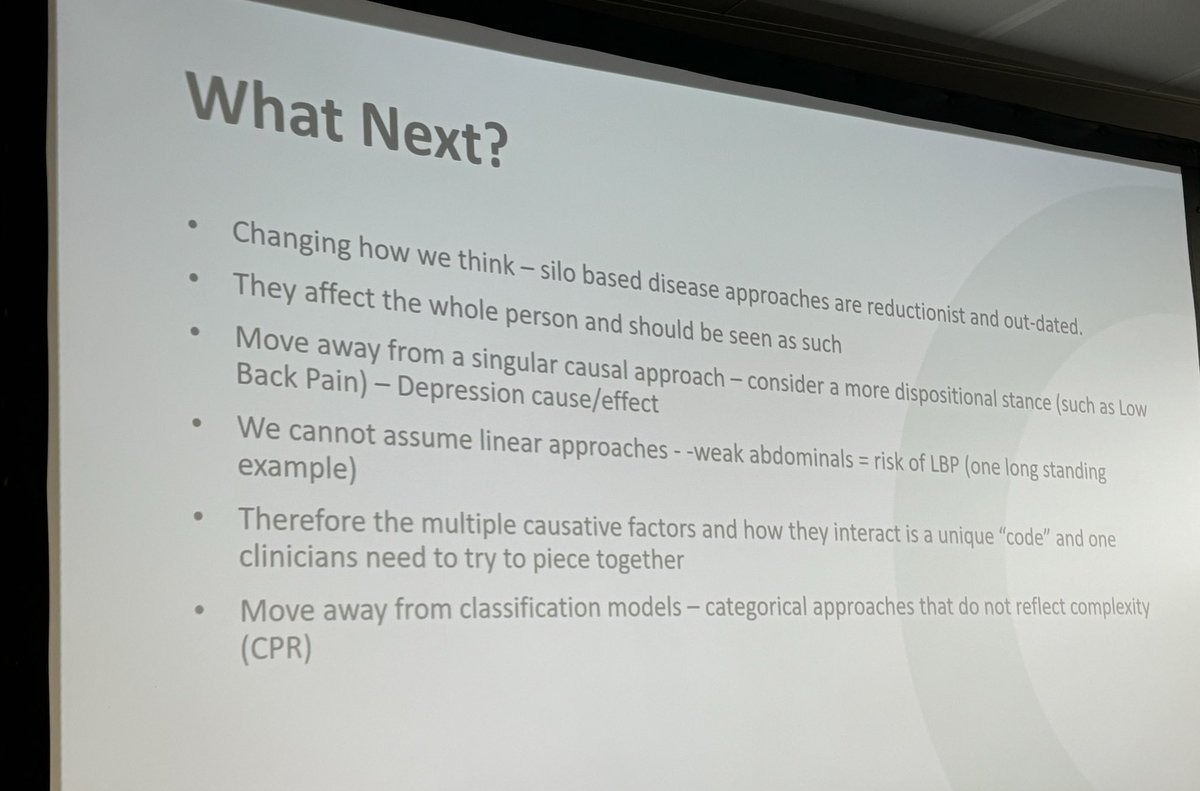
Great to hear @neiljlangridge talking on complex clinical reasoning and diagnostic uncertainty in clinical practice at @APPN_physio study day 2024!
Lianne Wood tweet media
English
0
4
25
1.1K
Clinical & Rehabilitation Services at HSU
Reflecting on the Clinical Decision: Putting the Pieces Together Our previous two #ClinicalInsights explored: ➡️The relationship of the clinician’s emotions and their effects on decision-making in the clinic ➡️How we take social and clinical cues from patients to build an understanding ➡️Some of the subtle clinical reasoning faults that may occur as we move through this. This week's #ClinicalInsight looks at how we manage this challenge, offering some tips on how to build around this problem. Leadership theory and models of learning start very much with how we understand ourselves, then how this can impact others. We then use that knowledge effectively to be able to adjust our leadership behaviours to ensure we present as authentic, compassionate and trustworthy. Presenting as an Authentic Clinician This is how a clinician can begin to gain insight and unpick complexity. If we present as the authentic clinician, then the patient is far more likely to disclose, and this deals with one of the pillars of uncertainty, which is not knowing what the patient expects, wants, or is concerned about. If we are uncertain about that, how do we ever develop an effective management plan? Use a Framework Secondly, when dealing with uncertainty we need to be able to place abstract ideas, presentations into a framework, and this requires some sort of testing protocol. In doing so we can improve how we make sense of symptomology and patient experiences. This is challenging, and allows for the therapeutic alliance to be structured. It’s a deep example of creating a research-like question and subsequent protocol within the clinical interaction. Building a Patient Story Lastly, we need to deal with technical uncertainty as we try to apply “test” to the presentation, such as clinical bedside and of course more structured rather like imaging. So, the building of the patient story has to be constructed, when it’s complex, around multiple mini frameworks that then allow the emotional and less structured (but vital) elements to be understood not only from the patient’s perspective, but by the clinician within a more objective framework. Experts live with uncertainty, however they mitigate for this by having a greater appreciation of their impact on the consultation, by creating developed models of how to deal with less obvious cues that underpin a patient story, and lastly modifying the consultation to try to create a better objective model for dealing with uncertainty. You can read the full article and previous Clinical Insight articles on our website here: bit.ly/3UQDYSL References Ghosh, A.K., 2004. On the challenges of using evidence-based information: the role of clinical uncertainty. Journal of Laboratory and Clinical Medicine, 144(2), pp.60-64. Stern, D., Smith, K. and Rone-Adams, S., 2020. Using A Self-Contained Integrated Clinical Education (ICE) Model to Identify Student Deficits.
Clinical & Rehabilitation Services at HSU tweet media
English
0
2
4
1.2K
Clinical & Rehabilitation Services at HSU retweetledi
Neil Langridge
Neil Langridge@neiljlangridge·
Really pleased to welcome our Consultant Orthopaedic surgeon to our University clinic team today - Mr Muthian will be delivering outpatient services onsite, and working closely with our interventional radiologist, imaging teams, rehab specialists and students. Exciting developments! @ClinicsHSU @HealthSciUni @ProfLesleyHaig
English
0
6
19
1.6K
Clinical & Rehabilitation Services at HSU
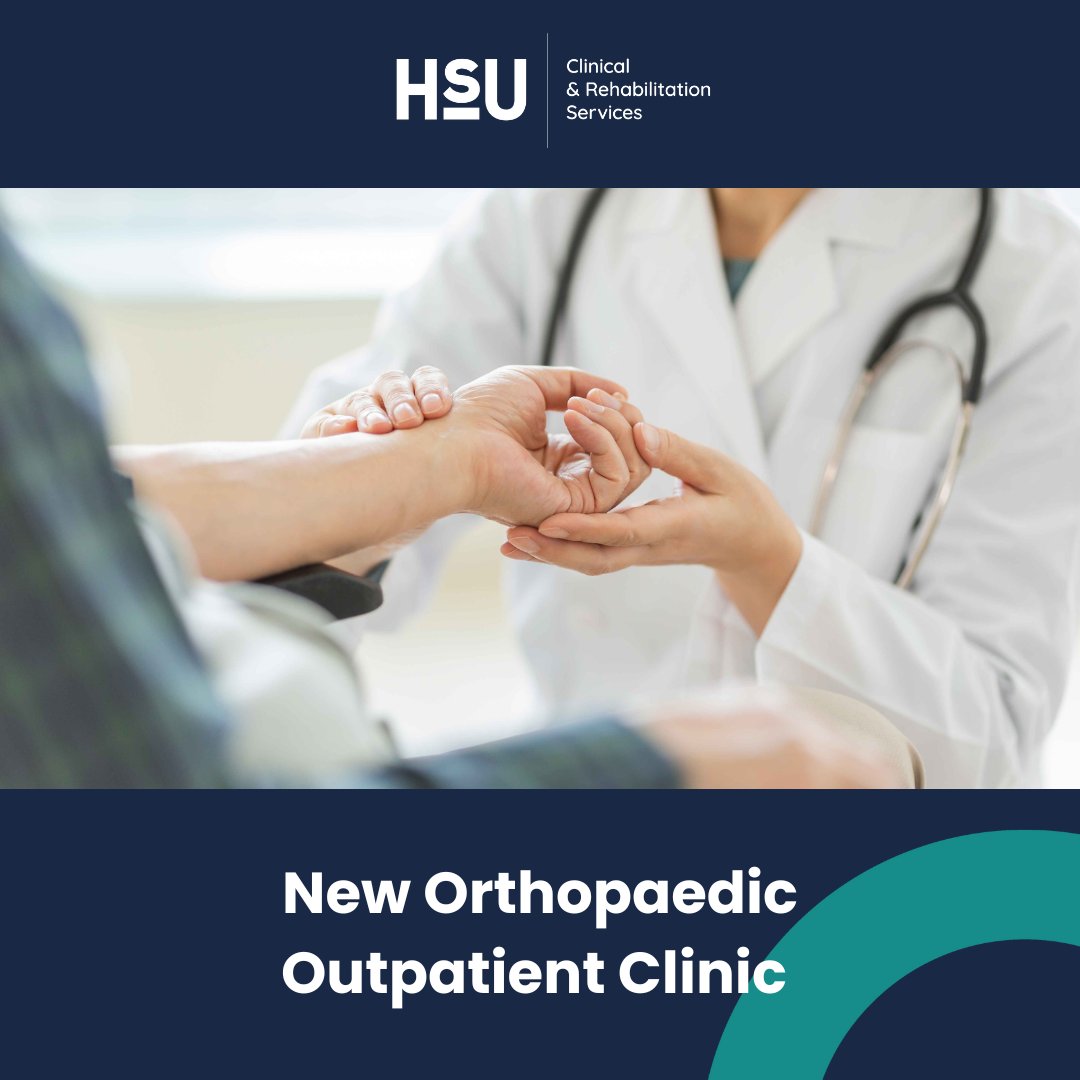
🚀 Introducing Our New On-Site Orthopaedic Outpatient Clinic 🚀 We’re thrilled to announce the launch of an on-campus orthopaedic outpatient clinic, led by Consultant Orthopaedic Surgeon Mr. Senthil Muthian. This clinic offers individuals an opportunity to explore their musculoskeletal options—whether surgical, interventional, or rehabilitative. Dr. Neil Langridge, Director of Clinical and Rehabilitation Services, highlights the advantages of the clinic, saying: “This service gives patients fast access to a surgical opinion and personalised treatment options, all in one location.” 🔹 Why Choose Our Clinic? • Expert opinion: Mr Muthian is a highly regarded Consultant Orthopaedic Surgeon, with a specialism in upper limb conditions and trauma. He can offer opinions on all types of orthopaedic interventions. • Streamlined Care: From initial assessment and imaging to advanced injections and rehabilitation, our clinic offers comprehensive support—all conveniently on one site. • Fast Access to surgical care: Skip the usual steps and get direct access to surgical opinions, imaging, and intervention options. This clinic is all about offering patients clarity, options, and control over their health journey. 💪 Learn more about how our Orthopaedic Outpatient Clinic can support you clinics.hsu.ac.uk/orthopaedic-ou… #orthopedics #orthopedicsurgery #orthopaedic #Orthopaedics #orthopaedicconsultant #MusculoskeletalHealth #MSKHealth
Clinical & Rehabilitation Services at HSU tweet media
English
0
2
11
545
Clinical & Rehabilitation Services at HSU
This week's #ClinicalInsight is Part Two in our current series exploring clinical decision-making. This article reflects on subconscious cues in making a clinical decision. As clinicians know, clinical reasoning involves the cognitive processes that culminate in a diagnosis and treatment plan. The process itself is difficult to analyse and especially in experts where non-analytic reasoning, which is believed to be mainly subconscious, features as the premise for fast thinking or pattern recognition. Cognitive expertise involves the linking of information via a set of perceptual cues into a more meaningful pattern. The dual process theory that allows humans to be able to move from fast patterns to slow analytical models is reflected in clinical practice. Errors in Reasoning Errors in reasoning are clearly commonly experienced and can range across cognitive bias and knowledge gaps. Clinicians can too early anchor a diagnosis, look to confirm it with a less analytical assessment of relevant information, or perhaps premature closure without considering other sources. The subtly of practice and information can be built on subconscious cues that essentially raise an awareness and a more analytical approach of enquiry. These can be linked to previous experiences, knowledge, or a blend of past encounters that build a picture for the clinician. Responses can be augmented as physical experiences in the clinician, such as heart rate, sweating or breathing, rather like a mild stress response, if there is concern. Otherwise, it’s a level of conscious confidence that builds as the pattern “fits”. Clinical Clues The subtle clinical cues are different for every patient: they can be physical, emotional, verbal, or non-verbal. These can be a way something is explained, the words, phrases, description. It could the way a patient shows where the symptoms are and the words used in conjunction with this to describe it. The responses to the specific questions, some of course may be evidence based to inform, others just from prior experience. The clinician may enquire in a certain way to see if a familiar response is gained. The way the patient interacts non-verbally will be full of clues to be explored, and in the end analytically accepted or rejected based on clinical relevancy to what might be happening. Essentially, sub-conscious cues become conscious through analysis, concern, or linking patterns. Clinicians, although looking for “tests” that offer sensitivity / specificity, have to be aware of the subconscious to conscious cueing of meaning, and the wax and wane of fast to slow reasoning through the clinical encounter. By doing so, improved diagnosis and reflection is more likely to be achieved as experience is gained. This Clinical Insight article is Part Two in our current series – Part One explored the “Yellow Flags” of the Clinician: Reasoning, Reflection and Responses. You can read the full article here: bit.ly/3NwLY7q References Corrao, S. and Argano, C., 2022. Rethinking clinical decision-making to improve clinical reasoning. Frontiers in Medicine, 9, p.900543. van den Berg, B., de Bruin, A.B., Marsman, J.B.C., Lorist, M.M., Schmidt, H.G., Aleman, A. and Snoek, J.W., 2020. Thinking fast or slow? Functional magnetic resonance imaging reveals stronger connectivity when experienced neurologists diagnose ambiguous cases. Brain Communications, 2(1), p.fcaa023.
Clinical & Rehabilitation Services at HSU tweet media
English
0
4
9
2.8K
Clinical & Rehabilitation Services at HSU
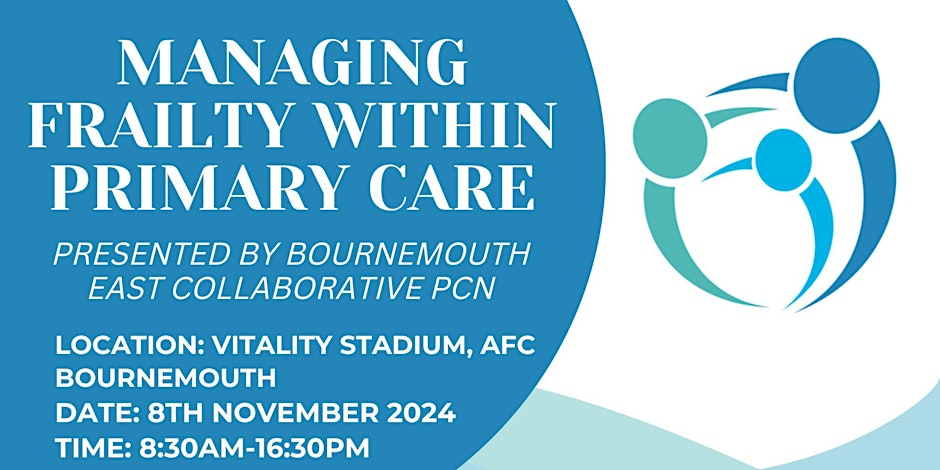
Are you working in Health and Social Care or do you work with people living with frailty? The Bournemouth East Collaborative PCN is hosting a "Managing Frailty within Primary Care" conference on Nov 8 at AFC Bournemouth's Vitality Stadium. The event covers topics like frailty management, dementia, heart failure, polypharmacy, and falls prevention. Details and registration: eventbrite.co.uk/e/managing-fra… #PrimaryCare #HealthcareEducation
Clinical & Rehabilitation Services at HSU tweet media
English
0
3
5
374