
Zach Raber

5.1K posts

Zach Raber banner
Zach Raber

Zach Raber

@CoachRaber

Trine University, Head Cross Country Coach, Assoc. Head Coach for Track & Field

Fort Wayne, Indiana Katılım Temmuz 2013
249 Takip Edilen367 Takipçiler
Zach Raber retweetledi

Steve Magness
Steve Magness@stevemagness·
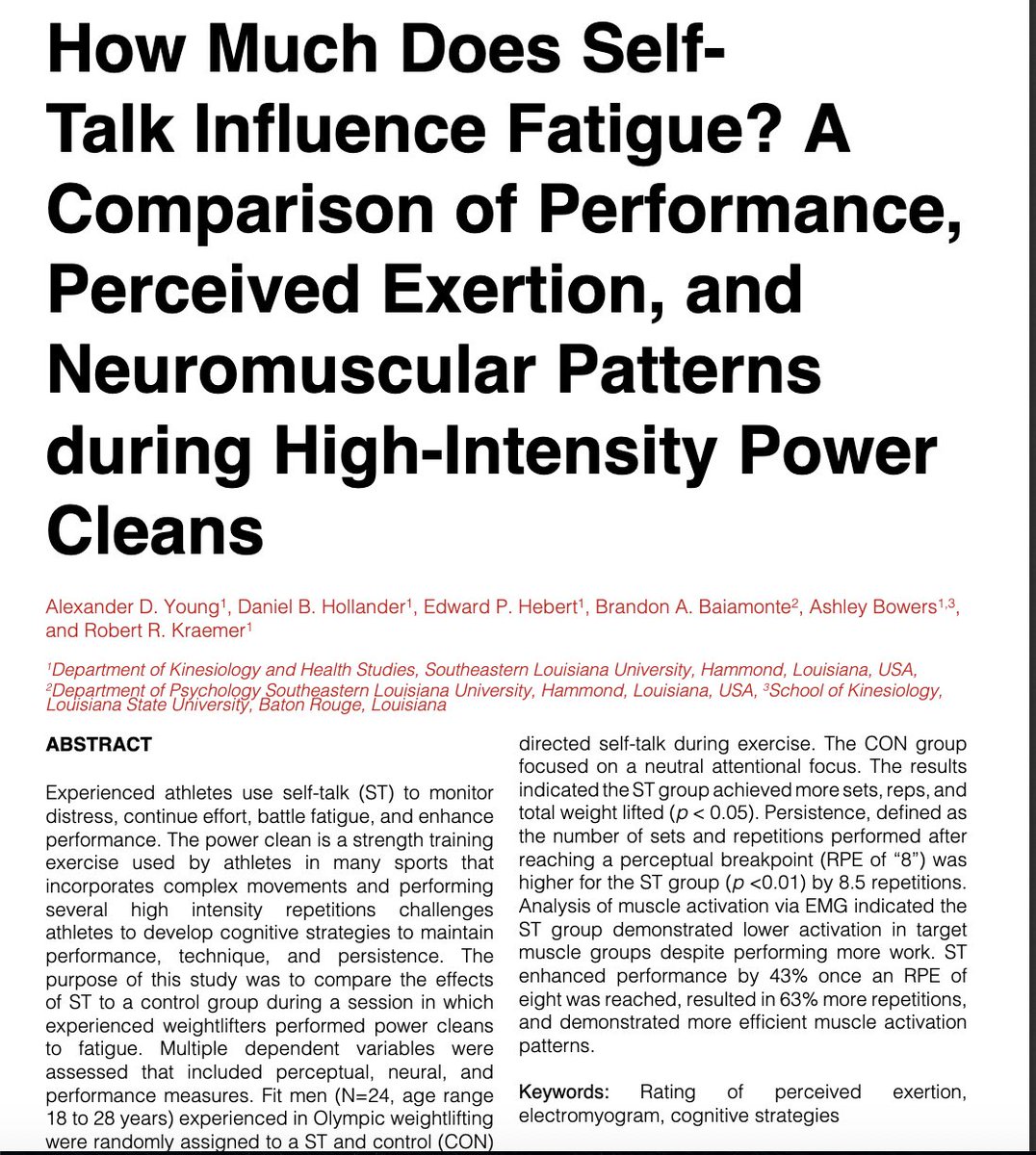
How you talk to yourself matters. In one study on lifting weights, goal directed self-talk "enhanced performance by 43% once an RPE of eight was reached, resulted in 63% more repetitions, and demonstrated more efficient muscle activation patterns."
Steve Magness tweet media
English
15
121
850
39.1K
Zach Raber retweetledi
Steve Magness
Steve Magness@stevemagness·
When I started running, I asked my coach how to get better. He said: show up to every practice I got better. I asked again: "Run on the weekends when we don't practice" I got better Showing up consistently is step 1 in any pursuit Don't overcomplicate it when getting going
English
11
43
476
27.5K
Zach Raber retweetledi
Steve Magness
Steve Magness@stevemagness·
The #1 factor determining whether a training program will work or not is belief. If you don’t have buy-in, even if the training is perfect, it’s not going to work.
English
1
12
112
11.7K
Zach Raber retweetledi
Steve Magness
Steve Magness@stevemagness·
You can't "tough it out" alone. Isolation triggers a threat response in the brain. Connection triggers a safety response. It releases oxytocin and aids recovery. The strongest performers are the ones who build a tribe. Deep connection is the ultimate performance enhancer.
English
5
12
113
8.6K
Zach Raber retweetledi
Steve Magness
Steve Magness@stevemagness·
Listen to World champion Josh Kerr: “I don’t do crazy workouts or crazy mileage. I just don’t miss days. Consistency is my biggest weapon. I’ll break any athlete down with how consistent I’m going to be training wise and just getting the work done.”
English
12
65
564
37.1K
Zach Raber retweetledi
Steve Magness
Steve Magness@stevemagness·
The goal is not to feel confident all the time. The goal is not to eliminate doubt. The goal is to be able to do what matters even when doubt is present. You can feel anxious and still perform at your best. You can feel scared and still step into the arena. You can feel like an imposter and still do the work. Your feelings don't have to dictate your actions.
English
4
22
132
7.2K
Zach Raber retweetledi
Rod Murrow, JD
Rod Murrow, JD@RodMurrow·
I’ve been saying this for decades. At state meets all across the country, there are athletes running the 400 who have the genetic potential to be future American record holders in the mile or even 5000. The American tendency to run the shortest distance for which we have the speed to compete is one of the biggest things holding us back.
Steve Magness@stevemagness

The general public doesn't understand how fast most distance runners are A high level 1500m runner can out sprint all but a few skill position players on a typical HS football team Distance runners don't have elite speed But they have more than the majority of other athletes

English
9
7
65
17.8K
Zach Raber retweetledi
Steve Magness
Steve Magness@stevemagness·
The truth about progress: Big heroic efforts get applause, but boring consistency gets results. Anyone can crush it for a day. What’s truly hard is showing up day after day, week after week, when no one’s watching. Consistency is the real superpower.
English
5
28
155
7.5K
Zach Raber retweetledi
Steve Magness
Steve Magness@stevemagness·
My high school coach had a simple but profound rule: No matter what happened—win or loss, joy or disappointment—the next day, you get back to work. We called it the 24-hour rule. You had 24 hours to feel it all. Then it was time to move forward.
English
19
103
1.1K
39.1K
Zach Raber retweetledi
Steve Magness
Steve Magness@stevemagness·
Research has found that sitting close to a high performer improved performance by 15%. Sitting close to a low performer decreased performance by 30%. Surround yourself wisely!
English
27
179
912
72K
Zach Raber retweetledi
Steve Magness
Steve Magness@stevemagness·
There’s no hack for heart. No shortcut for showing up. Greatness is built in quiet rooms, early mornings, and late nights—without an audience. You won’t always feel inspired. But you do it anyway. That’s the real routine.
English
4
26
184
8.7K
Zach Raber retweetledi
Steve Magness
Steve Magness@stevemagness·
There is no secret. Consistency over intensity. Small wins instead of chasing heroic efforts. Progress beats perfection. Solid work. Repeated for a long time. That's it.
English
18
57
369
20.3K
Zach Raber retweetledi
Steve Magness
Steve Magness@stevemagness·
One key differentiator for elite performers? They don’t see it as a sacrifice. Going to bed early, skipping the party, putting in hours of practice... That’s not giving something up. It’s living in alignment with what they care about most.
English
32
103
975
83.2K
Zach Raber retweetledi
Steve Magness
Steve Magness@stevemagness·
People underestimate the speed of distance runners. Most people think, they run far, so they are slow. A top-distance runner is fast. Not actual sprinter fast...but a top distance runner could out sprint most non-speed orientated team sport athletes.
English
50
27
796
81.1K
Zach Raber retweetledi
Greg Berge
Greg Berge@GregBerge·
Want a Winning Program? Ask yourself, what does a “Losing Program” look like? Make sure you don’t have these 7 Losing Attributes in your program. 1: Entitlement Do your seniors feel entitled to play? Do your seniors feel entitled to lead? Losing programs have entitled players. Everything needs to be earned in sports. Playing time needs to be earned. Leadership needs to be earned. This is your Culture. 2: The Blame Game Losing programs have a lot of blame to pass around. There is a lack of responsibility. There is finger-pointing as to why the team does not have success. Own it or suffer the consequences of losing. 3: No Discipline Discipline is doing what has to be done, when it has to be done, and doing it this way all the time. Losing programs lack discipline. You can see it and how they act, how they play, and how they practice. It is sloppy. 4: Lacking Leadership Losing programs lack leadership. Leadership from the coach. Leadership from players. Player lead teams win. One responsibility of the coach is to develop leaders for your team. 5: Complaining Losing programs have complainers. Complaining creates excuse-makers. Complaining creates ➖ energy. Complaining creates fixed mindsets and losing programs. 6: Lack of Commitment Losing programs have a lack of commitment. Players are not bought into the program. They do not put in needed time into the off-season. This becomes contagious. 7: ME > WE Finally, losing programs have ME First mindsets. Players are worried about their stats. Players are worried about themselves. They are not worried about the team. ----- Follow me @gregberge for more Actionable Ideas on Coaching, Leadership, Culture, and Teams. Join 15,000+ others and subscribe to my free weekly newsletter. The subscription link is in my profile
English
1
37
153
16.6K
Zach Raber retweetledi
Shawn Siemers
Shawn Siemers@Siemers_XC_TF·
Every year there’s that kid who says, “Coach, don’t worry — I’m gonna start training again in January.” Like fitness cares about the calendar. Like the body is sitting there going, “Oh! January 1st? Right this way, sir. Here’s all your fitness back.” That’s not how this works. January just magnifies whatever you did — or didn’t do — over the break. You don’t need heroic mileage. You don’t need perfect runs. You just need to avoid the holiday fitness cliff. January doesn’t save you. It exposes you.
English
2
4
27
1.4K
Zach Raber retweetledi
Shawn Siemers
Shawn Siemers@Siemers_XC_TF·
Middle-distance kids always think track season means: “YES — finally, SPEED WORK!” They picture flying 200s, spikes, swagger… the whole speed fantasy. Then December hits and you tell them we’re doing: – steady aerobic – progressive runs – short hills – boring strength work And they look at you like you just canceled Christmas. But here’s the truth nobody tells them: The 800 and 1600 don’t reward the fastest kids. They reward the strongest kids who can still move late. Speed shows up in the last 150. Strength controls the first 1450. Middle-distance isn’t about being fast. It’s about being fast after fatigue.
English
5
13
146
10.4K
Zach Raber retweetledi
Steve Magness
Steve Magness@stevemagness·
Two characteristics I've noticed in high performers: -Consistency emphasized more than short-term Intensity: They stack good work week after week, month after month. -They know how to flip the switch to compete, instead of always being hypercompetitive.
English
2
27
247
10.9K
Zach Raber retweetledi
Greg Berge
Greg Berge@GregBerge·
Players see the workouts, the practices, the plays. Coaches see something different. We see people becoming who they are meant to be. And sometimes the biggest gap in a program is understanding what a coach is actually thinking. So here’s the truth… the side players rarely hear. 1. Your coach wants you to succeed more than you realize. Your growth matters to us more than the scoreboard. 2. We notice your attitude more than your stats. Talent helps you play. Attitude helps you lead. 3. We pay attention to how you treat teammates. Respect, effort, and energy say far more than a box score ever will. 4. We see your potential long before you see it yourself. That’s why we push you. That’s why we challenge you. 5. When we’re hard on you, it’s because we believe in you. A coach doesn’t spend extra time with someone they’ve given up on. 6. We replay mistakes too, not to blame you, but to help you. Teaching is how we show we care. 7. Your body language speaks louder than your words. Effort, focus, and pride are visible. 8. We want kids who make others better. If you raise the standard, you become invaluable. 9. We don’t expect perfection. We expect growth, humility, and the willingness to keep showing up. 10. We care about who you become long after the season ends. Championship people last longer than championship moments. These truths matter because trust matters. Programs change when players understand the heart behind every decision, every challenge, and every lesson. If players understood these 10 truths, teams would be better. But more importantly, people would be better. That’s coaching.
English
1
35
90
10K
Zach Raber retweetledi
The Winning Difference
The Winning Difference@thewinningdiff1·
"Any high school coach telling your kid that they can't play multiple sports is telling you that because it's in their best interest. The second that coach tells you that, you should be out."@gregolsen88 You're not just taking away the sport. You're taking away the memories.
English
34
702
2.8K
403.4K