Brandon Bailey

2.1K posts

Brandon Bailey banner
Brandon Bailey

Brandon Bailey

@Coach_BBailey

Follower of Jesus Christ. Husband to C.C. Daddy to Brighton. Safeties Coach at JMU. #GoDukes #FaithFamilyFootball

Statesboro, GA Katılım Haziran 2012
4.3K Takip Edilen18K Takipçiler
Brandon Bailey retweetledi
JMU Football
JMU Football@JMUFootball·
Introducing Robert Bala, who leads the JMU defense. He spoke to the media for the first time Tuesday following day two of spring ball. 📽️ youtu.be/iIPJMMv6No4
YouTube video
YouTube
English
3
19
116
20K
Brandon Bailey
Brandon Bailey@Coach_BBailey·
Your Process > The Result Your Response > Your Mistake or Failure Day 1. Only more important than the others because it is the opportunity we have TODAY! #ForMula #GoDukes @JMUFootball
English
2
1
14
1.1K
Brandon Bailey retweetledi
Billy Napier
Billy Napier@coach_bnapier·
Dr. Lemma@DoctorLemma

19 years ago, a high school basketball coach put his team manager into a game for the final four minutes. The kid had never played a single minute of competitive basketball in his life. He scored 20 points. Jason McElwain was diagnosed with severe autism at age two. He didn’t speak until he was five. He couldn’t chew solid food until he was six. He wore a nappy for most of his early childhood. As a baby, he was rigid, wouldn’t make eye contact, and hid in corners away from other children. He tried out for his school basketball team every year and got cut every time. Too small. Too slight. Barely 5’6 and about 54 kilograms. But he loved the game so much that his mum called the school and asked if there was any way he could be involved. The coach created a team manager role for him. For three years, McElwain showed up to every practice and every game. He wore a shirt and tie on match days. He ran drills, handed out water, kept stats, and cheered every basket like he’d scored it himself. On 15 February 2006, the last home game of his final school year, the coach let him suit up in a proper jersey and sit on the bench. With four minutes left and a comfortable lead, the coach sent him in. His first shot missed. His second missed. Then something shifted. He hit a three-pointer. Then another. Then another. His teammates stopped shooting entirely and just kept passing him the ball. He hit six three-pointers and a two-pointer. 20 points in four minutes. The highest scorer in the game. When the final buzzer went, the entire crowd rushed the court and lifted him onto their shoulders. His mum tapped the coach on the shoulder, in tears. “This is the nicest gift you could have ever given my son.” McElwain won the ESPY Award for Best Moment in Sports that year, beating out some of the biggest names in professional sport. He’s 36 now. He works at a local supermarket, coaches basketball, has run 17 marathons including five Boston Marathons, and travels the country speaking about never giving up. When asked about that night, his coach still gets emotional. “For him to come in and seize the moment like he did was certainly more than I ever expected. I was an emotional wreck.”

QHT
0
4
72
15.9K
Brandon Bailey retweetledi
JMU Football
JMU Football@JMUFootball·
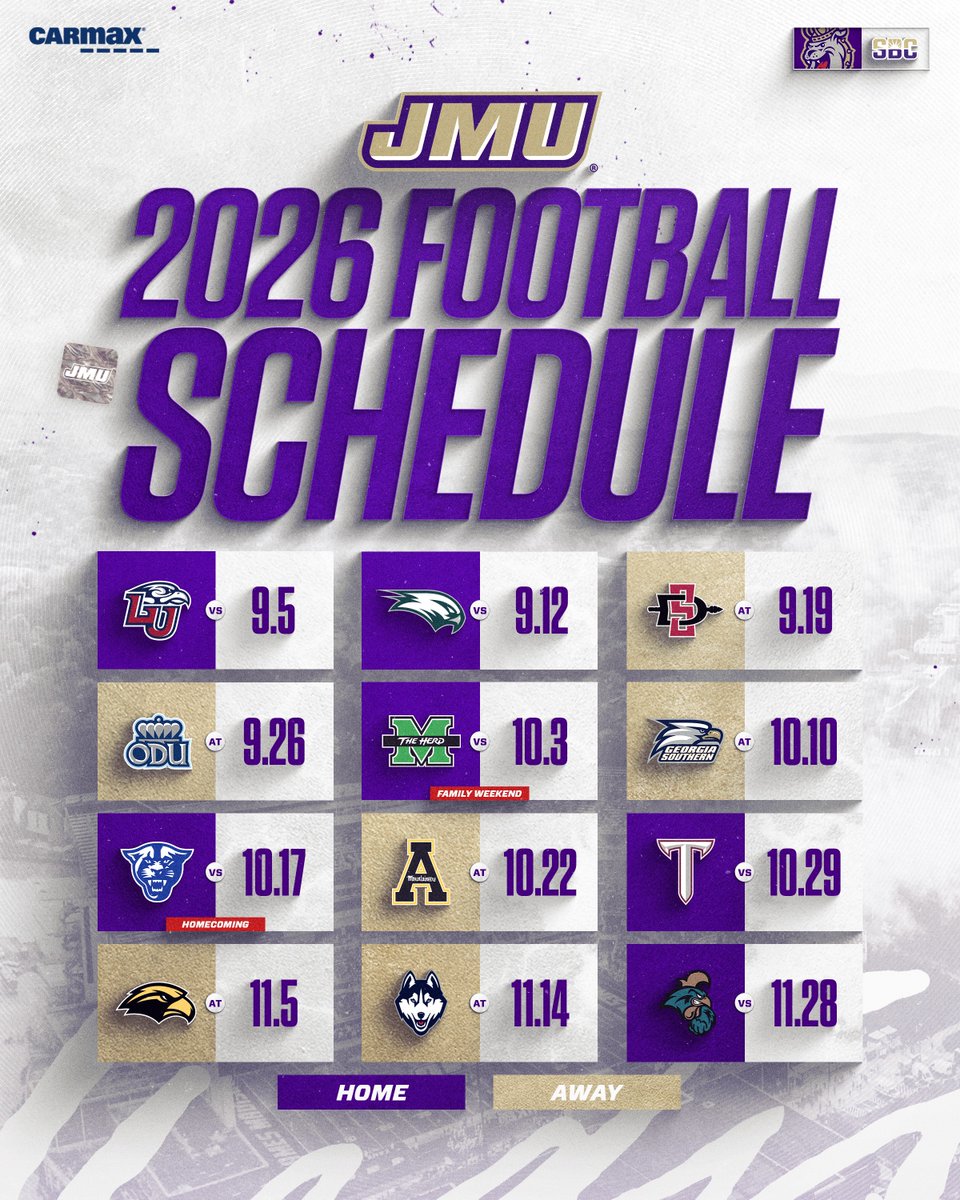
𝐆𝐞𝐭 𝐲𝐨𝐮𝐫 𝐩𝐨𝐩𝐜𝐨𝐫𝐧 𝐫𝐞𝐚𝐝𝐲 🍿 We'll be back at Bridgeforth before you know it! 📰 bit.ly/4ltAQIy #GoDukes
JMU Football tweet media
English
13
64
334
77.3K
Brandon Bailey retweetledi
Billy Napier
Billy Napier@coach_bnapier·
Alan Stein, Jr.@AlanSteinJr

There’s a phrase I borrowed from my years working with elite basketball players that has become one of the cornerstones of how I live, coach, and lead: "Next Play." It’s a simple mantra, but it carries a heavyweight punch. Whether it’s on the court, in business, or in life, the ability to let go of what just happened and lock in on what’s happening now is a true separator. It’s one of the defining characteristics of high performers—those who consistently show up, bounce back, and move forward. Let me paint the picture. It’s the final minute of a tied basketball game. One of your teammates turns the ball over. A bad pass. You can see it all over his body—his shoulders drop, he winces, maybe even mutters a few words under his breath. Meanwhile, the other team sprints down the court. Momentum swings. Opportunity missed. Why? Because he didn’t move to the next play. He got stuck. Stuck in the mistake. Stuck in what just happened. And that mental hesitation became a physical one. Here’s the truth: You can’t change the past—but you can absolutely ruin the present by dwelling on it. The best players I’ve ever worked with—from Kobe to KD—had short memories. Not because they didn’t care. Not because they didn’t want to learn from their mistakes. But because they understood this: what’s done is done, and the only thing that matters now is the very next decision, the next action, the next play. This principle isn’t just for athletes—it’s for all of us. Missed a big sales call? Next play.Messed up a presentation? Next play.Snapped at your partner in a moment of stress? Next play.Fell short on a goal? Next play. Every moment offers us a choice: dwell or decide. Do we dwell on what just went wrong—or do we decide to move forward with intention? See, high performers don’t ignore failure—they just don’t live there. They reflect, learn, adjust, and move on. Fast. They respect the past, but they live in the present. And this mindset doesn’t just build performance—it builds resilience. It’s the muscle that allows you to bounce back quicker, recover stronger, and show up with purpose again and again. So, how do you build a “Next Play” mindset? 1. Awareness – Catch yourself when you spiral into replay mode. Notice when your energy is stuck in something that already happened. 2. Reset Ritual – Create a physical or verbal cue that snaps you back into the now. A deep breath. A clap. A phrase like “Next play.” Make it second nature. 3. Respond, Don’t React – Use the moment to choose your response. Don’t let your emotions steer the wheel. 4. Practice Daily – This isn’t just for big moments. Practice moving to the next play in the little things—traffic delays, emails, arguments. Every rep counts. Remember, success isn’t about being perfect—it’s about being present. And the more you can live in this moment, the better you’ll perform in the next one. So the next time you mess up, miss out, or fall short, don’t dwell. Decide. Next play. Always.

English
5
10
56
14.5K