EAC中文社区-Crypto 荣耀哥

440 posts

EAC中文社区-Crypto 荣耀哥 banner
EAC中文社区-Crypto 荣耀哥

EAC中文社区-Crypto 荣耀哥

@CoinConsensus

地球币中国社区是一个非营利性的团体。宗旨建立 本社区的宗旨是为了方便地球币等加密货币爱好 者之间的相互交流、沟通。性质:本社区为非营利性 公益松散社区,不参与任何盈利活动。若出现任何人 打着盈利旗号的任何行为,跟本社区无任何关系。QQ 群:566186244

Katılım Temmuz 2021
255 Takip Edilen233 Takipçiler
Sabitlenmiş Tweet
EAC中文社区-Crypto 荣耀哥
EAC中文社区-Crypto 荣耀哥@CoinConsensus·
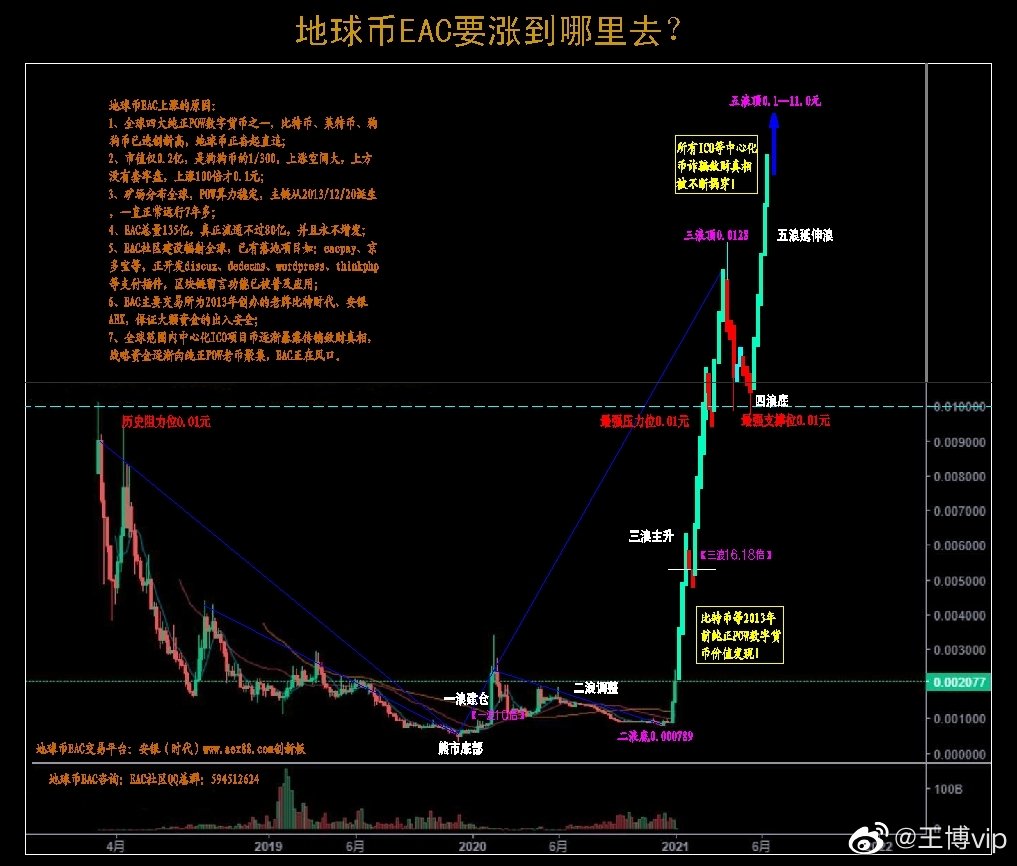
地球币EAC涨到1元】 1、纯正POW数字货币之一,莱特币狗狗币 地球币同算法 2、市值低 是狗狗币的1/10000,上涨空间大,上涨100倍才0.1元 3、POW算力稳定,主链从2013/12/20诞生,一直正常运行12年 4、EAC总量135亿,真正流通不过80亿,并且永不增发; 5、EAC社区共识强,eacpay、eactalk 应用完善
EAC中文社区-Crypto 荣耀哥 tweet media
中文
6
3
7
1K
CZ 🔶 BNB
CZ 🔶 BNB@cz_binance·
You can safely assume anyone who claims to be able to help you list your project on Binance (CEX) is a SCAMMER, especially if they say they know CZ or is a good friend, etc. 99.999% of the time, I don't know them. If I do, I will put them on a blacklist. Stay SAFU! 🙏
English
1.6K
594
5.2K
1.7M
H.E. Justin Sun 👨‍🚀 🌞
H.E. Justin Sun 👨‍🚀 🌞@justinsuntron·
我知道你对未来有很多不确定 其实不是 未来已经发生了 只是你尚未察觉 未来10年 人类的寿命会达到150岁 是真的 未来10年 人人都将获得足够的财富与自由 是真的 未来10年 人类的生活将会比之前任何时代都幸福 是真的 再给AI一些时间,一些耐心,一些包容 现在你唯一需要做的就是 好好活着 Do nothing Don't die.
中文
594
478
3.6K
466.8K
ChandlerGuo 郭宏才 宝二爷
摩根士丹利要发比特币ETF了 8万亿资金池 按2%配置就是1600亿美元 这波要起飞了
中文
104
35
276
101.4K
Elon Musk
Elon Musk@elonmusk·
Optimus+PV will be the first Von Neumann probe, a machine fully capable of replicating itself using raw materials found in space
English
5.9K
5.5K
52.3K
49.6M
vitalik.eth
vitalik.eth@VitalikButerin·
A very important document. Let's walk through this one "goal" at a time. We'll start with fast slots and fast finality. I expect that we'll reduce slot time in an incremental fashion, eg. I like the "sqrt(2) at a time" formula (12 -> 8 -> 6 -> 4 -> 3 -> 2, though the last two steps are more speculative and depend on heavy research). It is possible to go faster or slower here; but the high level is that we'll view the slot time as a parameter that we adjust down when we're confident it's safe to, similar to the blob target. Fast slots are off in their own lane at the top of the roadmap, and do not really seem to connect to anything. This is because the rest of the roadmap is pretty independent of the slot time: we would need to do roughly the same things whether the slot time is 2 seconds or 32 seconds There are a few intersection areas though. One is p2p improvements. @raulvk has recently been working on an optimized p2p layer for Ethereum, which uses erasure coding to greatly improve on the bandwidth/latency tradeoff frontier. Roughly speaking: in today's design, each node receives a full block body from several peers, and is able to accept and rebroadcast it as soon as it receives the first one. If the "width" (number of peers sending you the block) is low, then one bad peer can greatly delay when you receive the block. If width is high, there is a lot of unneeded data overhead. With erasure coding, you can choose a k-of-n setup, eg: split each block into 8 pieces so that with any 4 of them you can reconstruct the full block. This gives you much of the redundancy benefits of high width, without the overhead. We have stats that show that this architecture can greatly reduce 95th percentile block propagation time, making shorter slots viable with no security tradeoffs (except increased protocol complexity, though here the performance-gain-to-lines-of-code ratio is quite favorable) Another intersection area is the more complex slot structure that comes with ePBS, FOCIL, and the fast confirmation rule. These have important benefits, but they decrease the safe latency maximum from slot/3 to slot/5. There's ongoing research to try to pipeline things better to minimize losses (also note: the slot time is lower-bounded not just by slot latency, but also by the fixed-cost part of ZK prover latency), but there are some tradeoffs here. One way we are exploring to compensate for this is to change to an architecture where only ~256-1024 randomly selected attesters sign on each slot. For a fork choice (non-finalizing) function, this is totally sufficient. The smaller number of signatures lets us remove the aggregation phase, shortening the slots. Fast finality is more complex (the ultimate protocol is IMO simpler than status quo Gasper, but the change path is complex). Today, finality takes 16 minutes (12s slots * 32 slot epochs * 2.5 epochs) on average. The goal is to decouple slots and finality, so allow us to reason about both separately, and we are aiming to use a one-round-finality BFT algorithm (a Minimmit variant) to finalize. So endgame finality time might be eg. 6-16 sec. Because this is a very invasive set of changes, the plan is to bundle the largest step in each change with a switch of the cryptography, notably to post-quantum hash-based signatures, and to a maximally STARK-friendly hash (there are three possible responses to the recent Poseidon2 attacks: (i) increase round count or introduce other countermeasures such as a Monolith layer, (ii) go back to Poseidon1, which is even more lindy than Poseidon2 and has not seen flaws, (iii) use BLAKE3 or other maximally-cheap "conventional" hash. All are being researched). Additionally, there is a plan to introduce many of these changes piece-by-piece, eg. "1-epoch finality" means we adjust the current consensus to change from FFG-style finalization to Minimmit-style finalization. One possible finality time trajectory is: 16 min (today) -> 10m40s (8s slots) -> 6m24s (one-epoch finality) -> 1m12s (8-slot epochs, 6s slots) -> 48s (4s slots) -> 16s (minimmit) -> 8s (minimmit with more aggressive parameters) One interesting consequence of the incremental approach is that there is a pathway to making the slots quantum-resistant much sooner than making the finality quantum-resistant, so we may well quite quickly get to a regime where, if quantum computers suddenly appear, we lose the finality guarantee, but the chain keeps chugging along. Summary: expect to see progressive decreases of both slot time and finality time, and expect to see these changes to be intertwined with a "ship of Theseus" style component-by-component replacement of Ethereum's slot structure and consensus with a cleaner, simpler, quantum-resistant, prover-friendly, end-to-end formally-verified alternative.
Justin Drake@drakefjustin

Introducing strawmap, a strawman roadmap by EF Protocol. Believe in something. Believe in an Ethereum strawmap. Who is this for? The document, available at strawmap[.]org, is intended for advanced readers. It is a dense and technical resource primarily for researchers, developers, and participants in Ethereum governance. Visit ethereum[.]org/roadmap for more introductory material. Accessible explainers unpacking the strawmap will follow soon™. What is the strawmap? The strawmap is an invitation to view L1 protocol upgrades through a holistic lens. By placing proposals on a single visual it provides a unified perspective on Ethereum L1 ambitions. The time horizon spans years, extending beyond the immediate focus of All Core Devs (ACD) and forkcast[.]org which typically cover only the next couple of forks. What are some of the highlights? The strawmap features five simple north stars, presented as black boxes on the right: → fast L1: fast UX, via short slots and finality in seconds → gigagas L1: 1 gigagas/sec (10K TPS), via zkEVMs and real-time proving → teragas L2: 1 gigabyte/sec (10M TPS), via data availability sampling → post quantum L1: durable cryptography, via hash-based schemes → private L1: first-class privacy, via shielded ETH transfers What is the origin story? The strawman roadmap originated as a discussion starter at an EF workshop in Jan 2026, partly motivated by a desire to integrate lean Ethereum with shorter-term initiatives. Upgrade dependencies and fork constraints became particularly effective at surfacing valuable discussion topics. The strawman is now shared publicly in a spirit of proactive transparency and accelerationism. Why the "strawmap" name? "Strawmap" is a portmanteau of "strawman" and "roadmap". The strawman qualifier is deliberate for two reasons: 1. It acknowledges the limits of drafting a roadmap in a highly decentralized ecosystem. An "official" roadmap reflecting all Ethereum stakeholders is effectively impossible. Rough consensus is fundamentally an emergent, continuous, and inherent uncertain process. 2. It underscores the document's status as a work-in-progress. Although it originated within the EF Protocol cluster, there are competing views held among its 100 members, not to mention a rich diversity of non-EFer views. The strawmap is not a prediction. It is an accelerationist coordination tool, sketching one reasonably coherent path among millions of possible outcomes. What is the strawmap time frame? The strawmap focuses on forks extending through the end of the decade. It outlines seven forks by 2029 based on a rough cadence of one fork every six months. While grounded in current expectations, these timelines should be treated with healthy skepticism. The current draft assumes human-first development. AI-driven development and formal verification could significantly compress schedules. What do the letters on top represent? The strawmap is organized as a timeline, with forks progressing from left to right. Consensus layer forks follow a star-based naming scheme with incrementing first letters: Altair, Bellatrix, Capella, Deneb, Electra, Fulu, etc. Upcoming forks such as Glamsterdam and Hegotá have finalized names. Other forks, like I* and J*, have placeholder names (with I* pronounced "I star"). What do the colors and arrows represent? Upgrades are grouped into three color-coded horizontal layers: consensus (CL), data (DL), execution (EL). Dark boxes denote headliners (see below), grey boxes indicate offchain upgrades, and black boxes represent north stars. An explanatory legend appears at the bottom. Within each layer, upgrades are further organized by theme and sub-theme. Arrows signal hard technical dependencies or natural upgrade progressions. Underlined text in boxes links to relevant EIPs and write-ups. What are headliners? Headliners are particularly prominent and ambitious upgrades. To maintain a fast fork cadence, the modern ACD process limits itself to one consensus and one execution headliner per fork. For example, in Glamsterdam, these headliners are ePBS and BALs, respectively. (L* is an exceptional fork, displaying two headliners tied to the bigger lean consensus fork. Lean consensus landing in L* would be a fateful coincidence.) Will the strawmap evolve? Yes, the strawmap is a living and malleable document. It will evolve alongside community feedback, R&D advancements, and governance. Expect at least quarterly updates, with the latest revision date noted on the document. Can I share feedback? Yes, feedback is actively encouraged. The EF Protocol strawmap is maintained by the EF Architecture team: @adietrichs, @barnabemonnot, @fradamt, @drakefjustin. Each has open DMs and can be reached at first.name@ethereum[.]org. General inquiries can be sent to strawmap@ethereum[.]org.


English
322
258
1.6K
342K
EAC中文社区-Crypto 荣耀哥
EAC中文社区-Crypto 荣耀哥@CoinConsensus·
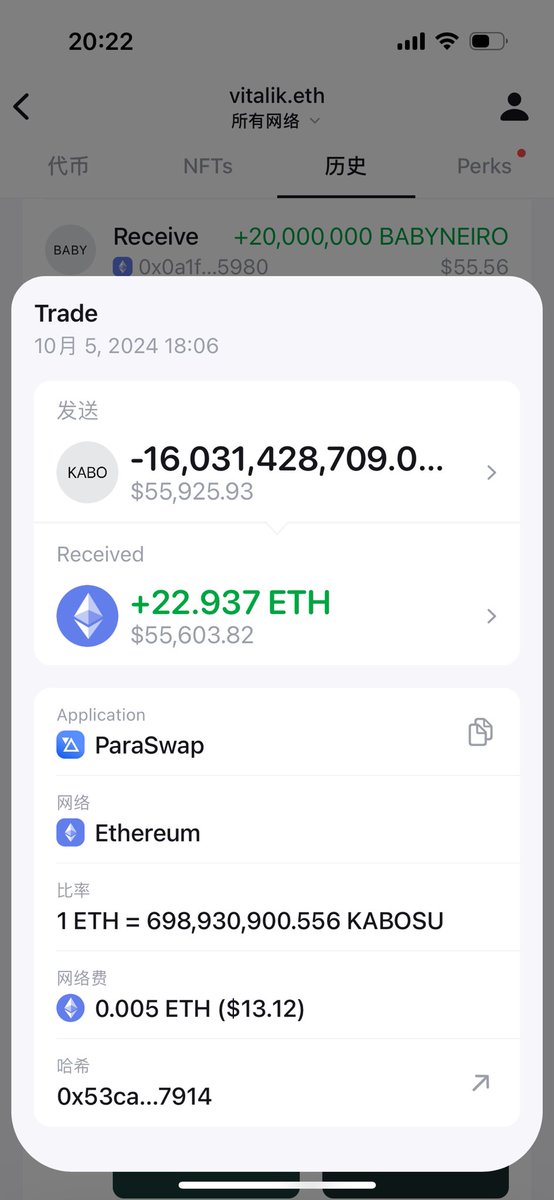
@Kaelis0x @fexir1 以太坊创始人 V神唯一卖过的币KABOSU,狗狗币的原型,出过22个ETH,重走SHIB线路,随时爆拉,可以看K线,买50u忘记ta 0xceb67a66c2c8a90980da3a50a3f96c07525a26cb
中文
0
0
0
16
0xKaelis
0xKaelis@Kaelis0x·
@fexir1 $KABOSU Unleash the OG meme energy. Kabosu = culture, not just a coin. The internet’s favorite dog never dies. Bags loading, history repeating. 0xCEb67a66c2c8a90980dA3A50A3F96c07525a26Cb
0xKaelis tweet media
English
1
0
1
24
vitalik.eth
vitalik.eth@VitalikButerin·
In 2026, I plan to be fully back to decentralized social. If we want a better society, we need better mass communication tools. We need mass communication tools that surface the best information and arguments and help people find points of agreement. We need mass communication tools that serve the user's long-term interest, not maximize short-term engagement. There is no simple trick that solves these problems. But there is one important place to start: more competition. Decentralization is the way to enable that: a shared data layer, with anyone being able to build their own client on top. In fact, since the start of the year I've been back to decentralized social already. Every post I've made this year, or read this year, I made or read with firefly.social, a multi-client that covers reading and posting to X, Lens, Farcaster and Bluesky (though bluesky has a 300 char limit, so they don't get to see my beautiful long rants). But crypto social projects has often gone the wrong way. Too often, we in crypto think that if you insert a speculative coin into something, that counts as "innovating", and moves the world forward. Mixing money and social is not inherently wrong: Substack shows that it's possible to create an economy that supports very high-quality content. But Substack is about _subscribing to creators_, not _creating price bubbles around them_. Over the past decade, we have seen many many attempts at incentivizing creators by creating price bubbles around them, and all fail by (i) rewarding not content quality, but pre-existing social capital, and (ii) the tokens all going to zero after one or two years anyway. Too many people make galaxy-brained arguments that creating new markets and new assets is automatically good because it "elicits information", when the rest of their product development actions clearly betray that they're not actually interested in maximizing people's ability to benefit from that information. That is not Hayekian info-utopia, that is corposlop. Hence, decentralized social should be run by people who deeply believe in the "social" part, and are motivated first and foremost by solving the problems of social. The Aave team has done a great job stewarding Lens up to this point. I'm excited about what will happen to Lens over the next year, because I think the new team coming in are people who actually are interested in the "social": even back when the decentralized social space barely existed, they were trying to figure out how to do encrypted tweets. I plan to post more there this year. I encourage everyone to spend more time in Lens, Farcaster and the broader decentralized social world this year. We need to move beyond everyone constantly tweeting inside a single global info warzone, and into a reopened frontier, where new and better forms of interaction become possible.
Lens@LC

Today, we’re proud to share that @masknetwork will steward the next chapter for Lens, bringing the strongest onchain SocialFi foundation to life through intuitive, consumer-ready applications.

English
919
657
4.2K
614.2K
R.I.P. $Kabosu
R.I.P. $Kabosu@KabosuCoinErc·
Kabosu and the memes will live on forever
R.I.P. $Kabosu tweet media
English
74
7
39
4.8K
Gotti
Gotti@Gottigems·
Top blasted $KABOSU, Vitalik sold his airdropped wallet. The same thing happened with NEIRO. It’s insane that there’s no KABOSU coin with over a $100 million market cap yet. Maybe this is what it needed. Will Vitalik respond next? dexscreener.com/ethereum/0xceb… t.me/KabosuCoinERC NFA/DYOR 2,4M
Gotti tweet media
English
1
0
2
261
Anndy Lian
Anndy Lian@anndylian·
I am buying not just the memes. I am buying into communities.
English
576
55
684
37.9K
Anndy Lian
Anndy Lian@anndylian·
The future belongs to builders: market your vision relentlessly, but let product excellence speak loudest always.
English
40
9
101
4.7K
加密炸毛仔
加密炸毛仔@zx_hey·
🌟pow新币 还有前途吗? ——我知道的pow币有过2次大牛市,1次小牛市 17年以前的币圈不了解,最早只能看到17年。 1️⃣第一次是2017下半年,那会pow还是主流,现在市值比较高的pow项目基本都是那时候涨起来的,这次主要是隐私币和btc的分叉。 ✅这些pow币 至今多数还没有突破17年的高点 2️⃣第二次就是19年下半年,那会是熊市,可能市场没热点吧,无数小pow开始疯涨,和17年不同的是这些币总量很大,和现在的币很像。 ✅这批小pow基本都在往后的半年里死掉了,有一些坚持得长的,也在21年牛市完成了最后一舞。这轮行情里我关注过的项目🚨100%死掉了。 3️⃣最近的一次小牛市就是24年下半年,主要是og复活币和pow meme这两种。 ✅经过一年的下跌,表现比较好的项目也🚨跌了90%了。 资金:三次的上涨强度一次比一次弱 技术:17年大的创新 ➡️ 19年细分领域创新 ➡️24年 复制粘贴 交易所:17年主流所 ➡️ 19年二线gate 抹茶 ➡️ 24年 跑路的蛋所 持续8年的下坡路,我想pow也已经成为时代的弃子,这注定是一条越走越窄的路,不要陷入太深。 #pow
中文
5
1
10
2.6K