Sabitlenmiş Tweet
🚨 BREAKING: The Committee for Academic Freedom (CAF) is supporting a working-class student who left school at 13 and spent years saving and studying after work to get into university, but who may now be forced to abandon his PhD after being frozen out on an art programme.
His “crime”? Introducing the conservative philosopher Roger Scruton into a seminar on aesthetics.
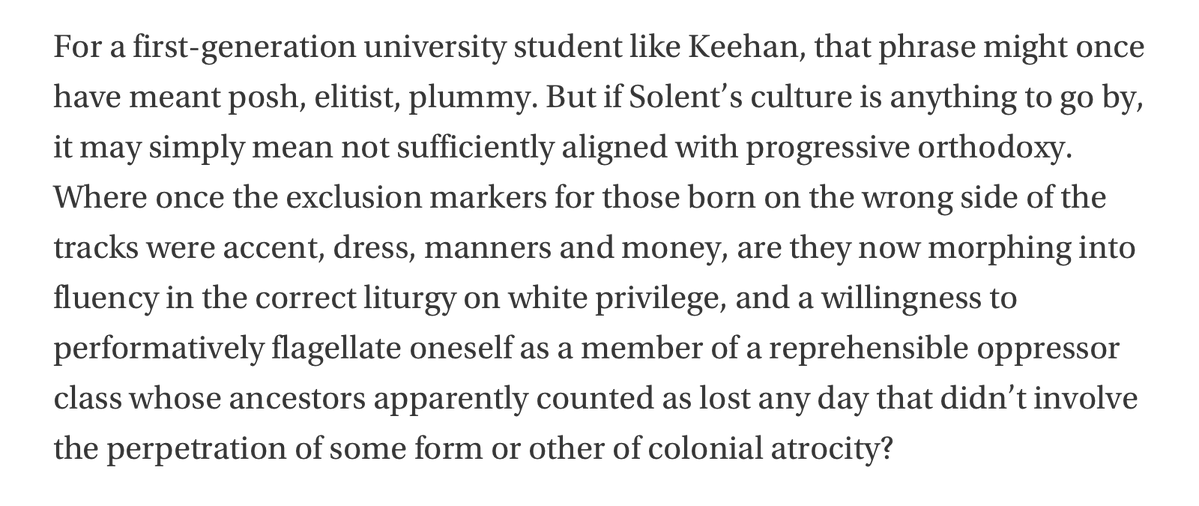
Matthew Keehan, who studies at Solent University, says disagreements over the dominance of critical race theory and other “progressive” philosophies on his course escalated into ostracism by his peers, disciplinary threats and a politically charged viva.
Trouble began when, ahead of an in-person seminar on art and aesthetics, he circulated Roger Scruton’s Fools, Frauds and Firebrands to the group. Matthew argued that academia had for too long excluded important conservative voices, and said he wanted students to hear a wider “cacophony” of perspectives.
When no one replied, he followed up with a link to Scruton’s lecture “Art Today”, which critiques the way postmodern approaches have, in Scruton’s view, hollowed out artistic standards. Again, no one responded.
During the seminar, Matthew asked whether anyone had read the material, and was told by the lecturer — who also happened to be his supervisor — that “we felt it was inappropriate”.
Months later, a fellow postgraduate reached out and told him that members of the group had effectively been advised not to contact him because of the “C word” — “Conservative” — following his circulation of the Scruton material.
It was in this culture that concerns later arose over Matthew’s PhD viva. During that viva, Matthew — an Irishman who grew up on a deprived council estate — was criticised as a “Western, white, male researcher” whose work had failed to reflect on the “privileges associated with race and cultural dominance” supposedly attaching to his identity.
CAF has been supporting Matthew in making a formal complaint to the university about the culture of his department and his treatment after raising concerns about the intellectual direction of the course. We are also helping him prepare a complaint to the Office of the Independent Adjudicator and a formal notification to the Office for Students.
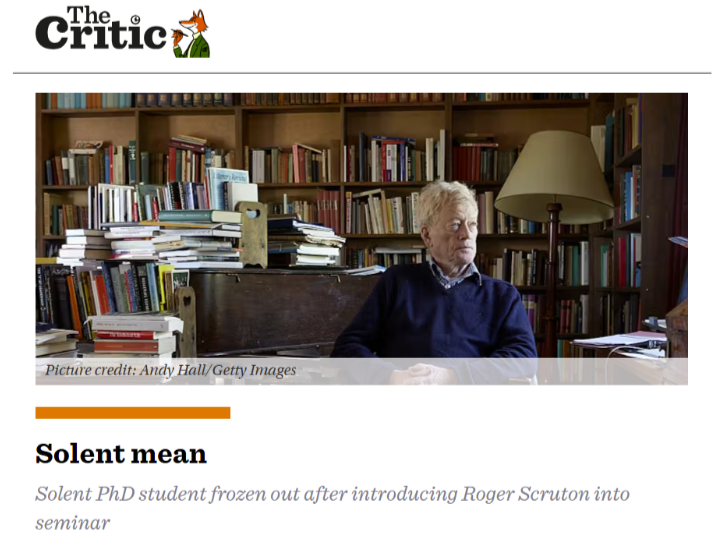
We’ve written more about this shocking case for @TheCriticMag here:
thecritic.co.uk/solent-mean/
To keep up to date with Matthew’s case, and with CAF’s wider work supporting academics and students facing censorship, ideological discrimination and threats to academic freedom, sign up to our free newsletter here:
afcomm.org.uk/updates-from-t…
@ProfAliceS @drianpace @epkaufm @Fox_Claire @NigelBiggar @LauraTrottMP @ObhishekSaha
English