Combat Learjet

3.6K posts

Combat Learjet banner
Combat Learjet

Combat Learjet

@Combat_learjet

🇺🇸Retired Military Pilot, Major Airline Captain, Aviation Consultant. A blend of aviation awesomeness, humor & my opinion. Bremont Watch Ambassador

United States Katılım Mart 2016
1.9K Takip Edilen51.4K Takipçiler
Combat Learjet
Combat Learjet@Combat_learjet·
Just lost sight of each other, it so easy to do.
English
215
362
3.1K
271.3K
Combat Learjet
Combat Learjet@Combat_learjet·
Looks like everyone got out.
English
15
10
222
7.2K
Combat Learjet
Combat Learjet@Combat_learjet·
I recently flew by Ivanpah solar electric generating grid. Below is what Grok had to say about it. 😳😳 Ivanpah is widely regarded as a bust — a high-profile, expensive failure of concentrated solar power (CSP) tower technology, though it provided some engineering lessons and did generate power (just not enough to justify its costs). sentinelksmo.org Key Facts on Ivanpah • Location and Design: Mojave Desert, California. Three 459-foot towers with ~173,500 heliostats (mirrors) focusing sunlight to heat boilers for steam turbines. Gross capacity ~392 MW (net ~377 MW). • Cost: ~$2.2 billion total, including $1.6 billion in federal loan guarantees (Obama-era DOE funding). nypost.com • Expected vs. Actual Performance: • Designed for ~940,000–1 million MWh/year. • Early years were dismal: ~40-50% of target in year 1, improving to ~65-70% later but rarely hitting full expectations. Capacity factor ~24% actual vs. ~28-31% planned. en.wikipedia.org • It relied on natural gas to keep systems primed (especially at night/cloudy times), producing significant emissions for a “clean” project. It improved after initial ramp-up and met some contract obligations by ~2017, but never became economically competitive. en.wikipedia.org Why It Failed • Technology Outpaced: CSP towers without significant thermal storage proved inflexible in a grid shifting to cheap solar PV (photovoltaic panels), which plummeted in cost and became far more efficient/scalable. Ivanpah lacked meaningful storage for dispatchable power. sentinelksmo.org • High Costs and Maintenance: Expensive to build and run; underperformed on output, leading to high per-MWh costs. • Environmental Issues: Famous for “streaming” birds (singeing/incinerating them in concentrated sunlight). Estimates: thousands per year early on (hundreds documented, with search inefficiencies). Also other wildlife impacts. foxnews.com • Operational Problems: Fires from misaligned mirrors, turbine vibrations, lower-than-expected efficiency in real desert conditions. cpuc.ca.gov Current Status (as of 2026) Utilities (PG&E and SCE) wanted to exit contracts early and shut down two units in 2026, citing high costs and better alternatives — saving ratepayers money. California regulators (CPUC) rejected full closure for grid reliability/“green” goals, forcing continued operation at extra cost (~$105M to ratepayers in one report). It’s effectively a subsidized relic. en.wikipedia.org Critics (across political lines, including some environmental groups) call it a boondoggle worse than Solyndra in scale. Proponents note it was a “first-of-a-kind” (FOAK) project that advanced CSP knowledge globally, but economics and PV’s rise killed it. nature.com In short: It produced some renewable energy and data, but at massive taxpayer/utility expense with poor reliability, environmental tradeoffs, and no path to competitiveness. Modern utility-scale solar is almost entirely PV for good reason.
English
32
8
118
17.8K
Combat Learjet
Combat Learjet@Combat_learjet·
I wonder what the annoying horn is for? 🤣🤷‍♂️
English
265
57
1.2K
110.4K
Andrew McCarthy
Andrew McCarthy@AJamesMcCarthy·
I took 1.7 million photos over 6 days to catch this photo of a commercial jet in front of the sun. The moment it happened, TWO floating prominences were visible, making this not just my best aircraft transit photo, but one of the luckiest of my career! Videos of the transit 👇

Andrew McCarthy tweet media
English
1K
4.1K
33.9K
1.6M
Combat Learjet
Combat Learjet@Combat_learjet·
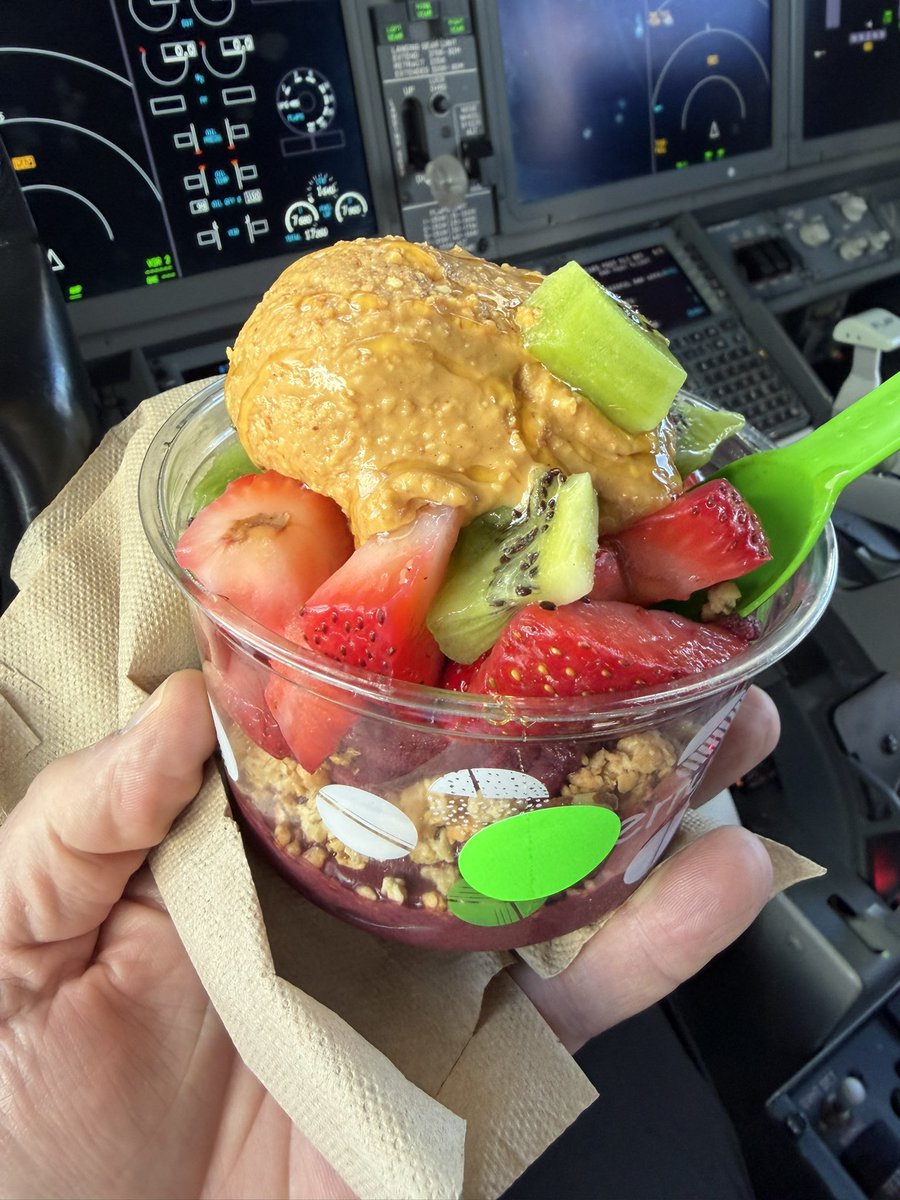
@THALLballz It’s deceptive, there was a substantial amount under the fruit and peanut butter
English
0
0
2
31
Combat Learjet
Combat Learjet@Combat_learjet·
This Acai bowl is my favorite in the system. It will definitely get me to my next location! #berrydivineacai
Combat Learjet tweet media
English
4
1
88
2.7K
Eric Button
Eric Button@ericjacobbutton·
We have raised $7 million in funding, led by @Initialized to build the next generation of air traffic systems. We’re joined by investors such as United Airlines, Y Combinator, and other amazing firms and angels who I'll tag at the end of this thread
Eric Button tweet media
English
43
18
291
123.9K
Combat Learjet
Combat Learjet@Combat_learjet·
@MCCCANM Want to trade for my Cleveland, Detroit, Chicago over nights?
English
4
0
33
1.7K
KC-10 Driver ✈️ 👨‍✈️ B-737 Wrangler
Schedule Bids are out… 26 hours in Maui. 23 hours in Honolulu. 26 hours in Maui, then 24 hours in Maui. There is a 13 hour layover at LAX in there at one point, but nothing is perfect. My seniority has arrived at the level that this is my June schedule. We are so back!
GIF
English
98
29
1.6K
33.8K
KC-10 Driver ✈️ 👨‍✈️ B-737 Wrangler
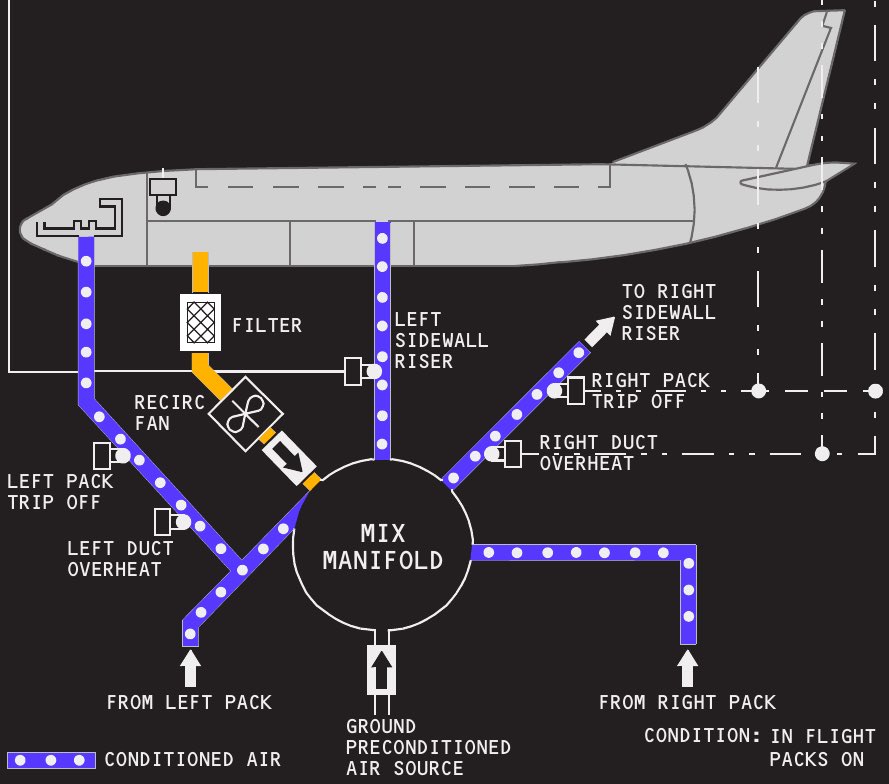
I find myself frequently explaining the air systems of an airplane in replies, so let’s do a post to try & answer questions. I’ll base everything on the 737, but most jets are similar. At the gate as you board, air comes from one of two sources: Ground Air (called PCA, or Pre-Conditioned Air) which is basically a big air conditioner mounted on the jet bridge, or the Auxiliary Power Unit (APU) which is a small turbine engine in the tail, providing both electrics & pneumatics to the jet when the engines are off. I usually find the PCA gets too warm in the summer. It pumps out good air, but for whatever reason the jet gets warm. It might be because it travels to the jet via a big yellow hose that attaches to the belly & that hose is out in the sun. I don’t know. In any event, the APU pumps out a little more air than the PCA, and I can control the temperature better. At my airline, they don’t let us run both APU air & PCA at the same time, as they fear over pressuring the ducts, but I hear other airlines do. I have done it in the past & watched a duct shut itself off…thankfully it came back on when I shut off APU air. Anyway, when you disconnect PCA at the gate, you switch to APU. They also remove ground electrics at that time, which the APU takes over for as well. (The APU air path is not included in the diagram below, but it’s the best I can find) Then we push back from the gate. During engine start, there is a brief period that we divert APU air to the engine. This spins the engine, which allows us to introduce fuel & ignition. Once the first engine is started (the right one, number 2), we take air from it to supply the cabin. Pay attention here: even though the APU is not supplying air to the cabin during this moment, you’ll notice some air is coming out of the vents, albeit at a lower pressure. We’ll talk about that in a second. For simplicity’s sake, just understand the engines supply cabin air the rest of the way. We can use the APU, but we shut it down as soon as the engines are running. No need to waste fuel. All of these air sources go through a process of cooling via a heat exchanger (I’m simplifying), except the PCA…because, as it says in the name, the PCA is pre-conditioned. Anyway, once brought down to temperature, it goes into the “Mix Manifold”. The Mix Manifold is where the outside air meets the recycled air, taken from the cabin. Remember how there is still air coming from the vents when the APU air is diverted to start the engines? That’s because the “Cabin Recirculation” fans (there are two) are always on & pulling air from the cabin to go into the Mix Manifold. The “Recirc Fans” are just left on at all times, unless we have smoke in the cabin & need to stop circulating it. They also turn off automatically when we shut the battery off on the last flight of the day. They can turn themselves off under some conditions of the engines, but that’s not meaningful to your understanding. Just remember that those switches are left in “on” & we don’t touch them unless an emergency checklist tells us to. So, the Recirc Fans are constantly pulling air from the cabin through a big HEPA filter. They push that air into the Mix Manifold, where it mixes with PCA, APU or engine air & gets distributed to the cabin. On landing, we start the APU back up. It will take over air & electrical duty from the engines so we can park at the gate, then reconnect PCA & ground power. Once they are connected, the APU is shut down. You may wonder what the term “PACK” means in the diagram. This refers to the air-conditioning “packs” for each engine. We just call them packs, but it’s where the heat exchangers I referred to earlier are (it’s more complicated than that, but it won’t help your understanding). Now, it’s possible to have the engines off, no PCA & no APU at the gate. That’s not the norm, but even in this scenario the recirc fans are still pushing air. It just doesn’t get cooled, so the jet gets hot. Hope that helps!
KC-10 Driver ✈️ 👨‍✈️ B-737 Wrangler tweet media
English
73
89
1.1K
47.6K