

Compaore Yacouba
137 posts

If you are interested in getting involved in Burkina Faso, contact: +34 665 08 23 59

English
Chess is rapidly spread across Burkina Faso 🇧🇫. Today 10 @thegiftofchess chess sets were given to the Schorge College of Koudougou, to start training chess there.

English
Compaore Yacouba retweetledi

The Blindsight device from Neuralink will enable even those who have lost both eyes and their optic nerve to see.
Provided the visual cortex is intact, it will even enable those who have been blind from birth to see for the first time.
To set expectations correctly, the vision will be at first be low resolution, like Atari graphics, but eventually it has the potential be better than natural vision and enable you to see in infrared, ultraviolet or even radar wavelengths, like Geordi La Forge.
Much appreciated, @US_FDA!

Neuralink@neuralink
We have received Breakthrough Device Designation from the FDA for Blindsight. Join us in our quest to bring back sight to those who have lost it. Apply to our Patient Registry and openings on our career page neuralink.com
English
Compaore Yacouba retweetledi

🗓️We are happy to announce that the new program of our #LunchSeminars is out!
Join us monthly, either on-site or online, to explore various research in #population studies.
#popX #poptwitter

English
Compaore Yacouba retweetledi

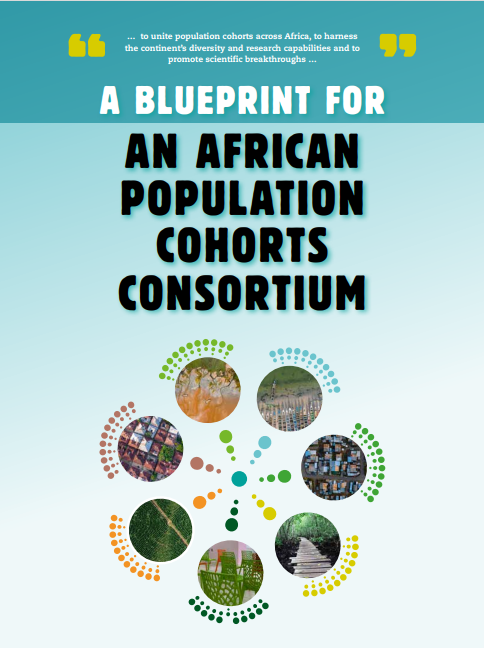
The Blueprint for the African Population Cohorts Consortium bit.ly/4bC8plS seeks to unite population cohorts across Africa, to harness the continent’s diversity and research capabilities to promote scientific breakthroughs.
@MRCza @dsigovza
English
Compaore Yacouba retweetledi
📢Exciting news!
@UCLouvain_be launched a double degree in #Demography,
spanning 🇨🇦#Canada and 🇧🇪#Belgium [in French]

English
Compaore Yacouba retweetledi

Is long-term monogamy beneficial? Why??
We now have an idea...
Do you want to know why it is "one of the clearest demonstrations of the benefits of long-term monogamy so far" (reviewer 2)?
Read it all in "just accepted" @ASNAmNat
doi.org/10.1086/729436

English
Compaore Yacouba retweetledi

Au Sénégal, la #santé mentale est enracinée dans les croyances culturelles, ce qui pose des problèmes considérables en matière d'accès au soutien et au traitement. Malgré la présence de psychiatres, les individus hésitent à demander de l'aide en raison des stéréotypes.

Français
Compaore Yacouba retweetledi

Our amazing team @PRUhelsinkiuni is looking for a postdoctoral researcher!
🦠💊⚖️If you are interested in social inequalities in population #health, join us!
#jobalert #poptwitter
📌
jobs.helsinki.fi/job/Helsinki-P…
English
Compaore Yacouba retweetledi

Check out our new paper "Measuring under-5 mortality and fertility through mobile phone surveys: An assessment of selection bias in 34 low-income and middle-income countries" @BMJ_Open @economicas_uva @DemographieLLN @LSHTM @ashiratamar @BrunoMasquelier bmjopen.bmj.com/content/13/11/…
English
Compaore Yacouba retweetledi

Compaore Yacouba retweetledi

I taught a new advanced masters/intro Ph.D. course on applied microeconometrics in R this semester. Everything is on GitHub, which means it's freely available for all! I spent a lot of time talking about coding, which might not be clear from the slides.
github.com/JoshMerfeld/ap…
English
Compaore Yacouba retweetledi
📢Quetelet Journal Publication Alert!
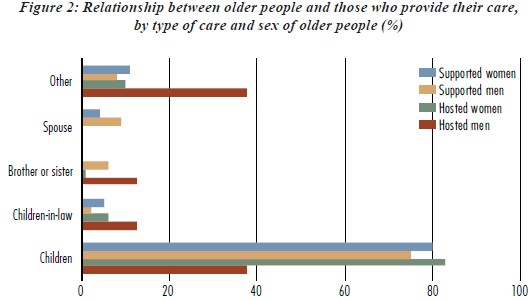
#Vulnerability & #ageing in #Ouagadougou 🇧🇫: The crucial role of #gender and #migration status in older people’s support, by @CompaoreYacou16, M-L Flahaux & N Sawadogo.
⏩ojs.uclouvain.be/index.php/Quet…
English
Compaore Yacouba retweetledi

CALL FOR APPLICATIONS!!
The Union for African Population Studies (UAPS) is pleased to announce the call for applications for the second cohort (2023-2024) of the African Research and Data (AfRes-Data) Fellowship. Visit our website uaps-uepa.org/call-for-appli… for more information.
English
Compaore Yacouba retweetledi

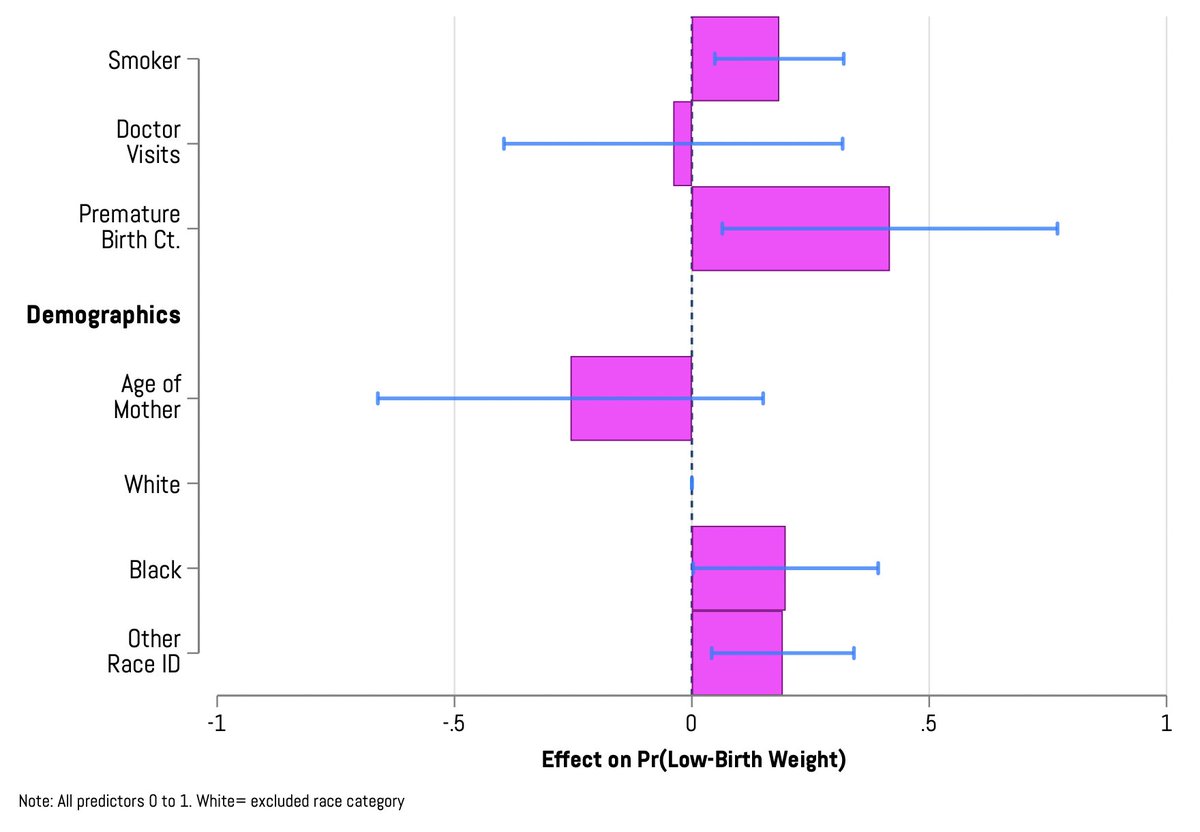
Want to use @Stata to visually present your regression results?
I made a guide for my students & wanted to share. It covers key aesthetics, combining results from multiple models, working w/ logit models, and more. Oh, and I provide all the code.😊
drive.google.com/drive/folders/…



English
Compaore Yacouba retweetledi

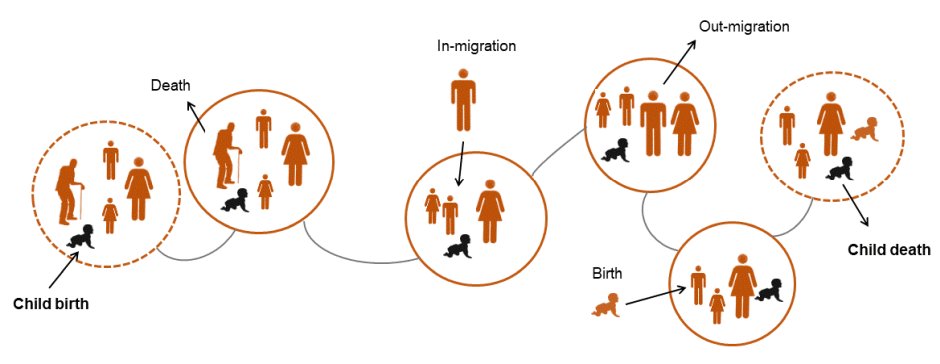
Do under-5 year old children face higher #mortality in larger #households? Time-varying household structure analysis using #Africa-n #HDSS data suggests not. By @ashiratamar, @PhBocquier,Carren Ginsburg, @CompaoreYacou16 & @MarkCollinson4
👉 demographic-research.org/articles/volum…
English
Excellent explanation of Effect Size!
Selçuk Korkmaz@selcukorkmaz
Understanding Effect Size in Statistics 🔹 Ever puzzled by the term "effect size" in a research paper or report? This thread breaks down what it is, why it's important, and how it complements other statistical measures. 🔹 Let's start at the beginning. In plain English, effect size tells us about the size of the difference between two groups. It's like asking, "How different are these groups really?" or "How much of an effect does this factor or treatment have?" 🔹 Suppose you read a study saying a new diet pill helped people lose more weight than a placebo, with a p-value of less than 0.05. That sounds promising, right? But what if the average weight loss was only 0.1 kg more than the placebo? Is it practically significant? 🔹 That's where effect size comes in! While the p-value tells you if an effect exists (is statistically significant), the effect size helps you understand the magnitude of this difference, giving you context and a sense of practical significance. 🔹 There are several ways to measure effect size. Some common ones are Cohen's d, which is often used in comparing means of two groups, and eta-squared (η^2), which measures the proportion of total variance in a dependent variable that's associated with the membership of different groups defined by an independent variable. 🔹 For instance, in our diet pill example, Cohen's d might be 0.02, a very small effect size. This means the difference in weight loss between the diet pill and placebo is small, even if it's statistically significant. 🔹 Importantly, effect size is independent of sample size, unlike p-values. This makes it a great tool for meta-analysis, where you want to combine results from different studies. 🔹 Reporting effect size helps provide a complete picture of your results. It allows others to judge the practical significance of your findings, not just the statistical significance, leading to more informed decisions in fields like medicine, policy, and beyond. 🔹 Remember, a "large" or "small" effect size isn't inherently "good" or "bad". It depends on the context. In some situations, a small effect size can still have big implications! 🔹 In conclusion, effect size gives context and depth to the results of statistical tests. It aids in understanding not just whether an effect exists, but how large that effect is, thereby contributing to a richer, more meaningful interpretation of the data. #DataScience #Statistics
English


Compaore Yacouba retweetledi

#DiscoursSn
Mes cher(e)s compatriotes, ma décision longuement et mûrement réfléchie est de ne pas être candidat à la prochaine élection du 25 février 2024. Et cela, même si la constitution m’en donne le droit.

Senegal 🇸🇳 Français