

Y
1.5K posts

Y
@ContrarietiesCY
University of Damascus - Faculty of Medicine
Katılım Ekim 2014
1.5K Takip Edilen70 Takipçiler

Last year, J1 visa delays nearly cost many matched applicants their residency positions. When Forbes reached out to us, we worked alongside multiple leaders to help drive a solution. And fortunately, it worked. We will guide you on how to smoothly transition to J1 status after matching.
If you just matched and need a J-1 visa, this is for you.
The guide covers:
- Full step-by-step J-1 application walkthrough
- Statement of Need
- DS-160, SEVIS fee, and securing your embassy appointment
- Exactly what to say (and avoid) at the visa interview
- Emergency appointment options
- J-2 visas for your spouse and children
Comment "GUIDE" below, and we will DM it to you.
Repost if you know an IMG who needs this. It could save their spot.
English
@dmctv @MoezMasoud معز الغالي
زمان عنك
what are the odds that I saw this on live TV today even though I never watch any TV, let alone dmc.
Glad to have u back.
English

@MahmoudElsb is it a bad indication to have 40-ish% w/ Amboss Internal Medicine 2 CK Qbank?
Many of the incorrects are factoids that I haven't been exposed to.
English

1. Finish in the shortest time possible, dont start if you know you wont be able to dedicate most of your day
2. Studying for step 2 = solving
3.Dont study from premade notes before starting uworld and dont take notes from uworld. Notes only for nbmes +-cms
English
السلام عليكم انا محمود السباعي
حضرت ستيبس خلال سنه خمسه
دي مختصر تجربتي
اولا الحمد الله و كله بفضل ربنا
الresources هي انك
تبدا حل uworld كامل
بعدين تحلCMS
تاخد اول nbme 8/9 تشوف مستواك و نقاط الضعف تشتغل عليهم من amboss library + qbank
و تاخد nbme و تعيد نفس الموضوع
العربية
💰$3000-$5000 per month 🚨 #hiring #job
We’re looking for 1–2 people to join our customer support team with strong English skills and solid sales experience, or the ability to clearly explain our services to customers.
If this sounds like you, comment “interested” and we’ll send you the link to apply.
English
English
@AP @SimonDixonTwitt you think this will come to an end at some point? Was thinking about doing medical research on a J1 visa in the US, but I've heard that even legal visa holders are not immune to such treatment, which is quite weird tbh.
English

Cellphone footage from Minneapolis appears to show a federal Border Patrol agent kneeing a man in the face multiple times while other agents hold him down on the pavement.
English
Y retweetledi

النخب السورية ما تزال عالقة بين نموذجي ميشيل عفلق الحالم الشاعري، وياسين الحافظ المنظّر الفهمان، وكلاهما أمسك سوريا من يدها وأخذها إلى بيت الأسد.
العربية
@teachplaygrub No doubt whatsoever that it'll age like milk, just a question of how much time it will take.
English
I know they say it is a game changer!
But it hasn’t been changing the game that much.
Is it cheap? No.
Does it reliably work without crashing? No.
But does it help me with the really hard cases I need help with? Also no. 😂
We will see how this post ages!!
English
@hyguruprep The realization of AI disrupting medicine dawned on me last week when two of the best Ob/Gyn doctors in my country missed a diagnosis I was able to make just by feeding AI the right info. They went far and beyond with their guesses to fit smth they didn't have an answer for.
English
@hyguruprep I think it's leverage for both width and depth.
An architect of synthesis, indeed, but it's quite weird that we don't have any incorporation on how to deal w/ AI in curriculums, while other knowledge-based professions are getting revamped or disrupted every 2 weeks.
English

In 2025, I tutored 53 students studying for the USMLE 1-on-1.
Here are insights consistently seen among the top scorers...
English
@hyguruprep Problem is sometimes we get stuck on questions far too long, when in fact we should've moved on to achieve width rather than depth, esp. w/ rare diseases.
I wonder what the future looks like for physicians with AI, think this hoarding of info is gonna be all wasted.
English
1. They not only focus on doing UW & NBME questions, but moreover review their incorrects with intensity.
Doing questions without review is a form of passive studying.
Top scorers house their incorrect notes in one location & relentlessly revisit them.
English
Y retweetledi
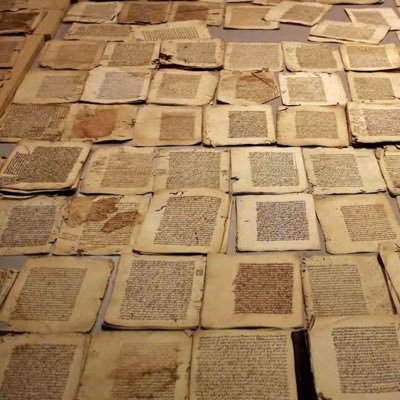
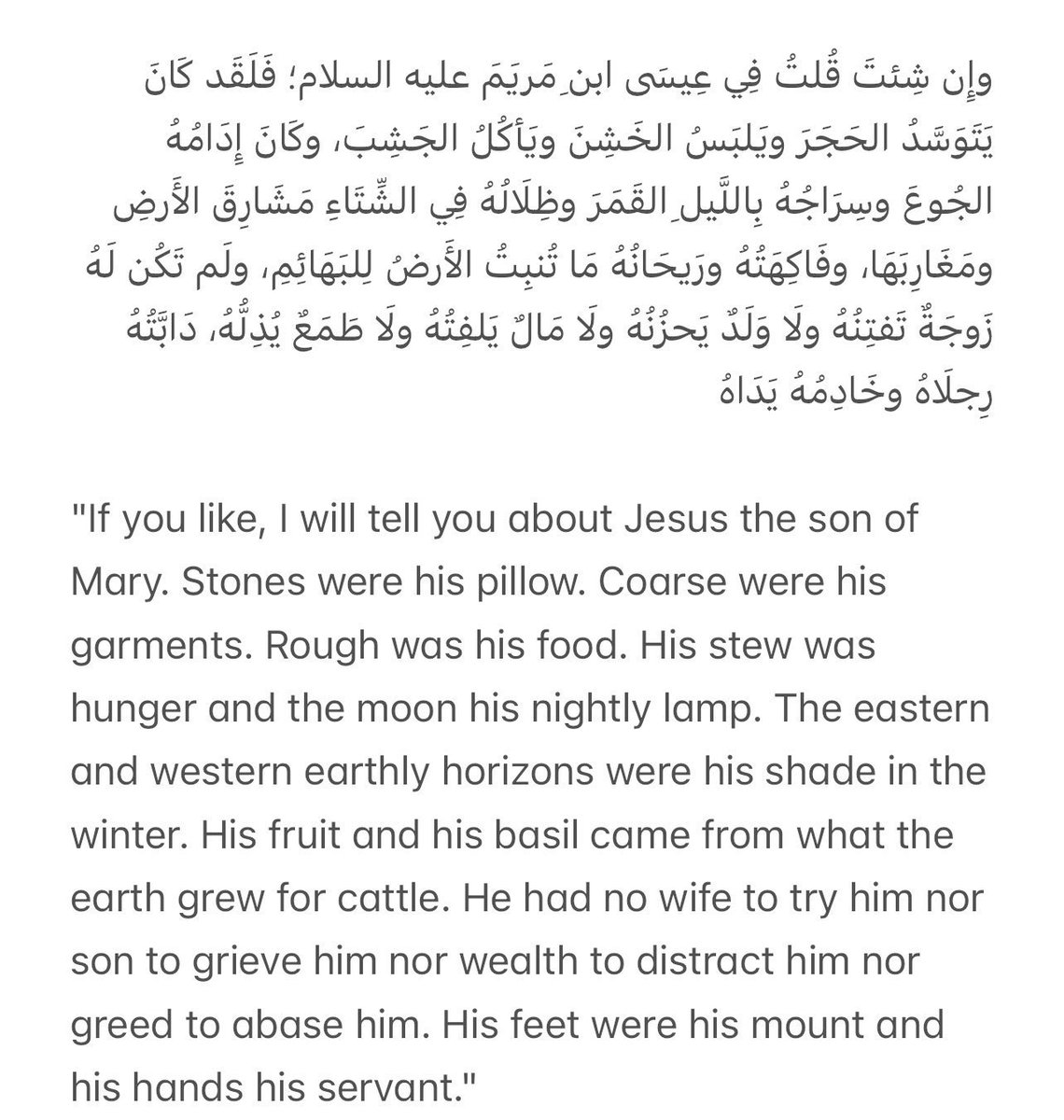
Ali b. Abi Talib (d. 661 CE) on Jesus son of Mary: “If you like, I will tell you about Jesus the son of Mary…”
English
Sunnism never needed secularism to limit power. It limited power by refusing to sanctify it. Here's how that works.
Apart from Shia messianic movements, Islamic political history did not produce a clerical class that claimed superior authority over rulers. A premodern Abbasid or Andalusian observer wouldn't understand a phrase like “secular system of government” because it's already a reality. Islam produced some of the finest statesmen and bureaucrats in the world for a thousand years, and their offices governed worldly affairs, including through juristic reasoning and negotiation with the scholarly class.
Infallibility of rulers is not a Sunni concept; it belongs more clearly to Shia or Catholic traditions. Even the Prophet's Companions were subject to disagreement and revision. Their conflicts, severe as they were, had a paradoxical effect: they desacralized political authority very early, making Islamic history unusually resistant to fixed political dogma. If figures as central as Ali and Muawiya could contest power, then no political form could claim final sanctity. In this sense, Sunni history “secularized” politics through sacred law, not through the modern doctrine of popular sovereignty.
The problem with contemporary Arab secularism is that it reproduces an idealized, purifying logic inherited from Christian and Shia (both originally Platonic) political theology: the belief in a correct founding moment, a clean conceptual rupture, after which proper governance can finally begin. Ironically, both communist and Islamist movements borrowed much of their political grammar of the “new society” from the same messianic traditions. History does not unfold this way. Political life is a continuous process of negotiation, compromise, and repair. Demands for pure egalitarianism or fully realized conceptual justice are ahistorical.
Moreover, secularism in Muslim societies did not arrive as a neutral principle. It arrived through authoritarian states that marginalized Arabic and Persian classical traditions, severed their shared scholarly and literary continuities, and recast linguistic sciences into secular, ahistorical forms modeled on Latin paradigms. These states persecuted religious movements, dismantled Sufi institutions, centralized knowledge in state universities, and reduced social life to government-controlled associations. In practice, secularism functioned as a doctrine of state domination, and even by its own standards, it largely failed.
Secularism also aligns easily with military logic. Armies seeking mass mobilization across religious difference require a rigid, nonreligious identity capable of producing sacrifice and discipline. Such identities are never neutral; they rely on myth, exclusion, and sacralized narratives of threat. This makes for fascistic impulses deeply hostile to cultural pluralism. The claim that secularism bears no responsibility for the crimes of Baathist atrocities in Baghdad, Damascus and Beirut is defensible only in the abstract world of concepts, not in lived political history.
At the social level, Muslim secularism has tended to attach itself to elites hostile to religion as a lived practice, or to projects that reduce religion to folklore without normative authority. This creates a permanent ideological escalation. There is no stable “moderate secularism” because more radical versions can always accuse it of inconsistency. Secularism thus becomes an arena of symbolic competition rather than a workable political settlement.
By contrast, significant Islamic currents have already produced serious alternatives. The Egyptian Wasat Party’s insistence on being “civic” rather than secular or Islamist was not rhetorical evasion. It reflected an attempt to ground the state in civic life while recognizing Islamic culture as a historical and social reference, not a legislative straitjacket. Law, on this view, is not imposed from theology but emerges from social practice within a shared civilizational horizon.
This opens the way for a social theory centered on cities rather than ideologies. Cities are economic, commercial, and social systems before they are identity projects. Trade, as Montesquieu observed, softens manners. Urban life produces citizenship precisely because it moves people from land-based belonging to exchange-based association, from inherited roles to negotiated interests. Civic life precedes abstract sovereignty.
Civic also means removing the military from governance and pushing war to the margins as much as possible. It means institutions and initiative in both economic and cultural life. It means placing civil society above both the market and the state: protecting social vitality without abandoning contractual order. And it means, above all, resisting the sentimental nationalism that manufactures identity and dictates collective emotion based on fabricated history and mass delusion. In a land shaped by over five millennia of civilization, it is remarkably naïve to attempt to build a state like the United States or Australia, one that defines a people’s doctrine, project, and moral posture within a single modern layer of history.
What is needed, therefore, is not secular but civil relations: contractual and ethical norms rooted in material life and civilizational memory. Secularism is a long European historical process, and it made sense when “the secular” referred most people outside the clergy. In Muslim societies, the secular refers to a globalized elite of culutral actors who are largely hostile to their own people. The more moderate advocates engage with it as a frozen abstraction, detached from its actual social history and power dynamics. Civility and urbanity, by contrast, cannot be thought outside concrete conditions.
Imported political doctrines must be dismantled into methodological and moral components and then reassembled into serious political theology suited to local histories. Syria, as one of Islam's civilizational centers, requires intellectual elites capable of this work. Appeals to secularism that ignore cultural politics, social histories, and psychological power structures will continue to fail - not for moral reasons, but for analytical ones.

English
@al_ashajj Well put.
Any recommended readings on the spectrum of political thought in Syria pre-Assad?
English
A “Sunni state” in Syria is commonly read in two reductive ways. Many intellectuals hear it as shorthand for an “extremist state” and reject it outright. Many members of minority communities hear it as a project of identity-based violence and reject it just as quickly. Both readings miss the structural argument being made.
In practical terms, a Sunni state - meaning a state under which the Syrian Sunni community is unified - is the only configuration that has a realistic chance of stabilising Syria. If Sunnis were to cohere behind a single leadership, and if that leadership succeeded in persuading the broad Sunni spectrum to support it, wider Syrian unity would likely follow as a secondary effect. This is because the internal diversity of the Sunni community is at least as wide as that of Syrian society itself. Unifying Sunnis is therefore not an act of exclusion, but a mechanism for aggregation.
More importantly, if all Sunnis were politically aligned within a single sovereign, a Syrian civil war in the conventional sense would no longer be possible. The war has been sustained not by Sunni dominance, but by Sunni fragmentation. Competing Sunni projects, militias, and ideological claims have created a permanent vacuum in which violence reproduces itself and external actors intervene. Sovereignty here is not a moral category but a stabilising one: civil war requires rival centres of legitimacy within the same social body. Remove that condition, and the war loses its internal engine.
This leads to a counter-intuitive but crucial point. Sunni identity must become politically sovereign in order to de-escalate politically and re-activate itself culturally and within civil society. Only consolidated identities domesticate their own extremes. Extremist movements rush in precisely where no authoritative centre exists to discipline, absorb, or marginalise them. A unified Sunni political field would deprive such actors of legitimacy rather than empower them. What appears as a risk of extremism is, in reality, a strategy for containment.
This logic is often inaccessible to the standard secular intellectual mindset, which tends to view “Sunnis” as a crude, pre-political bloc, while treating “the nation” as the proper object of political faith. What this view overlooks is that secular nationalism can itself function as a tribe, and that successful political projects have rarely been built on abstract moral principles alone. Radical pragmatism - the willingness to doubt abstractions and organise power around real social formations - has been the operative creed of most historically successful states.
The resistance to this argument is not merely political; it is theological. Syrian intellectual life remains shaped by imported European models of political theology, particularly French and Russian ones. French secularism is nationalist, centralising, and militantly anti-clerical; Russian political theology, even in its secular socialist form, is collectivist, mythic, and suspicious of mercantile life and intermediate institutions. Both frameworks are ill-equipped to think about religion as a source of institutional order rather than as a problem to be neutralised.
What is missing is the possibility of a mercantile Sunni political culture: one oriented toward trade, property, law, education, and durable institutions rather than permanent mobilisation. Historically, political transformation has often emerged not from the suppression of religious identity, but from its institutional domestication. Protestantism’s entanglement with mercantile culture in Britain did not weaken the state; it helped produce stable political authority, civic discipline, and long-term institutional continuity. The parallel is analytical, not imitative: Sunni Islam already contains strong legal, urban, and commercial traditions capable of performing a similar function.
Critics will argue that any Sunni-centred political order risks marginalising minorities or entrenching majoritarian rule. The stronger reply is that minorities are most vulnerable when the majority itself lacks coherence and responsibility. A politically sovereign Sunni centre would be forced to govern, not mobilise, and governance necessarily entails limits, institutions, and inclusion.
The obstacle, then, is not sectarianism per se, but the refusal to think politically about religion at all. As long as Syrian debate remains captive to secular paradigms that deny religion any legitimate role in state formation, it will continue to misdiagnose both the causes of the war and the conditions of its possible end.

English
Y retweetledi
The Economist chooses Syria as country of the year in 2025, with Argentina as runner-up.
English
@MhdAGhanem شكراً على مجهودك دكتور علاء, ح نضل نتذكرك كل ما نتذكر هالأيام و الأكشن تبعها. الله يجزيك كل خير, و نشالله بتشوف الشام عمرانة و بتنبسط فيها أنت و أحبابك.
العربية

#عاجل من تحت قبّة الكونغرس الأميركي: أجاز مجلس النوّاب للتوّ واللحظة مشروعَ موازنة وزارة الدفاع لعام ٢٠٢٦ وفيها مادّةُ إلغاءِ قانون قيصر إلغاءً غير مشروط بنتيجة تصويت ٣١٢ موافق و ١١٢ معترض.
بعد إجازته في النوّاب يتّجهُ المشروعُ الآن لمجلس الشيوخ ليجريَ التصويتُ عليه الأسبوعَ المُقبل ويُرسلَ بعدها لمكتب الرئيس الأميركي للتوقيع عليه. تصويتُ النوّاب كان هو التصويت الأصعب وقد انتهينا منه!! ألف مبارك لسورية!! ألف مبارك للسوريين!! ٢٠٢٦ بدون عقوبات!!
العربية
Happiest day of my life, without a doubt.
Permanent memories during a jubilant sleepless night.
Still remember refreshing Aaron's account throughout that night.
Aaron Y. Zelin@azelin
HTS's Administration for Military Operations makes it "official" official: "We declare Damascus free from the tyrant Bashar al-Assad"
English
Y retweetledi

HTS's Administration for Military Operations makes it "official" official: "We declare Damascus free from the tyrant Bashar al-Assad"

English
Y retweetledi

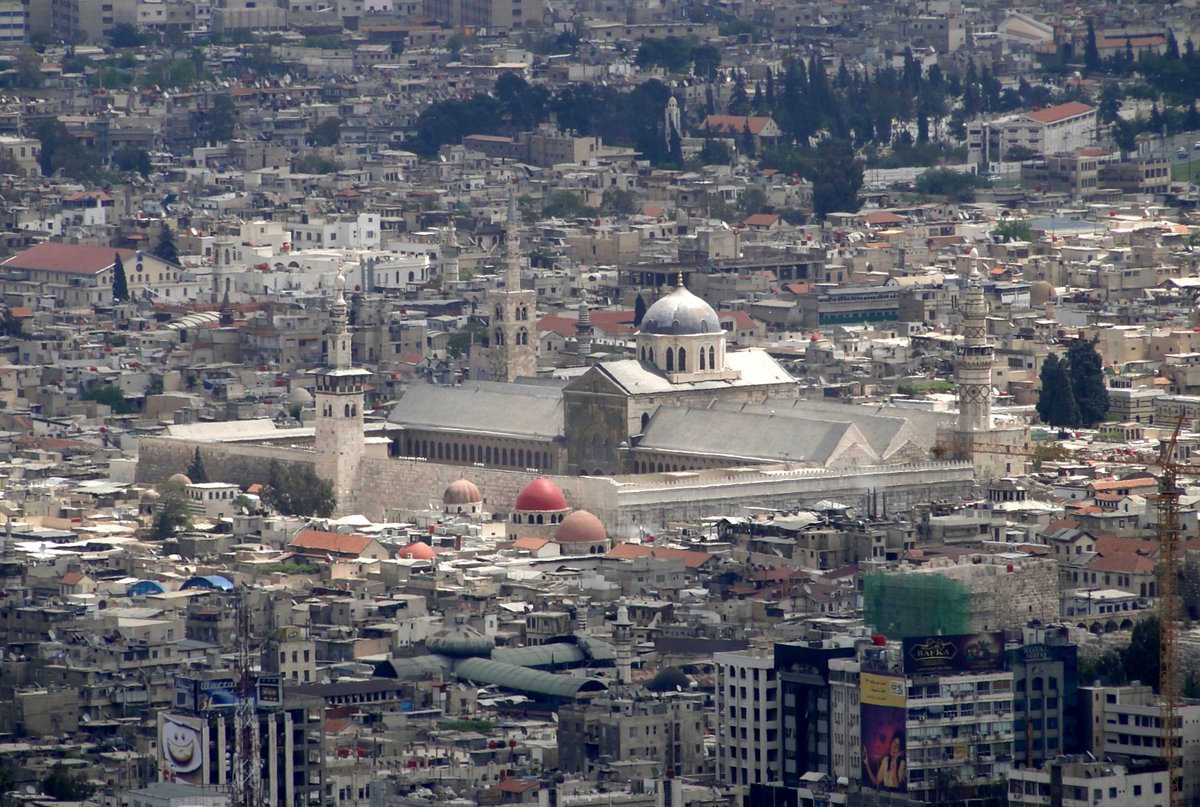
قرأت مجدك في قلبي وفي الكُتُبِ
شامُ ما المجدُ، أنتِ المجدُ لَم يَغِبِ 🇸🇾💚
العربية
Y retweetledi
