Cook's PlayBooks

197 posts

Cook's PlayBooks banner
Cook's PlayBooks

Cook's PlayBooks

@CooksPlayBooks

Jim's passion is sharing 30+ years of experience in scaling top Silicon Valley's brands from Series A to IPO including Intuit, Netflix, and Mozilla/Firefox.

Palo Alto, CA Katılım Mayıs 2024
5 Takip Edilen26 Takipçiler
Sabitlenmiş Tweet
Cook's PlayBooks
Cook's PlayBooks@CooksPlayBooks·
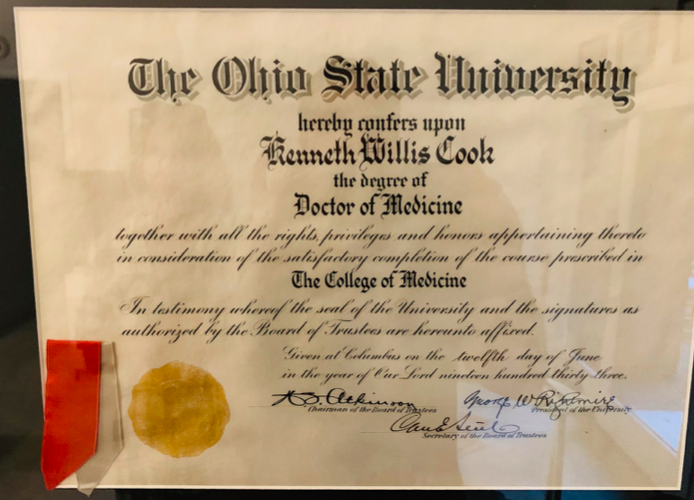
My name is Jim Cook and I was on the founding team of Netflix where I led all of finance and operations including the creation of the once famous red envelope that landed in mailboxes for over 25 years. Yes, my story started long before streaming even existed. Many are surprised to know that I actually come from 5 generations of medical doctors. What may be even more surprising is that the foundation of my business coaching process comes from the medical school’s own playbook dating back nearly 1,000 years. 1st year = Read It; learn and memorize all types of literature. 2nd year = See It; watch procedures actually performed in hospitals. 3rd and 4th years = Do It; years 3 and 4 are where future doctors are allowed to start putting hands on patients (initial surgery cuts; closing up the incisions, etc) Years 5-10 = Teach It; yes, they don’t give you a doctor of medicine until after internships and residencies where the students become the teachers and by teaching become the masters of their practice. Read It, See It, Do It, Teach It. Med School practice for 1,000+ years. It works. I’ve condensed this practice in my own mastery with a 3 part mantra; “Learn It, Do It, Coach It” before we can say you have a Masters in Business! I certainly earned my Masters of Silicon Valley this way. I LEARNed IT and continue to learn everyday in the startup trenches and battlefields of Silicon Valley. I was coached by some of the best in the 90’s with Intuit, ISN, Netflix, and Wineshopper. I’ve been DOing IT as a full time CFO for the last 25+ years. I began COACHing IT with several companies and clients over the last 5+ years. I'm now excited to pay it forward and share my lessons learned and “Best Of” knowledge with you through Cook's Playbooks, my new weekly blog. Here, we will dive deep into the strategies, frameworks, and playbooks I’ve used by learning from others. Over the next 100+ weeks, we'll explore topics like: How to properly lead with Strategy Leadership lessons from the trenches Leadership Operations: Structuring the systems of leadership to align to the Strategy Creating Decision-Making Systems Building high-performing teams and company cultures; the art of scaling a startup from stage to stage; what to do and not to do at each stage. Communicating for Influence; Whether you're a seasoned executive or just starting your entrepreneurial journey, these are my “Best Of’s” condensed into Cook's Playbooks. Subscribe at jcookflix.substack.com Let’s begin sharing and coaching this knowledge to others and begin creating our own knowledge sharing community where we can all learn from each other. Blog Link: jcookflix.substack.com/p/launching-co… #startups #leadership #CFO #coaching #mentorship

Cook's PlayBooks tweet mediaCook's PlayBooks tweet mediaCook's PlayBooks tweet media
English
1
0
1
152
Cook's PlayBooks
Cook's PlayBooks@CooksPlayBooks·
Most founders run from declining markets. But if your product is truly differentiated, those markets can be a shortcut to becoming #1. Here’s why: In a stagnant space, customers are frustrated but still interested; they’re just waiting for something better. There is a “market” here, after all, it’s just not being served properly. If you show up with a wedge product that feels like a breakthrough, the switch happens fast. You’re no longer competing against noise; you’re standing out in a frustrated customer market.
English
0
0
0
23
Cook's PlayBooks
Cook's PlayBooks@CooksPlayBooks·
The CFO of “No” is common. The CFO of “1st Principles” is respected. In coaching sessions with growth-stage leaders, I often talk about this balance: ✅ Being deeply anchored in the company’s non-negotiables (your North Star metrics, first principles, financial guardrails) ✅ While also staying flexible enough to respond to new data, shifting market dynamics, or evolving strategy The best CFOs know how to hold both truths. They can say, “Here’s what doesn’t change”, and still have the agility to zigzag their way there, correcting course without losing alignment. It’s not easy. It takes rigor, strong internal frameworks, and the willingness to ask better questions. But when a CFO can combine strategic flexibility with principled conviction, that’s when they stop being a back-office function and become a true driver of growth.
English
0
0
0
36
Cook's PlayBooks
Cook's PlayBooks@CooksPlayBooks·
Too many finance teams are buried in dashboards, reports, and manual analysis, yet still struggle to make clear, confident decisions. Why? Because data doesn’t drive decisions, leadership and culture does. In my latest blog, I outlined how modern CFOs can shift from reactive reporting to proactive leadership by focusing on five key levers: 1. Build a true data-to-decision loop: Collect the right inputs, define decision triggers, act fast, and course-correct quickly. 2. Anchor decisions in first principles: These are the strategic truths that keep exec teams aligned when things get noisy. 3. Develop third-level listening: Tune into not just what’s said, but how it’s said, who’s saying it, and what the room is signaling. 4. Reframe board management: The goal isn’t to defend past results, it’s to direct the conversation toward forward strategy. 5. Incentivize better data: If there are blind spots in your reporting, fix the inputs. Smart incentives can turn data gaps into strategic insights. This is more than a mindset shift; it's a re-architecture of the Office of the CFO. Read the full blog for details on how to put this into action: open.substack.com/pub/jcookflix/…
English
0
0
0
11
Cook's PlayBooks
Cook's PlayBooks@CooksPlayBooks·
As a CFO or head of Finance, are you Agile or just Adaptable. There’s a huge difference. ADAPTABLE? When the numbers shift, they shift. When the board changes course, they pivot. When a new metric emerges, they chase it. AGILE? Just like the engineering function this term came from, Agile needs to be anchored in a structured alignment to the strategy and the company’s 1st Principles…both of which I write about A LOT!. Adaptable and not Agile leads to scattered priorities, inconsistent decisions, and teams constantly in reaction mode. Lots of noise..no signal Agile creates true influence and impact and keeps the focus on the signal and not the noise. In a recent coaching session, a client and I landed on a powerful shift: Flexibility is only valuable when it's anchored. Here’s what that looked like in practice: She defined 3–4 first principles, core truths about her company’s strategy and risk profile. These became her “anchor points” in every exec and board conversation. Instead of tracking a mountain of metrics, she narrowed in on just a few that directly supported those principles. That allowed her team to act faster and course-correct with confidence. She started practicing Level 3 Listening, not just hearing what was said, but reading the intent, the room, and the nonverbal signals. This changed how she responded to pressure in high-stakes meetings. She reframed how she engaged with the board. Less about defending numbers. More about directing attention toward long-term priorities. If your team is always adjusting but rarely aligned, the problem might not be your data. It might be the lack of a North Star… the lack of being properly anchored in being Agile. Read the full blog for a deeper breakdown of how CFOs can pair strategic clarity with operational agility. open.substack.com/pub/jcookflix/…
English
0
0
0
10
Cook's PlayBooks
Cook's PlayBooks@CooksPlayBooks·
If your finance product roadmap is just stacking features onto legacy workflows, you're missing the point. The real shift isn’t about adding more dashboards or AI summaries. It’s about re-architecting the entire design to ensure the proper output. Instead of asking: ➡️ “What data can we surface?” We need to ask: ✅ “What decisions does the CFO need to make today?” Most tools are still forcing CFOs to ask better questions when the tools themselves should be the ones guiding better questions. That’s why the real moonshot isn’t another “AI assistant” for finance. It’s a Virtual CFO Advisor, an active agent that knows the business, maps the conversations CFOs are already having, and is your own real-time advisor. • Ops reviews • Board meetings • Exec 1:1s • Strategic pivots This new Agent will speak the language of tradeoffs, risks, confidence scores on assumptions and scenario planning; not just BvA (budget vs actuals & variance. This isn't a feature. It's a new product category. And the adoption curve will reward whoever builds for this new interactive behavioral transformation, not just technical API integration. 📌 If you missed the blog, read it here: open.substack.com/pub/jcookflix/…
English
0
0
0
10
Cook's PlayBooks
Cook's PlayBooks@CooksPlayBooks·
Startups love to brag about how fast they can pivot. That agility is a superpower. Here’s the caveat: If you pivot too fast, you might kill your momentum before it has a chance to catch fire. In this clip, I talk about a common mistake I’ve seen: founders pivoting too soon. Sometimes all the groundwork is there, the kindling is lit, but the team switches course before it can spark something real. This isn’t just a product decision. It’s a leadership one. And it applies to more than just early-stage strategy. 👉 In finance, the same mistake is happening at scale. CFOs are stuck managing tools that were designed to structure data, not deliver clarity. They’re trapped in systems that prioritize input over insight. And when new tech comes along? The instinct is often to keep pivoting tools instead of rethinking the architecture or their actual role. What we need isn’t another AI-powered dashboard. We need a whole new model: one that starts with the decisions CFOs need to make, and works backwards from there. The same logic applies whether you’re a founder or a finance leader: Start with the right questions. Stick with the right direction long enough to see the results. Re-Aim and Course Correct. (Aim-Fire!). Don’t pivot without a course correcting plan. Read the full blog to learn more: open.substack.com/pub/jcookflix/…
English
0
0
0
4
Cook's PlayBooks
Cook's PlayBooks@CooksPlayBooks·
The CFO’s job isn’t to say no to innovation. It’s to say yes to focus. Too many people still think constraints are about scarcity. They’re not. They’re a strategy to force clarity. At Mozilla, constraints weren’t just a reaction to limited resources, they were the deliberate system that shaped how we hired, built, and shipped. That’s what most high-growth teams miss: More capital doesn’t always buy better outcomes. It often buys confusion. When leaders stop asking “What’s worth doing?” and start asking “How fast can we scale?” That’s when judgment breaks down. As CFO, your real power isn't in the budget; it’s in what the budget forces your teams to decide. If you missed my deep dive on Constraint-Driven Innovation (and why “Get Big Fast” failed so many companies), check the link in the first comment.
Cook's PlayBooks tweet media
English
1
0
0
9
Cook's PlayBooks
Cook's PlayBooks@CooksPlayBooks·
In the early days at Mozilla, we didn’t have Google’s money or Microsoft’s headcount. But we did have something they didn’t: Constraints. And we used them on purpose. As CFO, I helped shape a playbook around Constraint-Driven Innovation, not as a philosophy, but as an operating system: -Headcount caps for every new initiative -Hard timelines with no padding -Budget ceilings that forced creativity -Clear outcomes with no ambiguity Why? Because constraints force focus. Focus forces choices. Choices force critical thinking. We built smarter, faster, and more creatively because we couldn’t afford to do everything. The opposite, unlimited capital, endless hiring, zero prioritization, is what led to failures in the “Get Big Fast” and “Growth At All Costs” eras. Not bad products. Bad discipline. As CFOs and CEOs, our job isn’t just to manage capital... it’s to architect constraints that keep our teams sharp, clear, and aligned. Want real innovation? Start by saying: “No. Not yet. Pick one.” 📖Read the full blog for examples from Mozilla, dot-com busts, and SoftBank-era chaos, link in the first comment.
Cook's PlayBooks tweet media
English
1
0
0
12
Cook's PlayBooks
Cook's PlayBooks@CooksPlayBooks·
Most CFOs are operating with a decision stack full of untagged assumptions. I’ve been there. Focusing on First Principles Thinking is the solution. It’s a concept that goes all the way back to Socrates, Plato, and Aristotle, but it’s one of the most powerful tools a modern CFO can use, especially when the forecast is fuzzy or the team is stuck chasing noise. Learn how to apply First Principles Thinking to your financial and strategic decisions, including: – How to surface and score assumptions – How to tag confidence and risk to guide your team – A maturity model that turns guesswork into a repeatable system This isn’t just about better forecasting, it’s about building a decision infrastructure that gets smarter over time. If you’re tired of gut-based planning and want something more durable, my latest blog is for you. Read the full breakdown here: open.substack.com/pub/jcookflix/…
English
0
0
0
15
Cook's PlayBooks
Cook's PlayBooks@CooksPlayBooks·
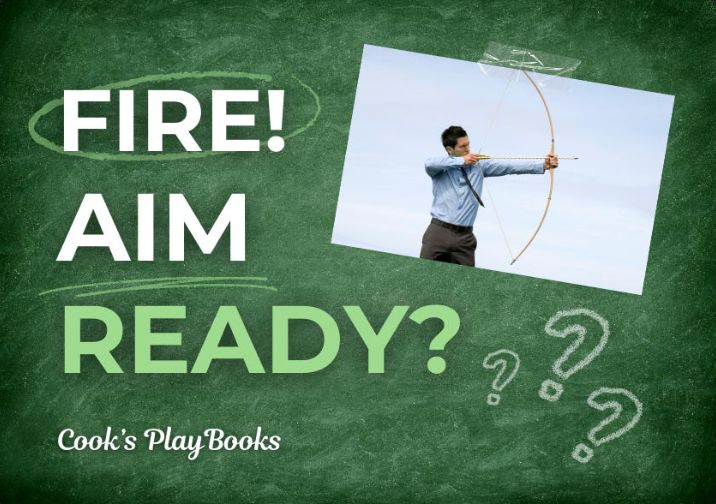
At some point, the same scrappy instincts that helped you grow can start breaking things. How do you know when it's time to switch gears? When should you stop firing off impulsively and start aiming before you pull the trigger? For me, it’s about recognizing that moment when the chaos of innovation turns into the demand for structure. The key is knowing when to prioritize alignment and quality, consistency, and repeatability over experimentation. If you’re scaling, those fast, messy days of "fire!, aim, ready?", you need to know when to make the shift. You need clear strategy, minimal structures that scale, and execution that drives consistency. This is about the decisions you make as the leader, it’s about your teams decisions, your fellow execs and your CEO’s decisions. It’s ok to run as fast as you can but to also catch yourself before you are out of control and about to fall. It’s about recognizing when things are breaking because you are moving too fast. Check out my latest post (linked in the comments below), for more on “Fire!, Aim, Ready? Feel free to comment and let’s create a mini comment poll if you and/or your CEO is in "fire, aim, ready" phase, or if you’ve made shifts to "ready, aim, fire"? in some areas of your company already?
Cook's PlayBooks tweet media
English
1
0
0
7
Cook's PlayBooks
Cook's PlayBooks@CooksPlayBooks·
Do you work with a “fire first” and “aim later” CEO? Are you one? Are you a “ready first” CFO or CEO? You need to be both dependent on company stage and where on the risk curve the decision/action is. In the early startup days, firing first and aiming (learning) later is the way to go. Are you ever “ready” at the earliest of stages? Speed of learning beats any preparation when testing a new product or company decision (as long as that decision is a 2-way door decision). The best companies you know operated this way in their early days (Airbnb, Netflix, Amazon/AWS, Google). Eventually, they all also hit that point on the maturity curve where "fire, aim, ready" started breaking their company and losing customers. As you scale, quality, consistency, and minimal but solid structures becomes equally important and at late stage and post IPO….Ready, Aim, Fire takes precedent leaving Firing-Aiming to the Innovation Labs. Knowing how to balance both approaches is critical in a startup in the CEO/COO/CFO seats. My full blog: open.substack.com/pub/jcookflix/… . Take a look and add your own comments
Cook's PlayBooks tweet media
English
1
0
0
15
Cook's PlayBooks
Cook's PlayBooks@CooksPlayBooks·
A year ago, I launched Cook’s PlayBooks as a Strategy to scale my Best Of’s more broadly. But I was missing the very thing I talk about. I needed a real content structure and executional system to ensure my posts were delivered with quality and consistency. So I hired Honey & Hive as my marketing team. Now? ✅22K+ monthly Substack views ✅4,100+ subscribers ✅625K+ LinkedIn impressions ✅1,100+ new followers ✅A steady stream of coaching client inquiries The difference wasn’t more hours, it was the right kind of help. My marketing team built a setup that works with my coaching practice, not around it. I stay focused on writing and working with clients. They handle the rest (they even helped me shape this post 😉). If you’re sitting on a pile of notes and wondering what it would take to turn them into something sustainable that scales, I’d suggest checking out Honey & Hive. This teams strategy, structure, and execution made all the difference for me.
English
0
0
0
6
Cook's PlayBooks
Cook's PlayBooks@CooksPlayBooks·
The best CFOs aren’t rule enforcers. They’re culture designers. That post sparked a lot of great conversations. One question came up again and again: "How do you know if a policy is helping or hurting your culture?" Here’s the test I’ve used across teams at Mozilla, Netflix, and Intuit: ✅ Does it reinforce a core belief we want to scale? ✅ Does it encourage the right action, not just the easiest one? ✅ Will it still work when we’re twice the size? If the answer is no to any of those, the policy needs work. If the answer is yes, then you’ve got a lever, not just a rule. One example I still come back to is our approach to recognition. We didn’t just celebrate big names. We highlighted the people contributing in the open, wherever they sat. That sent a very clear message: impact matters here, not just visibility, titles, or politics. Small rules. Big cultural ripple. If you’re in finance, ops, or people leadership, here’s the PlayBook. 1. Next time you write or review a policy, ask yourself what kind of behavior it rewards. 2. And more importantly, whether it reflects the company you say you want to be. Because at the end of the day, policies are quiet signals. They either build your culture or slowly erode it. Want more examples and a deeper breakdown of building your Cultural OS? Read the full blog here: open.substack.com/pub/jcookflix/…
English
0
0
0
12
Cook's PlayBooks
Cook's PlayBooks@CooksPlayBooks·
Most CFOs don’t realize it, but every policy they write is a cultural signal. It’s not just about compliance, it’s about what behaviors you want to scale. For decades, finance leaders were taught to act like enforcers. Budgets. Approvals. Controls. We said “no” a lot. And we believed that’s what made us valuable. Then the startup world overcorrected. Chasing speed and chaos with a “no rules” culture. I’ve worked on both ends of that spectrum, and neither works. At Mozilla, Netflix, and Intuit, I tried a different approach: My finance teams partnered with the other leaders to design rules that built a clear Cultural OS ones that rewarded contribution, ownership, transparency, and accountability. Here’s what that looked like: ✔️ A travel policy that prioritized trust over receipts ✔️ Recognition programs that celebrated impact over titles and visibility. ✔️ Transparent budgets that turned compliance into shared ownership ✔️ “Hall of Fame and Wall of Shame” leaderboards that sparked conversations, not just discipline The best CFOs don’t just protect the bottom line. We architect systems that reflect who we are and how we work. I wrote about this in more detail here: 🔗 open.substack.com/pub/jcookflix/… I would love to hear how you’re designing culture in your organization, especially if you’re in a finance or operations seat.
English
0
0
0
7
Cook's PlayBooks
Cook's PlayBooks@CooksPlayBooks·
A lot of smart people still believe they need to be technical to use Ai well, but that’s just not true. In fact, the most powerful Ai users I know aren’t engineers. They are simply willing to learn by asking lots of questions and being comfortable with asking those questions to a computer. Ai isn’t just a technical tool, it’s a thinking partner. And the more you think with it, the more useful it becomes. In my latest blog (linked in the comments below), I talk about why “prompting with purpose” is becoming a critical leadership skill and how people are using it to clarify their thinking, pressure-test ideas, and make better decisions faster. If you’ve been on the sidelines of Ai because you don’t feel technical enough, give this a read.
Cook's PlayBooks tweet media
English
1
0
0
16