
Menefreghista retweetledi
Menefreghista
37.2K posts


Menefreghista
@CornStar0
Probably a Data Analyst. Probably an Investor. Definitely a book reader. Probably a runner. Definitely a carpenter. Probably a Venture Capitalist.General Merit
Mumbai, India Katılım Şubat 2016
2.2K Takip Edilen552 Takipçiler

Menefreghista retweetledi


Menefreghista retweetledi

Menefreghista retweetledi

Menefreghista retweetledi

Menefreghista retweetledi

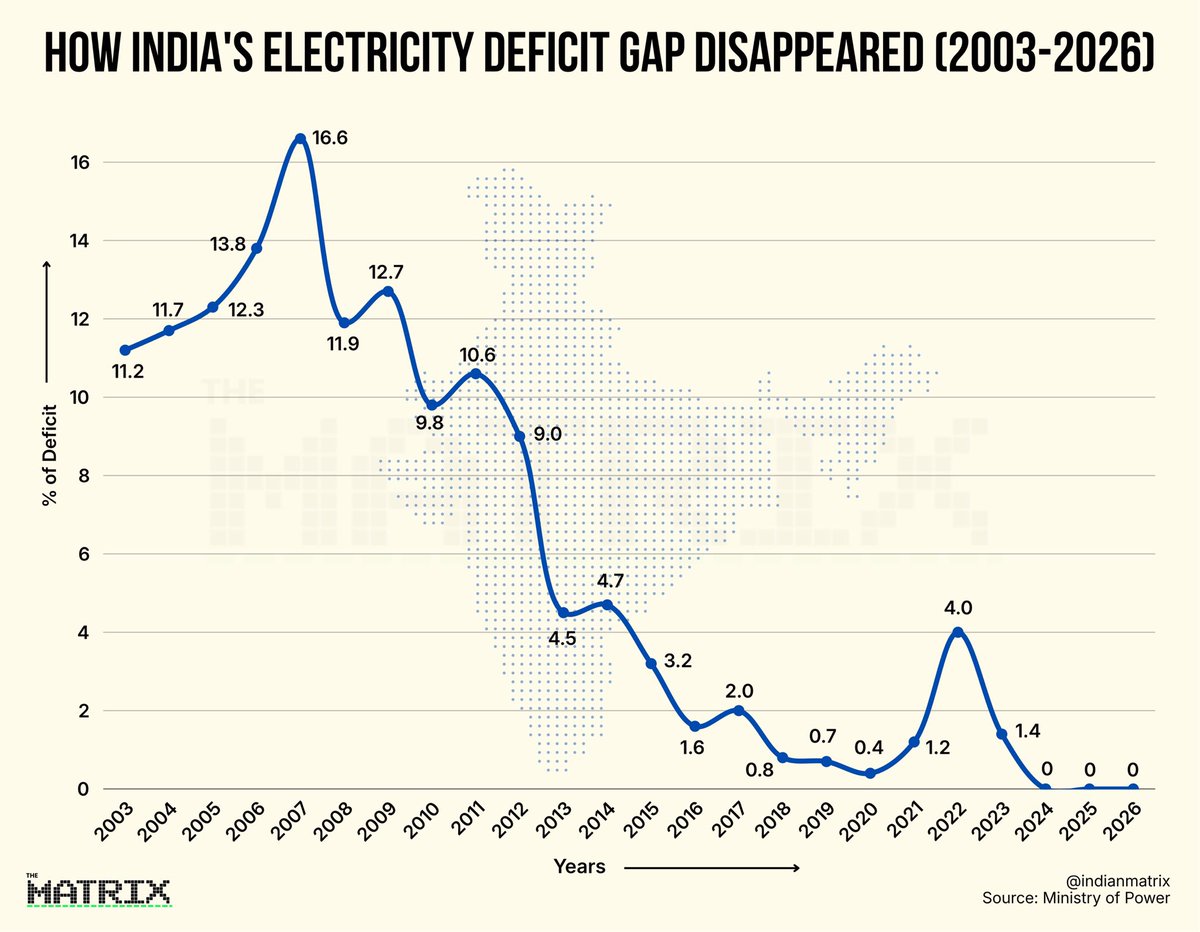
In 2005, India couldn’t meet 12.3% of its own peak demand. By 2007, the shortfall had widened to nearly 16.6%, and close to 18,000 megawatts were unavailable.
The early 2000s were years of genuine electricity poverty. Factories ran on diesel backup generators as a matter of routine. Homes in smaller cities and villages received power for a few hours a day.
Distribution, which is the final link between the grid and the household, was historically the most neglected and most corrupt part of the chain. Electricity theft was widespread, billing was unreliable, and state electricity boards were financially broken.
Reforms here were uneven and politically difficult, but schemes like UDAY, launched in 2015, restructured the debt of state distribution companies and pushed them toward financial viability. The Saubhagya scheme, from 2017, connected the last unelectrified households, around 25 million of them, to the grid by 2019.
India’s solar capacity in 2010 was negligible. Today, it is measured in hundreds of gigawatts. The price of solar panels fell globally by over 90% across this period, and India made a strategic bet to capture that cost decline at scale. Rooftop solar programmes brought electricity generation to homes, factories, and commercial buildings. And the International Solar Alliance, co-founded by India in 2015, helped build global momentum.
The timing proved critical. India’s peak electricity demand now falls in the afternoon, driven by air conditioning in an increasingly hot country. Solar generates hardest in exactly those hours.
On April 25, around 12:30 pm, solar plants and rooftop systems together supplied roughly one-third of all electricity being generated at that moment. Across the full day, solar’s share was around 22%.
India today draws 52% of its electricity from non-fossil sources. More than half of every unit generated comes from sun, water, wind, or nuclear.
The deficit percentage, which once sat stubbornly above 10%, has now collapsed. Since 2024, it has been effectively zero.
Reliable electricity means a small business owner does not budget for a diesel generator as a fixed cost. It means an electric vehicle is practical for someone who cannot afford to be stranded. It means a student in a rural home can study at night without planning around power cuts. It means a hospital runs its equipment on the assumption that the supply will hold.
Electricity reliability is, in the end, a quiet form of equity. When the grid is unreliable, those with money buy backup. Those without simply go without. India's closing of its power deficit means that the gap no longer falls along economic lines.
The country that once rationed darkness now delivers light on demand, at the moment of highest need, to everyone connected to the grid.
That took two decades and thousands of infrastructure decisions. It is not the kind of achievement that fits in a headline. But on an April afternoon, when 256 gigawatts flowed, and nothing broke, it showed.
English
Menefreghista retweetledi

Menefreghista retweetledi

Menefreghista retweetledi

Every country must earn the patriotism it demands. Only some have.
This is a garbage disposal facility in a city that was completely incinerated with a nuke just 3 generations ago.


English
Menefreghista retweetledi
Menefreghista retweetledi

Menefreghista retweetledi

India used to have a copper factory in the South which was troubling China to claim monopoly , suddenly emp union in this factory start complaining,riots happen ,machines gets damaged ,local govt make sure comp gets closed .now we import appx $ 12 billion copper each year.
English
Menefreghista retweetledi

O husbant, you tell world story about my fish head & rittle titties & now we are homeress

English
Menefreghista retweetledi
Menefreghista retweetledi

Menefreghista retweetledi

तस्वीर में दिख रही महिला भास्कर ग्रुप की महिला रिपोर्टर है। हाथ में डंडा लिए आर्केस्ट्रा का मालिक। इस ऑपरेशन में कई बार महिला रिपोर्टर को पीटा भी गया।
बिहार में महिलाओं को बेचे जाने पर चल रहे नेक्सस को एक्सपोज करने के लिए महिला रिपोर्टर पांच दिन तक अंडरकवर रही, इस दौरान महिला रिपोर्टर को तीन बार बेचा गया। इस दौरान उसने एजेंटों, दलालों और ऑर्केस्ट्रा गैंग के बीच रहकर उनकी काली दुनियां को एक्सपोज कर दिया।
रिपोर्टर जैसे ही इस नेटवर्क के संपर्क में पहुंची, उसके चेहरे और लुक्स को देखकर लोग खुलकर सौदेबाजी करने लगे,कोई कह रहा था,
लड़की तो एकदम हॉट है, देखने वाला पागल हो जाएगा,तो कोई बोला हरियाणा वाली है, कस्टमर को खुश कर देगी,
कुछ लोग उसे नेताओं और बड़े लोगों तक पहुंचाने की बात करने लगे। ऑफर दिया गया
चलो विधायक जी से मिलवा देंगे एक बार हाथ रख दिया तो जिंदगी बदल जाएगी,
किसी ने कमरे में पिस्टल निकालकर रख दी, तो कोई सख्त आवाज में धमकाने लगा
लेकिन महिला रिपोर्टर लगातार सबूत जुटाती रही।
सबसे चौंकाने वाली बात ये बताई गई कि गैंग ने उसी रिपोर्टर को 3 बार अलग-अलग लोगों के हाथ बेच दिया।
महिला रिपोर्टर की हिम्मत की दाद देनी होगी। ऐसी खबरें पत्रकारिता पर भरोसा बनाए रखती हैं।
वरना इस दौर में हमने ऐसे भी लोग देखे हैं। जो खुद को पत्रकारिता का शहंशाह बताते हैं। लेकिन एक व्हाट्सप मैसेज में उनकी घिग्गी बंध जाती हैं। और खुद को सरेंडर कर देते हैं।
खैर...इस रिपोर्ट के लिए पूरी टीम बधाई की पात्र है।
#अंकित

हिन्दी
Menefreghista retweetledi
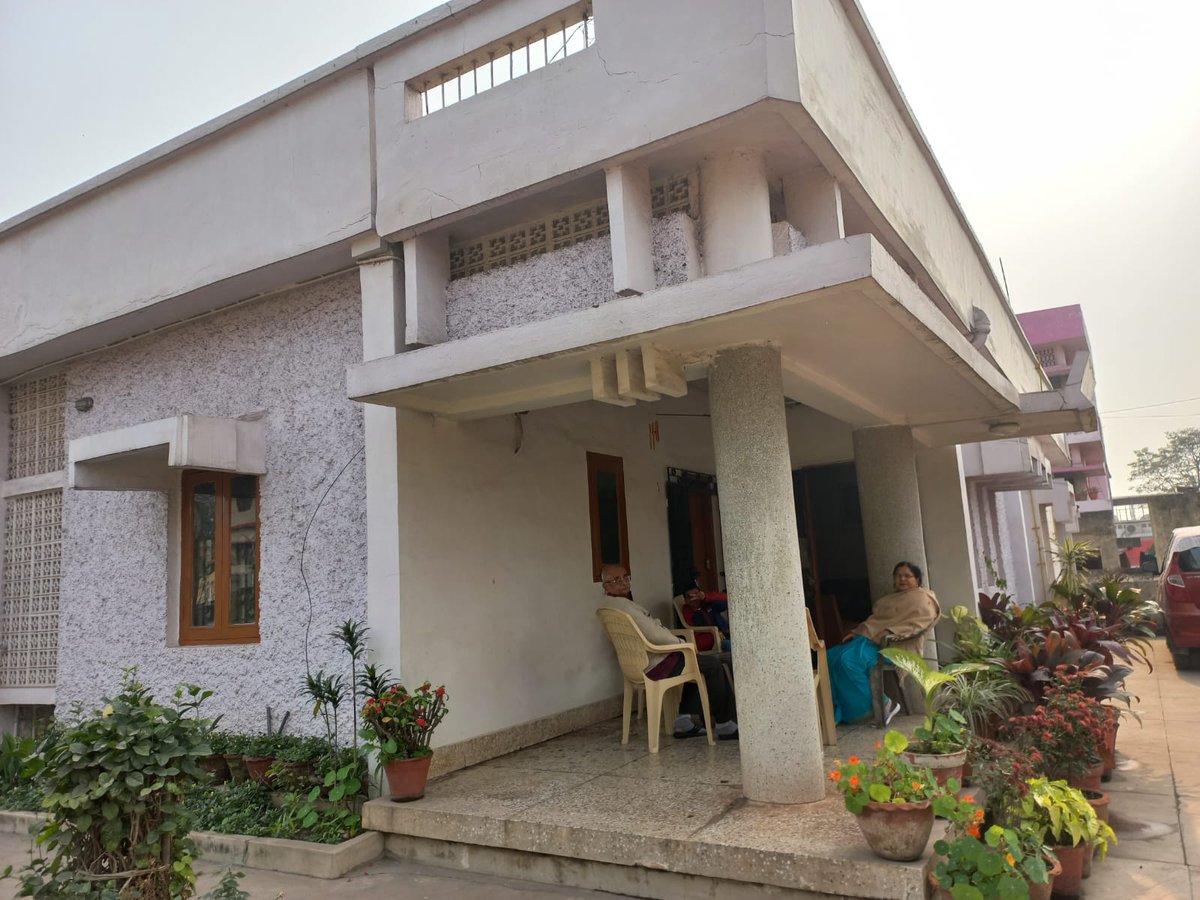
Our house at Cooperative Colony Bokaro steel city was completed and House Warming done on this day 30th April 1977.
Today is the 49th Anniversary of our House
English
Menefreghista retweetledi

@RobertMSterling I know a wall street guy who got caught cheating
He did something similar to this in an attempt to save his marriage
He ended up with a hat trick: he got steamrolled by the company, the courts AND his wife
English
@TRE_320 @Pivot2Centre Something we all forget. Earn less but stay close to people who matter. Foreign cities and organisations will find your replacement 5 minutes after your death.
English

@Pivot2Centre Stay close to family and or friends. Everything else is overrated.
English

If I want to retire in India and want this, where should I end up?
1. Coastal city because pollution will be low
2. No danger of language warriors - I don’t intend to get into anyone’s way
3. Decent infra
4. At least 2 good hospital within 20-30kms
5. Airport within 2-3hr drive; railways station a major plus
I can think of these:
1. Vizag
2. North Goa (Ponda, Mapusa)
3. Bhubaneswar (not coastal but you get the drift)
4. Udupi
5. Mangalore
What else?
English
@rand0m_cha0tic @GreenDrvIndia @volklub I have a vehicle with the same specs. Same range also. But my battery was changed once free of cost at 40k kms 3 years at 2023.
English

@GreenDrvIndia @volklub That’s almost 200km full charge for 6 year old vehicle which is very good 👍🏼
English

If use & throw is the parameter for cars in this consumerism-driven market, then for 8–10 years ownership and 70:30 usage, EVs are the best bet especially with home charging.
Even if brands find ways to avoid giving a battery replacement, the first battery itself should easily last 3 lakh+ km in modern EVs without much fuss.
Better than petrol & diesel in 2026.
English